From April 2023 to July 2023, I was at Young Animators Club doing animations for use in a film named The Pigeon Theory, as part of an exhibition named Big Folkestone Doodle. Written, animated, narrated and scored by the other young animators and myself and edited by Lydia Hibbert, the film is about the pigeons’ takeover of the world and has interviews with different people in Folkestone giving their thoughts and theories about them based on their actions. It was made using Adobe After Effects, Character Animator, Premiere Pro, Google Maps and Procreate. I made a pigeon puppet for a stop motion scene in which a flock of pigeons (the other young animators’ pigeons) fight over breadcrumbs and have a party, and did three hand-drawn animations: one of a squirrel running and jumping across some Folkestone buildings’ walls and windows to reach an acorn (named Squirrel Climber made using markers, a plastic sheet and a photograph), another of a pie on a window sill growing legs and standing up, and one of a rotoscoped pigeon looking back before turning into a seagull and flying towards the screen, eating the camera. All three animations were photographed in Procreate, which I also used to do an animated advertisement for the exhibition itself.
My marker-drawn squirrel animation.
My three-frame boil window animation.
Turnaround of my pigeon puppet.
My rotoscoped pigeon turns around to see if anyone is watching him…
…before turning into an attacking seagull and flying towards the screen!
My animated advertisement for the exhibition.
On 22 July 2023, the exhibition opened at 4pm, and I attended it at 3:30pm. There I watched the film and saw my animations, though the one with the squirrel did not play due to the interview featuring it being shortened before the squirrel could move. The film was later uploaded to YouTube under the name The Pigeon Problem. My pigeon is seen at 3:45, and my animations are at 6:07, 9:17 and 10:42.
The film’s YouTube upload.
Advertisement for the exhibition.
Advertisement for the exhibition.
My projected animated advertisement for the exhibition.
The Earth.
The pigeons’ invasion causes the Earth to blow up.
The film’s title card.
A pigeon walks across the grass in the middle of a park, enveloped in a fiery-red aura.
My pigeon puppet joins the pigeon party, looking for breadcrumbs.
A terrified person hides from the pigeons’ takeover inside a post box.
My transforming pigeon stands atop a drainpipe.
A pigeon watches hijinks occurring in a building’s windows.
Two red-eyed pigeons walk around before talking about their love for food.
My marker-drawn squirrel runs and jumps across buildings to reach his acorn, while a woman expresses her love for pigeons and hails them.
My inverted three-frame boil window animation.
A ‘fat pigeon’ pecks away at the ground before another pigeon gobbles him up.
Seeing the Titanic, a pigeon prepares to use his telekinesis powers to sink the ship.
Three monstrous pigeons stand against a dark, brown, stormy background, their mouths and sharp teeth drooling with saliva.
A pigeon transforms into a mushroom bottle before falling over and exploding.
A pigeon stands and looks at the camera, confused about the film ending and the pigeons’ invasion being cut short.
The Dinky-Di’s: Friends on Freedom’s Frontier was an Australian animated television series that aired on TVNZ 2 in New Zealand in 1992,[1] Sistem Televisyen Malaysia Berhad in Malaysia from 1994 to 1998,[2] in Italy on 21 August 1995,[3] on the Nine Network and RTQ in Australia from 6 December 1997 to 30 May 1998,[4] in Brazil, Korea and the Arab World in 1997,[5][6] in Poland on 10 January 1998,[7][8] and in Russia in 2001.[9]
The show’s premise follows a group of anthromorphic animals, the titular Dinky-Di’s, who go around the world saving rare and endangered animals and plants, while educating the audience on the importance of environmental preservation. Led by Aussie Roo (a kangaroo) and Cass Koala (a koala), this group consists of animals from all over the world (main: Chopa Crocodile, Plato Pus, Ernest Eagle, Equulus Emu and Zennie; others: Lazur Lion, Orikawa Bear, Cauda Kiwi, Bill Buffalo, Pleiades Panda, Lennie Llama and Sidney Seal) who have many different specialities that serve to the Dinky-Di team, and are well organized with a command centre, computer network, and high-tech flying machines. The group of rescuers fight against Mephisto, an eco-terrorist who is always engulfed in shadow, and his henchmen: Rancid Rodent (a rat), Hugo Hyena (a hyena), Ganny Goanna (an iguana), Serpent Sam (a dragon), and others. Mephisto’s true identity, however, is a true mystery to the Dinky-Di’s, and one which, when solved, will be a major step towards slowing damage to the planet.
The series was created by Melvyn Edward Bradford, produced by Roo Films, Proprietary Limited in 1989-1993, distributed by Motion Picture Management Studios Australia, and animated by Pacific Rim Animation. The theme song “Friends On Freedom’s Frontier” and the episodes’ songs, such as “Cross The Line (Start, Don’t Stop)”, “Don’t Run With The Pack”, “Love Comes To The Rescue”, “Don’t Look Back”, “Don’t Call Me A Hero”, “What About The Animals” and “Reach Out”, were composed and produced by Matthew Sloggett, with lyrics by Bradford and Bob LaCastra, while the soundtrack was composed by Garry McDonald and Laurie Stone and mixed at Grevillea Studios. The voices were recorded at Sunshine Studios.[10][11][12][13] Gennie Nevinson is the only voice actress listed in the credits, and her website says that she voiced all the female characters, including Cass Koala, Equulus Emu, Cauda Kiwi, Beatrice, Hydra Hen and Pleiades Panda (I actually came across the show by discovering Nevinson’s website when I was trying to find which characters she voiced in The Twelve Tasks of Asterix; she voices Cleopatra). Though her website does not mention that she provided the voice of Orikawa Bear’s son, I am pretty sure that he is Nevinson as well. Ric Melbourne must have voiced Aussie Roo, as well as Chopa Crocodile (his voice is basically a slightly higher version of Aussie) and G.T. Garuda, since A) The Dinky-Di’s was his only voice acting role and his only other credit is as a host in an episode of Countdown in 1974, B) his name is listed under Nevinson’s in the credits, and C) he seems to be the only voice actor who sounds a bit more realistic and less exaggerated, even with the American accent (which seems odd because Aussie is a kangaroo, and kangaroos are native to Australia). Ernest Eagle, Sidney Seal, the second Iceburglar (pitched-down voice) and the narrator all sound like Lee Perry’s American accent (specifically around the 0:19 and 0:31 marks) and his Ulysses in Hercules (Burbank), so it is definitely him doing them. Considering that Perry did animal noises for Hans Doberman in a YoGo commercial and his 2018 Character Demonstration at 4:07, he might have done animal vocal effects for the series as well, including the goat and the whales (pitched-down voices). Grahame Matters likely did additional voices such as Bill Buffalo’s secretary (compare to his Bottle Top Bill). Tony Bellete’s BrisVoiceOver profile mentions that he has ‘been everything from a talking train to a T. Rex in four animated features (The Hunchback of Notre Dame (Burbank), Beauty and the Beast (Burbank), Hercules and The Diamond Cutter) and two series (The Dinky-Di’s and The Shapies)’. The Dinky-Di’s was the first animated production that Bellette did voices for. He played various characters on the show: Plato Pus, Zennie, Lazur Lion, Orikawa Bear, Bill Buffalo, Mephisto, Rancid Rodent, Hugo Hyena, Ganny Goanna, Serpent Sam, Lazur’s boss, Mephisto’s henchman, the Baron of Babel, the first Iceburglar, Doctor Hope, the Archduke of Avaris, and the Guard Bear. Plato, Rancid and Lazur’s boss sound like Bellette’s Bob Oblong from The Shapies; Zennie’s voice is a dead ringer for the ‘Stay focused, dudes, it is real!’ voice at around 02:20 in Bellette’s Animation Demonstration; Lazur and Orikawa sound like King Henry in The Hunchback of Notre Dame; Bill, Hugo and Sam sound like Quasimodo; Ganny is a higher version of the ‘Sorry all,’ voice at around 02:08 in the Animation Demonstration, and Mephisto’s henchman is basically T-Rex from The Shapies, as well as a deeper Rancid. Mephisto, the Archduke, the Baron, the first Iceburglar, Doctor Hope and the Guard Bear’s voices are pitched down, but are still recognisably Bellette; Mephisto and the Guard Bear sound like a more guttural, sinister Hercules (more apparent in Mephisto’s case when he angrily yells at the Baron for his failure), the Baron sounds like a raspier version of Bellette’s ‘Now for some real fun!’ voice at around 00:18 in the Animation Demonstration, the first Iceburglar has the same dumb voice as Quasimodo, Doctor Hope has the same warm, elderly tones as Mirror Man from The Shapies, and the Archduke sounds like Bellette’s deep ‘I saw someone here!’ voice at around 00:15 in the Animation Demonstration. As for the bilbies (particularly the one captured by Sam and Hugo), it sounds like actual animal effects (either recorded for the show or stock sound effects) were used for them.
Since its original run, the series has faded into obscurity. It was also not as successful as it could have been. Originally scheduled to be completed by 1992, it experienced a series of lawsuits and legal battles during production and was delayed, before eventually airing in New Zealand in 1992, Malaysia in 1994, Italy in 1995, and Australia in 1997. A 93-minute direct-to-video compilation film titled Mephisto’s Web was commissioned in the first half of 1993 and completed in February-March 1994, but was never released, with the accounting firm, Krampel Newman Partners Proprietary Limited, scamming/duping Mel Bradford and cheating him out of his money.[11][12][13][14][15] The original link to that case is now deleted, but I managed to recover some text from it: ‘Q11: Our next case, Krampel Newman Partners and the Commissioner of Taxation, concerns a Division 10B film scheme. Justice Ryan heard the case. A: The idea was to recycle footage from a cartoon known as Dinky-Di’s made for television into a feature film. A number of investors were put together to invest in the…’ In the late 2000s, four revivals of the show were attempted: a series of Flash-animated shorts named The Dinky-Di’s 2, a graphic novel, a stop motion pilot and a computer-generated imagery sequel. The Dinky-Di’s 2 was a continuation of the original show, where the Dinky-Di’s were to face a new villain, Maraudo, and his holographic alien henchmen. The series would have also had a robot named DDRobo, who would do some very amazing things in the Dinky-Dis’ High-Tech Control Room.[15][16][17] Bradford had been trying to find peace within himself, despite being an agnostic. He would often sit at a local church and ponder the existence of God. He asked his dear friend and neighbour YouTuber Alilb Ani that he be with him to sit at the top of Razorback Lookout. As they sat overlooking the valley, he was in a sorrowful mood, a glistening tear running from his eye. Bradford told Ani, ‘All that I ask for; continue my legacy.’ He feared all that he had and all that he was would one day be discarded like rubbish, his memory and his achievements forever lost. On the evening of 3 November 2010, Bradford and Ani were discussing many things, some of which were the characters of The Dinky-Di’s 2, and others were deep profound discussions of God. He said, ‘The thing that I have noticed with God and being on or offside with him is sometimes we are being offside with ourselves more so.’[18] He was also planning on giving the series a Digital Video Disc release, and had given YouTuber Genevieve Purchase, her husband Neil Purchase, and their daughter some of the original celluloids, which they framed to keep them in superb condition.[19] On 4 November 2010, Bradford died of a cerebral aneurysm caused by coronary artery disease at his computer desk in a humble unit in the town of Coolangatta near the boarder of Queensland and New South Wales, Australia. His service took place in Parkwood, Queensland on 23 November 2010. Most of his possessions, including his works of The Dinky-Di’s, were thrown out in the rubbish just as he had feared they would be treated. Ani jumped in the dumpster after them and salvaged what he could, including an old demonstration reel made for investors and overseas networks that Bradford perhaps never got around to converting, and if so may hold the key to lost episodes. When he revealed this in 2013-2014, YouTuber Marmalade000000, a hardcore Dinky-Di’s fan and an agnostic like Bradford, was shocked and furious. He had heard about Bradford’s passing from Matthew Sloggett, and believed that he deserved so much better than being taken away by God and having all his life’s work thrown out.[19] Bradford’s daughter Natalie, who has a YouTube channel named Beautiful Boho/EarnestDreaming, commented that she would like to speak with Ani.[20]
Out of the 26 episodes, only five have resurfaced; the first half of the first episode, Lost, One Dinky-Di,[21] full versions of the Arabic, Brazilian Portuguese and Polish dubs of said episode,[22][23][24] a music sequence from the Korean dub of said episode,[25] a full version of the Brazilian Portuguese dub of the second episode, The Compututor,[26] three-minute and seven-minute clips from the fourth episode, The Bilby Tale,[4][27] the twelth episode, Baron of Babel (in English and Russian),[28][29] the twentieth episode, Funga Wunda (English and Russian),[30][31] and full versions of the Russian dubs of Good Wood, Duke of Deceit, Sea Beneath the Sea, Beneath the Sea, Yesterday, Today and Tomorrow, Journey to Pedra Blanca, Java Lava, Tapir Caper and Mirage Master.[32][33][34][35][36][37][38][39] “Friends On Freedom’s Frontier” and “Cross The Line (Start, Don’t Stop)”,[40][41] the theme song for the Italian dub of the show,[42] the opening of the Korean dub,[43] backgrounds and character designs by Andrew Trimmer for episodes such as Baron of Babel, Good Wood, Yesterday, Today, Tomorrow, and the season finale Small Hippo, Big Bust;[44] copyrights for The Howling Crystal and Winds of the Whio filed in the United States Copyright Office in January 1990, and a work-in-progress test title animation for The Dinky-Di’s 2 have also been found.[45][46][47]The Bilby Tale, Straits of Sorrow, The Howling Crystal and Mirage Master were available to watch on Kooltube1 (Mel Bradford’s website) at some point.[16][17] Lost Media Wiki user Rynosaurus discovered that the first four episodes and a 10-minute promotional tape currently sit in the National Archives of Australia, having been submitted to the Australian Government in order to have them classified for television broadcast. He said, ‘From what I could find… It looks as though it was broadcast on the Nine Network here in Australia around 1985.’[48] YouTuber The Dark Knight commented on the upload of Baron of Babel, “There are two Gulf Countries that have a copy of the show. Kuwait and the United Arab Emirates. Kuwait’s television logo is seen at the bottom right of this video. I tried contacting them to no avail.”[49] There are also YouTube Poops online made from some clips of the missing episodes by Marmalade000000, but he no longer has access to them.[50]
Louis’ Shoes is a 2020 French animated short film about a young autistic boy named Louis, who arrives at a new school and tells his classmates about his bad experience at his previous school.
What is Louis’ Shoes about? The setting takes place in two classrooms and a playground. The characters that appear in the film are Louis, his parents, other pupils and his teachers.
Louis tells his new classmates about how the teachers in his previous school did not understand him, and how he was bullied by the children there.
In Louis’ story, he explains that his teacher did not understand how his brain works and prevented him from explaining to his old classmates, one of whom stole his shoes. Louis’ shoes are very important to him, as they make him feel comfortable when wearing them. He does not like touching the ground with his feet if he is not wearing his shoes.
Louis says that his parents confronted the teacher about the whereabouts of his missing shoes, and his bad time at the old school is why he is enrolling in the new one. He looks up at his smiling teacher, while the new classmates take their shoes off in solidarity.
The main themes in Louis’ Shoes are learning to listen and understand people better, bullying, and moving on.
Realist elements: Classrooms. Louis explaining his previous school experience. Louis’ old teacher and classmates not understanding his autism. Playground. The children hitting Louis with a football and stealing his shoes. Louis’ parents confronting his teacher about his missing shoes.
Formalist elements: Low angle shot of Louis and only the new classmates’ bodies. Louis’ Mind Palace (fantasy). Point-of-view shots with Louis not looking into other people’s faces. Cold, uncomfortable, muted colours for Louis’ nasty teacher, and warm, brightening colours for Louis’ nice teacher and new classmates. Louis’ love of simplicity and order (fantasy). Low angle shot of the playground. Dramatic lighting with tree shadows before Louis’ shoes are stolen. Changing music to fit with emotion.
Perspective: The film uses a lot of subjective perspective shots and details, such as the blurred details and backgrounds behind Louis, and the dramatic lighting and close-up shots of his face with a shallow depth of field, representing his isolation. It also lacks an objective perspective because it is being told from Louis’ point of view.
Colours: Louis’ new school has a warm, bright, welcoming temperature and palette consisting of yellows, blues, oranges and browns. This tells the audience that he is moving on to a new chapter in his life to make new friends, making them feel happy for him.
Louis’ old school has a cold, dark, uncomfortable, muted temperature and palette consisting of blues, whites, greys, reds and blacks. This tells the audience that he did not enjoy his time there and felt isolated, making them feel sorry for him and concerned about his well-being.
Lighting: Louis’ new school has hey key lighting, lighter shadows and less contrast to fit with its welcoming, sympathetic tone. His old school has low key lighting, heavier shadows and more contrast to match its dark, sombre, misunderstanding tone. In the scene below, a warmer light is shone on Louis’ face as he ignores the cold, bluish-white lighting surrounding his body from his old school. Another scene shows Louis in the warm, bright, tree-silhouetted light from outside his classroom’s dark colours, representing his calm before he finds that his shoes are missing.
Camera movements: When Louis introduces himself to his new classmates, the camera zooms slowly out to convey his loneliness and nervousness. Throughout the film, there are static cutaway and point-of-view shots that take the audience into Louis’ world. When he feels anxious about his stolen shoes and falls down to his Mind Palace, we get a point-of-view shot with camera movements, and there is another one at the end with his new teacher, which opens up his claustrophobic world a bit more.
Editing: At the beginning of the film, cutaway, wide and point-of-view shots are used at a faster pace to show Louis’ disorientation and recollection of his memories at the old school, notably when he is taking off his shoes, looking at his new classmates’ shoes, and struggling to look directly at one of his old classmates.
Sounds: On the title card, we hear children putting their belongings away and sitting at their desks and a school bell ringing, indicating that the film begins there and Louis has arrived at his new school. From Louis’ perspective, we also hear whispering and mumbling between his new classmates in the ambience of the classroom, and loud noises when Louis takes off his shoes and the classmates are moving and tapping theirs. When Louis is anxious about looking at the old classmate’s face, a faint heartbeat and slightly loud fabric sounds are used. This sonic landscape created by the filmmakers exaggerates the sounds to represent Louis’ state of mind, using reverbs and increased volumes of foley sound effects. An example being when one of Louis’ old classmates runs past the screen and their football hits him on the head.
Perspective example: In a point-of-view shots from Louis’ perspective, his new teacher is shown smiling at him and the audience, breaking the fourth wall and indicating that the film is about wanting recognition, sympathy and understanding. The film ends with a close-up shot of Louis smiling at his new classmates, another instance of breaking the fourth wall.
Who made the film? Louis’ Shoes was made by director-screenwriter-technical artist Marion Philippe and Kayu Leung. It was also animated and edited by Théo Jamin and Jean-Géraud Blanc; produced by Anne Brotot with MoPA 3D School, and composed by Lolita Del Pino. It was distributed by François Heiser for Yummy Films.[1]
Why and how did they make the film? As parents, Philippe, Leung, Jamin and Blanc did a lot of research for the film to understand Louis, and ensure that he feels good about himself. They watched interviews with autistic philosophers and met people who were concerned to try to see the world form Louis’ perspective. Thinking that it would be amazing if others could step into Louis’ shoes and question the world, they decided to make a film about him. They also decided to let the character tell them what he experiences on a daily basis.[1][2] Louis is a shy character, so the filmmakers asked Ronan Guilloux to provide his voice, giving Louis his own mature vocabulary, and themselves a window into his thoughts. Very often, they realised the paradox between what Louis sees and what he thinks.[1][2] Louis gives his new classmates a structural and self-aware narration of his previous time at the old school. The filmmakers had to develp a visual grammar specially designed for him, as well as a further commentary for how humans behave in general. By doing this they integrated the theme of empathy into the composition of every frame, with a setup at the beginning and a payoff at the end.[1][2] Setups include Louis not looking directly at his new classmates, and only their shoes being shown instead in surreal framing; the environments being oddly massive to Louis due to living in a social structure that is so much bigger than him and others; and his life. Payoffs include the scene cutting to the centre of Louis’ face and him looking at his new, smiling teacher (the human face and empathy is the centrepiece) and the scene with Louis’ parents confronting the teacher not opening with his shoes.[1][2] Philippe, Leung, Jamin and Blanc did not want to portray Louis realistically because they wanted his story to be for everyone and for anyone to empathise with him. This is why he was given a stop motion doll-like look. The appearance reminded the filmmakers of their childhood. They also gave Louis his shoes, an integral part of the character and one of the film’s most important themes, and coloured them blue and added a cube logo. Blue is the symbolic colour of autism, and Louis likes square things. They also created a blue school bag for the boy, representing his structured personality and perspective, and the teacher at his new school, the only character that Louis looks at directly. The characters are distinguished by their different footwear (shoes, boots, high heels, et cetera), which was done to visually convey their personality through their feet, and allow them to be identified by Louis from his perspective.[1] The filmmakers considered bringing Louis to life to be challenging. They recorded footage of Leung to use as reference for the character’s subtle, calculated movements and gestures when he is in control of them. The only exception is when he falls down to his Mind Palace after his shoes are stolen. Louis’ eyes also lack irises or pupils, so they animated the reflections in his eyes to indicate which direction that he is looking in. They also had to set up and animate the many elements and props in the constellation and Mind Palace scenes, which represent Louis’ thoughts. To save time on the repetitive task, they developed some tools to automate the rigging of all the props. Through that process, they were animating Louis’ mind.[1] Since Louis does not move from his stool because of his attachment to his shoes, the filmmakers made their effort to go inside the character’s head by creating his own sensory environment. The lighting, colours and sounds are made from Louis’ senses, no matter what emotional stage he is in, imaginative or realistic. From the set pieces to the props, they wanted to make a school conceived by the mind of a child, naïve and palpable just like a miniature toy in a doll house. Each set in the abstract constellations scene is made by the elements previously seen in Louis’ memory, to show how he reconstructs and reinterprets his daily life.[1] Louis sees the world as sort of a social theatre, so the filmmakers used a directional stage light to light up his doll’s house. In the abstract dark shoe tunnel scene, all the lights do not link to any realistic factor, because we see what Louis sees, from environmental light to spotlight. The filmmakers research actually helped them a lot in their aesthetic choices; the sensitivity of light plays a large role when Louis finds that his shoes have been stolen.[1] With their research on neurodiversity, Philippe, Leung, Jamin and Blanc used sound design to construct Louis’ sensory environment and allow the audience to see things more closely from his perspective, as they can hear the world as he does. Sound is so important in the film, because Louis is hypersensitive, and the slightest sounds that he hears are amplified. The filmmakers chose a form of music (composed by Lolita Del Pino) at the limit of sound design. For example, when Louis loses his shoes, he feels an intense emotion, but says nothing and remains frozen in place. His parents are the only ones that are angry about his shoes’ disappearance. When the audience sees things from inside Louis’ head, the sound becomes a cacophony of emotions.[1] The filmmakers did not want to tell a Manichean story that was dualistic or simplistic, since Louis does not show resentment towards the classmates who stole his shoes. The pain that he feels is about not having his shoes on, basically the loss of his anchor to the world. His main enemy is his own reality. Telling Louis’ story was also a way for the filmmakers to tell the audience about something close to their hearts. To quote Louis himself, ‘It doesn’t matter who you are, the most important thing is that you’re comfortable in your own shoes.’[1]
Genres: The genres used in Louis’ Shoes are realist-fiction (Louis telling his new classmates about his old school) and fantasy (representations of Louis’ sensory environment). The film is also influenced by docufiction films in order to create an educational piece.
Influences/References: The film has parallels between Alice in Wonderland and Coraline, in the sense that we see Louis in his fantasy worlds (the Mind Palace, the constellations and the dark shoe tunnel that he falls down). The Mind Palace and constellations are an alternative reality for Louis to escape to, much like the Other World in Coraline, where the titular character goes to escape her boredom in the real world. The scene where he falls down to the Mind Palace is pretty similar to Alice falling down the rabbit hole.
In 1988, Nintendo Company, Limited signed a deal with Sony Group Corporation to begin development of a compact disc read-only memory-based add-on for the Super Nintendo Entertainment System that would allow for full-motion video and larger games.[1][2] However in June 1991, Nintendo broke the agreement and instead signed with Sony’s rival, Koninklijke Philips Naamloze Vennootschap, to make the add-on.[1][3] This caused Sony to spin off their add-on into its own console, the PlayStation. Witnessing the SEGA Compact-Disc’s poor reception and sales, Nintendo scrapped the idea of making an add-on entirely.[1][2] As part of dissolving the agreement with Philips, they gave them the license to use characters from their Super Mario and The Legend of Zelda series (Mario, Luigi, Princess Toadstool, Bowser, Link, Princess Zelda and Ganon) to create four games for Philips’s console, the Compact Disc-Interactive, contracting out to independent studios for development.[4][2][5] These included Link: The Faces of Evil and Zelda: The Wand of Gamelon, both released between September 22, 1993 and November 11, 1993;[6][7]Hotel Mario, released in July 1994;[8] and Zelda’s Adventure, released on May 10, 1996.[9] Though based on the Mario and Zelda series, the games are not considered official entries. A Donkey Kong game was apparently in development for the system between 1990 and 1992, and during the 1992–1993 period at Riedel Software Productions, before it was quietly canceled.[10]
Link: The Faces of Evil puts the player in control of Link, who goes on a quest to defeat Ganon and rescue Princess Zelda. Zelda: The Wand of Gamelon changes the roles and has the player control Zelda, who sets out to save Link and King Harkinian and defend her kingdom from Ganon. Both travel to a new world (Koridai and Gamelon, respectively) to thwart Ganon’s plans. At the beginning of both games, players have access to only three areas, which are accessed through an in-game map. The two characters only have their swords and shields at this stage. The sword can be used to attack enemies either by stabbing or shooting “Power Blasts”, while the shield can deflect attacks. Link’s sword in The Faces of Evil is known as his Smart Sword, and will not hurt anyone considered friendly. The shield is used whenever the player character is standing still or crouching. They gain new items later on in the game, including lamp oil, rope, and bombs, all of which can be purchased from a shop. Rubies (Rupees in canon Zelda games) can be obtained by stabbing them with the sword after defeating an enemy; after which they can be spent at the shop. The player’s health is measured in “Life Hearts”. Although the player begins the game with only three hearts, there are ways to earn more. Each time the player character is injured, they will lose at least one-half of a heart. The first two times the player runs out of Life Hearts, the player will be given the option of continuing from near the point where their last heart was lost. When the player loses their hearts for the third time, they will be returned to the map and must start the level from the beginning. Returning to the map replenishes their Life Hearts and lives, and they will retain any items and Rubies they picked up.[11][12]
The Faces of Evil’s story begins in Hyrule Castle, where a bored Link discusses the prospects of a new adventure with King Harkinian. His hopes are soon fulfilled, as a wizard named Gwonam arrives on a magic carpet. Gwonam tells them that Ganon and his minions have taken over the island of Koridai, and explains that according to a prophecy, Link is the only one who can defeat Ganon. Link then asks Princess Zelda for a kiss for good luck, but Zelda refuses. Gwonam then transports him to Koridai, explaining that many of Ganon’s minions have established giant stone statues known as “the Faces of Evil” that act as their bases of operation, and that the young boy has to conquer each. Link ventures through the island and conquers all the faces along with defeating their leaders, including Goronu, a reptilian necromancer; Harlequin, a jokester pig; Militron, a fire-breathing armored knight; Glutko, a gluttonous cyclops; and Lupay, a sinister, dangerous three-eyed wolf. During Link’s quest, Gwonam discovers and informs him that Ganon has captured Zelda and imprisoned her in his lair. At one point during his adventure, Link discovers the sacred Book of Koridai, and brings it to a translator named Aypo. Aypo revels to him that the book is the only way to defeat Ganon. Link finally confronts Ganon, who attempts to recruit him with the promise of great power and the threat of death. He then defeats the demon, imprisoning him within the Book of Koridai, before rescuing and awakening Zelda. Gwonam appears and congratulates Link on his success, and then transports the two on his magic carpet. He shows them the liberated and recovering Koriadi, before officially declaring Link the hero of the island.[13] In The Wand of Gamelon, King Harkinian announces his plan to aid Duke Onkled of Gamelon, who is under attack by the forces of Ganon, and orders Zelda to send Link for backup if she does not hear from him within a month. He reassures her that he is taking the Triforce of Courage to protect him, while Zelda’s elderly nursemaid, Impa, promises that the Triforce of Wisdom will ensure the King’s return. An entire month passes without word from the King, so Zelda sends Link to find him. When he too goes missing, Zelda ventures off to Gamelon to find both Link and the King, accompanied by Impa. During the quest, Impa discovers that King Harkinian has been captured by Ganon and that Link was engaged in a battle, with his fate being unknown. As she ventures across the island, Zelda defeats many of Ganon’s minions, including a villainous Gibdo, the three wicked witches of the Fairy Pool, an intimidating Iron Knuckle, an evil Wizzrobe, and Omfak, a gluttonous shape-shifter. Eventually, she rescues a woman named Lady Alma, who gives her a canteen that she claims Link gave her in exchange for a kiss. On reaching Dodomai Palace, it is revealed that Duke Onkled has betrayed the King by willingly collaborating with Ganon by permitting him to take over Gamelon and allow the King’s capture. Zelda storms the palace, defeats Ganon’s henchman, Hektan, and saves a prisoner named Lord Kiro, who accompanied the King before his capture. Kiro reveals the secret entrance to Onkled’s chamber, and when they confront him he reveals the entrance to Reesong Palace, where Ganon has taken residence. Zelda travels to the Shrine of Gamelon to obtain the Wand needed to defeat Ganon, then makes her way to Reesong Palace where she fights him. After incapacitating Ganon with the Wand, she rescues her father. Back at Hyrule Castle, Kiro turns the traitorous Onkled over to the King, begging for mercy. The King orders him to scrub all the floors in Hyrule as punishment. Although Link’s whereabouts are still unknown, a comment by Lady Alma prompts Zelda to throw her mirror against the wall. Link magically materializes from inside the smashed mirror, seemingly having been trapped in it. They decide to celebrate Gamelon’s return to peace with a feast and begin to laugh since all is well again.[14]
Philips insisted that the development studios utilize all aspects of the Compact Disc-Interactive’s capabilities, including full-motion video, high-resolution graphics, and compact disc-quality music. The system, however, had not been designed as a video game console, which resulted in several technical limitations, such as unresponsive controls (especially for the standard infrared controller) and numerous problems in streaming audio, memory, disc access and graphics. Being the first two Nintendo-licensed games released on the Philips Compact Disc Interactive, The Faces of Evil and The Wand of Gamelon were given the relatively low budget of approximately $600,000, and the development deadline was set at a little over a year to be split between the two games.[14] The games were developed in tandem by Animation Magic in Cambridge, Massachusetts in order to make more efficient use of the budget, and shared the same graphics engine. The rest of the development team included programmers Linde Dynneson, John O’Brien and John Wheeler (all previous employees of Spinnaker Software), musician Tony Trippi, and freelance writer Jonathan Merritt, who created the scripts and designs. Under the direction of Dale DeSharone, development progressed similarly to that of his game Below the Root, suggested as a forerunner by Retro Gamer‘s John Szczepaniak. Background designs were created by Tom Curry and Rob Dunlavey.[13][14] The animated cutscenes were done by a team of animators from Russia, led by Igor Razboff, who were flown to the United States for the project.[15][16] According to DeSharone, Nintendo’s only input in the games’ development was that Animation Magic ran the design document and character sketches past them for their approval. They were mostly interested in the looks of Link and Zelda. DeSharone thought that the characters were in somewhat of a formation stage back then, because they really did not appear as characters in the original The Legend of Zelda; they were on the box covers. Animation Magic only had The Legend of Zelda and Zelda II: The Adventure of Link for reference, and Nintendo then gave them their Nintendo Character Manual for art in terms of the design: box and booklet artwork.[15][16] The manual stated that the artwork of Link and Zelda from The Legend of Zelda: A Link to the Past was for reference only and not to be used as original art, yet Philips used it on the Compact Disc-Interactive games’ boxes and booklets. In the cutscenes, Link and Zelda’s designs were based on the Valiant Comics adaptation of the The Legend of Zelda (1989) television series. This also explained why Impa was even a factor in The Wand of Gamelon‘s story as a soothsayer, interpreting the wisdom of a pyramid standing in for the Triforce of Wisdom. However, the final designs of Link and Zelda looked different, with Link having blond hair instead of brown and Zelda wearing a sleeveless shirt that bears her midriff. This was because Philips did not have the rights to those initial designs or any design that was not Zelda and Link. While Nintendo co-owned the Zelda television series, they neither had the full rights for the designs of characters like King Harkinian and Ganon, nor their color schemes. This resulted in Ganon looking nothing like his previous designs. Philips could not get the rights to Impa’s color either, so the color of her robe was changed from red to blue. The animators tried to match Link and Zelda’s new designs within a tight deadline. In the end, they could not afford to change every cutscene due to the lack of time and money to do so. Zelda was given the most attention to with this change. Her design only ever changed once between the cutscenes, showing Zelda in her outfit from the television series, while Link’s hair would change color from blond to brown very frequently in The Faces of Evil to the point that it became half and half.[17] The first two games were showcased at the 1993 Consumer Electronics Show, and surprised audiences with their degree of animation.[18]
For voice acting, Animation Magic auditioned local union actors, American Federation of Television and Radio Artists actors, and chose the voices for the game. There was about 10 minutes of cinema in each game, so there was a fair amount of audio to edit.[15][16] Jeffrey Rath, an artistic director at Theater in the Open in Newburyport, Massachusetts, was cast as Link. In a 2010 interview with The Gaming Liberty, Rath stated that he and the other actors would be shown pictures of the characters and given little script backgrounds. There were two-hour recording sessions after roughly 15 minutes of rehearsals. The actors only usually did 2-3 takes.[19] Rath also provided the voice of Dash Daniels (clips) in Pyramid Adventures: Episode 1: Treasures of the Lost Pyramid, which was in development around the same time as the Zelda games, and would be released in 1996. Bonnie Jean Wilbur was cast as Zelda,[20] and her husband Paul Wann played various characters including Gwonam. Both were actors performing in Theater in the Open.[21] Mark Berry provided the voices of King Harkinian and Ganon. Berry responded to a YouTube comment in February 2022 asking if he was familiar with Ganon, confirming that he voiced the character.[22][23] The claim of his role as the King remains unconfirmed, but it still sounds like him. Additional voices were provided by Berry, Jeffrey Nelson, Natalie Brown, Phil Miller, Chris Flockton, John Mahon, Josie McElroy, Jerry Goodwin, Karen Grace and Marguerite Scott. Brown, Flockton and Goodwin had previously worked with DeSharone on two Spinnaker Software games for the Compact Disc-Interactive in 1992, Laser Lords and Alice in Wonderland (Brown and Goodwin are credited under “Animation Voices” (claymation scenes)). Wilber, Wann, Nelson and Brown would later provide voices for another game that Dale DeSharone worked on, Mutant Rampage: Bodyslam in 1994, though their names are unattributed in the credits. Since there is confirmation on Link, Zelda, Ganon and Gwonam’s voices from the games’ credits, Rath, Wilbur and Berry, and the King has been identified as Berry, I thought that I would go over the remaining characters without confirmation on who voiced them, beginning with the ones I was able to identify (this is only speculation and not meant to be concrete fact):
Morshu: YouTuber wavywebsurf did a video on who could have voiced Morshu. Though the character has a deep, baritone-sounding voice like King Harkinian and Ganon, Mark Berry replied to a comment by wavywebsurf asking if he voiced Morshu, saying, “This is not me in the Morshu.” That said, Morshu’s voice clearly lacks the heaviness heard in Berry’s characters and sounds deeper than them and more constrained. For a while I thought that the voice was Paul Wann, because it sounded like the deeper parts of Wann’s credited role as Merlin in Darkened Skye (2002) (specifically when Merlin says “…need…” and “…a new one.”), as well as a deeper Gwonam (when he says “You must conquer each,” and “…you, Link, are the hero of Koridai!”). But now I think that it might actually be Jeffrey Nelson, since Morshu’s voice does not really match with Wann’s actual voice or his characters. Because the voice actors in the Zelda games were recruited in Boston, Massachusetts, the Jeffrey Nelson in those games is definitely not the same person as the voice impressionist of the same name, who was previously thought to have voiced Morshu. Anutu: Chris Flockton. Though some of the high-pitched male characters in Alice in Wonderland (such as the WhiteRabbit and the Dormouse) sound like Jerry Goodwin based on his high-pitched roles in Laser Lords, including one of his credited “Animation Voices” (clip), the closest comparisons to Anutu for Flockton would probably be the March Hare and Humpty Dumpty (before and when falling off the wall), most notably when Anutu says, “Keep GOing, boy, you’re doing REAL well!” Since the voice actors were recruited in Boston, Massachusetts, Flockton could be the same person as the New York-based British actor Christopher Flockton, but he does not list The Faces of Evil in his resume. Aypo: Paul Wann. Basically the same voice as Gwonam. Alora: Natalie Brown. Out of the three female Mutant Rampage: Bodyslam characters (Tina Felina, Piedra Sangria and Petra Preatora), the character that sounds the closest to Alora is Petra, with her “We will grind these humans to bits!” being a dead ringer to Alora’s deep, seductive voice, specifically when she says, “Pretty please?” Brown is also credited in The Wand of Gamelon, but surprisingly none of the female characters in that game besides Zelda sound like her, though this could be a result of the two games being developed simultaneously. Alora also sounds like Nathalie Brown’s credited “Animation Voices” in Laser Lords‘ claymation scenes (clip). Sidenote: I listened to the voices of Aunt Olivia Pitt (clips) and Yam (clips) in Pyramid Adventures, and they sound like they might also have been voiced by Brown. Horgum: Jeffrey Nelson. Sounds like a breathy, more constrained Morshu. Suprena: Natalie Brown. Same voice as Alora, albeit more regal-sounding. It also sounds like Petra in Mutant Rampage: Bodyslam and Aunt Olivia in Pyramid Adventures. Goronu: Jeffrey Nelson. His voice sounds like Morshu, only with a deeper, almost electronically-lowered-sounding tone (more noticeably heard when he says, “Find the living and cut their vile throats!” and “…you will beg to join me.”), which none of the other characters seem to have. I initially thought that Jerry Goodwin did the voice since the it sounded vaguely like Sarpedon in Laser Lords and the Caterpillar in Alice in Wonderland (both of whom have similarly deep voices, albeit without electronic modification and less Morshu-sounding), and also has a sharp rasp similar to the Dodo and Executioner in the latter game, noticeably heard when Goronu says, “You can’t kill me!” Harlequin: Jeffrey Nelson. Harlequin in The Faces of Evil has this high-pitched nasal voice which sounds different from Paul Wann’s nasally-voiced characters, which by comparison are much lower. The voice is also heard in two other characters in The Wand of Gamelon, and Nelson is credited in bothgames. Though Nelson’s name is unattributed in Mutant Rampage: Bodyslam‘s credits, the closest comparison to Harlequin’s voice (particularly his scream when defeated) could possibly be this baby mutant in Mutant Rampage: Bodyslam‘s intro. Militron: Jeffrey Nelson. The voice is mostly constrained, but his “Oh, my goodness, this is awful!” sounds a lot like Morshu’s “…mmmmm, richer!” Droolik: Jerry Goodwin. The character was rumored in the past to be voiced by Dan Castellaneta due to sounding a lot like Barney Gumble from The Simpsons, but it is not him since his name is not in the game’s credits. Goodwin also appeared in Mutant Rampage: Bodyslam, providing the voice of the game’s main antagonist Hectro Genocide. As with Droolik in The Faces of Evil, the raspy “Dan Castellaneta vibes” associated with him apply in Bodyslam for Hectro. On a sidenote, Bodyslam also features the late Maddie Blaustein (credited as “Adam Blaustein”) as L. Wolf Jam, who also voiced Tofu (clips, compare to the Mayor and Seymour in Pokémon) in Pyramid Adventures, save for one line done by Paul Wann (compare to his Gwonam). Glutko: Jeffrey Nelson. The voice sounds more like a slightly higher Militron (especially when he eats the Koridian). I initially thought that it was Jerry Goodwin, since the voice sounds like Bob in Laser Lords, but it is not him. Devoured Koridian: Paul Wann. Sounds like a higher, slightly constrained version of Gwonam, specifically when Gwonam says, “Squadalah! We’re off!” Sakado Merchant: Jeffrey Nelson. Sounds like a deeper Harlequin. Gibdo: Mark Berry. The voice sounds exactly like Ganon, especially when he yells, “The shroud! No, it’s cold! AAAAARRRGH!!!” (compare to Ganon’s “No! Not into the pit, IT BUUUUURRRNS!!!”) Mayor Cravendish: Paul Wann. Though sounding deeper and smoother than Gwonam, the way that Cravendish says, “I managed to conceal this magic lantern,” specifically the “…conceal…” part, sounds similar to Gwonam’s “Look and see Goronu,” specifically on the “…see…” part where his voice lowers and becomes breathy. Harbanno: Paul Wann. Sounds like Gwonam’s “Squadalah! We’re off!”, as well as the Devoured Koridian. Iron Knuckle: Jeffrey Nelson. Basically the same voice as Militron; plus his “You will die!” sounds exactly like Morshu. Armos: Jeffrey Nelson. Their deep, breathy voices sound like Horgum. Wizzrobe: Jeffrey Nelson. Compare to Harlequin. They even have similarscreams when defeated. Lord Kiro: Paul Wann. Kiro’s voice in of his lines mostly sounds like a higher version of Mayor Cravendish and Harbanno, except for his “Yes, my liege!”, which is a dead ringer to Gwonam’s “Here is the map.” Hektan: Paul Wann. The way that Hektan says, “Am I here? Or here? Or here?”, particularly on the third “Or here?”, has a similar lowered, strained, breathy tone to Gwonam’s “Look and see Goronu.” He also sounds like Antu (clips) in Pyramid Adventures. Duke Onkled: Paul Wann. Onkled’s voice has the same deep smoothness as Mayor Cravendish, while his “Please! Your omnipotence! Have mercy!” sounds a lot like Gwonam’s “Go, with many blessings!” Omfak: Jeffrey Nelson. His “Mmmm!” when he licks his lips after eating the bird sounds a lot like Militron, Glutko and Iron Knuckle.
Now let us move on to the characters whose voice actors and actresses were difficult to identify. Given that the voice actors were recruited in Boston, Massachusetts, John Mahon is likely not the same person as the television, stage and screen actor of the same name (clip), and Phil Miller is definitely not the same person as the Rio and Dynasty Warrors 9 voice actor Phil Miler (credited as “Phil Miller” in the latter), since whoever the Boston-recruited Miller voiced does not sound like the Aviary Intern, the First Waiter, Huang Zhong or Zhang Jiao. They both seem to have only worked on The Faces of Evil. Unlike Natalie Brown, Karen Grace, Josie McElroy and Marguerite Scott have not done voice acting in anything other than The Faces of Evil and The Wand of Gamelon (and Pyramid Adventures). There is another Karen Grace in Close Combat: First to Fight (2005) (her name is in between Terry Daniel and Bill Holmberg), but she is probably not the same person as the Boston-recruited Karen Grace in the Zelda games.
At the time of the games’ release, contemporary criticism was mixed. Super Nintendo Entertainment System Force described the animated sequences as “breathtaking” and praised the game for its high-resolution graphics and its “brilliant” use of sound and speech.[24]Joystick‘s development preview of The Faces of Evil described it as a veritable arcade-quality game with stunning graphics and “perfect animation”. They gave The Wand of Gamelon similar praise, and gave it additional praise for its use of voice acting, its plot and its backgrounds. The same magazine would ultimately score The Faces of Evil 79% a few months later, giving particularly high marks for music, sound effects and play-through time. Other publications gave more negative reviews. Compact Disc-Interactive Magazine rated The Faces of Evil 65%, stating that the game was a poor relation to the original Nintendo games and singling out the perfunctory storyline, the lack of graphical features like parallax and the slow and repetitive gameplay. Another reviewer for the magazine gave The Wand of Gamelon a higher 75% and called it a “reasonably good game” for its puzzles and animated sequences, but criticized its plot and controls.[25] In 1994, Edge reported that as Compact Disc-Interactive sales began to suffer, criticism sharpened, and the games were described as low-cost, low-risk ventures that had failed to excite any interest in the platform.[26]
In later years, both games have been met with largely negative reviews for their plots, cutscenes, voice acting, controls and graphics. Imagine Games Network‘s Travis Fahs criticized the games for using a style similar to Zelda II: The Adventure of Link, for “insufferable” controls, and for the designers’ poor understanding of the Legend of Zelda franchise. He noted, however, that the backgrounds looked decent considering the poor design of the Compact Disc-Interactive’s hardware. Imagine Games Network‘s Peer Schneider criticized The Wand of Gamelon for not effectively indicating when a platform begins or ends, and also said its controls were “sloppy”.[27]The Star Tribune described the voice acting as “laughable”,[28] and it was also criticized by Zelda Elements as “jarring”.[13]Imagine Games Network described the cutscenes as “infamous” and “cheesy”,[29] while other reviewers described them as “freakish”[30] and “an absolute joke”. Schneider felt that the cutscenes in The Wand of Gamelon were “entertaining… for all the wrong reasons”.[27] Jeffrey Rath and Bonnie Jean Wilbur later acknowledged that they did not see the finished product.[19][21] In Rath’s case, it was not until a friend told him about the games being “infamous products”.[19]Zelda Elements felt that the games’ soundtrack was “average” and not up to the usual Zelda quality,[14] while Schneider described the soundtrack as “Red Book audio compact disc pop”.[27] Other reviewers described it as diverse, high-quality and superb with an adventurous upbeat tempo blending “delicious 1980s synth”, electric guitar, panpipes, marimbas and other unusual instruments. Despite their negative reception, there have been a few positive reviews as well. Danny Cowan of 1UP.com and John Szczepaniak of Hardcore Gaming 101 praised The Faces of Evil and The Wand of Gamelon as among the best games on the Compact Disc-Interactive. Szczepaniak in particular suggested that several of the magazines that had rated and reviewed The Wand of Gamelon and The Faces of Evil had engaged in hate campaigns, having never even played the game. Their praises drew from the games’ detailed, well-drawn backgrounds (described as both Gigeresque and Monet-esque) and “pretty decent” gameplay,[30][14][31] although both criticized the controls.[30][31] According to Szczepaniak, the games’ controls work best when played with a hardwired three-button Compact Disc-Interactive control pad, as opposed to the Compact Disc-Interactive’s “crappy infrared remote”. In a periodical for Retro Gamer, Szczepaniak suggested that the natural comparison of the games by reviewers to the quality of games in the rest of the Zelda series was an improper comparison to make, arguing that when reviewed in their own right, the games were actually excellent. Contrary to what were described as “lies perpetuated about The Faces of Evil and The Wand of Gamelon“, Retro Gamer described the games as “astoundingly good” and rated them together as number ten in its “Perfect Ten Games” for Compact Disc-Interactive. While acknowledging that they were non-canonical, the games were praised for exhilarating pacing and superb gameplay design.
Since 2006, the games’ cutscenes have been commonly used in YouTube Poop parody videos, with their various characters, such as Morshu and King Harkinian, gaining minor notoriety as Internet memes. They were very popular as YouTube Poop sources in the early days of YouTube, but due to the increasing diversification of the “meme” side of YouTube and the decline of the classic Walrusguy and Waxonator-style YouTube Poops, the cutscenes’ usage as memes became less common, usually only being referenced to harken back to the original YouTube Poops.[32] Since April 2020, however, Morshu once again rose to viral popularity due to memes such as the Morshu Beatbox and Morshu – Ray Tracing Texel eXtreme On, resulting in the return of the Zelda Compact Disc-Interactive memes’ former popularity.[33] In November 2020, amateur developer Dopply released unofficial remakes of both games for Linux and Microsoft Windows, making them in four years in an effort to teach himself game development. The remakes feature the same assets and gameplay as the original releases and add several quality-of-life improvements, such as subtitles for the cutscenes, a widescreen mode, new unlockable content and the ability to choose between the original gameplay style and “Remastered Mode”, which makes various gameplay changes to reduce player frustration.[34][35] To avoid a cease-and-desist from Nintendo’s legal department like many similar fan projects, Dopply took the remakes down two days after their release, making them unavailable for download.[36]
Hotel Mario is a single-screen puzzle video game.[37] Controlling Mario, or his brother Luigi in two-player mode, the player must search the Klub Koopa Resort for Princess Toadstool, and rescue her from the clutches of Bowser and the Koopalings, who are holding her hostage in one of the former’s seven Koopa hotels.[38] Each hotel features nine stages. The player must shut every door in the stage by moving up and down elevators and avoiding enemies. Mario can step on most enemies such as Goombas, Paragoombas, Koopa Troopas, Koopa Paratroopas, Buzzy Beetles or Monty Moles, as in previous games, but some like Boos (here named “Boo Buddies”) and Big Boos must be avoided by changing floors or entering an open door.[37] At the end of each hotel, the player engages in a boss fight with a Koopaling (Morton Koopa Junior, Roy Koopa, Larry Koopa, Lemmy Koopa, Ludwig von Koopa and Wendy O. Koopa), where the goal is to close all the doors while defeating them; in the final hotel, the player battles Iggy Koopa and Bowser. Various items and power-ups can be found in rooms behind the door and obtained, including coins (collecting 30 coins gives Mario an extra life), the Super Mushroom (which allows Mario to take multiple hits), the Star Man (which makes him temporarily invincible) and the Fire Flower (which allows him to throw fireballs).[39]
Developed by Philips Fantasy Factory, the game was produced and designed by Stephen Radosh, Michael Ahn and Janice Convery, with project engineering by Kevin Goldberg, Thomas Lohff, Stephen J. Martin and Kevin VanAllen Hunt, art and graphics by Jeff Zoern, Mirena Kim and Trici Venola, and sprite animation by Yeeoww!!! and Pat Campbell at Digital Cartoons.[40][41] Radosh had a concept for a video game set in a hotel with various stages and decided to incorporate it into the project.[42] The developers and testers tended to be older in age, with one tester being noted by Venola as “well past retirement”. Since the target audience of children would have faster reflexes, the game was designed to play well for the testers, then sped up.[43] Nintendo’s only involvement in the development was ensuring that the source material was faithful to the Mario series. They were reported to be pleased with the finished project, and were rumored to have considered bringing the game to their own platforms.[40] Nintendo had previously given positive feedback to an early prototype of Super Mario’s Wacky Worlds (a sequel to Super Mario World) by NovaLogic, which was developed at around the same time as Hotel Mario, though due to the declining sales of the Philips Compact Disc-Interactive, that game was never released.[44] Feeling that an early version was “mechanical and cold” and “visually no fun”, Venola and Zoern used elements from Disney and J. R. R. Tolkien to enhance the visual style. Illustrations of the stages were composed of several blocks, each with one detail. The first item that Venola created for all hotels was the door. Each building took a week to complete and was designed with a specific theme, such as Bowser’s Seizures Palace Hotel using a gothic design. Iggy Koopa was planned to have his own hotel, a “Cheese Hotel”, which was proposed during the concept phase and had concept artwork drawn for it, but the development team refused the idea, with Venola calling it “awful”, and the artist responsible for it was fired. Iggy is only encountered in Bowser’s Barbecue Room in Bowser’s Seizures Palace in the final game.[41][43] The game’s music was composed by Marc Saint Regis, who had to write the music as MIDI files on a Mac OS 7 with Opcode Studio Vision using Studio Electronics Obie Rack, Yamaha TG-100, Roland S770 (custom and stock samples), MKS-20, MKS-50, Casio CZ-100, and MT-40 (customized). The title and ending theme songs were renditions of Max Steiner’s “Polka Medley” used in Little Women. Saint Regis’ friend Jack Levy, a sound designer and production assistant, only co-produced alternate versions of the songs.[45][46][47][48][49] The game uses full-motion video cutscenes to tell its story, animated by Terry O’Brien, his wife Kathleen Swain (who worked on Who Framed Roger Rabbit as a background artist) and Bonita Versh at Ocatillo Pictures. Voices were provided by Marc Graue (Mario, Luigi and Bowser) and Jocelyn Benford (Princess Toadstool).[41][43] In a 2008 interview with Interactive Dreams, Graue stated, “The Hotel Mario game developers and directors were great to work with. Most video game directors are easy to work with and the good ones know what they want so they will usually have you do the scripted version and then let you do a version with lots of ad-libs. I got the voiceover gig for Hotel Mario the old fashioned way. Audition and wait for the call. The normal process is to send voice actors ‘sides’ (the script with some character descriptions) and then you read a couple of different ways and hopefully the client and director like what they hear! I’ve voiced games from World Of Warcraft to Ratchet and Clank Future: Tools of Destruction, but hopefully the voices are pretty different than Hotel Mario! I’ve been lucky enough to own and operate the oldest voice over recording studios in Burbank, California for the last 25 years so I’ve been involved with some very cool projects both as voice talent and as a producer. There’s one line in the cutscene where Mario says, “Hey, you! Get off of my cloud.” That was made up during the session and was a reference to the song sung by The Rolling Stones.”[50] In a 2015 interview with IDH Films, Graue expressed his dissatisfaction with the game’s production process, citing poor direction as a factor in the subpar results.[51] Bowser was originally planned to be heard reading the letter that Mario finds, but this was changed to Mario reading the letter in the final version.[52] Benford was recommended by an employee of Phillips Media. She would later marry Michael Ahn, one of the game’s producers.[42] Initially, jumping was not going to be a feature of Hotel Mario, but this was added after a suggestion from engineer Thomas Lohff’s daughter Hollie Lohff. She played Hotel Mario before its release, and criticized it for not allowing jumping like previous Mario games did.[42]
Hotel Mario initially received mixed reviews upon release. Electronic Gaming Monthly praised its gameplay as simple yet addictive.[53]GamePro said that the game was fun but quickly grew boring, and stated “the only intriguing aspects of this game are the well-fashioned animated sequences”.[54]Video Games: The Ultimate Gaming Magazine gave the game 7 out of 10, but acknowledged its difficulty.[55]Superjuegos praised the game’s simple mechanics, and recommended the game to Compact Disc-Interactive owners.[56] In later years, however, Hotel Mario has received negative reviews for its door-closing game mechanic, controls, cutscenes and voice acting.[57][58]Imagine Games Network‘s Levi Buchanan said that while the game was superior to Link: The Faces of Evil and Zelda: The Wand of Gamelon, closing doors was not “a strong enough hook for an entire game”.[39] J.C. Fletcher of Joystiq ridiculed the plot, saying, “Apparently Bowser has nefariously plotted to have his underlings open doors in… his own hotels, thus wasting air conditioning and increasing his own electric bill. Mario and Luigi must heroically latch all the doors and save their archenemy from having his hallways get too cold.”[40]GamesRadar described it as “craptastic”,[59] and Eurogamer referred to it as “little more than a really rubbish version of Elevator Action“.[57] The controls have been criticized as unresponsive.[39][40]1UP.com described the cutscenes as “outright terrifying”,[37]Imagine Games Network called them “abysmal”, resembling “a bad flip-book of images printed out of Microsoft Paint”,[39] and Joystiq described them as “amateurish, garishly colorful, shaky, randomly zooming animation”.[40] Danny Cowan of 1UP.com and Imagine Games Network found Marc Graue’s portrayal of Mario unfitting for the character, lacking the playfulness of Mario’s then-current voice actor Charles Martinet. Cowan wrote that the dialogue is meant to sound playful, but the character voices are indications of menace and hatred.[37][39]
Despite the game’s negative reception, Hotel Mario has amassed a cult following over time for the alleged “so bad, it’s good” nature of its cutscenes and voice acting. Many Internet memes, specifically YouTube Poops, were created because of the poor quality.[60][61][62][63] Marc Graue stated, “I think that it is very cool (and flattering) that something that was recorded in 1993 has found new life on YouTube videos that are using Mario and Luigi’s voices for their comedic video collages. During a recording session you almost always have a lot of fun but you’re not usually aware of how big, successful or how much impact a project will have. Being a voiceover guy with a sense of humor and NO taste means there are always going to be lots of really bad out takes. Nothing is sacred so needless to say Mario and Luigi found themselves in some very compromising positions….VOCALLY!! Considering Hotel Mario was released in 1994, I’m thrilled to see it take on a new life as a parody of itself on YouTube…or anything else you can think of! I don’t think the Academy will be calling me anytime soon, and I really don’t feel that it was “My Finest Moment As A Thespian”…but hey! We had a lot of fun…. AND someone is still listening!!!”[50] He even reprised his roles as Mario and Luigi in a parody dub in 2012.[64] In May 2024, YouTuber SLB94 commented, “This game doesn’t deserve the hate that it gets. While nothing spectacular, the gameplay itself is still pretty decent, very reminiscent of the original 1983 Mario Brothers arcade game. If it was not for those awful cutscenes and the Compact Disc-Interactive’s interesting controller design, we might have had another classic Mario game.”[65] On October 3, 2024, a fan remake of the game with several quality of life enhancements, named Hotel Mario ReBooked, was announced to be in development.[66]
Released eight months after Link: The Faces of Evil and Zelda: The Wand of Gamelon, Zelda’s Adventure follows a non-traditional storyline, taking place in Tolemac (“Camelot” spelled backwards), an uncharted southeastern region of Hyrule. Ganon has captured Link and stolen the seven Celestial Signs, hiding them away in Tolemac’s Shrines, guarded by his followers, the Shrine Keepers (Llort, Pasquinade, Aviana, Malmord, Agwanda, Ursore and Warbane), and creating an “Age of Darkness” in Hyrule and Tolemac. Players take control of Princess Zelda, who is recruited by the court astrologer Gaspra to set out deep into Tolemac and, guided by him and Shurmak, fight through the Seven Shrines of the Underworld to collect the Signs in order to rescue Link, defeat Ganon and the Shrine Keepers, and bring Hyrule and Tolemac to the “Age of Lightness”. Unlike the previous two Compact Disc-Interactive Zelda games, which take the side-scrolling view from Zelda II: The Adventure of Link, Zelda’s Adventure was created by Viridis Corporation, an entirely different company, with a change in style and gameplay. Level design is very much like the original The Legend of Zelda and The Legend of Zelda: A Link to the Past, with an overworld that allows access to individual dungeons. The full-motion video cutscenes that present the plot are live action instead of animated.[67][68][69]
The game began development in April or May 1992.[70] Viridis was tasked with observing A Link to the Past and basing Zelda’s Adventure‘s gameplay on it, though was told to still show off the Compact Disc-Interactive’s capabilities, meaning that the game still used Red Book audio and cutscenes.[71] As Viridis was given very little budget to work with, the development team had to get creative.[72] For the top-down motion capture necessary for all of the game’s human characters the team hung a mirror on the office ceiling and had a camera on the floor point up to it to record and take photographs of the actors. This was so low that it precluded mounting the camera. The human characters were played by the in-office staff. The characters’ sprites’ walking animations were done by having the actors walk on a motorized treadmill.[73] For the cutscenes, one of the walls in the office was painted blue to achieve the use of blue screen.[72] Mark Andrade played Gaspra in the game’s cutscenes, while his voice was provided by Hal Smith. Zelda in the opening cutscene was played by office receptionist Diane Burns, while her sprite was played by Annie Ward. The houses and interiors in the cutscenes and the enemy sprites were created from and built as scale clay models and props by Jason Bakutis, inspired by Ray Harryhausen. The background seen in Gaspra’s cutscenes was one of the clay props used. At one point during development, several “high-ranking executives” from Japan visited Viridis and were impressed by the models that Bakutis had made.[73][74][75] The backgrounds for Zelda’s Adventure were created from videos of scenery near Santa Monica Boulevard in West Los Angeles, footage of Hawaii taken from a helicopter and the developers’ vacation photographs.[72] Due to the console’s limited memory and other hardware issues, the development team faced many frustrating difficulties with putting the game together. The highly-detailed backgrounds and sprites had to be reduced in size and color,[74] and at one point, the game’s music and sound effects had also took up extra kilobytes of random access memory. These issues became a contributing factor as to why the game loads slowly when moving between screens.[73] Developers had difficulty making sure all the areas of the game had proper background masking, and much more music was composed for the game than was used. There were plans at one point to hire Echo and the Bunnymen to do the music, but this plan fell through, most likely due to to a low development budget. The game’s music was later composed by Mark Andrade, though most of the tracks would not be used in the final game.[73][74] Intending to push the capacities of the Compact Disc-Interactive to its limits, development initially progressed with a goal of 600 screens and 160 non-player characters. At this early stage, Viridis president Lee Barnes suggested that playthrough time might take as much as 300 hours. These development figures were reduced in the final product which had only a handful of non-player characters and whose playthrough time has been placed by one commentator at only 12 hours.[76] Viridis was also developing another Compact Disc-Interactive game named Food Dude, originally called Skate Dude. This game was never released, but that did not stop its protagonist from showing up in an Easter egg.[70][77] Randy Casey was responsible for programming all of the game and all associated tools. Additional programming for the inventory system and game progress tracking was done by Gavin James. Though one developer claimed that there was “no budget at all” for the game,[72] Bakutis claimed (possibly facetiously) that it had “at the time, the biggest budget ever for a video game”.[74]Zelda’s Adventure spent two years in testing, longer than it took to develop the game. The game was originally going to be released in North America in November 1993, but was pushed to August 1994, October 1994, and early 1996. It was finally released exclusively for the Compact Disc-Interactive in Europe, in the Netherlands in February 1996 and the United Kingdom on May 10 1996, due to Philips having stopped publishing games for the console in North America by the time that the game was finished.[70][73][78][9]
Upon its release, Zelda’s Adventure was widely panned by critics, in contrast to the more nuanced reviews of Link: The Faces of Evil and Zelda: The Wand of Gamelon. The graphics were called “blurry and digitized”.[79][30]Wired said that the graphics were some of the worst ever encountered.[79] The game’s acting was criticized as unprofessional. Another flaw that has been identified is that the game could not produce both sound effects and music at the same time.[30] Scott Sharkey of 1UP.com called the box art of Zelda’s Adventure one of the 15 worst ever made.[80]Zelda’s Adventure was released as the Philips Compact Disc-Interactive was being discontinued and has become very rare over time, as have the first two Philips Zelda games. The game is regularly sold for over $100.[30]RetroGamer‘s John Szczepaniak described the game as demonstrating arbitrary and illogical design, sloppy visuals, nearly non-existent music, excruciatingly high difficulty and cumbersome loading and controlling. Gameplay for Zelda’s Adventure has also been portrayed as a trial-and-error effort to guess which items can be used to defeat which enemy. Danny Cowan of 1UP.com called Zelda’s Adventure “practically unplayable” due to the jerky framerate, unresponsive controls, and long load times, summarizing his review with a warning to avoid the game at all costs.[30] In discussing the popular online conception that Zelda’s Adventure is superior to The Wand of Gamelon and The Faces of Evil, RetroGamer pointed to the top-down perspective as fomenting misinformation regarding the game’s similarities to the original Zelda when, according to RetroGamer, the game is actually not worth playing. USgamer staff ranked Zelda’s Adventure as the second worst The Legend of Zelda game, noting that it is counted separately from the other Compact Disc-Interactive games due to being less terrible than the others. They considered it a “well-meaning attempt” to recreate the original The Legend of Zelda on the Nintendo Entertainment System, as well as crediting it for being one of few video games to let players play as Zelda, but felt that the lack of experience on the designers’ part as well as the Compact Disc-Interactive’s technical limitations made it a “dreadful” game to play. Peer Schneider of Imagine Games Network was excited that a new developer (Viridis) was chosen instead of the one behind The Wand of Gamelon and The Faces of Evil (Animation Magic), though still felt it was not worth playing despite being an improvement over the other two games. He recommended it only for “die-hard Zelda fans”.[71]
On April 16, 2023, indie developer John Lay released a much better-looking Nintendo Game Boy remake of Zelda’s Adventure, developed in Game Boy Studio with some modifications. Lay noted that he adapted Zelda’s Adventure to make it have the same aesthetics as The Legend of Zelda: Link’s Awakening, seeing as the first two Compact Disc-Interactive Zelda games were side-scrolling games. He also chose to port it over to the Nintendo Game Boy because of the Zelda games that were already released on the portable system, such as The Legend of Zelda: Oracle of Ages. The game is playable on the website on its Itch.io page, as well as the original Nintendo Game Boy and Nintendo Game Boy Advance if you order the cartridge.[81][82][83] On July 13, 2023, a trailer for Arzette: The Jewel of Faramore, an interactive animated action-platform game inspired by Link: The Faces of Evil and Zelda: The Wand of Gamelon, was uploaded to YouTube. Funded and developed by Limited Run Games and Dopply under the developer name “Seedy Eye Software” (who developed The Faces of Evil and The Wand of Gamelon‘s unofficial remasters), the game follows the titular Princess Arzette as she goes on a quest to defeat an evil being named Daimur, whose return has disrupted Faramore’s ten years of peace. Development of the game had begun in late 2020. The Kingdom of Faramore was beautifully realized by Rob Dunlavey, the artist behind the world map paintings from the Compact Disc-Interactive games, while Jeffrey Rath and Bonnie Jean Wilbur (voices of Link and Zelda) provided voices for the game; Rath voiced the Tutorial Voice and Skelvis, while Wilbur voiced the Narrator and Brinda. Some of the other artists from the Compact Disc-Interactive games were contacted to work on the game. The key art of Arzette was drawn by Geibuchan, known for The King’s Epic Adventure and other videos featuring characters from The Faces of Evil and The Wand of Gamelon.[84] Digital Foundry’s John Linneman announced his involvement as level designer after the initial reveal,[85] while fellow Digital Foundry personality Audun Sorlie revealed his involvement as lead producer and writer for the game.[86] Geibuchan, Jimmy Davis, Madeleine Keene, Don Dunno, GarryAGoGo and other YouTube Poopers and animators were given free rein, with their only limitations being the color palette, resolution and framerate of the cutscenes of the Compact Disc-Interactive games. The cutscenes, all drawn in a flat, pixelated style using Blender’s “Grease Paint”, alternated between flat, expressive silliness and surprisingly impressive rotoscoping, and each matched whichever character Arzette would be talking to.[87][88][89][90][91] The game was released for the Nintendo Switch, Sony PlayStation 4, Sony PlayStation 5, Microsoft Xbox One and Steam on February 14, 2024 to generally favorable reviews.[92][93]
From September 2021 to July 2022, I worked on a short film named Hunger Pains. Written and directed by myself and produced by Lydia Hibbert, the film was made using Adobe Animate for the animation, Adobe Photoshop for the backgrounds, and Adobe After Effects and Premiere Pro for compositing and effects (hand-drawn animation, photography, masking, scaling, rotation, puppet pins, textures, et cetera). A freelance three-dimensions modeller named LauraBoots (who I met at the United Kingdom Creative Festival in September 2021) was originally going to do models and effects for the film, but she was unavailable, so I had to do the effects myself. Music direction was done by Kate Wintie. An arcade platformer video game based on the film was also made from February 2023 to March 2023, using Construct 3 and Photoshop. The cabinet was designed using cardboard, printed Adobe Illustrator cutouts and glue. The game was part of an exhibition at Young Animators Club called Young AnimatorsArcade, and was also used as a template for the other young animators’ Construct 3 games (a tutorial for making the games can be watched here). I was told by Lydia that they had played my game and enjoyed it. It was decided that the film would be shown at the exhibition as well. We even designed two logo animations (both in two dimensions in Procreate, Illustrator and After Effects and in augmented reality using Adobe Aero), one for Hunger Pains, and another depicting Ferguson the Fox bouncing past and behind the ‘Young Animators Arcade’ logo on a pogo stick. A video of the exhibition (with footage from Hunger Pains) can be watched here.
A hungry squirrel walks along the seaside towards a food stall. He has come from the forest to the seaside due to the other squirrels laughing at him for not having a stump full of stored nuts for the winter. Desperate for sustenance, he spots a pack of French fries. He rushes over to them and is about to eat them, when a seagull swoops down, swiping the squirrel’s snack. Enraged by the loss of his food, the squirrel chases after the feathered thief. Will the squirrel retrieve his food, or will he get a surprise?
Watercolour painting background for someone’s Construct 3 game.
In-progress left side of my arcade cabinet.
Nearly completed left side of my arcade cabinet.
My printed cutouts.
Reference/concept art for my arcade cabinet.
In-progress right side of my arcade cabinet.
Finished right and left sides of my arcade cabinet.
In-progress space sketches on someone’s arcade cabinet.
Finished space sketches on someone’s arcade cabinet.
In-progress arcade cabinet sign.
Finished arcade cabinet sign with border.
On 2 April 2023, the exhibition opened between 1pm and 4pm, and I attended it at 12:30pm. There I saw my animation projected on the wall and my game projected on transparent paper in my arcade cabinet.
From November 2022 to December 2022, I was at Young Animators Club doing two animations for an exhibition at the Chaos Cards Tabletop Gaming Centre. One was a stop motion animation of a yeti and an arctic fox brawling in an ice cave, made using Dragonframe, After Effects and Premiere Pro. The puppets were made using felting wool, aluminium wire, polymorph, upholstery foam, liquid latex, foot magnets for the stage, dragon eyes and glass eyes, while the cave was created using chicken wire, newspaper, rocks, Modroc, bicarbonate soda, shaving foam and a steel sheet. The other was a hand-drawn logo animation for the word ‘Chaos’, with the letters forming from metal, straw, fire, wood and stones.
My arctic fox puppet.
My yeti puppet.
My ‘Chaos’ logo animation drawings.
My ‘Chaos’ logo animation.
On 20 December 2022, the exhibition opened between 5pm and 6pm, and I attended it. There I saw my stop motion animation projected on the wall and ceiling, used along with the other young animators’ animations as part of a film named CHAOS!, and entered a room with the ice cave set and puppets amongst the young animators’ sets and puppets. CHAOS! was uploaded to YouTube on 22 December 2022, and can be watched here (my animation is at 2:10).
On 7 October 2022, I was invited to A+C Studios for a tour around the animation studio by BD. During my time there, I got to ask him and the people working at the studio some questions:
OM: How did you become an animator? BD: I am a producer, not an animator, but I got into the field of animation through marketing and sales. OM: What software do you use? BD: Dragonframe, After Effects, Blender, Photoshop, Anycubic. OM: What length are your animations? JH: 44 seconds. OM: How much time do you spend on each animation? H: I am not doing much animation at this point. OM: Who comes up with the ideas? JH: DR and the clients come up with ideas. OM: How much input do you have from your clients, and how regularly do they see the work? (unanswered) OM: How closely do you work with each other? BD: Together, close proximity, back and forth, collaborating, not always widely. OM: What helps you come up with ideas? KD: I take inspiration from life. OM: Who is your favourite animator? (unanswered) OM: What is your favourite animation technique? (unanswered) OM: Where do you store your production information, and who do you share it with? BD: We store our information on a network server with other departments (producer, product manager, et cetera). OM: When and how was your studio founded, and how long has it been around for? BD: We founded our studio in 2013. It has been around for nine years, originally in Whitstable. OM: Has your studio done any animated movies? BD: Not yet, but we are planning on doing a television show or something. We are also working on a sequel to a Christmas family commercial for HyperX, which we made in 2020. It will air on television in November. OM: What equipment do you use? BD: Cameras, photography, lights, computers, laptops, machines, paints, glue, clay, 3D printers, paint, LED lights, wash and cure, photon M3 max. OM: How many animation stages does your studio host? BD: Four (actually three). OM: Does your studio hire people who are already animators? BD: We had a young female animator work here, making models and labeling storage boxes. She now works at Aardman. JH: I only do stop motion. 2D animation is hard to do. Animation has been my hobby since I was a child. KD: I am also an electrician, programming the lighting through Dragonframe. I worked on Robot Chicken, and began working at A+C in 2020. H: I am a production assistant and stop motion animator. Since the age of 10, I have been involved and in love with animation before going to university.
On August 6, 1993, Keiō Yūgekitai was released for the SEGA Compact Disc in Japan. Developed and produced by Victor Entertainment, a subsidiary of JVC (Japan Victor Company), the game simultaneously refers to ancient and modern Japanese culture.[1][2]
The game is set on July 1-3 in the Keiō era during the Edo Shogunate period of Japanese history (1865-1868). Rami Nanahikari (kanji for surname means “benefiting from the influence of a master or parent”), a naughty 12-year-old girl in her prime, has been raised from a young age and brought up to be the next Guardian of the “Secret Treasure Key” to the “Ark” by her grandparents. She is really a descendant of the ancient gods who came to Earth long ago and have been guarding the Key in the Nanahikari Shrine in the Chichibu Mountains for generations. When her grandparents came to the realization that they no longer look very good in their bunny suits (the formal attire of a Key Guardian) and her real parents, who were succeeding Guardians, went missing, they decided to resign their posts to Rami and enjoy their retirement. Though they still know their duty to guard the Key, they no longer remember the secret of the Ark and the Key’s importance, and she does not know of the secret and the Key’s importance, either. One night while Rami is at the local convenience store, a Treasure Ship appears and attacks the Nanahikari Shrine, and the Key is stolen by Doctor Pon Eho, a tanuki billed as the most intelligent creature on Earth with an intelligence quotient of 1400, who knows of its significance and wants to use the Ark to turn Earth into a tanuki paradise. He also owns an adopted stray cat named Poko (their names are based on the “pon-poko” motif that most tanuki are associated with), who sits in Pon’s front pocket. Under threat of no food from her overbearing grandmother, Rami, wearing her bunny suit, rides into battle on her trusty but lazy dragon Pochi (who has been serving the Guardians and the Nanahikaris as a pet for many generations) to get the Key back, as she encounters various enemies such as tanuki, dogs riding tamatis (Nipper from Victor’s “His Master’s Voice”), cats, monkeys, the Seven Lucky Gods (Fukurokuju, Ebisu (appears as a boss), Bishamonten/Bishamon, Shōjō (appears as a boss), Hotei, Benzaiten/Benten and Daikokuten/Daikoku (appears as a boss)), the United States military forces, the Russian Army, and a serpentine dragon, until she arrives at the Ark to stop Pon’s evil plan of world domination.[3][4][5][6][7][8] Transcript can be read here.
Keiō Yūgekitai plays as a classic side-scrolling shooter with a distinct cartoonish and family-friendly design, consisting of Rami riding on top of Pochi. Shot is the flame which Pochi blows. There are two kinds of Shots. One only goes forward and the other goes in multiple directions. By earning “Power-Up Items”, the player increases the power of the Shots to six different levels. The player can also pick up Sub-Weapons (which Rami uses to assist Pochi) and use either the Ground Bombs, the Explosive Throwing Stars or Homing Pochi Juniors (baby dragons) depending on the type of Sub-Weapon Items available. Normally, Pochi Juniors are for covering Pochi; however by pressing the “C” Button, they become powerful bullets projected forward. If surrounded by the enemy, the player can use the Kamikaze Attack, sacrificing the Pochi Juniors to do larger damage, only for them to reappear when Pochi ceases to shoot.[9]
The game was made by a small team of developers: director Yasushi Endo, game designer Satoru Honda, programmer Teruhito Yamaki, and composer Tsukasa Tawada, with art and graphics by Hiroshi Ogawa and Hitoshi Kakumu, and character designs by Hiromasa Ota and Takeshi Honda.[10] Since Victor Entertainment was originally a music company named Victor Musical Industries before its merge with Nihon AVC, they had been developing products that brought out the potential of compact disc read-only memories. Their Research and Development department had been around for a while, but they had not done much original work, since a lot of their previous games were outsourced. Around the time of the Super Nintendo Entertainment System version of Dungeon Master‘s release, Endo, Honda, Yamaki, Tawada, Ogawa, Kakumu, technical director Yoshiaki Iwasawa, and animation technicians Yoshikatsu Matsuki and Toshimi Yokota all came together. That was when the desire to create their first original game arose. Instead of planning the game first, the developers started coming up with ideas.[11] They wanted a story inspired by Kachi-kachi Yama, a Japanese folktale about a rabbit and a villainous tanuki. Honda, however, believed that just because a rabbit was the main character did not mean that it was just a rabbit. When he thought about rabbits, he thought about bunny girls, and the bunny girl costume (originating in America as the Playboy Bunny) was hugely popular in Japan, so he chose a bunny girl as the main character, naming her Rami Nanahikari. When Honda thought of bunny girls, he still saw them as big-breasted older sisters, which was not the image that he wanted. He decided to make Rami a young flat-chested bunny girl, which was the cute bunny girl image that he was aiming for.[12] He additionally stated in a 1996 interview that he thought that it would be good for Rami to wear distinctive attire that would make it easier to identify her as bisexual, and could easily be seen onscreen by players during gameplay, in a similar vein to Nintendo Company, Limited’s Mario’s nose, moustache, shirt and overalls. Rami was partly based on the girl from the Daicon IV Opening Animation from 1983.[12] Interestingly, both Satoru Honda and Takeshi Honda had worked on the URACON III Opening Animation from 1984, which was largely inspired by the Daicon IV Opening Animation.[13][14] Rami was also going to have a slightly mature look with her hair down and fishnet stockings (later changed to tights) for her bunny suit, but those ideas were dropped, with her hairstyle changed to twintails (when wearing her kimono) and a tomboy cut (for her bunny suit).[15] In a 1994 interview with SEGA Magazine and a 1995 interview with SEGA MegaZone, Endo stated that he did not like violent games, trying not to get involved with them, since they were seen differently in Japan. In the United Kingdom and United States of America, games had strict age restrictions if they included violent scenes. Japanese games with violence, on the other hand, did not, so there would be more of an outcry if a game like Mortal Kombat appeared on the shelves. The developers wanted to appeal to a wide audience, so they decided to make the game more comedic than serious, focusing more on fun than violence.[16] Due to this, Honda had to create a worldview that made sense. He decided to have the game take place in an alternate version of the Edo Shogunate period where the Keiō era continued for a while, from 1868 to 1872 onward, as he felt that it would be interesting if it were set in the past rather than the future. The Keiō era was just before the Meiji Restoration, and he wanted to create a worldview that had a sense of unity, where cute and strange characters could coexist, and was, in his words, “like the eve of a festival, where people are cheering for a great cause”. While the first three stages (Doctor Pon’s Ship Attacks!, Follow the River, Inside the Silent Castle City) were set in the Edo Shugonate period, the other stages (Another Ambush, The Battle at Mount Ararat, The Caspian Sea Confrontation, Legacy of the Gods) were, in Endo’s words, “like fictional parallel worlds”.[11] Endo handled the graphics and animation for the game. He came up with the basic concept on paper, then converted it onto the console. He took his inspiration for its strange creatures from his love for animation, wanting them to look as realistic as possible. At the time, a lot of young Japanese preferred American or English games. In the rest of the world, people seemed to go wild over Japanese-style animation, especially manga and anime.[16][17] Pochi originally had a longer tail and larger wings. He was colored blue in the cutscenes, but due to graphical/palette limitations and to contrast some of the backgrounds’ dark colors during gameplay, he was given a green color scheme instead. A robot rabbit named Usagimaru was going to be included as a Sub-Weapon, but was cut and replaced with the Explosive Throwing Stars. For the soundtrack, Tawada wanted to make it more extravagant, so setting aside whether it would suit the game or not, the music was interwoven with classical melodies, and there were also parts that he made so that the music alone could be enjoyed by players. There was also a strong focus on Japanese sounds, with Tawada trying to direct the parts that foreigners could not create.[11]Keiō Yūgekitai used a Japanese drum-like sound, but that one had a floor tom sound that was processed to create the effect of two drumsticks being struck with a time lag trigger.[18] The Japanese musical instruments used in the game’s soundtrack were recorded using two Yamaha SY99 FM+PCM tone generation hybrid synthsesizers, rather than using an AKAI sampler.[19] Endo chose to release the game on the SEGA Compact Disc because it would have been difficult to fit it on a cartridge, due to the sophisticated sound. Technically, the developers would have been able to produce the game on a cartridge, but Victor was more interested in producing games on compact disc formats at the time. The compact disc was still an emerging format, so developers were willing to experiment with it.[16][17] The game featured animated full-motion video cutscenes provided by Studio Pierrot. The voices were recorded at Magic Capsule in April 1993, and consisted of then-15-year-old Miho Kanno (Rami), Akiko Hiramatsu (Pochi, Pochi Juniors, Boy, Mother and Villagers), Jōji Yanami (Doctor Pon and Villagers), Keiko Yamamoto (Grandma and Villagers) and Yusaku Yara (Grandpa, Sunflower Captain, United States Military Sailors, Villagers and Narrator).[20][21][9] While Hiramatsu, Yanami, Yamamoto and Yara were all veteran anime voice actors, Kanno was an up-and-coming idol and Japanese pop singer who had made her debut on the variety show Sakurakko Club as a member of a group of the same name in 1992. She was gradually increasing her level of work outside the show while remaining in it as a regular, appearing in television dramas, commercials and gravure magazines, before she curiously applied for the role of Rami. Kanno was really nervous about working with the veteran actors, since Keiō Yūgekitai was her first time voice acting, but with her natural cheerfulness, she quickly got along with everyone and had a fun time recording for the game.[20][8][22][23][24] Hidden in the game was a “Super Catch Game” minigame, a parody of vintage liquid-crystal display games which can be accessed by entering a cheat code on the start/options screen; playing as a cat, the goal is to catch as many of the falling objects as possible.[25] Prior to the game’s release, the 41st issue of Mega Drive FAN (May 1993) stated that 20 people could write in a postcard and send it to the address 4-10-7 Shinbashi, Minato City, Tokyo 105-0004, and would receive a “Special Playing Card” from Dungeon Master. 5 people would receive an animation celluloid of Rami signed by Kanno. The deadline was June 7, 1993, and the winners would be announced upon shipping.[23][24] On the back of the game’s instruction manual was a “Present” message saying that players could apply to win four special Keiō Yūgekitai goodies by answering the enclosed questionnaire postcard and entering the number of the gift that they would receive before September 30, 1993. A total of 1,000 people applied by lottery to receive the goodies. The goodies were a colored paper with an autograph signed by Kanno (3 people), an illustration of Rami and Pochi with an autograph signed by Kanno, a poster, and a promotional video.[26] The game also had a promotional “not for resale” demonstration disc named Keiō Yūgekitai: Taikenban (Keiō Yūgekitai: Trial Version), distributed as a gift to magazine readers. It was a plain demonstration of the first level with no real extra features, and it was adorned with the image of Kanno on the cover, featured the full soundtrack in Red Book audio, and came with four punch out signs/tabs featuring Rami, Pochi and Doctor Pon, which people could hang from their television or any other items available.[27][28][29][30] Another version of the game, Keiō Yūgekitai: Kirakira★Rakkī Takarabako (Keiō Yūgekitai: Glittering/Sparkling Lucky Treasure Box), came with an “Ark Key” card or “Tanuki” card. Players could use the cards to hit the jackpot and win the Treasure Prize (three Victor micro components), the Pochi Prize (20 Sonic the Hedgehog plushies), the No Prize (five Aiwa playback-only videocassette recorders) or the Doctor Pon Prize (100 phone cards), or be selected by the lottery and win a pack of Dungeon Master playing cards.[31][32]
When JVC Musical Industries released the game as Keio Flying Squadron in Europe in December 1994 and North America on February 5, 1995, some changes were made, in what The Cutting Room Floor described as “a very low-effort localization”.[2][25] In the Japanese version, contact with solid terrain was fatal outside of boss fights, and most enemies flashed different colors when hit. In the Western versions, touching the ground did nothing, which needless to say made the game much easier, and the flashing-colors-when-hit behavior was mostly limited to bosses. Some material from the cutscenes was cut, such as an animation and title card at the beginning of each stage wherein a tanuki unravels a scroll containing the title (followed by an animation of Pochi falling asleep before a clockwork Fukurokuju knocks him on the head to wake him up), two “tutorials” by Doctor Pon explaining some mechanics and his minions from the first two stages: Tekkannon, a heavy armored chahakobi ningyō (tea-serving doll) vehicle, and Nipper, whom Pon put on a tamati and possibly cloned since we see more of him onscreen (a hint of this still exists in Pon’s profile, which mentions that he “manipulates his animal associates to do his dirty work”); a few extensive monologues from Rami (with Pochi and Grandma) and Pon before certain stages (with only Rami saying the chapters’ names and saying, “Push to start!” being translated), and most of the non-important text. Rami was originally 12 years old in the Japanese version, but was changed to being 20 years old in the Western versions to avoid controversy over her attire.[25] Despite her age lift, the introductions in the manuals still say that Rami is a child, only that they call her a “seemingly typical teenager” rather than a preteenager, and the narrator refers to her as a “granddaughter”.[4] Pochi was given the name “Spot”, and his profile was rewritten to say that he is 11 years old, that he and Rami were raised together (which contradicts the fact that he has been serving the Key Guardians and the Nanahikari family as a pet for many generations), and that he is a vegetarian whose favorite food is corn. His gender was also changed from male to female (despite still having testicles as shown in the eyecatcher for Follow the River). The ancient gods/Key Guardians were called “aliens” and “keepers” (in the profile and manual only; the narrator refers to them as “gods”), the Secret Treasure Key was renamed “the Key to the Secret Treasure”, the tanuki were called “raccoons”, the Seven Lucky Gods were renamed “the Seven Gods of the Good Fortune”, and the United States millitary forces were renamed “the United States Navy”, with the original name being used separately for the forces battling with the Russian Army.[25] The translation and voice recording was done at Watanabe-Robins and Associates, with the voices provided by Samantha Paris (Rami, Spot, Boy and Villagers) and The Powerpuff Girls and Scream actor Roger L. Jackson (Doctor Pon, Grandma, Grandpa, Sunflower Captain, United States Navy Sailors, Mother, Villagers and Narrator).[10] Paris got the audition for Rami from her agent. She went to their office to record the audition, and was hired for the job. Jackson first trained with Paris at her school Voicetrax before he became a professional voice actor.[33] At the time, the video game industry was not the titan that it is now, and proper voice direction could not be afforded, which resulted in the voice acting sounding quite poor and cheesy.[34] To be honest, even if the voice acting in the Western versions is cheesy, I think that it kind of fits with the game’s goofy tone. Some have considered the voice acting to be pretty great even for its standards back then and by today’s standards. To promote Keio Flying Squadron in the United Kingdom, JVC teamed up with SEGA Pro Compact Disc to give away a free playable demonstration disc on the front cover of their December 1994 issue. The demonstration contained the first level of the game. When this was completed, a promotional splash screen saying that the game would be on sale in October would be revealed, before the game was reset back to the title screen. JVC, however, forgot to remove the rest of the game from the disc and disable its level select cheat code, so anyone who knew about the code and entered it on the start/options screen received a free copy of the full game.[35][27] They also sent out bunny ears with copies of the game, one of which was received in the mail by Dan Amrich. When Amrich was invited by Mark Turmell and Sal Divita to appear in NBA Hangtime as a secret character, Midway Games said that it would be fine to wear the ears in the game. The player can enter “AMRICH” for the player name and “2020” for the PIN to play as him.[36][37][38]
Upon its release, Keio Flying Squadron was not commercially successful in Japan and did not sell very well (leading to its status today as a collector’s item), but received critical acclaim, being praised for its visual flair, delightful soundtrack, and engaging gameplay. It received mixed-to-positive reviews in the West. However, due to the Sega CD’s limited success and the game’s scarce distribution, it did not reach a wide audience initially. Over time, it has attained a cult following, with collectors and retro enthusiasts seeking it out for its charm and quality.[21]Electronic Gaming Monthly gave it a score of 78, and stated, “A cutesy shooter with the standard requirements for the genre: huge bosses and power-ups. This one adds excellent cinematics and sound effects. This must be one of the best shooters ever to appear on the SEGA Compact Disc!” SEGA Pro also gave it a score of 78, calling the game ‘a creepy yet kooky and perfect introduction to shoot-’em-ups that nostalgic arcade fans might also enjoy’. GamePro gave the game a score of 80, stating, “Keio moves as smoothly as it sounds, so novice players and serious shooters alike will enjoy Keio. If you’re tired of complicated flight simulators and shooters, Keio may be the break you’re looking for.”[39]Next Generation reviewed the game, rating it two stars out of five, and stated, “The game received an extra star because a few bits actually made us laugh, but that’s it.” The game has appeared on multiple top lists of SEGA Compact Disc games.[6][40]Retro Gamer included the game among top ten SEGA Compact Disc games, calling it ‘a perfectly acceptable substitute’ of Konami’s Parodius that features ‘similar style of horizontally scrolling wackiness and puts the SEGA Compact Disc hardware to good use to produce some excellent cutscenes and a brilliant compact disc-quality soundtrack’.[40]M! Games reviewed the game, giving it a score of 71 out of 100.[41]
On May 17, 1996, a sequel to the game, Keiō Yūgekitai: Katsugeki-hen (Keio Flying Squadron: Action Movie Edition), was released for the SEGA Saturn in Japan. It would later be released in Europe in September as Keio Flying Squadron 2.[42] JVC never released the game in North America, and though there is no explanation for this, YouTuber Watcher3223 speculated that they could have decided not to release the sequel there if they believed that the first game did not sell strongly enough to publish the sequel on the SEGA Saturn, though there were plausible explanations on that, such as the potential culture clash of a uniquely Japanese game to Americans, the first game releasing rather late in the SEGA Compact Disc’s life, and the console’s unpopularity.[16][43] If I remember correctly, Tumblr user magpants wondered if the game and other wacky Japanese games might have had more releases in Europe than North America due to their tolerance for Japanese humor. The game begins with Rami (now 14 years old) and her grandparents having dinner. Just as they are about to eat, their feast is interrupted by a stranger bursting in through the floor (and through their dinner table). Himiko Yamatai, the “13th Queen of Yamatai-koku/Pompous Queen of the Ancients”, grabs the family’s Jewel/Magical Orb and blasts off in her mysterious (psychic-)powered karakuri doll vehicle Tōma/Psi-Vee 1. Before she can get away, Doctor Pon ambushes her and steals it. Rami discovers the Secret Treasure Scroll and is told by her grandmother to search for six Magical Orbs (including the one stolen by Himiko and Pon, the former of whom claims that the Orbs rightfully belong to her royal family) that are the key to unlocking a vast fortune of gold known as Jofuku’s Gold, located beneath Mount Fuji. She makes chase and joins the race for the treasure, starting her on her new adventure.[44] Transcript can be read here.
Keio Flying Squadron 2 mainly consists of side-scrolling platformer stages. Two of the stages (Sumida/Edo River and Outer Space) retain the shoot-’em-up style of the first game, but the Spot Juniors can be obtained as bonuses only. Besides the platformer and shoot-’em-up stages, there are vertically scrolling bonus stages, a rollercoaster stage (Amusement Park), and an underwater stage (Aquarium), classifying the game as a multi-genre platformer. Several bonuses can be collected, including three weapons directly handed down to Rami from the Nanahikari family: Atami, the Hammer of Dreams, a large mallet used only for hitting enemies; Kinugawa, the Umbrella of Love, an umbrella used to hit enemies, float and deflect overhead obstacles; and Kusatsu, the Arrow of Hope, a bow and arrow set used to shoot at enemies.[45] Rami can also bounce on the heads of enemies to defeat them, as well as Kappas to reach higher places. Being damaged without holding an item results in the loss of a life. Background objects can be picked up and thrown at enemies to defeat them. Some background objects can also have a utility use. There are three difficulty levels which alter how many enemies there are to defeat and how quickly weapons disappear after being damaged. Points Orbs can be collected throughout the game. Defeating some enemies also rewards points, but there are enemies that are considered passive and will instead deduct points when defeated.[46][47] Enemies and bosses in the game include Himiko, Doctor Pon, tanuki, the Crane in the Hanging Bag, a bird who dislikes the cold weather and occasionally scares those who pass underneath; Nezumi Kozō Tanukichi, a thief who steals money from the rich to give to the poor and holds a senryō-bako; Mister Piggy, Pon’s marine reserve who usually works as a houseboat captain; Musashi Sakaimari, a giant Daruma doll possessed by the spirit of the legendary sumo champion Raiden Tameemon and the Ryōgoku Kokugikan’s mascot; Tekkannon (+150 millileters)/Toxic Waste Disposer, an armed chahakobi ningyō vehicle and an improved version of Tekkannon from the first game, built and operated by Pon; Kurobei the Octopus, an octopus found in the Aquarium at the theme park Azuchi Jidaimura (Azuchi Historic Village); Menreiki/the Three Funny Faces, a yōkai composed of three Noh masks (Hannya, Otafuku and Hyottoko) working part-time at the Haunted House to earn money to go to Easter Island; ninjas, Karakuri Nobunaga and Hiyo-chan/Mech Shogun and Birdie, the Oda Nobunanga-like boss and his pet rooster of Azuchi/Ninja Castle; King UFOs, a species hailing from an unknown space region with the highest amount of hormone secretion in the universe; Nipper (as a Soviet space dog used to test the manned spacecraft Sputnik Number 2[48]), the 3-meter Alien, a Flatwoods monster with a bomb-shaped rocket launcher with sexy legs and huge mace-hands; Benkei Musashibō, a camp gay kabuki fighter; Missionary Xavier/Cardinal Xavier, a God-fearing Christian Hakata missionary and evangelist; and Daidarabotchi/Apocalypse, a giant, powerful, Balinese god-like mechanical demon who resides in Mount Fuji.[49] A reward system accessed from the main menu unlocks helpful hints and behind-the-scenes extras such as boss information and fanart (which were suspected to be winners of a competition run in the pages of a game magazine[50]) depending on the highest and lowest scores achieved through playing.[51]
After Keio Flying Squadron was released to critical acclaim, the developers started talking about developing a sequel. Production on the game began in 1994 with the title Keiō Yūgekitai 2, with Yasushi Endo, Satoru Honda, Teruhito Yamaki and Tsukasa Tawada getting the basic ideas together. Three-dimensional games were popular at the time, but the developers chose to stick to a two-dimensional game, initially planning to develop it for the SEGA Compact Disc. Endo and Yamaki stated that this was because they were not good at making three-dimensional games, had been planning it for the first game, and considered the idea of turning anime characters into polygon models terrible. About half a year after they began planning the game, the developers heard that SEGA was planning to release the Saturn in November, so they changed course. However, they did not know the console’s technical specifications, and even when the development equipment finally arrived, they could not really use it that much. They spent more time opening and closing the lid of the laptop than typing on the keyboard. At first, the developers were so preoccupied with learning how to make games on the Saturn that they could not even think about doing three-dimensional polygon graphics, but over time the Saturn and Sony PlayStation started to focus primarily on three-dimensional polygon graphics, which angered them. They decided that they would never use the Saturn’s capabilities. The game was originally going to be a graphically enhanced Saturn version of the first game, but was made into its own game with a different story and lots of different features.[52][16][17] Endo and Honda felt that because the previous game was a side-scrolling shooting game, it did not allow the time and luxury to look closely at the characters onscreen, and made it quite difficult to bring out their charm, with Rami being the only character that stood out. Because of this, they decided to go for a genre that would allow for larger sprites. Thus, the game became an action platformer.[53] The characters originally had sprites with proportions close to their anime designs, and Rami was going to carry a Frog Hammer as her primary weapon.[54][55] The developers would experiment with using video backgrounds and three-dimensional bonus stages, and most of the items that the player would pick up would be taken from real photographs. The specifications for the Saturn had changed a lot at the time, so the developers spent a lot of time testing the console’s capabilities. Endo considered the Saturn a wonderful console to work with. Keio Flying Squadron 2 was Victor Entertainment’s next big project, but they had a couple of other Saturn games in development: Metal Fighter Miku (Victor published the game, while it was developed by Feycraft Company, Limited) and a port of Four-Dimensional Boxing.[53][16][17]Keio Flying Squadron 2 was said in an article in the first issue of Saturn Fan (December 1994) to likely see a release in February 1995, while Metal Fighter Miku and Four-Dimensional Boxing were set for release in the summer that year. However, development on Keio Flying Squadron 2 continued past February, and the two other games would be released in September 1995 instead, the latter changed into and renamed Center Ring Boxing. The game’s name was later changed to Keiō Yūgekitai: Katsugeki-hen, and the video backgrounds, three-dimensional bonus stages and photographed items were dropped.[53][56] The characters’ tall anime sprites also limited the range of movement and made parts of the platformer stages, like traps, almost unusable, so they had to be redrawn in two-and-a-half dimensions. Mickey Mania: The Timeless Adventures of Mickey Mouse had just been released in Japan on March 31, 1995, so Rami’s sprite animations were based on Mickey Mouse’s. The game had a different title screen with Rami and Spot that was only used in an early sample build at a SEGA trade show in late 1995. The art, graphics and stage designs were done by newcomers Naomasa Kitatani, Kenji Kawashima, Yoshiyuki Ozaki, Nobuyuki Ikigame, Daisuke Fukuda, Akito Kuroda and Masaru Yokōra (whose face is revealed with pixelated eyes when Menreiki/the Three Funny Faces are defeated), though Hiromasa Ota would still be involved in the game’s development as character designer.[22] Compared to the first game, Keio Flying Squadron 2‘s graphics and animation were more polished and fluid. It also made use of sprite scaling, squashing and rotation, digital photography, transparency, shading and three-dimensional elements. The Sumida River stage was originally going to be a platformer stage, but when Endo was working on parts of the stage where Kusatsu, the Arrow of Hope, was to be used, he got stuck and decided to change it to a shoot-’em-up stage. Because of this, the bow and arrow set has stationary locations throughout the stage and cannot be obtained. The Martial Arts Tournament was planned to have eight participants, including Rami, Benkei, Xavier, Kojirō Sasaki, a handsome young swordsman who freely wields his 3-1/2-inch long sword Bizen Nagamitsu, but carries a drying pole on his back instead of his sword because Japanese swords are dangerous, and would have been accompanied by an abnormally-developed, overgrown penguin-like swallow; Kurama-Tengu and Pakaran-kun, a gun-toting tengu who lives on Mount Kurama and looks like an old man, and whose true identity is prohibited from television broadcasting, and his famous sentient horse costume; Hanzō Hattori, the half-yin and yang leader of the Iga-ryū/Iga Shinobu-gun who never removes his shinobi shōzoku in order to keep his appearance a secret; Shishido Umeken, a Kusarigama master with a perch carved from a plum tree on his head who puffs his back instead of his cheeks; and Goemon Ishikawa and Oyabun Gama, an outlaw and an exceptional lover of cleanliness and his fire-breathing toad, the former spending 16 hours a day in the bath and the remaining eight hours sleeping, leaving the transportation to the latter. Five of the participants ended up being scrapped, with only Rami, Benkei and Xavier making the final cut, and Himiko was added. Sasuke Sarutobi, a ninja monkey, was mentioned in an article in Saturn Fan‘s special second supplement issue (March 1, 1996) and planned to appear as an enemy, but was cut, although he would still appear on the back of the Japanese version’s manual.[45] In contrast to the first game’s more fast-paced score, Keio Flying Squadron 2‘s soundtrack, composed by Tawada, had an exciting yet relaxing tone that was coordinated with the onscreen characters’ animations, with the platformer stages having patterns that ranged from sounding Sonic the Hedgehog-esque to Disney-esque. The musical instruments, which included koto, shamisen, percussion instruments and drums, were recorded using the Yamaha SY99.[57] The game featured animated cutscenes provided by Studio Pierrot, who also animated the cutscenes in the first game. The Japanese voices were recorded and directed by Susumu Aketagawa at Magic Capsule and Avaco Creative Studio. In the first game, Rami was the only character with spoken dialogue during gameplay, but this time the enemies and bosses also had dialogue. Rami’s voice in the first game was provided by Miho Kanno, but her voice actress in the second game had yet to be decided at the time.[58] In response to overwhelming requests,[22] Kanno, who was appearing in advertisements for the Victor V-Saturn (included in the Outer Space stage as an Easter egg in the form of a planet; she also owned aV-Saturn at the time, as well as a copy of the first game) and releasing singles under Victor’s music label at the time,[59][60][61] reprised her role as Rami, reuniting with Jōji Yanami and Keiko Yamamoto, who reprised their roles as Doctor Pon and Grandma, respectively. Kanno was really nervous before, but this time producer Toshiyuki Nagai took care to create an atmosphere in the recording booth so that she could enjoy her sessions.[22] Yanami also replaced Yusaku Yara as the voice of Grandpa.[62] Mika Kanai provided the voice of Himiko and replaced Akiko Hiramatsu as the voice of Spot, not only doing his vocal effects in the cutscenes and during gameplay, but also giving him a single line of dialogue in the title screen (“Action Movie Edition! Ugya!”). Additional voices were provided by Yamamoto (Otafuku), Kae Araki (Yoshiko Oroshiya), Keiji Fujiwara (Fire Tanuki, Fishing Tanuki, Rikishi, Kurobei, Hyottoko, Castle Promenade Tanuki, Ninjas, 3-meter Alien, Benkei, Xavier and Daidarabotchi), Nobuo Tobita (Umbrella Tanuki and Karakuri Nobunaga), Wataru Takagi (Tekkannon), Dai Sasahara (Yobidashi, Musashi and Hannya), Hikiko Takemasa (Hamster and Cat) and Tsukasa Tawada (Birds and Space Koala).[62][22] Tawada created Daidarabotchi’s voice and sound effects by recording Fujiwara’s voice and applying various effects to it, such as pitch-shifting it down, and used a sample of his own burp from a sound effects library for Musashi’s burping and vomiting. He was immersed in a lot of the voice clips in the Digital Audio Tape that he was using, though he only used about three-fifths of what he sampled. At one point he happened to use the wrong sampling rate for the 3-meter Alien’s voice, resulting in the voice being sped up when it was imported into the game. Endo found this interesting, so he added subtitles for players to understand what the Alien was saying. At first, Tawada was planning to use the Saturn’s built-in sound engine for everything, including the music, but the voice clips took up a lot of memory space on the disc. He tried playing around with it, but he just could not get the sound that he was satisfied with, so he decided to use Compact Disc Digital Audio instead, trying to do so in a way that would not be noticeable even if the music looped. The game was set for release in March 1996, but was moved to May 17, 1996.[63] The English translation (described by Television Tropes as “surprisingly good writing”[34]) and voice recording was done at Watanabe-Robins and Associates and Music Annex, with the voices provided by Samantha Paris (Rami, Spot (cutscenes) and Hamster), Roger L. Jackson (Spot (gameplay), Doctor Pon, Grandma, Grandpa, Umbrella Raccoon, Fire Raccoons, Fishing Raccoons, Sumo Wrestlers, Musashi, Hyottoko, Castle Promenade Raccoon and Ninjas), Elaine A. Clark (Himiko, Hannya, Otafuku, 3-meter Alien and Yoshiko), Toby Gleason (Tekkannon, Benkei and Cat) and Don Robins (Kurobei, Mech Shogun and Xavier).[64] I actually reached out to Clark on Twitter in 2021, telling her that I saw that she voiced Himiko and Yoshiko, and asked if she voiced the 3-meter Alien. She replied, “You’ve got a good ear! I believe I did, and it sounds a bit like me… but it was so long ago, I can’t remember. As I recall, I performed several different characters. Thanks for asking!” The following day, I Tweeted to Clark that I forgot to tell her that she also voiced Hannya and Otafuku. She liked the Tweet, seemingly confirming that she voiced the characters as well.
Around the time of Keio Flying Squadron 2‘s Japanese release, a manga based on the series, named Keiō Yūgekitai: Chichibu Gakuen-hen (Keio Flying Squadron: Chichibu School Edition) and following Rami during her time at middle school, was written by Tatsuya Mitamori and serialized in Virtual Idol Re☆Co☆Mix Volumes 2-5, running between January 8, 1996 and May 5, 1997.[65][66][67] Two novels were published by Victor Entertainment’s novel label “Victor Novels”: Keiō Yūgekitai Volume 1: Hakobune-hen (Keio Flying Squadron Volume 1: Ark Edition), published on April 9, 1996, and Keiō Yūgekitai Volume 2: Hōgyoku-hen (Keio Flying Squadron Volume 2: Jewel/Orb Edition), published on July 27, 1996 (originally going to be published in the middle of June that year). Written by Tokuji Komine, the books retell the events of Keio Flying Squadron and Keio Flying Squadron 2 with some new characters and deeper, expanded plots.[68][69][70][71][72][73] The four new characters introduced in the novels were Alexander Gray, a mysterious British intelligence officer who investigates the secrets of the Ark and has nothing to do with the Key Guardian Clan; Reira Nanahikari, Rami’s seductive mother; Farner/Hanako, Reira’s dragon and Spot’s mother; and Tokai Niimi, the son of gaikoku bugyō Masaoki Niimi and a master of Western magic who joins the race for Jofuku’s Gold in Mount Fuji. Both Alex and Reira help Rami and Spot throughout the first novel, and the aforementioned scrapped Martial Arts Tournament participants and Sasuke Sarutobi from Keio Flying Squadron 2 appear in the second novel as clones created by Doctor Pon.[74][75][76][77] The books were softcover, tightly bound little things each with a fold-out image by Takeshi Honda (first novel) and Satoru Honda (second novel) on the inside of the cover, and began with a short character summary using artwork from the games. There were also a few pages throughout the novels with manga-style illustrations by Komine (first novel) and Satoru Honda (second novel), although the books were mostly text. Komine’s illustrations mostly had character designs, poses and faces traced from artwork from the games, while Honda’s illustrations had more original designs, poses and faces.[68] Like the first game, Keio Flying Squadron 2 had a promotional demonstration disc, with only the Mount Chichibu/Forest stage being playable.[78] It was also included in Saturn Super Volume 6.[79][80] SoftBank published Keiō Yūgekitai: Katsugeki-hen Kōryaku to Settei Shiryōshū (Keio Flying Squadron: Action Movie Edition Capture and Setting Material Collection) (August 1, 1996), which was full of information about the game, had an insane amount of artwork, and came with a bookmark with its sides labeled “RAMI side” and “HIMIKO side”, and a demonstration disc named Keiō Yūgekitai: Okiraku Tamatebako (Keio Flying Squadron: Carefree Jewel/Orb Box). The disc contained demonstration levels (one of which had a giant robot kangaroo with rocket-powered boxing gloves as a boss), higher quality versions of the opening and ending cutscenes of the first game, two new cutscenes related to the second game, a sound test including voice clips for Rami, Spot, Doctor Pon and Himiko, a showcase of the scrapped Martial Arts Tournament participants, and an art gallery available both in-game and separately, being accessible on the compact disc via a personal computer.[68][27][81][82] There was also Keiō Yūgekitai: Katsugeki-hen Guide Book (September 10, 1996), a 96-page book published by Mainichi Communications, which provided an illustrated walkthrough of the game (with some strategies on how to beat certain enemies), and had some general character information, a nifty section at the back with a reference to the developers of the game, a few sketches of game concepts, and an interview with the developers (which mentions how they came up with the extended Keiō era and why they gave Rami a bunny suit); and Keiō Yūgekitai: Katsugeki-hen mi Shūroku Shīn-iri Tokubetsu Bideo (Keio Flying Squadron: Action Movie Edition Special Original Video with Unused Scenes).[68][83] The 30-minute tape begins with the ending cutscene from the first game (00:06), followed by an introductory scene with Doctor Pon, Himiko, Rami and Spot, with the latter two venturing through the stages Sumida River, Rodent Kingdom, Haunted House, Amusement Park and Outer Space (01:44, also included in Keiō Yūgekitai: Okiraku Tamatebako, only with Pon mistakenly called “Mister Pon”). The scene is narrated by one of the Kappas, named Kaiyan the Kappa, voiced by Akiko Hiramatsu (I previously thought that it was Miho Kanno or Miki Nagasawa as Rami doing the narration). After that, another scene taking place before the events of the game plays (04:32, also included in Keiō Yūgekitai: Okiraku Tamatebako), with the narrator (Yusaku Yara) saying that a year has passed since the apocalyptic disaster which left a great crater in the center of the town of Edo. The destruction wrought major economic consequences, and while much investment was poured into the public works for the new Edo Castle, the citizens were all feeling the pinch of the recession. Hard reality forced Doctor Pon to become a part-time laborer in the construction of the castle. One day, while he was shoveling away some gravel near the center of the crater, he unearthed the Secret Treasure Scroll and one of the Six Magical Orbs. With the knowledge that the six Orbs together would bring him enormous wealth, Pon quickly left his job in search of the remaining five Orbs listed on the Scroll’s map. This is followed by the opening cutscene from Keio Flying Squadron 2, with Himiko stealing the Nanahikari family’s Orb, only to lose it to Pon (05:57); a cutscene where Pon uses the six Orbs to resurrect Daidarabotchi, who destroys the magical seal of the door to Jofuku’s Gold, after which Rami and Spot arrive on the scene (08:09); a commercial for the game narrated by Rami (09:25), a five-minute interview with Satoru Honda (09:48, also includes his answer to why Rami wears a bunny suit), and another commercial for the game (15:15). The tape ends on a quick tour of the Victor Entertainment office (15:32).[83] Translation can be downloaded here and transcript can be read here. As part of the promotional campaign, fans could apply to win four special Keio Flying Squadron goodies by answering the enclosed questionnaire postcard and entering the number of the gift that they would receive before May 31, 1996, June 30, 1996, July 31, 1996, or August 31, 1996. A total of 2,000 people applied to receive the goodies, with 500 applying by lottery each month. The goodies were a colored paper with an autograph signed by Miho Kanno (40 people), celluloids used in the game’s cutscenes and the tape’s unused scenes (160 people), the tape itself (800 people), and a Keio Flying Squadron 2 telephone card (1,000 people).[60][84][73]
Upon release, Keio Flying Squadron 2 received a mixed reception. While many praised its graphics and soundtrack, the controls were a common point of criticism. The SEGA Saturn was also facing stiff competition from the Sony PlayStation and Nintendo 64, which may have overshadowed the game’s release. Sam Hickman wrote in SEGA Saturn Magazine that the game had very generic and overly easy gameplay, but was still somewhat fun to play, largely due to the intriguingly strange graphics. However, she concluded that most people would not find it worth the retail price, and gave it a score of 78%.[85][86] Other magazines such as MAN!AC, SEGA Saturn Magazine (JP) and Total Saturn scored the game a 76%, 5.66/10 and 86%, respectively.[87][88][89] In 1998, Saturn Power rated the game 88th on their Top 100 Sega Saturn Games. The magazine called it ‘a bizarre Japanese platform game that somehow manages to impress players’. Though stating that the graphics were ‘fairly primitive, Saturn Power praised the gameplay, calling it ‘excellent’.
On October 1, 1996, Victor Entertainment subsidary Pack-In-Video merged with their video game division, becoming Victor Interactive Software.[90] On September 17, 1998, Victor Interactive Software released the third and final game in the series, Rami-chan no Ōedo Sugoroku: Keiō Yūgekitai Gaiden (Rami’s Big Edo Sugoroku: A Keio Flying Squadron Sidestory), for the Sony PlayStation in Japan.[91][92][93] While the first game was a side-scrolling shooter and the second game was a platformer, the third game was a party game. After the first two battles with Doctor Pon that did cataclysmic damage to Edo, things are starting to look normal again. Rami, Spot and her grandparents go to the beach, following a hot lead on more sacred treasures. Rami and Spot swim off the beaten path to an abandoned shrine. After blowing up the ground with dynamite and reaching the disclosed location, they reach a door with a powerful seal that they can’t open. Spot then finds a ring with the same seal as the one on the door, which turns out to be one of King Solomon’s Treasures, with the rest hidden somewhere around Japan. Rami travels around Japan to go through all the leads on the rest of Solomon’s Treasures, with Doctor Pon tracking her every move.[94][95][96] The game can be played here.
Rami-chan no Ōedo Sugoroku features eight playable characters and two secret characters: Rami, Spot, Himiko, a King UFO, Tekkannon Dash, a general-purpose transport machine created by Doctor Pon, manufactured in the first year of the Man’en era and equipped with the artificial intelligence “Pon-chan version 1.33”; Kaeru-hime (real name: Strona Covers), the second princess of the Kēroggu Kingdom, a small country in Europe, who is under a spell cast by a witch as a frog; Oyabun Saru, a lustful monkey and an onmistu from the Minami Machi-bugyō; Airin, a young oni who had been living near Kawachi and goes to Edo in search of a marriage partner; Daizō Hino, the construction supervisor of the new Edo Castle and a citizen of Edo; and Yao Bikuni, a legendary nun with perpetual youth who lived for 800 years. For whatever reason, the best way to gather information is to raise more ryō than everyone else in a game similar to Monopoly, where the player builds food stalls for different festivals. Every stall and zone that the player owns counts as capital to help them win at the game’s end, even if they do not have it in play. Expensive stalls that have been upgraded repeatedly will net the player massive points over really cheap stalls in play, so they must have as many valuable properties on the board as they can. The course of time is indicated by “Year” and “Month”. Beginning from April, the order is each turn is one month elapsed. In January, it changes to the next year. In March, there are annual property taxes and year-end financial results. Each season doubles the value of food stalls in each of the four quadrants. Rami-chan no Ōedo Sugoroku includes multiplayer compatibility through the use of the Sony PlayStation Multitap, with each game consisting of four players. Minigames are held at special street stalls. A cash award is paid to the winner of a minigame. The four minigames in this game are “Toge Jizō”, a memory game requiring two players, the player who lands on the square and the designated player; “Sumo Tournament”, in which the player wins by pushing the other players from the shrinking arena with body blow attacks; “Lottery”, which requires four players, who have to guess the location of Kaiyan, hidden somewhere in one of 16 boxes; and “Chū Race” (“Squeak Race”), which requires four players, who, among five mice, predict the combination that they think will come in 1st and 2nd place.[96]
The game was directed and written by Yasushi Endo, Satoru Honda, Taniguchi-kun and Urano-kun, executive produced by Kazumasa Harada, and programmed by Teruhito Yamaki, with art and graphics by Naomasa Kitatani, Nobuyuki Ikigame and Koji Noguchi, character designs by Hiromasa Ota, music and sound effects by Tsukasa Tawada, and animated cutscenes by Studio Pierrot. Developed between December 1996 and 1998 and initially considered to be made as a role-playing game or puzzle game, the game was made on a low budget, as it had little voice acting, grainy or focusless images, a choppy framerate, and simple three-dimensional graphics and polygons, with characters with floating limbs like Rayman. Like many party/board games before it, it was rigged (in this case, the computer-controlled character is almost impossible to beat in certain minigames, almost always gets “lucky” and finds items constantly, has a penchant for somehow avoiding whole zones of occupied property, et cetera), and had a lot of underlying mechanics. The annoying part of the game’s story was that the player essentially had to play each board twice to get everything; two characters held Solomon’s Treasures while the others gave information for new areas, but the player could only interrogate two of the three characters upon victory. Despite this, there were actually several exploits that made the game one of the easier computerized party/board games, such as special powers to reach the “Go” spot, the artificial intelligence’s mismanagement of stamina, and some minigames where the player had control like “Sumo Tournament” being pretty easy. It also had some nice two-dimensional art and pretty neat original music, with a few music tracks being rearrangements of tracks from Keio Flying Squadron and Keio Flying Squadron 2.[97][98][99][96] The voices were recorded and directed by Jin Aketagawa at Magic Capsule. Miki Nagasawa replaced Miho Kanno as the voice of Rami, probably because of NG from the office. Etsuko Kozakura voiced Spot, taking over from Mika Kanai and giving him some lines of dialogue during gameplay and in the game’s ending cutscene, though Kanai reprised her role as Himiko, as did Jōji Yanami as Doctor Pon, Keiko Yamamoto as Grandma, Yusaku Yara as the narrator (uncredited), and Kae Araki as Yoshiko. The other characters’ voices were provided by Nagasawa (Crane), Araki (Koala Fund Raising Girl), Tomohisa Asō (Tekkannon Dash and Bear), Kōji Ishii (King UFO), Kumiko Watanabe (Airin), Kurumi Mamiya (Kaeru-hime, Yao, Kaiyan, Karakuri Doll, Cat Girl, Fairy and Drug Store Owner), Tomokazu Seki (Oyabun Saru, Dragon and Alien), Dai Sasahara (Daizō, Street Stall Owner 1, Fish, Street Stall Owner 2, Street Stall Owner 3, Gold Certificate Statue and Luck Welcoming Pavilion Man), and Misa Watanabe (Benten and Tea House Woman).[100][101] The game also had a pack of bonus playing cards, phone cards, posters and a storefront punch out sign/tab to promote its release.[68][102][103][104][105]
On March 24, 2003, Victor Interactive Software (along with its intellectual properties and games, including Rami-chan no Ōedo Sugoroku) was acquired by Marvelous Entertainment and was renamed Marvelous Interactive, before being merged into its parent company on March 20, 2007.[106][107] Though the Keio Flying Squadron series was short-lived, the games represented JVC and Victor’s most ambitious push to establish an enduring franchise and still managed to make quite an impact,[108] as there were fans that kept the series and its characters alive in fanart, fan fiction, dōjinshi, manga, comics, dōjinshi software, resin kits, exhibitions, fangames and music,[105][109][110][111][112][113][114][115][116][117][118][119][120][121][122][123][124] and continue to do so today, such as Jōji Manabe at Studio Katsudon (who wrote some erotic manga of Rami and Himiko, and stated that he came across the Keio Flying Squadron series and Rami via an article in a SEGA Mega Drive book,[125] and had a bit of a bad experience with Victor because of the delayment and poor quality of the 1987 Nintendo Family Computer video game adaptation of his manga, Outlanders[98]),[68][126][127][99][128][129] Harakun/pon Pogler/pencilpen.hara (who had a website with artwork and manga of Rami and Himiko in an interesting watercolor style),[126][127][130][131][132][133][134][135][136][137][138][115][116] Yukao Oki of Group 601,[127] Heppoko-kun/pokojiru,[127][115] fukuloazuma,[113][114][115] Terukikuma/shirokumabukuro,[139] Takehito Harada/Haradaya,[126][140] QQQC100(Ni~Tsu)pu32bmaināshinjikēto,[111] Tatsuya Mitamori,[141] yaki_hutarou01,[142][143][144] TengaiKemono,[145] h_niwatori,[146] Stokow,[147][148] MIYATA,[149] Noriguchi@Shadow Phantom 750,[150] Florian KaféGaming,[151] ninōchīrazu,[152] zentaroh,[153][154][155][156][157][158][159][160] Dimpsuu,[118][119][120][121][122] Rashaad Williams/BluCappedDawg/BluStarDogger,[161][162][163][164] Rock’n Rami,[165][166] Iriomote Yamaneko,[167][168] rsk/twrsk,[169] JuacoProductionsArts,[170] Allison Perry,[171] Shinji Hamigaki,[172][173] Fey Tas/Thir[174][175], Kwagona,[176][124] Chibi_dora_,[177] thebulbmin (who said, “This manga by QQQC100 implies that Keio Flying Squadron was somewhat relevant in 1999-2000. Rami-chan no Ōedo Sugoroku came out in 1998, so…”[178]),[179], Brayan Gonzales/Bragon,[180] Shriek (who released an album named DiGiCRUSHRUSH on Amazon Music on January 2, 2023, with a Keio Flying Squadron-themed track named “BUNNYHOPPING CARROTDREAMING”),[123] osLV3,[181] yawarakakantai,[182][183] OGUmondo[184][185] and sinmeidon.[186] In 2002, Oliver Bareham/SuitCase874 began making a fansite for the Keio Flying Squadron series named Soaring Rabbit, with help from Neil Lafrenais and TaeshiLH, who also submitted fanart, along with Blaze Hedgehog. According to SuitCase, “Keiō Yūgekitai or its follow-ups didn’t revolutionize gaming. It didn’t inspire developers worldwide to adopt new styles in their design, and it didn’t really sell that many consoles. The combined effect of this series upon any facet of any industry, entertainment outlet or interest group is pretty negligible. But all the same, both Keiō Yūgekitais are rather excellent games. There is no other site on the internet devoted to the series (to our knowledge). Why not make an exhaustive information site on the game? We hope that even a brief trip through the site will enlighten you as to some details of this highly colorful yet terribly obscure series, and to the few that have previously enjoyed either or both of the games that we have given the series a little bit of the justice it deserves. I always wanted to have a cool and useful website. I guess this isn’t a particularly useful website when it comes down to it, but it’s at least interesting to me, and has a point. Neil Lafrenais tagged along for a short time then lost interest, but it’s been slowly forming since around 2002. It might not be a useful site, it might not even get any visitors outside of those people who know me, but it doesn’t really matter in the end. Keiō Yūgekitai needs some sort of tribute for being so quirky and interesting, and it’s represented here! It’s also a rather fun hobby, collecting random stuff from a forgotten game series last thought about in 1998. And at least we can keep our hopes up for maybe a new game sometime in the distant future!” The site had its grand opening on December 11, 2004.[187][188] The series gained a resurgence in popularity when the first game was featured in JonTron’s Japanese Shoot ‘Em Ups (August 16, 2014).[189] It was also featured in two of Larry Bundy Junior’s Fact Hunt videos: Hilariously Idiotic Gaming SCREW UPS (Huge Game Business Blunders) (29 May 2016)[190] and Game Demonstrations that Contained the FULL GAME (6 December 2020).[191] I personally came across the Keio Flying Squadron series when I watched the first video in 2017, and have fallen in love with it and the characters (Rami, Spot, Himiko, Doctor Pon, et cetera). According to GemaYue, co-developer of the two-dimensional exploration platformer Rabi-Ribi, the inspiration behind the game and its main protagonist Erina came from when she was drawing Rami’s sprites from Keio Flying Squadron 2, which she was playing during her time in elementary school. In addition, it is noteworthy that both characters use a giant hammer as their main weapon, though Erina also bears a striking resemblance to Reisen Udongein Inaba from Touhou Project.[192][193]
On August 22, 2019-September 1, 2019, DeviantArt user Mario Bermudez/MarioAntonioB/DoctormooDB published a fan fiction named Flying Rabbits, the fourth episode in his Crossover Crossfire series (kind of similar to DEATH BATTLE!), hosted by Doctor Katherine X. Ross, Muta Muchado, Rico Ranchado, Michael Stroder (Maestro) and Marcenia “Marcy” Nanina (introduced in Season 2). In it, Rami is auctioning off a yellow Chaos Emerald (from Sonic the Hedgehog), which she had found when it landed on her head from the sky while she was exiting the convenience store for a snack run. Just as she is selling the emerald to one of Doctor Eggman’s robots, whom Rami thinks has money in his suitcase, Cream the Rabbit appears and destroys the robot, and, accompanied by Cheese the Chao, tells her that the robot was going to take the emerald and trick her. His suitcase was more than likely a bomb or some other device that he was going to use to rob her. Cream apologizes and asks for the emerald, but Rami is too upset by her money loss to listen to her and thinks that she is working for Doctor Pon. This results in a battle between the youngsters and their pets (including Spot), during which Rami loses Atami, the Hammer of Dreams, Kinugawa, the Umbrella of Love, and Kusatsu, the Arrow of Hope. The fight ends with Cream using an Indigo Wisp’s power to violently spin and trash Rami and Spot, and slamming into the former full-force, colliding with a mountain and leaving a massive crater. Cream and Cheese decide not to leave Rami in the crater, but bring her and Spot (who crashes down nearby) to the hospital, with Cream saying that even if she (Rami) is mean, she is still a person. At the hospital, Rami wakes up and sees Spot sleeping in a bed next to her own. Both of them are now wrapped in gauze bandages with most of their limbs wrapped in casts. She then sees a note and reads it. The note is from Cream, who apologizes about the fight and never meant for anyone to get hurt, as she just needed the Chaos Emerald before Eggman could find it.She made sure to carry Rami and Spot to the hospital when the fight was over. As an apology, she left them flower necklaces that they could wear. After she would give the Chaos Emerald to Sonic the Hedgehog, Cream and Cheese will come back to town to help someone rebuild his shop, and hope to visit Rami later so that she (Cream) can make sure that she is feeling better. The suitcase that the robot was going to give Rami in exchange for the emerald turned out to be full of nothing but counterfeit coins. After reading the note, Rami realizes that she got into that fight and got nothing for it aside from the necklaces, and her grandmother bursts through the sliding doors of the hospital room, angry about Rami hanging out while leaving their treasures unguarded, causing damage to the town of Edo during her fight with Cream, and winding up in the hospital with expensive medical bills to boot.[194][195][196]
While MarioAntonioB said that he has a bit of an attachment to the Keio Flying Squadron series, wanted to use Rami in a fight, had a lot of fun writing the fan fiction due to Rami and Cream’s contrasting personalities, and considers it one of his favorite fights that he has written,[197][195][196] there is something that, in my opinion, seems to run counter to that. Before the fight, the hosts analyze Rami, going over her introduction, physical feats, special abilities, intelligence, weapons and equipment, companions, accomplishments and weaknesses. When they get over to her physical feats, companions and weaknesses, that is when they get critical and take things too seriously, and even just before the beginning of the fight and after she and Spot lose, they call them names, and unfavorably compare their personality, speed, strength, teamwork and versatility to Cream and Cheese’s:
Doctor Ross (when analyzing Rami’s physical feats): “I’d like to address the elephant in the room. What the HECK is she doing running around in that outfit?!”[198] Muta (when analyzing Rami’s physical feats): “Well, while this may be a little out of order, I suppose we can talk about her bunny suit first since it linked both to her power and her heritage. What she wears is the none other than the aptly named: “Super Ultra Cute Battle Suit”. It’s an outfit passed on through generations made from the ancient technology of her ancestors which they often wore to protect their treasure for hundreds of years.”[198] Doctor Ross (when analyzing Rami’s physical feats): “In-universe explanation or not, it still feels… off. I’m sure the ones who localized these games felt the same since they had to bump her age up to 20 based off her profile in the English version. Sorry, guys, but it DID NOT work.”[198] Doctor Ross (when analyzing Rami’s physical feats): “HOLD UP! If regular humans in this world are that strong, why the hell does she even NEED to dress like that? And no, I’m not taking the “It’s part of her alien culture/traditions” as an answer. Who ever designed those things on her own planet was either had terrible hindsight or had some REALLY freaky kinks. My money’s on the latter!”[198] Muta (when analyzing Rami’s special abilities): “I don’t care if she’s 16 or 60, she still looks too young! Besides, I’d much prefer her mother.”[198] Maestro (when analyzing Rami’s special abilities): “Oh, not bad! Makes you wonder why they didn’t make HER the main character instead.”[198] Muta (when analyzing Rami’s special abilities): “I KNOW, RIGHT?”[198] Doctor Ross (when analyzing Spot): “OH, MY GOSH, HE’S SO CUTE! Wait, he can talk but they STILL stick him outside to sleep in a dog house? If he was my baby, he’d be indoors and sleep on his own cozy bed! With a blanket! And cocoa!”[198] Muta (when analyzing Spot): “The two of them are pretty much just a pair of lazy slackers and slobs who just want to hang out and eat all day opposed to doing their jobs. In fact, Spot is arguably more lazy than Rami as he spends most of the day sleeping and nothing else. So Rami might need to kick him just so he can wake up and assist her.”[198] Doctor Ross (when Rami kicks Spot): “So the poor thing is abused on top of that. Yano what? I take it back. Rami IS a mather! Specifically the definition of “idiot, t**t, moron or jerk”. I now believe the translators were on to something.”[198] Maestro (when analyzing Spot): “Okay, so their relationship is a little dysfunctional, but Spot still remains a VERY loyal dragon who will always come to her aid if he sees her falling or hears that she’s in trouble. Plus he’s shown he’s smart enough to understand orders and help her set up and detonate explosives. But where their friendship truly shines is their team work when they take to the skies together!”[198] Doctor Ross (when analyzing the Spot Juniors): “That’s just messed up and kinda sad. Though it might explain why we never see any other dragons in these games; they keep blowing up their offspring!”[198] Muta (when analyzing the Spot Juniors): “You’re right… Now that I look at it, these poor criaturas (children) are brought into the world just to literally die right after they’re born. They are treated as mere ammunition, and instinctually fly into their targets to sacrifice themselves as if they’ve already accepted and embraced their fates from birth. Are they not the same kind of dragon as Spot? Would they not grow to be sentient and learn to love?”[198] Maestro (when analyzing the Spot Juniors): “Well, this just became dark and depressing…”[198] Muta (when analyzing the Spot Juniors): “Does Spot sacrifice such children with a heavy heart? Are they HIS children? Has he already grown desensitized at the mere act of sending not just his own infant kin to their deaths, who are possibly even his own offspring on top of that!?! AY, HOW TRÁGICO! JUST THINKING ABOUT IT BRINGS ME TO TEARS!”[198] Maestro (before analyzing Rami and Spot’s accomplishments): “Let’s move on to something more uplifting: Rami’s accomplishments.”[198] Doctor Ross (before analyzing Rami and Spot’s accomplishments): “Things she accomplished thanks to sacrificing baby dragons.”[198] Maestro (before analyzing Rami and Spot’s accomplishments): “Aunty, it’s just a video game. Let’s not take things seriously.”[198] Doctor Ross (before analyzing Rami and Spot’s accomplishments): “That’s… kind of what we’re supposed to be doing, but fine.”[198] Maestro (when analyzing Rami and Spot’s weaknesses): “Not bad for a couple of lazy and childish slackers, right? Oh, that’s actually one of their weaknesses.”[198] Muta (when analyzing Rami and Spot’s weaknesses): “They’re also irresponsible and easily distracted. Examples include when she left to hang out at a local mini-mart instead of protecting her family’s key (which was stolen as a result), or the time she decided to go have fun at an amusement park while she was in the middle of tracing her family’s stolen Orb. Heck, they’ve actually failed to retrieve their family’s ancient treasures in the first two games and even missed out on the discovery of a major treasure in the third.”[198] Maestro (when analyzing Rami and Spot’s weaknesses): “So much for being “Treasure Hunters”, huh? Not surprising considering Rami herself also suffers from delusions of grandeur. In other words; she’s cocky and egotistical. Not helping is the fact that she’s also really selfish and barely pays attention even when being told important information. She’s only really motivated if threatened with no dinner or believes she can get rich and famous quick.”[198] Doctor Ross (when analyzing Rami and Spot’s weaknesses): “Yeah, famous. Which is why NO ONE knows who she is or even remembers her. She was only in three games, only two of them were localized, and the third one was a Mario Party clone that NO ONE played. (Seriously, there’s literally only one gameplay video of it on the entire Internet!) Speaking of games; did you know that the free demonstration disc for her first game contained the whole game on it, which people could access via a simple level select code? That’s right; they accidentally gave her ENTIRE game away for free. Whoopsie!”[198] Maestro (when analyzing Rami and Spot’s weaknesses): “Wow… Guess Rami and Spot aren’t the only irresponsible ones in this franchise.”[198] Muta (when analyzing Rami and Spot’s weaknesses): “No, I mean the dragon LITERALLY HAS C*****S! AY, MIRA!”[198] Doctor Ross (when analyzing Rami and Spot’s weaknesses): “Huh… if his testicles are on the out side, it must mean he’s warm blooded like a mammal opposed to cold blooded like a reptile. Fascinating! But I suppose it also means that since they’re just dangling freely, he’s also vulnerable to nut shots. This also raises more questions about how dragons reproduce in this world, but we gotta wrap things up now.”[198] Maestro (closing): “Rami is… not a good role model. She’s pompous, she’s immature, she’s lazy, she neglects her responsibilities in favor of just hanging out, and she runs around in an obscene outfit. She completely failed to protect/retrieve her family’s treasures, as well as failed to achieve her dreams of fame and fortune.”[198] Doctor Ross (closing): “Surprise surprise; the teenager acts like a teenager. Who knew? Plus, when you think about it the only reason she’s even special is because of her lineage, genetics, and heirlooms passed down to her by her family. And even then, she doesn’t seem to care about any of that.”[198] Muta (closing): “Still, I can’t help but be impressed with a girl who has the gall to storm into a fortress of ninjas, hop onto a dragon and challenge the an armada belonging to the American Navy, or even face off against the gods themselves. Plus, her games have become quite the collector’s item. (I mean, have you SEEN how much it goes for on eBay!?!) So while Rami and Spot lost their treasures, the two of them and their very games have since become treasures themselves.”[198] Rico (before the fight): “HA! The only ones that are gonna get stomped is that mangy mocoso (brat) and her scrawny freak of a dragon!”[196] Doctor Ross (after the fight): “Not bad! Though I’m annoyed by the fact that the obnoxiously cutesy one scored the victory and that this is our second death-free fight in a row. But then again, I am relieved that Spot didn’t get slaughtered. Couldn’t really care about Rami, though.”[199] Rico (after the fight): “HAHAHA! Once again, I, Rico Ranchado, have used my intense analítico (analysis) prowess to make MUTA POO-CHADO look like a complete utter idiota (idiot)! That bootleg-bunny brat and her dunderhead dragon will continue to rot in the pits of obscurity where they belong!”[199] Muta (after the fight): “It’s not fair! Rami and Spot finally had their time in the spot light again after so many years only to be met with a crushing defeat… HOW IS THIS POSSIBLE!?!”[199] Muta (after the fight): “But, but… Cream is just a niñita (little girl)! I mean, she’s only SIX YEARS OLD! Rami is at least a teenager, so she’s likely smarter and more experienced. Plus while Eggman has an intelligence quotient of 300, Doctor Pon had an intelligence quotient of 1400, so she’s out smarted and thwarted people FAR smarter than Cream herself!”[199] Doctor Ross (after the fight): “Okay, can we STOP with this whole ‘my character defeated a character with a super high intelligence quotient’ argument? There is NOTHING that implies that either Rami or Cream are smarter than or just as smart as their antagonists. Sure, Cream is more naive than Rami, but Rami herself is very irresponsible and can overlook important details.”[199] Rico (after the fight): “Rami has only been in like, what? Three games? Compare that to Cream and Cheese who’ve been on at least five adventures. Also, Rami and Spot are muy (very) lazy and do absolutely nothing all day, while Cream and Cheese actually TRAIN with their friends allowing them to hone their skills and pick up new ones to help them fight.”[199] Maestro (after the fight): “Didn’t Rami FAIL all three of her quests and need to be rescued by her own rival during the second?”[199] Muta (after the fight): “…um… At least Rami has… more practical weapons? Bow and arrows? Bombs? Shuriken?”[199] Rico (after the fight): “HA! Better weapons means NOTHING! Cream’s power ups countered ANYTHING that those Parodius rejects could dish out. Invincible ALONE would be enough to end this match considering she becomes invincible and unstoppable for 20 whole seconds. That is more than enough time for her and Cheese to just run through the projectiles and swiftly take out their opponents!”[199]
I could see and understand why (the first two games and their manuals describe Rami as a “naughty girl in her prime” and “seemingly typical teenager” in the introduction and as being self-centered and having blood type B in her profile, while the first game’s manuals describe Spot as “a little weak-minded” and “a little goofy” in his profile[3][4][200][25][201][202][203][204]), but still, as someone who became a fan of the characters and the Keio Flying Squadron series in 2017, I think that the hosts’ analysis of Rami and Spot and comparisons of the two to Cream and Cheese are too harsh, overblown, hypocritical and undeserved. Not to mention that it seems unrelated to the fight itself, false and poorly researched, with the unnecessary application of real world sciences to the characters. Although MarioAntonioB was establishing the hosts’ personalities and dynamic and lightly fleshing them out when writing the first six episodes (including Flying Rabbits) at the time, the parts where I feel that the hosts go too far with their criticism are when Doctor Ross questions why Rami wears a bunny suit, says that her censored age of 20 did not work, calls her a “mather” as in “idiot, t**t, moron or jerk” for keeping Spot (whom Ross only seems to care for) in a doghouse and kicking him, says that Rami’s accomplishments are due to sacrificing the Spot Juniors (who never appeared in the other games as a result), says that her selfish behavior is why no one in real life knows or remembers her and no one has ever played Rami-chan no Ōedo Sugoroku, calls Rami-chan no Ōedo Sugoroku a “Mario Party clone”, sees Keio Flying Squadron‘s demonstration disc being given for free with the level select cheat code still intact as one of her in-universe weaknesses, does not really care about her when she loses and ends up in hospital, and says that she can overlook important details; Maestro says that Rami is a “bad role model” who “lost her family’s treasures, and failed to achieve her dreams of fame and fortune, due to suffering from delusions of grandeur”, and implicitly calls JVC and the people working there at the time “irresponsible ones in the franchise” for leaving the level select cheat code on Keio Flying Squadron‘s demonstration disc; and Rico refers to her and Spot as “that mangy mocoso and her scrawny freak of a dragon”, “that bootleg-bunny brat and her dunderhead dragon who will continue to rot in the pits of obscurity where they belong” (this makes him come across as a racist hypocrite, since Rami is Japanese, Spot is a European dragon, and both are obscure video game characters, and he is Mexican and is a forgotten video game character himself[205]) and “those Parodius rejects”, and says that they are very lazy and do absolutely nothing all day. MarioAntonioB even said that the series’ popularity was short-lived and the third game went completely unnoticed and forgotten, which he thought was for the best considering that Rami “wears an inappropriate outfit and kind of has a creepy design”.[206] Unrelated to Flying Rabbits, Edward of 1CC Log for Shmups called Rami a “childish, lazy brat who is totally unaware of the danger she constantly runs into” in his review of Keio Flying Squadron in 2013,[207] and I guess that Fur Affinity user PikaMazin seems to have read the analysis on Rami and Spot and disliked the former as well, as he uploaded Pochi Paw Sandwich (February 26, 2020), in which Spot crushes Rami with his enlarged feet. The image even has an artstyle mimicking the official artwork of the characters similar to that of Sky Rabbit Rumble (August 31, 2019), the image for the fan fiction.[208] The only characters in the fan fiction that seem sympathetic toward Rami and Spot are Muta and their opponents Cream and Cheese, though given the other hosts’ criticism, this comes off as a case of the trope “Darned By Faint Praise” to me. Muta, despite preferring Reira as the main character instead of Rami, saying that Spot just sleeps all day and does not guard the Key to the Secret Treasure, taking the Kamikaze Attack seriously and wondering if Spot sacrifices the Spot Juniors with a heavy heart, saying that Rami and Spot being irresponsible and distracted is why they missed out on the treasure in the third game, and viewing the dragon’s testicles as one of his weaknesses, is the host who is the least critical of them. He is impressed by Rami’s accomplishments, and says that her games have become quite the collector’s item. After they lose, he says that Rami and Spot finally had their time in the spotlight again after so many years, only to be met with a crushing defeat, which he thinks is unfair. This makes him come across as relating to the bunny girl and her dragon since they are obscure video game characters, and he is a forgotten video game character himself, like Rico.[205] After the battle, Cream tells Cheese that even if Rami is mean, she is still a person. She apologizes to Rami about the fight, tells her that she never meant for anyone to get hurt, as she stopped her from getting the counterfeit coins and needed the Chaos Emerald before Eggman could find it, took her and Spot to the hospital after the fight and apologetically left them flower necklaces, and hopes to visit Rami later to make sure that she is feeling better. She and Cheese also seem to have something in common with their opponents; just as Rami and Spot have appeared in only three games and Marvelous has no plans for any more Keio Flying Squadron games, SEGA did not seem to utilize Cream and Cheese in their recent Sonic the Hedgehog games like Team Sonic Racing until 2023’s Sonic Dream Team, although they still appear in IDW’s Sonic the Hedgehog comic series. In fact, I kind of feel sorry for Rami and Spot, especially the former, and can’t bring myself to dislike them. I believe that there is more to them (which Edward, MarioAntonioB and the hosts have overlooked) than just their physical feats, special abilities, intelligence, weapons and equipment, accomplishments and weaknesses, and that they deserve better than receiving harsh criticism and judgment (by appearance/personality) like that, and here is why (WARNING: contains some mature themes and spoilers):
In Keio Flying Squadron‘s opening cutscene, Rami’s grandmother is shown to be strict, harsh, and abusive toward her own child; when the Key to the Secret Treasure gleams, she and Grandpa bow, but Rami still watches the Key, to which Grandma tells her to get down and pulls her down to the floor, disproportionately hurting her for this small infraction and making her look at her grandmother with tears in her eyes.[209] Spot sleeps in a doghouse because he has been serving the Key Guardians as a pet for many generations, meaning that the Guardians and Rami’s grandparents might have been the ones keeping him in it, long before Rami was born.[200] In Keiō Yūgekitai Volume 1: Hakobune-hen, he is said to have originally been a Guardian Dragon who fought alongside the Guardians in the face of danger. However, the last few decades have been peaceful, resulting in Spot’s status as something of a pet and his laziness, and further disproving Muta and Rico’s assumption that he too slacks off his duty of guarding the Key.[210] The novel also mentions that Rami, who is still young and does not care about the Key, sneaks out of the Nanahikari Shrine to hang out in the town at the foot of the Chichibu Mountains (where she plays in game arcades and browses in bookstores) because she finds her grandmother training her to be a Key Guardian painful and boring. Rami hanging out somewhat infers that even if she slacks off, she seems to be more active than lazy and at least does some things. After Doctor Pon’s Treasure Ship bombs the Nanahikari Shrine and Spot’s doghouse (from which Spot wakes up and escapes; he is sent flying into a tree by one of the explosions in the novel[211]) and he has the Seven Lucky Gods steal the Key, Rami feels guilty that she was not there in time to stop them (in the novel, she runs back to the shrine, concerned for her grandparents’ and Spot’s safety during and after the attack[212][213]), and changes into her bunny suit (as mentioned previously, it is the formal attire of a Guardian, and it was never actually called the “Super Ultra Cute Battle Suit”).[214] Before she can give chase, Grandma gets too close to her face and asks where she has been. Rami’s nervous flinching body language at that point basically says, “Please don’t hurt me!”, somewhat implying that her grandmother has been abusive toward her before.[215] When she explains that she was hungry, went to the convenience store and bought some oden (she says that she went to the mini-mart and wanted a burger at first in the Western versions), Grandma, not taking kindly to Rami leaving the Key unguarded, tells her that she has disrespected their Guardian ancestors by slacking off (shamed her and Grandpa in front of them in the Western versions). She takes Rami’s snack and begins trying to smack her around with it, kick and punch her, all while repeatedly calling her a “fool”,[216][217] and hits her with her harisen offscreen, bruising her cheeks and making her cry.[218] In the novel, Grandma (named “Grandma Shima” here and in the second novel) straight up lands an uppercut into Rami’s lower jaw, sending her flying,[219] and when she fails to retrieve the Key from Pon, who, along with Benten, attacks and distracts her and Spot with a smoke bomb before disappearing (increasing Rami’s thoughts about not being able to defeat him and her fear of death), she (Grandma) tells her to shut up and calls her a “useless b*****d”, even though she protests that she was doing her best.[220][221][222] I understand why Grandma would do that, since she and Grandpa brought Rami up to guard the Key and she (Rami) just shirked her duties. However, given that Rami is a child and her grandmother tries to smack her with her snack, kick and punch her, calls her a “fool” and “useless b*****d”, hits her with her harisen (which is traditionally used as part of a manzai act, which involves two adult performers, a straight man (tsukkomi) and a funny man (boke), with the former smacking the latter in response to their jokes or idiocy), lands an uppercut into her jaw, and tells her to shut up, to me it comes across as child abuse and unfair treatment like an adult. Even worse, the abuse seems to be played for laughs as part of the game’s (and novel’s) Japanese humor, which may have been acceptable back then, but not now, since Japan prohibited all corporal punishment of children in 2020.[223] Rami tearfully feels that her grandmother is overreacting a bit, seeing as it is just a key, so Grandma tells her that Pon stole the Key to the Secret Treasure. She curiously asks her Grandma what the Secret Treasure is, to which she tells her to shut up (she tells her not to ask so many questions in the Western versions). At first she struggles to remember anything about the Treasure due to being old, which I initially thought would explain her telling Rami to shut up/not to ask so many questions,[224] but tells her that it is called the “Ark”, and Pon wants to use it to turn Earth into a tanuki paradise. Being a child approaching her teenage years, Rami fails to see the problem in that, asking Grandma if she could leave Pon alone (she thinks that Pon’s tanuki paradise sounds like fun in the Western versions). Grandma dismisses her question as nonsense (she calls her a “fool” in the Western versions), tells her that she knows that it was her fault and will never learn, and explains that until she brings the Key back (her punishment for slacking off in the novel[225]), she will get no food.[226] So basically, Rami’s grandmother is threatening her with starvation. Rami reluctantly tells Spot that it is time to go, but he does not wake up, so she wakes her sleeping dragon with a high-heeled kick to the face.[227][228]
This would be where Doctor Ross calls Rami a “mather” as in “idiot, t**t, moron or jerk”, but that is false. Spot’s profile in the Japanese version says that although he is always bullied like that by Rami, they have a fairly good relationship,[25] and the novel says that he is a childhood friend of Rami’s since she has not seen her parents and has no siblings, as well as an important companion. It also states that Spot is Rami’s fighting partner/quarrel opponent, which I previously thought implied that they do train with each other to fight bad guys together, even if not with others, but actually seems to indicate Rami’s bullying toward Spot.[210] As mentioned minutes ago, Rami is also concerned for Spot’s safety when Doctor Pon bombs the Nanahikari Shrine and she finds her dragon lying unconscious.[212][225] His profile in the Western versions say that he looks up to Rami as a big sister, not just a “mather”, which I am pretty sure is actually an unintentional misspelling of “master”, not as in “idiot, t**t, moron or jerk”, meaning that Watanabe-Robins and Associates (the translators) were never on to something.[25] Considering that she woke Spot up that way after being abused and scolded by her grandmother, I think that Grandma’s abuse must have had some partial negative influence on Rami, making her a victim of bad parenting. I also believe that Grandma might have abused or been harsh toward Spot, too (game continuity only); when she is trying to smack Rami with her snack, he is just sitting and watching the abuse, secretly worried about it since he has a good relationship with Rami in the Japanese version and looks up to her as a sister in the Western versions. When Grandma tells Rami that the Key is for the Secret Treasure, Spot is seen lying unconscious next to his doghouse with two chickens circling around above his head, which is odd because he escaped his doghouse during Pon’s attack. This could likely mean that offscreen before the pixelated part of the cutscene, regardless of how random it may seem, A) Grandma, in her rage, knocked Spot out while he was watching the abuse or going back to his doghouse, B) Spot fell asleep to ignore the abuse, and the chickens are a sight gag symbolizing his fear of the abuse (which might be ironic because the Japanese language does not have the “chicken means coward” idioms), or C) Spot was originally going to be sent flying into a tree by one of the explosions or beaten by Bishamon, the strongest of the Seven Lucky Gods. Keiō Yūgekitai: Katsugeki-hen Kōryaku to Settei Shiryōshū mentions that Spot always sleeps and allows outside enemies to invade, which I initially assumed Grandma would likely not take kindly to and could be a reason why she might be abusive and/or harsh toward him, but might not be true since she and Grandpa brought Rami up to guard the Key.[229] While Keio Flying Squadron is similar to Parodius in terms of gameplay and was hailed by some as a “successful parody” and ‘perfectly acceptable substitute’ of the former game upon release, Victor and JVC were probably unaware of Parodius during the making of the game, and Digital Press stated that it stands as a unique parody game on its own, with an original story set in the Edo Shugonate period, and original characters (including Rami and Spot).[230] Plus, Victor and JVC are actual official companies who developed and published the franchise, not parts of the franchise or bootleg companies. As mentioned previously, Satoru Honda created Rami as a bunny girl and an adaptational replacement for the rabbit in Kachi-kachi Yama due to his hobby of thinking about them and the bunny suit’s popularity in Japan. In 2018, Saturn Memories commented that the bunny girl trope did not originate with Keio Flying Squadron or Parodius, but with the Daicon IV Opening Animation.[231] Because of this, I do not consider Rami and Spot to be a “bootleg-bunny brat” and “Parodius rejects” as Rico calls them, and most or all of Rami’s accomplishments throughout the games are actually not because of the Spot Juniors’ sacrifices, which Spot does not do with a heavy heart. Just because the Spot Juniors are sacrificed in the first game does not mean that they do not appear in Keio Flying Squadron 2 and Rami-chan no Ōedo Sugoroku; they appear again in pictures taking place after the events of the game and its sequel, and are seen and used as Power-Up Items in the sequel’s Sumida River and Outer Space stages. I do not even think that the level select cheat code being left on the demonstration disc counts as one of Rami’s in-universe weaknesses, since it happened in the United Kingdom in real life in 1994, and Keio Flying Squadron was released in Japan in 1993.
In the eyecatcher for Follow the River, a disappointed Rami says that she lost track of Doctor Pon due to Daikoku’s interference, but she comes up with the idea that if she knows where the Secret Treasure is, she would be able to get ahead of it, though Grandma does not know anything other than the fact that it is an Ark. Hearing a rumor that the Ark was written in the Old Testamemnt in the library in Edo Castle, she and Spot decide to go down Edo River to the castle (in the novel, Grandpa, who seems to be the only sane and wise Guardian in the family and the voice of reason who interrupts Rami and Grandma’s arguments, tells them that because Pon stole the Key, misfortune may befall humanity, a situation that has been brought about by their carelessness, and that they must take responsibilty for resolving it; he also tells Rami about the Ark, the forbidden Testament and its location in the castle, persuades and inspires his initially anxious granddaughter to go there,[232][233] and asks his wife to bring Rami her bunny suit).[234] In the eyecatcher for Inside the Silent Edo Castle Town, Rami says that the town of Edo is on high alert and under martial law, due to the President of the United States of America visiting Japan, and that if she and Spot were to arrive at a time like that, they would be caught. They decide to infiltrate Edo Castle through the sewers, but for some reason accidentally enter the subway.[235] After passing through the subway and evading the security samurai guards of Edo Castle, they finally arrive at the castle’s library. In the novel, Rami and Spot fly over Edo to the castle, which causes a disturbance to the town, and nearly gets them caught and shot at by the security forces. Rami ponders if she should attack them, before deciding not to, and she and Spot escape the forces’ all-out attack.[236][237] Wondering if entering Edo Castle from the sky was a bad move, she disguises Spot as a dog to enter the castle without being recognized.[238][239][240] When asking a guard for directions, she learns that the castle is off-limits and under stricter security, and realizes that she is responsible for causing that and the disturbance.[241][242] However, the samurai recognize Spot through his paper-thin disguise, and catch him and Rami outside a burger shop, before Alex appears, beating two of the guards, and Rami kicks the third.[243][244][245] After escaping the samurai and introducing themselves,[245][246] Alex takes Rami to a small coffee shop, where he tells her that he knows an underground passage leading to Edo Castle, and that Doctor Pon stole the United States government’s flying technology.[247] When Rami tells him about Pon stealing the Key and his Treasure Ship, Alex realizes that the tanuki has used the flying technology for the ship. That evening, he brings her and Spot to a quiet temple with an entrance to the passage.[248] After walking down the passage, they reach the storehouse and plan to sneak from there to the castle through the garden.[249][250] Back to the game, we get a Japan-only cutscene where Rami and Spot are in the library, with the former having opened the Testament and reading it, learning about the true nature of Noah’s Ark (the content is the same as the story of the real Noah’s Ark) and the Ark’s location atop Mount Ararat, while the latter looks on. In other words, her decision to go to the castle’s library for the Old Testament and her learning about Noah’s Ark, along with herself listening to Grandpa when he tells her about them in the novel, implies that she does not always overlook important details (the novel instead has Rami tell Alex that Grandpa told her to go to the library for the Testament that mentions the Ark’s location,[251] followed by him revealing that the location must be Mount Ararat, which unfortunately leads to them having an argument that almost gets them caught by the security forces; Alex asks Rami why she did not tell him that the Testament was her goal sooner, to which she tells him that he should have asked her sooner[252]).[253][254] If I remember correctly, a now-defunct Japanese Twitter user said that Rami also learns about the fact that she is a descendant of Noah in that scene, but she actually does not learn about that until later on. The castle is suddenly attacked by the United States military forces’ (who are also after the Ark) Sunflower, causing a destructive earthquake, but Rami and Spot manage to escape.[255] When Sunflower’s Captain tells Rami to stop pursuing the Ark (he tells her to go home in the Western versions), she defiantly tells him that if she goes home without the Key, she will not have dinner (she says that her grandmother will starve her to death in the Western versions).[256][257] This is were we learn that Rami is determined to get the Key back, with Oliver Bareham/SuitCase874 (the man behind Soaring Rabbit) even sympathetically saying, “Yes, poor Rami, her only reasoning for taking to the back of Spot in the first place is so she can return home to a hot dinner. However, this given, Rami is quite determined in her quest, even if her reasons are completely selfish.”[258] She also is shown to easily get in hilarious yet unfortunate situations other than being abused by Grandma and attacked by the United States military, such as being chased by a subway train in the eyecatcher for Inside the Silent Edo Castle Town,[235] shivering and freezing in the cold while Spot, who warms himself by the fire with four tanuki, laughs at her in the eyecatcher for The Battle at Mount Ararat,[259] and floating in a tight space suit and losing oxygen in the eyecatcher for Legacy of the Gods, though the eyecatchers were probably all done as non-canon gags.[260] The novel has Rami remember the secrets of her bunny suit during her battle with the United States military (as explained to her by Grandma before her journey, with one of them being that Spot will breathe fire from his mouth if Rami wears the bunny suit while riding him), putting her reborn power to good use,[261][262][263] in contrast to the beginning of the game where she changes from her kimono into her bunny suit, implying that her grandmother has already explained the secrets to her offscreen.[214] In the eyecatcher for Another Ambush, Rami rushes home to ask her grandmother about Mount Ararat. Grandma says that Mount Ararat is in Russia (the volcano is actually in Turkey in real life, though it being in Russia could be a result of Yasushi Endo wanting some of the game’s stages like Another Ambush and The Battle at Mount Ararat to be “like fictional parallel worlds”), and tells Rami to go there to pursue the Ark, to which she obeys.[264] In the novel, after battling the United States military on Sunflower (here named “Kentucky”), Rami, Spot and Alex hide in an inn underneath the now-destroyed Edo Castle, where the latter tells the former that Mount Ararat is in Turkey on the other side of Qing.[265] Rami calls Grandma using Alex’s phone to tell her that she understands the meaning of the Ark, and explains what has happened so far and asks what they should do in future. Grandma rants unsolicitedly to Rami that she is going after Doctor Pon, whether she is going to Mount Ararat or it will be the end of Earth; she says that she and Grandpa are looking for Rami’s mother Reira and leaves Pon to her (Rami), and hangs up on her granddaughter, after which Alex tells Rami that he will take responsibility and guide her to Mount Ararat, much to her dissatisfaction.[266] That night, Rami struggles to fall asleep due to her encounter with the security forces and Kentucky, so Alex tells her the legend of Noah’s Ark, which she listens to with great interest.[267] The next day, they board the Romanov to fly to Moscow to find Mount Ararat, with Rami dressed in a pink dress, a cute hat and red shoes. However, the United States military’s Genocide Lincoln attacks the Romanov, disabling its steering system and separating Rami, Spot and Alex, much to the former’s dismay. The force of the Romanov crashing knocks her unconscious, while Spot and Alex end up in the Gobi Desert, where Spot, missing his owner, cries and howls for his mother Hanako. Hanako and Reira appear, and Alex tells Reira about what happened so far and thinks that Genocide Lincoln has captured Rami.[75] Reira says that Grandma told her about the stolen Key and Rami going to Mount Ararat, and that she (Reira) came to help because she figured that Rami is having a hard time, and that even as a mother, she can’t do anything. Spot tells Hanako that he is a strong child and does not need her, but without Rami, he does not know what to do. Then they all fly after Genocide Lincoln to rescue Rami. The novel states that a group of thieves disguised as aristocrats had stolen art from America and boarded the Romanov, and after Genocide Lincoln disabled the Romanov’s steering system while engaged in a shootout with the thieves (who, when hearing that the United States military would be inspecting the Romanov, thought that they had come to arrest them, unaware of the fact that they were actually looking for Rami, Spot and Alex), its crew and passengers, including the disguised Rami, were moved to the former ship to go to Moscow. Rami wakes up and searches for Spot and Alex in the ship’s dining room, calling their names, but they are nowhere to be seen. She bursts into tears. The next day, the poor girl wakes up on the mat on the dining room floor with a red, swollen face. A kind old woman comforts her, stroking her head with her warm hand and taking her over to the table to have soup for breakfast. Later when an emergency announcement about a dragon (Hanako) flying behind Genocide Lincoln is made, Rami, feeling limp and weak and mourning Spot and Alex, says that she does not care anymore. However, she overhears the soldiers passing the dining room talking about the dragon, which makes her jump and ask them if there really is a dragon following them. They do not understand her, so she calls them “idiots” and searches outside for the dragon. There she finds Hanako, along with Reira, Spot and Alex, much to her joy, only for Genocide Lincoln to fire at Hanako, hurting her. Angered by the attack and caring deeply for the mother dragon and her riders, Rami changes into her bunny suit and destroys Genocide Lincoln’s artillery batteries, remembering Grandma telling her before her journey that when her anger reaches its peak, her bunny suit will increase her power by a dozen times. Her bunny suit also doubles Rami’s reflex speed when dodging the ship’s soldiers’ gunfire, and she beats them up as well. Spot, Alex and Reira join in the battle to assist Rami, with the former two reuniting with her. After the battle, Rami reunites with Reira, and they hug each other. She asks her mother if she has found her father, to which Reira sadly says that she has not. The novel reveals that since Reira was a teenager, her stunning beauty and her wonderful, fascinating figure have been admired by the men around her. However, during her teenage years, she would neglect her treasure-guarding duties by sneaking out of the Nanahikari Shrine, and was notorious as a delinquent girl with a fiery temper who was quick to fight, like Rami. I initially thought that Reira’s neglect of her treasure-guarding duties would explain Grandma’s temper, but now I think that this temper seems to run in the Nanahikari family, considering that Grandpa is seen angrily growling along with Grandma when Doctor Pon steals the Key. When Reira became an adult, she stopped being a troublemaker, but gained a bad reputation for her relationships with men. She would randomly attack them and make love with them, but she soon got tired of it and broke up unilaterally. Her dissoluteness made all the men of the world tremble in fear. However, one day after being severely reprimanded by Grandma, Reira deeply reflected on her life up to that point, and decided to live an honest life as a Key Guardian. She met Rami’s father, an ordinary but honest young man, and after a passionate love affair, they got married and gave birth to Rami. Unfortunately after two or three years, her dissolute tendencies began to show again, abandoning Rami (further confirming her status as a victim of bad parenting) and running off to play every night. Her husband soon got fed up with her and left the house. At this time, Reira realized for the first time how much she loved her husband and how much she had lost, and she reflected deeply. When Rami turned five, Reira entrusted Grandma to take care of her daughter while she set off with Hanako on a journey to find a husband. However, as the years have passed, she no longer cares about finding a husband and has quit her job as a Key Guardian, and she lives freely and enjoys her journey (this is hinted earlier to be the reason why she does not live with Rami, as when Alex asks her, she does not want to answer).[268][76][269][270] She reflects a little on her carelessness and apologizes to her daughter, after which Alex tells them that the purpose of Genocide Lincoln was to go to Mount Ararat, where the United States military forces and the Russian Army are competing for the Ark.[270][271] Even though Rami’s parents do not physically appear in the games, I am certain that their marriage, Reira giving birth to Rami, her years of misbehavior and debauchery, and herself leaving Rami with her grandparents might have also happened in the games’ continuity, taking place years before Keio Flying Squadron‘s actual events; Rami is first shown watching the Key with her grandparents, while the narrator says that the Key Guardian Clan’s numbers have dwindled through the ages, with Rami and her grandparents being the only remaining Guardians left. Her parents are also mentioned in Keio Flying Squadron 2‘s manuals (“Then who are Rami’s real parents??? That’s a secret.”/”I can’t tell you about Rami’s real parents.”) and Keiō Yūgekitai: Katsugeki-hen Kōryaku to Settei Shiryōshū. The book also has an August 8, 1872 news article from Daily Keio Sports, where the editorial team visit the Nanahikaris (with Rami and Grandma greeting them in their bunny suits) and talk to them about scholars requesting the Edo Shogunate to designate the Ark as an important cultural property. The article incorrectly states that Rami’s bunny suit was passed down to her by Reira. Grandma politely refuses to be photographed since the bunny suit is a sacred item, so sketches of Rami and a young Grandma in their bunny suits are shown instead, along with a head turnaround of the missing Reira, taken from the character’s model sheet. Rami’s sketch is traced from concept art for Keio Flying Squadron, first shown in a preview and developer interview for the game in Beep! MegaDrive. I initially thought that Reira’s turnaround indicated that she was created for and planned to appear in Keio Flying Squadron 2, but she was actually created for the novel.[272][5][203][273][11] Doctor Pon’s profile in the Western versions says that he is well known for his criminal activity, while the game and its sequel’s manuals say that he has been after the Key for many, many years and is critical of most humans (the novel mentions that Pon wants to turn Earth into a tanuki world and dislikes humans because they saw him as a freak, judging him by his appearance and intelligence, stoning him and going hunting for him to catch him in traps and turn him into tanukijiru (tanuki soup)), so it is possible that he might have killed Reira (and Hanako) after she left Rami with her grandparents (game continuity only).[25][200][203] The following chapter in the novel has five of the Seven Lucky Gods (Fukurokuju, Ebisu, Bishamon, Hotei and Daikoku) battle Reira and Hananako using one of the Treasure Ship’s Kodakara Number 1 formations (she destroys it along with Fukurokuju’s aircraft, sending him and some small tanuki falling down to the Karakum Desert) and oxcart cannons (both normal and illusion), while Doctor Pon, Benten and Shōjō fly to Mount Ararat and the Ark in Benten’s personal plane Tennyo. They also attack the Genocide Lincoln with cannons, and separate Rami and Spot from the ship with another Kodakara Number 1 formation, but the bombardment on the ship makes Rami realize the enemy’s ruse. Deciding to save Genocide Lincoln and ignore the attacking and fleeing Kodakara Number 1, she heads back to the ship, thinking about the old woman who hugged and comforted her during her times of grief (more evidence of Rami caring deeply for others). When Genocide Lincoln’s G-Cannon fires at the Treasure Ship, she is surprised and amazed by the cannon’s power, and Kodakara Number 1 retreats. Unfortunately, the attack causes an abnormality in the ship’s energy supply system. When Rami returns to Genocide Lincoln, Alex tells her that the ship will crash and that he and the captain and adjutant are working on the control system to make sure that they can land safely. He also tells her to bring back Reira and retrieve the Key from the Treasure Ship, to which she obeys. Meanwhile, Daikoku and Ebisu fire at Hanako, hitting her in the stomach and weakening her. Reira finally notices the difference between the real and fake oxcarts, due to the misalignment of the second fireball from the fake’s gun. She regains her composure and laments her own foolishness, before telling Hanako to do one more attack to destroy the oxcart. Daikokuten fires a third fireball at the dragon, but she avoids it and spews out a fierce flame at the real oxcart, causing it to burst into flames. Hanako, feeling weak from her burns, lies flat on the ground. Reira thanks her for working hard with all her energy before Rami and Spot arrive, to which she explains that she made Hanako suffer just because she lost her temper. Rami explains the situation with Genocide Lincoln and says that Alex told her to retrieve the Key from the Treasure Ship. Reira tells her daughter that Pon has taken the Key to Mount Ararat, much to her bewilderment. She entrusts Rami to head to Mount Ararat and retrieve the Key while she and Alex take care of the Treasure Ship. At first Rami is anxious and unenthusiastic about this, but Reira, reading her daughter’s mind, tells her that if she does not go, she (Reira) does not know what Pon would do, and a great calamity may befall humanity. She tells her to be brave, and after Rami accepts, gives her bracelet to her as a present, which has been handed down from generation to generation. Rami is told that it will give her the power to fight alongside dragons like Spot, increasing his speed and the power of his flames, and will be able to use a special move to beat Pon. This amazes her, and her mother tells her to do her best before she and Spot fly off to Mount Ararat.[274][275][276][277][278][279] Back to the game, in the cutscene where Doctor Pon tells Rami and Spot about his master plan, she asks him why he wants the Ark (in the novel, she finds the Ark after seeing Pon use its regeneration ray to revive the United States military and the Russian Army after killing them; she is overwhelmed by its size, but snaps out of her distraction and tells herself not to be timid and to stay strong, an early sign of her maturity), to which the tanuki reveals that the Ark is a bionics factory in which different life forms can be created, and the Key is an ignition key that powers the factory. He tells Rami that her family’s ancestors arrived on Earth in it from space before more advanced sentient life forms walked the planet. They were able to use the cellular material from the Ark to create new breeds of creatures (including humans) and fill the entire planet with them. Rami and Spot do not understand what he is saying and have zero intellectual curiosity about his plan (which the former thinks is boring), and play with each other as Pon says that he is one of the species created in the Ark and will use its power to turn Earth into a tanuki paradise (unlike Doctor Ross and Maestro, YouTuber J. Craig Anderson says that this is why the cutscene is one of his favorite video game cutscenes of all time, as it always makes him smile;[280] in the novel, Rami falls asleep while Pon explains the secret, to which he calls her a “fool”);[281] however, in the game’s manuals, Rami tells the player, “You will learn the secret of the Treasure (Ark) in the cutscene after Chapter 5. Don’t miss it!”, which could likely imply that due to being a descendant of the ancient gods/aliens who came to Earth, she might have psychic powers and knows about the secret, but leaves Pon to explain it in-game to the player (earlier in the novel, Alex tells Rami that the legend of the Ark in the Old Testament is made up, saying that the Ark has the power to conquer the world, which is why America, Russia and England, including Alex, are desperately after it[267][282]).[283] When the Ark begins to rumble, Rami and Spot, at first, think that it is cool, but then the Ark slips off Mount Ararat and into the Capsian Sea. Having been snapped out of their distraction by this, an implicitly determined Rami and Spot follow the Ark, the former of whom saying that they will be in big trouble if they can’t get the Key back.[284] In the eyecatcher for The Caspian Sea Confrontation, Doctor Pon calls Rami a “persistent little brat”, to which the bunny girl calls him a “big jerk”, telling him that he stole her ancestors’ Key and that he will get into trouble, before taunting, “Pon, pon, pon!” Pon tells her that since he has got the Ark, he will not give the Key back. He also says that the Ark is much bigger compared to Spot, so big that it makes him and Rami the size of a bee. Insulted and angered, Rami tells Spot that they will show the tanuki what they are made of.[285] In the novel, during her battle with the Serpentine Dragon (here named the “Battle Dragon”), Rami taunts Shōjō, who is controlling the dragon, and avoids the monster’s flames, which burn the Ark’s garden, much to Doctor Pon’s anger. She later realizes that just running away from the enemy’s attacks won’t work, and maturily decides to look for the Battle Dragon’s weak point. She stares at the mechanical beast’s back, but can’t find the weak point, so she decides that it is useless to think about it. She orders Spot to fire 16 small but quick and sharp fireballs at the Battle Dragon’s back, making it roar in pain and attempt to strike them. Rami thinks that since the Battle Dragon was in pain when she attacked its back, the weak point must be somewhere on his back. Then she remembers the special move that Reira taught her, so she teases and gives Shōjō an akanbe, angering him, and flies straight up in the sky, the Battle Dragon following her and stretching its body. Rami and Spot then perform the special move, “Dragon Burning”, which involves Spot doing a steep descent and shooting stronger, more violent flames that envelope himself and Rami, and dive past the Battle Dragon’s body, burning its dorsal fin and back. They find the weak point, and Spot shoots a full-powered flame at it, piercing through the Battle Dragon’s stomach and causing it to crash into the Ark’s garden. This leaves a big hole leading to the Ark’s residential area, which Rami and Spot dive into, succeeding in infiltrating the Ark with ease. There Rami finds the Battle Dragon and the fainted Shōjō. She feels sorry for Shōjō and regrets her teasing toward him during the battle, showing her love of animals. Upon entering the Ark’s biological production plant, Rami encounters Benten and Doctor Pon’s newly-created mutant tanuki army. Back to the game, in the eyecatcher for Legacy of the Gods, Rami says that she can’t believe that she and Spot made it to space, but is bothered by the fact that she is leaving her dinner behind on Earth, and that if she does not bring the Key back, she will starve to death. She has to deal not only with the Key, but the Ark as well, and even if it costs her her life, it would not be enough. She figures that if she retrieves the Key, her grandparents would let her eat her dinner, so she decides that she and Spot go inside the Ark.[260] In the novel, when Pon sets the Ark for space and it begins taking off, Rami has an indescribable feeling of uneasiness, but snaps out of her distraction and determinedly thinks about getting the Key back, and continues fighting the mutant tanuki, even incapacitating all of them with the “Dragon Burning” move. Unfortunately, Benten knocks her off Spot’s back and sends the dragon falling unconscious to the floor. Rami desperately tries to wake Spot up (more evidence of their good relationship despite Rami’s earlier bullying), but Benten tells the bunny girl that has no chance of winning, after which Rami sees ten mutant tanuki surrounding her and realizes that she has been distracted by her dragon. Benten asks her if she has finished saying her prayers. Rami is conflicted on whether to fight the Lucky Goddess and the mutant tanuki or carry Spot home, but eventually chooses the former. She bravely stands up and stares sharply at Benten, resistantly telling her that as a member of the Key Guardian Clan, she intends to fight to the end. Just as they begin their fight, something crashes into the hull of the Ark, making the mutant tanuki lose their balance and distracting Benten. Rami, not being one to miss this opportunity, kicks the Goddess in the shoulder and carries Spot behind one of the machines in the plant. Benten orders the mutant tanuki to blow Rami away with bazookas. Seeing them prepare their bazookas, the bunny girl begins to flee, but trips over a cord and is pinned to the ground by her unconscious dragon, struggling to free herself. Just as the mutant tanuki prepare to shoot at the machine that Rami is hiding behind, Reira and Alex appear, with the former defeating the mutants, much to Benten’s shock. Alex tells Rami that he could not find an entrance to the Ark, so he had to excuse himself and force his way into its hull with the British space rocket Utopia Number 1. Reira and Benten, who refuses to admit defeat, prepare themselves for battle. Rami intervenes, saying that she will take care of Benten for knocking Spot out. Seeing her daughter’s serious, full-fledged Guardian face, Reira accepts, and Rami grabs, throws, kicks and slams her fist into Benten’s arm, face, chest, stomach and temple, defeating her. Reira praises Rami, Spot regains consciousness, and everyone rushes to the Ark’s main bridge to stop Doctor Pon’s plans. Upon entering the main bridge, Rami maturily introduces herself to Pon as the messenger of justice who has come to stop his plans, and tells him that if Benten had won the fight, the mutant tanuki would not have fallen over, much to Pon’s shock. Screaming in rage, Pon runs into the biological plant, where he refuses Reira’s command to return the Ark to Earth. He drinks from a medicine bottle and transforms into Monster Pon, a strong, gigantic, 5-meter tall tanuki. Rami, Spot, Alex and Reira are unable to defeat him at first, but Alex sees the bottle, and decides to use the Ark’s main computer to create a medicine to neutralize Pon’s monster medicine. Reira instructs Rami on a strategy to attack Monster Pon, telling her that she will buy her as much time as possible, which she accepts and understands. She (Reira) then distracts Monster Pon, resulting in him destroying the machines in the biological plant while trying to hit her. Rami and Spot use “Maximum Fire” on him, burning the tanuki’s head and back and making him collide with more machines. As he rises from the pile of rubble to attack Rami and Reira, Alex fires the neutralizing medicine at Monster Pon from a gun, returning him to his normal form as Doctor Pon. Back to the game, after the final battle with Pon on the Ark, Rami and Spot collect the Key.[286] However, because the Key is the ignition key that powers the Ark as a bionics factory (not due to the impact of the fight or Pon activating the self-destruct button offscreen), the ship begins to crash (in the novel, Alex calls Rami an “idiot” for removing the Key from the Ark’s control panel, saying that the Ark will not move without it; she finally grasps the situation and hurriedly puts it back) and falls down from orbit, exploding and leaving a crater in the town of Edo. Rami and Spot are shown in the crater after the crash, having survived along with most of the citizens of Edo (all citizens survive in the Western versions, and the novel states that they survived due to the power of the Ark, while Rami, Spot, Alex and Reira survive by hiding in an emergency escape capsule), and covered in ashes (one of the few times in the series where Rami is “mangy”). Rami nervously mutters that she does not know where the Key is (she wonders how they could possibly find it in the Western versions[287]).[288] The Key is then shown floating in space, having been either sent flying there by the explosion or left behind by accident in Rami and Spot’s haste to escape the Ark,[287] and they are later shown frantically searching for the Key through the rubble, the former screaming and crying; this basically infers that they did not lose it because they were irresponsible, distracted and/or self-centered (Rami cries, “I hate this! I hate this, I hate this!” in the Western versions;[289] in the novel, however, she says goodbye to her mission as a Key Guardian, sees the Key in the sky, and mistakes it for a shooting star, ignoring Alex’s words about what would have happened if she had not taken the Key out of the control panel[290][291][292][293]).[294] At the beginning of the end credits, there is a picture (incorrectly dated 72.12.10) of Rami’s grandmother throwing her out of their house, with Pon watching from the trees in the background. I say “incorrectly dated 72.12.10”, because the photograph clearly appears to have been taken after Rami lost the Key during the Ark Catastrophe, which is said to have happened on July 3, 1872. It should say “72. 7. 4” (July 4, 1872).[295] However, the ending turns out to be somewhat bittersweet, since Rami and Spot foiled Pon’s plans and saved everyone on Earth (including Rami’s grandparents) from being turned into and replaced by tanuki, and there is another picture (dated 73. 6. 3) of a foreman/builder knocking Pon on the head during the construction of the new Edo Castle.[296] Other pictures in the credits include Spot giving birth to a Spot Junior, with Rami congratulating him with a nudge (dated 73. 8.17, this could be the reason why his gender was changed from male to female in the Western versions);[297] Ebisu being chased by a shark (dated 73.11. 2),[298] Poko giving birth to five kittens, much to Pon’s joy (74. 2.19);[299] and Rami, Spot and two Spot Juniors standing in front of cherry blossom trees, with the former having successfully graduated from middle school and finished her final semester, and holding a scroll, while Pon (who has likely quit his job and is moving to another city) watches in the background (dated 74. 3.24).[300] Rami’s graduation from school, as well as herself and Spot cutting Pon’s dreams of a tanuki paradise short, implies that they are not always lazy and at least do some successful things, even if they do not protect the Secret Treasure. The graduation could also have happened after the events of Keio Flying Squadron 2 and a few months before the events of Rami-chan no Ōedo Sugoroku, given that the (third) game takes place in the 10th year of Keiō, and the photograph appears to have been taken two years after the Ark Catastrophe. The Spot Juniors’ presence in the photograph implies that they do exist within the third game’s story, only that they do not appear in it since it is a party game. At the end of the Japanese version, when Rami and Spot thank the player for helping them retrieve the Key to the Secret Treasure, Rami actually says, “See you in the sequel!”, with the “sequel” censored with a bleep sound effect to in order to hide Miho Kanno’s seemingly ad-libbed mention of a potential sequel (Keio Flying Squadron 2), rather than Rami saying a swear word.
In Keio Flying Squadron 2‘s opening cutscene, Rami is having dinner with her grandparents in their reconstructed house.[301] Super Adventures in Gaming says that she apparently earned back her food privileges by the end of the previous game. In a way, she might have, possibly due to her prevention of Doctor Pon’s tanuki paradise the previous year, even though she lost the Key to the Secret Treasure. This could also explain why Rami’s grandparents (including Grandma) are smiling. She also now owns a SEGA Saturn (one of the game’s zany anachronisms).[302] When Himiko’s Tōma/Psi-Vee 1 bursts in through the floor and their dinner table, the Nanahikaris just do nothing but sit in shock and watch as she steals their Red Magical Orb.[303] In Keiō Yūgekitai Volume 2: Hōgyoku-hen, Rami discovers the Orb and Atami, the Hammer of Dreams, while harshly and hungrily confined in the barn by her grandmother, as punishment for sleeping at and skipping middle school, which she reflects on (in contrast to the game’s manuals, which state that Rami was enjoying her life as an ordinary schoolgirl[201][203]).[304][305][306][307] Upon freeing Atami from a box, he is revealed to be a bit talkative, much to Rami’s regret. She tells Atami to free her from the barn, to which the hammer does, causing an explosion that destroys the barn and chars her. This results in Rami having to clean the shrine twice a day as punishment for messing with her family’s treasures, with Grandma furiously telling her that if she were not a middle school student, she would still be doing part-time work to repair the barn. Later after dinner, the Nanahikaris watch the Martial Arts Tournament (here named the World Martial Arts Tournament) on television, which announces that participants will win 10,000 ryō (winning prize) and a Blue Orb (extra prize). Rami, remembering the Red Orb, tells Grandma about it, but she glares at her, saying that she herself does not remember it. Feeling that she has stirred a hornet’s nest, Rami goes to the tent (a replacement for the barn) to bring it to Grandma, cursing herself for messing up. When she reaches the tent, she finds Himiko stealing the Orb. Rami chases Himiko, calling her a thief and knocking her out cold with Atami (disguised as a stick). She stares in fascination at her long, shiny hair, then looks enviously at her own explosive hair. Himiko comes to and calls for Tōma/Psi-Vee 1, however, much to Rami’s shock. When Rami yells at her to give the Orb back, she tells her that she is returning the Orb to Yamatai-koku, not stealing it. She then chants a spell, summoning Daidarabotchi’s head from beneath Nanahikari Shrine, which makes Rami’s grandparents faint, and they fly away.[308][309][310][311][312] Back to the game, after Himiko blasts off, Grandma angrily tells Rami to transform and go after the thief, to which she obediently clenches her right fist while looking up.[313] This is were we first see that compared to the first game, Rami seems to have become a little more mature (as mentioned in her profile in the novel and Keiō Yūgekitai: Katsugeki-hen Kōryaku to Settei Shiryōshū), in the sense that she sees one of her family’s treasures being stolen and immediately jumps into action.[314] This could also be hinted by the fact that she must have successfully brought the Orb to Grandma offscreen before Himiko stole it, considering that it is first seen when the Nanahikaris are about to have their dinner. Grandpa, however, decides that he will transform and give chase, and changes into his old bunny suit from the pre-retirement days where he and his wife used to kick butt and guard the Key to the Secret Treasure, much to the shock and embarrassment of Rami and Grandma. In Rami’s case, her being shocked and embarrassed by her grandfather’s transformation could double as an example of the trope “Hypocritical Humor”, since she changes into a bunny suit herself (in the first novel, Grandpa tells Rami about the bunny suit being the formal attire of a Key Guardian; she finds the idea of men like him wearing bunny suits funny, to which her grandfather calls her a “fool” (more evidence of the Nanahikaris’ temper running in the family), telling her that in the old days, his bunny suit was well-received). Grandma smacks her dopey husband into the floor with her harisen, revealing that she that is abusive to him in addition to their granddaughter.[315] Rami changes into her bunny suit and searches for Himiko, who then gets ambushed by Pon, who takes the Orb from her (in the novel, Pon knocks her out by spraying gas in her face (which she inhales) after she refuses his offer to join forces and find the Orbs together, and lowers her and Tōma/Psi-Vee 1 to the ground before leaving).[316] She refers to the tanuki by name (“Doctor Pon”), commanding him to give the Orb back (she simply calls him “Pon” and whines at him to do so in the European version), but Pon drops a bomb onto their house. Rami’s grandparents were still in their house when the bomb was dropped, and she was still on the roof, so they are all clearly sent flying by the explosion uncharred, which seems to debunk Maestro’s assumption that Rami leapt away from it.[317][318] Grandma activates their anti-air defenses with a mid-air phone call, who bombard Pon’s Treasure Ship.[319] This causes him to drop the Secret Treasure Scroll, and as Rami is told by her grandmother about the Six Magical Orbs bringing them an enormous amount of treasure (Grandma says that the stolen Orb and the “ni…ve” other Orbs will bring them enormous wealth in the European version; “ni…ve other Orbs” is an error by Roger L. Jackson (Grandma’s voice actor), with him beginning to say “nine” instead of “five” and correcting himself halfway, though it could be a fit for Grandma’s bad memory) and is told to find them and bring them back, she comes across the Scroll, opening it to reveal the map. After she eventually agrees, Rami’s grandmother says, “To me!”, to which she (Rami) and Grandpa react, “What?”, followed by Grandma saying, “Just kidding.”[320]
Throughout the game, we get more examples of Rami’s maturity due to her properly knowing about the treasure, although she still has shades of her selfish, childish personality. For example, before her battle with Musashi, the Daruma doll tells Rami that she is not leaving the Ryōgoku Kokugikan and will be squashed flat, and she tells him that he is so cocky (she tells him to watch his mouth in the European version);[321] in the eyecatcher for The Lost Underground Kingdom and at the beginning of the Castle Promenade stage, she looks at the Scroll and talks about the whereabouts of the Green and Purple Orbs;[322][323] at the end of Gaudy Space Junk, she is annoyed by Doctor Pon’s crush on her; he does not take the rejection well and throws a bomb at her, sending her falling from his Treasure Ship (the first novel has Pon see Rami and Spot on a monitor inside the Ark and say that it has been decades since he has seen the former’s bunny suit, which he finds nostalgic, which could be a reason for his crush on her);[324] in the eyecatcher for Running the Gauntlet at Azuchi/Ninja Castle, she says that she lost Pon and guesses/admits that even she makes mistakes sometimes,[325] and after her battle with Himiko at the Martial Arts Tournament, she calls Pon a “thieving tanuki” when he steals the Blue, Purple and White Orbs.[326] In the game’s European manual, she thinks that the bonus items seem very useful, and that she had better not forget anything.[327] One of the unlockable extras is a picture of Rami caringly petting Kaiyan on the head in the Edo River stage (from the game’s telephone card), showing her love of animals,[328][201][203] and there are times when she will have funny moments in keeping with the game’s Japanese humor, such as the way that she says, “I might go to Ja-mai-caaa! Ya man!” in the European version (originally Canada in the Japanese version).[329] In her Martial Arts Tournament interview, after Yoshiko spookily tells her that the tournament is cursed by an evil Machismo spirit that female contestants won’t survive, and knocks on her head for saying that she scares her and calling her “Obachan” (“middle-aged woman”), Rami shrugs and says, “I really can’t handle it!” (she calls Yoshiko a “weird woman” in the European version, another example of “Hypocritical Humor”, since she is a “weird woman” herself[330]), before they thank the in-universe viewers for watching and walk off.[331] Before her battle with Himiko, she tells her, “Don’t proceed with the conversation without permission!” in the Japanese version,[332] whereas in the European version, she calls the “Pompous Queen of the Ancients” an “egotistic, self-centered…”, despite being self-centered herself (a third example of “Hypocritical Humor”).[333] In the game’s Japanese manual, Rami’s profile mentions that she was born on August 22, in the 6th year of Ansei (1859), whereas the European manual says that she was born on August 22, in the 6th year of Kaei (1853). August 22 is also the birthday of her Japanese voice actress Miho Kanno, who was born in 1977. At the time, she would usually go shopping by herself, go to game centers, watch films, et cetera. Her hobbies were thinking about martians and making long phone calls, and she was 15 years old when she voiced Rami in the first game, who is an active teenage descendant of ancient gods/aliens (an example of the trope “Actor-Shared Background”).[201][202][203][204][20] In the Sumida River stage, posters for Keio Flying Squadron can be seen on two of the boathouses.[334][335] Framed pictures for the game can also be seen in the Azuchi Castle stage.[336] Despite being Easter eggs, the posters and pictures could possibly imply that before the events of Keio Flying Squadron 2, the events from the first game were made into an in-universe anime or film, and Rami has already become famous. Also somewhat supporting this is the fact that Yoshiko introduces her by name and as the youngest participant in the Martial Arts Tournament in her interview. When Yoshiko asks her why she decided to participate, Rami seems to have forgotten about her fame and/or uncertainly tries to come up with an answer about building her fame (going on television and eating food in the Japanese version; going on television, becoming famous and eating food in the European version) on the spot, inadvertently making Yoshiko nervous, before eventually remembering the “treasure for the prize” (the Blue Orb).[337][338] That, along with her saying that she will win the Blue Orb[339] and actually winning it along with the Purple and White Orbs before Doctor Pon appears and steals them (in the novel, she, Spot and Himiko are imprisoned for damaging the new Edo Castle, before Tokai comes to free them and Rami admits that she is (partly) at fault for destroying it),[340] might also be one of the many suggestions in the series that Rami might not be as “delusional” as Maestro thinks, which also include her determination to retrieve the Key to the Secret Treasure and her doing so before losing it in the first game. Even if Rami is self-centered, I feel that it is just wrong and a bit extreme to say that she suffers from delusions of grandeur and, because of this, loses her family’s treasures and fails to achieve her dreams of fame and fortune at the end of the games. That does not seem to be the case for me. Just saying that she suffers from delusions of grandeur makes it sound like she has a mental illness (I initially thought that they meant that as well), which is not true either, considering that she is a fictional god/alien-descended human child in a trilogy of Japanese video games who was never created with a mental illness (e.g. borderline personality disorder or schizophrenia, which usually occurs between the ages 16 and 30[341]) to begin with. She also does not explicitly say, hallucinate or repeatedly believe that she is a treasure hunter. Spot mostly appears to serve only as a checkpoint,[342] but can still be ridden in the Sumida River and Outer Space stages,[343][344] saves Rami after Pon throws a bomb at her and sends her falling from his Treasure Ship at the beginning of the Upper Deck stage,[345] and even appears alongside Rami during her adventure in her Martial Arts Tournament interview (voice only), the cutscene in which Daidarabotchi destroys the seal of the door to the Secret Treasure, and Keiō Yūgekitai: Katsugeki-hen mi Shūroku Shīn-iri Tokubetsu Bideo (02:31).[83][346][347] In one part of the tape’s introductory scene (02:52), they are contentedly eating their rice snacks together on the train in the Rodent Kingdom stage. Himiko steals a jar from them, and Rami yells at her to give it back, only for Himiko to throw the jar at her head. Just as she begins falling out of the window, Spot catches Rami by the leg as she crashes into the wall of the car that they are in, saving her from falling into the lava and further hinting their good relationship. In the novel, when Himiko destroys the roller coaster track at Azuchi Jidaimura (here named “Banana Yashiki”) and sends Rami (trapped in the coaster) flying off the rails, she calls for Spot, who comes to her rescue. She frees herself from the restraining bars using Atami and jumps onto Spot’s back before the coaster crashes into the Haunted House. Basically, Spot’s role in the game, novels and tape shows that he is much more than a “dunderhead dragon” as Rico thinks.[83] Also supporting Rami on her adventure is Grandma, who tells her granddaughter that she really can rely on her and tells her not to make mistakes in the eyecatcher for Running the Gauntlet at Azuchi/Ninja Castle,[348] informs her of the Martial Arts Tournament (which would explain Rami uncertainly trying to come up with an answer on the spot when Yoshiko asks her why she decided to participate in her interview; Rami did not decide, Grandma told her about the Tournament and sent her there to win the Blue Orb),[349][350] and is shown in some of the extras giving the player useful tips and hints and explaining the controls to guide Rami through the levels.[351] In the ending cutscene after escaping Daidarabotchi, Rami stores some gold in her backpack, only to find that it is heavy.[352] Not knowing what to do, she asks Spot to get her grandmother for her to collect the treasure and carry all of it back.[353] Just as she rubs her face with two gold bars and says that she can buy what she has always wanted with the treasure, a fly appears, making her unintentionally sneeze.[354] In the novel, after Rami discovers the gold, Tokai reveals himself to be Jofuku, telling the shocked girl that he has been using her to find the treasure, and that he had been using magic to extend his lifespan since his arrival in Japan. Later he met the 1st Queen Himiko, to whom he paid his treasures for enacting the “Law of Reincarnation” on him, giving him eternal life and the ability to reincarnate after death. After losing his life during the Shimabara Rebellion, Jofuku swore vengeance on the shogunate. Upon learning of his gold being hidden, decided to use it as military funds to infiltrate and overthrow the shogunate, presenting himself as the psychic “Tokai Niimi”, and setting out to find the six Orbs and Daidarabotchi to obtain the gold. When Himiko arrives and tells him that he cannot take the gold, Jofuku refuses and tortures the girls and Spot with lightning and balls of energy, intending to kill them. Just then, the 1st Queen Himiko possesses the 13th Queen’s body. She confronts Jofuku for breaking their contract and stealing the gold, telling him that he will never be able to reincarnate again. Just as Rami and 1st Himiko start arguing, Jofuku chants a spell and paralyzes them. He then changes one of the gold bars into a dagger and is about to kill Rami, when Doctor Pon uses a barrier neutralizer (used earlier by him to turn off the power field coming from the Blue Orb in the new Edo Castle) to cause pain to Jofuku’s head. Rami punches and kicks Jofuku before 1st Himiko destroys and kills him with a huge fireball, and leaves 13th Himiko’s body. Back to the game, Rami’s sneeze causes a rock to fall from Mount Fuji’s cave ceiling and land on Daidarabotchi, who then goes berserk and fires beams all over the place, hitting the ceiling and the treasure. Then lava erupts from the broken cave walls and ceiling, flowing down through one of the holes.[355] Rami runs past an unconscious Doctor Pon (who probably got attacked offscreen by either Rami after she escaped Daidarabotchi, as somewhat foreshadowed by her thoughts about defeating him and the treasure being hers,[356] or Spot after the demon swallowed her), only to stop and look back at him. Past memories of her and Pon drinking orange juice and playing in the sea together during summer run through her mind, with Rami secretly regretting her indirect rejection of Pon’s crush on her from Gaudy Space Junk. As an animal lover,[201][203] she sympathetically goes back to him, and, although telling the tanuki that he needs to go on a diet, tugs him by the tail away from the lava to safety, regretting that she let Spot go, another example of her maturity.[357][358] Then she sees the entrance to the cave, much to her relief, but it is blocked by falling rocks.[359] With herself and Pon trapped between the wall of rocks and the approaching lava, Rami calls for Spot, after which Himiko bursts through a wall with her Shima/Psi-Vee 2 to tell her that she can’t have the treasure to herself. An overjoyed Rami thinks that Himiko has come to rescue her and Pon. Himiko’s Shima/Psi-Vee 2 fires a beam of energy, which Rami bends over backwards to avoid. The beam hits the wall of rocks, causing an explosion, and the three escape Mount Fuji before the lava pours out.[360] Later, Rami sadly tells Himiko that the treasure is under the lava and lost forever, holds up her empty backpack (the treasure inside was likely destroyed by the explosion caused by Shima/Psi-Vee 2, which, along with the fly making Rami sneeze, proves that she did not lose it because she was irresponsible, distracted and/or self-centered), and pulls out two gold bars from her bunny suit, saying that without them, her grandmother would give her a hard time. Himiko sees the bars and says, “What’s that? You have some, let’s split them, okay?”, to which Rami refuses, saying that she risked her life for the treasure. This leads to them chasing each other and arguing, while Pon ignores this and relaxes, reading a part-time job magazine, and Spot arrives with Grandma, who will most likely punish Rami for failing to retrieve the Magical Orbs and the treasure (in the novel, Pon joins in the chase and argument, while Spot ignores this and falls asleep).[361] In November 2022, YouTuber Joseph Matthew Spears Slade commented, “Look, I am never one to show disrespect to the Super Bunny Rami, but the endings for both games were, to say the least, mildly disappointing. I mean, poor Rami did not even finish her original plans for the two games! No one likes an ending that is not really gratifying.”[362] As for her voices in the first two games, Miho Kanno does a brilliant performance, giving Rami that cheerful, energetic yet innocent tone and mischievous attitude, with her acting skills having improved in the sequel. According to Kanno, “When I heard about the ‘Katsugeki-hen arc’, it felt like parental affection because the character Rami was warmly accepted and loved by everyone. In the recording sessions, I was able to reunite with my former co-stars for the first time in a while, and play the role of Rami in a really fun atmosphere. My favorite scene in Katsugeki-hen is when I am arguing with Himiko in the ending. I think that Rami is a character close to my hometown of Saitama Prefecture. She is innocent and cute, and I think that she has some similarities to me in terms of personality, like not being easily intimidated. She is a cheerful, carefree girl with a strong sense of justice, so I was able to play the role freely and happily. I hope you all enjoy it too. I will also do my best to clear everything!”[20][8][62][22][363] Samantha Paris stated, “Voice-over has been my passion for almost 50 years now. Any time I was recording a part, I was having the time of my life. Then later running my school Voicetrax for the past 35 years and helping other people realize their voice-over dreams has been quite satisfying. I absolutely look back fondly on my role as Rami in Keio Flying Squadron. I was always so excited to be hired to play such fun characters, and Rami was so much fun. She had a real sass to her which is a lot like I am in real life.”[33] Paris is alright as Rami, but with all due respect towards her, due to the lack of voice direction at the time (and the shortened eyecatchers and removal of the Edo Castle library cutscene from the first game), her portrayal of the character can often sound a bit more immature, bratty, cocky, egotistical and inconsistent than Kanno’s. In the first game’s cutscenes, her voice sounds loud, hammy and high-pitched,[214] and does not seem to match with Rami’s nervousness about not knowing where the Key to the Secret Treasure is in the first game’s ending,[287] whereas her voice in the second game sounds lower, softer and quieter at times (possibly to fit with Rami’s maturity and innocent questions, although unintended on Paris’ part), such as when she says, “I’m hungry!” (originally “Thank you for the food!” in the Japanese version), “Hyper Cutie Bunny Change!”, “Okay…” (originally “Okay!” in the Japanese version), “What are you doing?” and “Ow!”[301][364][365][366] Paris also briefly gives Rami a valley girl accent in her Martial Arts Tournament interview when explaining her “reason” for participating, which does not match with her uncertain stammering while doing so,[367] and has her say that something is hers five times (victory at the Tournament, the Magical Orbs and the treasure).[368][369][356][370] I think that MarioAntonioB seems to have focused mostly on Rami’s brattier Western characterization in the fan fiction, presenting it and her personality in the Japanese games as the same thing, exaggerating her and Spot’s weaknesses, speed, strength, teamwork and versatility through the hosts to make the reader dislike them, and cranking her selfishness, immaturity and laziness up to eleven (such as having her neglect her duties, which she did only in the first game), unaware of the redeeming qualities that I am pointing out. In other words, he gave poor Rami and Spot the “Ron the Death Eater” treatment, somewhat flanderizing the former without knowing it. Not helping is the fact that he also published the prelude to Flying Rabbits with the harsh analysis on Rami on August 22, 2019, Miho Kanno’s 42nd birthday (August 22 is also Rami’s birthdate).
In Rami-chan no Ōedo Sugoroku‘s opening cutscene, Rami, retaining her maturity from the second game and currently thinking of doing some business with the gold that she received,[371] and decently voiced by Miki Nagasawa (though her portrayal of the character lacks the playfulness of Miho Kanno and sounds a bit higher), is told by her grandmother to time herself and find the abandoned shrine. She obediently does so, with Grandma watching her and chuckling while she and Spot swim away.[372] They reach the shrine, but when they blow the ground up with dynamite, the explosion is bigger than expected, covering the other beachgoers in dust and breaking the bridge above some of them. After that, Grandma calls Grandpa a “fool” for some reason (giving Rami and Spot dynamite?) and hits him, with her husband’s teary-eyed expression probably saying that he regrets having to live with an abusive, temperamental wife, after which she says, “But it seems that the goal of distraction has been achieved.”[373] Rami and Spot climb down the hole using a rope, only for the latter to block the former’s view (to which she calls him an “idiot”) and lose his grip, causing them to fall down to the shrine’s room, and comically landing on top on Rami, much to her frustration.[374] She talks to Grandma on the phone and tells her that she only found the sealed door, which Spot tries to kick open. Grandma grumbles, and Rami then says something along the lines of taking the door with them, to which her grandmother screams at her, calling her a “fool”, much to her (Rami) shock.[375] When asked if there is a keyhole in the door, Rami tells Grandma about the six-sided star-shaped hole on the door, after which her grandmother begins to regain some of her memory and wonders, “The Star of David. I wasn’t expecting this, but it was hidden in Enoshima. Is the story of King Solomon’s Treasure true?”[376] When Spot finds the ring, Rami tells Grandma about it, and Grandma tells her to camouflage the hole and come back, to which she obeys.[377] After successfully getting all of Solomon’s Treasures, the game’s ending cutscene begins with Rami, Spot and her grandparents on board a train, with Grandma smiling and holding the Star of David.[378] Just as Rami is telling her grandmother that they have found the Star of David and will finally have the treasure behind the sealed door, the train is suddenly attacked by Doctor Pon, making the Nanahikaris run for their lives and get stuck in one of the doorways, after which Pon knocks the car and sends them flying.[379] Himiko rescues them using her Tōma/Psi-Vee 1 and fires at Pon’s Treasure Ship, the latter firing back at them and sending them falling into the ocean.[380] They survive the crash and put the Star of David in the hole in the sealed door.[381] After they enter the room, Rami opens the blue box in the room, only to find nothing. Himiko says, “No, it doesn’t look like it had a ring in it.” Rami says, “It was said that there was something in it that the family had found.” Grandma says, “Well, in the legend of King Solomon, there is a story about a magic ring that allows you to communicate with animals,” after which Rami says, “Come to think of it, it seems that they were speaking different languages while playing the game.” Spot looks at the ring that he found earlier, and says, “I wonder what it is like to notice something now.” The ring is revealed to be a tracking device made by Pon, who knew about the treasure all along and had discovered the shrine before the Nanahikaris could, taking the real magic ring with him and using the fake one to track Rami’s movements during the game. This means that Rami and Spot did not miss out on the treasure because they were irresponsible, distracted, and/or self-centered.[382] Grandma tells Rami, “There’s no point in staying in such a lousy place,” to which the latter angrily kicks the door shut, saying, “Solomon’s an idiot!” Her grandmother furiously calls her a “fool” and yells that if she had thought of going to the room, she would not have believed it even if she died. Unbeknownst to them, parts of the walls in the room fall to reveal that they are made of gold.[383] I believe that out of the three games, Keio Flying Squadron 2 and Rami-chan no Ōedo Sugoroku are the ones where Rami was the most close to retrieving her family’s ancient treasures, or just getting treasure in general, even if she lost most or all of it and missed out on it. At the time that MarioAntonioB was researching and writing the fan fiction (2018-2019), there was only one gameplay video of Rami-chan no Ōedo Sugoroku on YouTube from 2010, uploaded by liquidpolicenaut, and to him it had minimal documentation on the Internet. He also knew of the Mario Party series. So he said that the Keio Flying Squadron series ended because of Rami’s “inappropriate” bunny suit and “kind of creepy” design, and wrote Doctor Ross to say that Rami’s selfishness, immaturity and laziness are why no one in real life knows or remembers her, and no one has ever played the game, which she claims is a “Mario Party clone”. That is not entirely true. Rami may not be known or remembered by everyone in-universe apart from the (anime/film) posters in the Sumida River stage and the pictures in the Azuchi Castle stage (an example of the tropes “One-Book Author” and/or “One-Hit Wonder”), but the real reason that she was forgotten (at least in the West) has not been officially revealed by JVC, Victor or Marvelous. Despite this, there have been some suggestions on why the Keio Flying Squadron series ended after three games. Saturn Memories said, “Unfortunately, the first two of these titles, Keio Flying Squadron and Keio Flying Squadron 2, were exclusives on failed consoles (the SEGA Compact Disc and SEGA Saturn). While the third did appear on the wildly successful Sony PlayStation, it was little more than a digital board game and never saw an international release. It’s a shame as these are all fantastics works, brimming with personality and over-the-top Japanese madness. If only more people had had the chance to experience them, maybe we’d still be playing Keio games today.”[108] Other reasons could be because of JVC Musical Industries’ (as JVC Music, Incorporated) dissolution on February 24, 1999,[384] or the fact that Marvelous, the developer behind Rami-chan no Ōedo Sugoroku, is busy developing and publishing other games and has no plans for any more games in the series. The games (particularly the first two) are considered cult classics by SEGA Compact Disc, SEGA Saturn and Sony PlayStation players and retro gamers, due to being uniquely Japanese and the fact that the first two were actually translated into English. Fans kept the obscure series and characters (including Rami and Spot) alive in fanart until Keio Flying Squadron was featured on JonTron in 2014,[189] so we owe the series’ current popularity and publicity amongst us Westerners to Jon and thank him for including the game in his video and bringing Rami and Spot out of obscurity, even if he destroyed the game’s case in the video’s title card and, not understanding the game’s anime weirdness, was scared of Rami changing into her bunny suit and moved on to another shoot-’em-up (I doubt that this counts as one of Rami’s in-universe accomplishments, though).[385][386]Rami-chan no Ōedo Sugoroku had merchandise and posters, and has articles and auctions on many sites such as VideoGameArchive, Soaring Rabbit, PlayStation DataCenter, LaunchBox Games Database and even Marvelous’ website, saying that it was released in September 1998, three months prior to Mario Party in December. All of this suggests that people did play the game back in the day, and debunks the claim that the game is a “Mario Party clone”.[387][92][388][389][390][391][104][105] I think that MarioAntonioB wrote Doctor Ross to say that no one played the game due to its Japan-exclusive release, gameplay video and minimal documentation, but he could have just written Ross to refer to it as “a party game that NO ONE in the West played” and kept it that way to avoid confusion. Just because there was only one gameplay video on the Internet at the time does not necessarily mean that the game was canceled and no one in the world has ever played it. On 27 September 2019, one month and 35/26 days after MarioAntonioB published Flying Rabbits, Florian KaféGaming did a live stream of his gameplay of Rami-chan no Ōedo Sugoroku.[392] To me, this was one of the many signs of justice around the corner for Rami, Spot and their franchise after their harsh analysis and battle with Cream and Cheese. The video’s thumbnail even has a sad Rami from Keio Flying Squadron 2‘s ending, which I like to think indicates that she has traumatic memories of the fan fiction’s events and possibly the analysis, and is hoping for someone to debunk MarioAntonioB and the hosts’ erroneous statements and claims and prove her innocent. Florian would purchase one of the game’s telephone cards on 15 January 2022.[393] Eight days prior to that on September 19, 2019, zentaroh said, “Compared to the previous two games, the content of the game is different, and is mediocre for a Monopoly follower, so I think that there will only be demand for fan items that don’t even appear in the archives.”[394] In September 2021, two years and 19/18 months after he published Flying Rabbits, MarioAntonioB saw a comment by YouTuber Chris Ward for a longer gameplay video that was uploaded by Vysethedetermined2 in 2020, saying, “I can’t stand the horrible three-dimensional graphics and the gameplay seems boring and non-understandable as its a generic Japanese party board-style game. A huge disappointment after the amazing first couple of beautiful two-dimensional games. After watching this for 10 minutes, I gave up. All I enjoyed watching was the funny anime intro. A real shame that it just went downhill from there. Thank you though for showing this game off as there is not much information on this game on the Internet.” MarioAntonioB commented, “There’s an ending cutscene, too, by the way. But yeah, the gameplay isn’t much to look at. Guess there’s a reason this was the final game,” to which Pacario replied, “It’d be nice if someone revived the franchise as seen with the Cotton series. Seems we’re long overdue for more Rami.”[395] On July 2, 2006, 2018-2019, June 2, 2012, August 16, 2014, March 8, 2018 and January 21, 2023, Royo Nabeshima, Game de Pon!, Livedoor user Sketchbook, Hiroyuki Maeda and Twitter users mm_yurika and pukuten_channel said, “We love Keio Flying Squadron! Until the SEGA Saturn sequel, the series had a taste of Miho Kanno’s badass voice acting as Rami. But two years later in the PlayStation game Rami-chan no Ōedo Sugoroku: Keiō Yūgekitai Gaiden (something like Itadaki Street), Kanno was replaced by Miki Nagasawa, probably because of NG from the office. There was a strange situation where the voice actor’s acting was good, but the character’s voice felt strange. That’s a pity. It was a little disappointing… It wouldn’t have been a problem if it was just as playable as the previous game, but Rami-chan no Ōedo Sugoroku is just terrible. It feels like they completely copied the original game and made it less interesting. It’s an ordeal of moving slowly and slowly on a board with rough polygons. The opening cutscene is rough, the polygons are rough… We probably wouldn’t have bought it if it weren’t for the Keio characters. This game, which had lost its only public recognition, had no power left in the spotlight. Shooting games, which are mainly played by one player, and board games, which involve lively multiplayer games, may not have been suitable for the same series. It was also painful that all the games in the series were released on different hardware, and the financial hurdles (prices) imposed on players who wanted to follow the series were high. It’s a shame that the games ended up unintentionally turning off players.”[101][396][397][398][21][399][400] Given the flaws mentioned in those comments, the gameplay video’s description,[96] and a comment by Vyesethedetermined2 himself, it is much more likely that upon its release in 1998, Rami-chan no Ōedo Sugoroku received mixed-to-negative reviews for its terrible graphics, boring, mediocre gameplay and lack of Miho Kanno, with its party game genre, release on the Sony PlayStation and expensive price unintentionally leading to the first two games receiving negative reviews at the time for their different genres, SEGA console releases and expensive prices. The game became the Keio Flying Squadron series’ Franchise Killer, and could perhaps explain the game’s lack of a Western release (if JVC and Victor ever had plans to release it in the West) and/or early minimal documentation. On July 6, 2020 and May 22, 2022, Limited Run Games CEO Josh Fairhurst said that he tried to get a re-release of Keio Flying Squadron going, but JVC would not do it without official blessing from SEGA.[401] On August 7, 2023, Tsukasa Tawada, the games’ composer, said that he personally thought at the time that it would have been nice if the series had a fourth installment, a role-playing game.[402] In an interview with Keio Archive in February 2024, Samantha Paris, Rami’s voice actress in the Western releases of the first two games, stated that she was not aware of Rami-chan no Ōedo Sugoroku.[33]
Based on my research and what I have seen, Rami is not really a bad character, just a flawed and somewhat relatable one. She may be self-centered, carefree, irresponsible, childish and lazy, but she is also a determined, sympathetic and adventurous girl who cares deeply about her friends and family, including her dragon Spot, Alex, her mother Reira, Hanako and sometimes her grandparents (most notably in the novels), and has a strong sense of justice, trying to right wrongs, do her best and redeem herself, only to unfortunately end up losing. Essentially, she is a Jerkbutt Woobie Butt Monkey Nominal Anti-Heroine with a Heart of Gold and an F in Good. Rami could also be a Nice Actor playing a Mean Character with a good relationship with the player, given that she explains the difficulties, controls and weapons and gives tips, hints and instructions to the player in the games’ option screens, selection screens, gameplay, manuals and advertisements,[403][404][405][406][283][203][407][408] announces the games’ names in the title screens (along with the other characters such as Spot),[409][410] narrates the eyecatchers for the next levels and says, “Push to start!” or “Push start!”,[411][412] possibly begs the player to continue the first game in addition to begging an offscreen Grandma not to abuse, starve and punish her in its game over screen,[413][414] narrates the commercials and promotions for the second game,[415][416][417][83] has a friendly rivalry with Himiko when they sit and lie by the pool in the eyecatcher for Recreational Facilities Out of Control, pose together on the front cover of Keiō Yūgekitai: Katsugeki-hen Kōryaku to Settei Shiryōshū, and swim together and share a winter spring in two of the splash screens in Rami-chan no Ōedo Sugoroku;[418][68][419][420] and (accompanied by Spot) thanks and waves at the player at the end of the first two games for helping her get the Key to the Secret Treasure back, foil Doctor Pon’s plans, find the Magical Orbs, and reach Jofuku’s Gold in Mount Fuji, respectively, despite losing them, and paints the end credits of the second game.[421][422][423] Given that the novels retell the events of Keio Flying Squadron and Keio Flying Squadron 2 with new characters and deeper, expanded plots, I like to think that they could represent the “real” version of the games’ events, while the games themselves are anime/film reproductions, which could explain their non-canon eyecatchers. Regardless of their weaknesses, I am sure that Rami and Spot have their fans (myself included) and always will, with DeviantArt user MeguruAyase even doing a drawing of Rami in 1996 and saying that she seems to still be secretly popular with some people in some parts of the world, including her home country Japan (due to her cute design and mischievous personality, the fact that she was voiced by Miho Kanno, an idol singer and actress; and the fact that she wears a bunny suit, which is hugely popular in that country).[45][424][425][426][427] Though they are a bit divisive in Europe and America than in Japan, they seem to have more fans than detractors.[428][429][430][431][432]
While MarioAntonioB, the Crossover Crossfire hosts (sans Muta) and PikaMazin were harsh to Rami and Spot, the people behind the other Keio Flying Squadron fanworks seem to be much kinder toward them. For example, in pencilpen.hara’s artwork and manga, Rami and Himiko are shown to get along and play with each other or get into little fights. Considering that pencilpen.hara appears to have begun doing art and manga of the characters shortly after Keio Flying Squadron 2‘s release and before and after Rami-chan no Ōedo Sugoroku: Keiō Yūgekitai Gaiden‘s release, I like to think that the art takes place after the two games and Rami ran away with Himiko to a faraway place in the fanon world to escape Grandma’s wrath.[126][133] In IndyGoNagaretton’s Fillets For Filling (February 27, 2011), Pocky (from Pocky and Rocky) gives Rami a little piece of advice just for her convenience and safety. She does not listen and finds it boring, so Pocky tells Rami that she will be very regretful for not listening to her advice, and tells her not to talk about her experience with the Menreiki. Umihara Kawase (from Umihara Kawase), who is cooking cod fillets on a campfire, tells Pocky to take it easy on Rami, saying that she does not need to lecture her with anything, as she is sure that she should deserve her rest. Rami and Spot then appear quickly near Umihara and eagerly look at and drool over her cod fillets, which she finds touching, as she can’t help but feel happy that someone has appreciated her food, since usually no one even touchs them with a stick, while Pocky still frowns skeptically at them. Also present at the campfire is Mighty the Armadillo (from Sonic the Hedgehog), who relaxes on the forest ground and looks up at the night sky, and wonders where Milon (from Milon’s Secret Castle) is, asking if he was supposed to be getting more food from Harmful Park. Pocky tells him that he was, and tells him that while she wishes that he did not get into any trouble, he has been through much harder times before, such as his experience with Castle Garland. Rami nibbles her fillet stick while Spot, having eaten his own serving, sleeps next to a tree. She praises Umihara’s fillets, saying that she thinks that she is the best seafood cooker that she has ever met so far, and that Grandma’s fish isn’t anything compared to the fillets. Pocky, surprised that she and Umihara are able to feed “this huge, weird bunch of people”, tells her that someone should call for others to come to dinner, to which the latter adds that the bunch consists of some animals and robots. Mighty wonders what they should feed Pulseman (from Pulseman) with, and says that even if he is half-human, he can consume food that the others cannot. Umihara comments that Pulseman must be a healthy person because he eats a lot of electric food, to which everyone bursts out laughing, expect a confused Rami, who listens to the conversation. Her visions about Pulseman eating electric food feel a little too literal for her tastes, but she thinks that it kind of makes sense since he is a cyborg.[433] BluCappedDawg/BluStarDogger began doing art of Rami in 2019, describing her as “one of the least sexually-dressed female video game protagonists” and his “favorite bunny girl”, and having her go on adventures or get into shenanigans (such as stuffing herself with food, getting inflated as a cartoon gag, et cetera) with other characters such as Mario, Kirby, Sonic the Hedgehog, Amy Rose and Pac-Man.[161][434][435][436][437][438] He has also stated to have been slapped and yelled at by his mother almost every time that he made a mistake or rebelled when he was younger, as well as when he was a teenager. As a result, he keeps his sanity safe with his interests in video games (including Keio Flying Squadron) and cartoons, and posts mother-related art that come from his feelings for his now-deceased grandmother and never his actual mother, so he relates to Rami in a way, since she has an abusive grandmother (Grandma) and a neglectful mother (Reira).[439][440] BluStarDogger also lists inflation as one of his Favorite Toon Gags because he finds it overrated, and draws pictures of characters getting inflated more than pictures about flattening because it is easier to draw.[441]One of his now-deleted comics, Amy Bloon (September 18, 2019), features Amy and Rami inflating themselves with a helium tank, ending with the former sighing and the latter falling asleep. I like to call the comic “Rami’s Inflation Therapy” or “Amy the Inflation Therapist”, considering it was published 17 days after Flying Rabbits, and Rami seems to be getting along with Amy more than Cream, Cheese or the hosts. It is also the second sign of justice for her, Spot and their franchise after the fan fiction. zentaroh did some promotional fanart of Rami (September 10, 2019/November 9, 2019, 9/70 days after Flying Rabbits, and the first sign of justice for Rami, Spot and their franchise after the fan fiction) for a Keio Flying Squadron event named Keio Festival (November 17, 2019) at Kyushu Denyū Expo 7 at Momochi Palace, with a message saying, “In commemoration of the long-awaited Mega-Compact Disc revival, we will play Keio Flying Squadron again. The Mega-Compact Disc version and SEGA Saturn version are available for free play! There will also be an exhibition with celluloids and goodies (such as shirts) that I did before.”[153][154][155][156][157][158][159][160] rsk/twrsk’s Expensive Keio Games (November 17, 2019) depicts Rami eating rice and interestedly looking up the expensive prices of her games on a computer.[169] Wattpad user JackDroid’s Aliens, Gods, And Girls!: OP! Omnitrix Wearing! OC X Massive Harem 3 (July 15, 2020-October 11, 2020) includes a three-part Keio Flying Squadron fan fiction, published on July 25-26, 2020. The story begins with Rami and Spot crash landing on the Thousand Sunny (from One Piece), where they meet Monkey D. Luffy, Roranoa Zoro, Nami, Usopp, Sanji, Tony Tony Chopper, Nico Robin, Franky, Brook, Jimbei, Jewelry Bonney, Princess Shirahoshi, Netfetari Vivi, Monet, Sugar and Jackson/J10. Rami tells them about Doctor Pon stealing the Key to the Secret Treasure and her grandmother telling her to get the Key back, so Jackson tells her that that they will help her retrieve it.[442][443] They head for the direction of an old ship named the “Fairwind”, stolen from the Nanahikaris’ Key Guardian ancestors by Pon. Pon holds the Key and stands behind a big box with something important inside. He wonders if the box contains a god/alien weapon or god/alien storage contraptions, only to get hit by Rami with Atami, the Hammer of Dreams. She tells the tanuki that this time she got help, and Jackson, Luffy, Zoro, Franky and Alvida get on board and surround him. Pon introduces them to the Giga Gear Gigant X (from Yu-Gi-Oh!), ordering the robot to destroy them. Giga Gear begins targeting the heroes and firing Ionic Blasts at them, but they dodge the blasts and use all of their attacks (300 Heavy Slashes of Death, Gum Gum Mecha Punch and Flaming Cutie Ariel Ace Blast Hammer Punch) at once, pushing Giga Gear off the Treasure Ship and into the ocean, where he explodes. Pon attempts to escape via rocket, but Luffy stretches his arms and grabs the tanuki, and everyone sends him (Pon) flying into the air. Though the Seven Lucky Gods are not mentioned in the fan fiction, I am sure that they are still present in the story, considering that they were shown stealing the Key in the original game, and were likely defeated in the same manner as Pon. After the fight, they take the box and the Key back to the Nanahikari Shrine for safekeeping. Rami is finally able to eat her dinner and even gives the Fairwind to the Straw Hat Pirates as a gift for their help. She tells Jackson that she has to admit that she loves him, which she wanted to do since she would feel bad if she did not. Jackson tells Rami that he has a harem, tells her that she is cute, funny and adorable, and asks if she wants to join, to which she agrees and kisses him. She says that she would have to ask her grandparents if she could leave Edo for a while and bets that since Pon is gone, they will say yes. This fan fiction is riddled with bad grammar involving the author (JackDroid) and most of the characters yelling, and inconsistencies such as Rami calling her bunny suit the “Super Ultra Cute Battle Suit” and claiming to be 20 years old instead of 12 when she meets Jackson and the Straw Hat Pirates, the Nanahikari family living on the Island of Edo instead of in the Chichibu Mountains, Rami buying a cheeseburger from the convenience store instead of oden, and Doctor Pon using the stolen Fairwind instead of the Treasure Ship. Despite this, it essentially marks the first and only time where she and Spot actually retrieve their treasures and win in the end, with JackDroid likely having seen the games’ endings, particularly that of the first game (and possibly read Flying Rabbits), and wanting to give his own take on a happy ending for the bunny girl and her dragon.[444] In a series of comments for Screaming-Sheldon’s now-deleted Hypno-Cutie Bunny Change! (April 30, 2021), in which an adult Rami is in a delightful trance, DeviantArt user Ask-Dark-Kirby nearly falls for the trance, but snaps out of it to ask Rami if she is okay, to which she says that she feels great. He tells her that it sure does feel fun beginning a new life free of the stress that her old one as a Key Guardian and treasure hunter had. Rami says that it feels so wonderful, like a dream. After that, Ask-Dark-Kirby tells her that she called him over for something. She tells him to keep looking in her eyes, and when he does, her pretty, spiraling eyes lift the stress from him, and he is turned into a bunny girl, to which he is glad to be. Hugging Rami, Ask-Dark-Kirby asks what they should do first, to which she says that they entertain the guests.[445][446][447] In MegaToon1234’s [KISEKAE]-Unexpected Easter Surprise (April 17, 2022), Elijah Eubank and a confused Sophia Sammy meet Rami, who looks at the former seductively (possibly something that she inherited from Reira) and thinks about giving him a kiss.[448] Shinji Hamigaki’s I’m Begging You… (July 15, 2022) features Cotton from Cotton wanting her game, Paranorma Cotton, to be included in the then-upcoming SEGA Genesis Mini 2, and Madison from Trouble Shooter glaring at SEGA in the background, her grumpy expression saying that she wants them to include her game as well, while Rami uncertainly ponders whether her game, Keio Flying Squadron, will be included or not, considering that Marvelous has no plans for any more games in the series and JVC won’t re-release it without SEGA’s blessing.[173] In addition to these favorable interactions, Rami has occupations and jobs other than (and far better than) her job as Guardian of the Secret Treasure, such as a farmer in Floppyears49’s Sketches,[126] a cook in Neil Lafrenais’ Rami, Holding Book,[126] a gymnast in BluCappedDawg’s Rami’s Gymnastics (May 26, 2020),[435] a showgirl in Qineth’s Rami (Keio Flying Squadron Fanart) (June 28, 2020),[449] a parent/babysitter in Plotmon’s Keio Footpuff Squadron (2020/2021; she and Spot try to take care of two Spot Juniors, only for the dragons to inflate and tickle their feet, making them laugh until they cry),[450][451] a magician’s rabbit in Screaming-Sheldon’s The Court Magician, Trucy Wright (December 7, 2020),[452] a kart racer in Dimpsuu’s Kart Pack (March 2, 2021) for Sonic Robo Blast 2 Kart,[118][119][120][121][122] a bottle cap challenger in Slammin’ Flowerchild/MincyMatsu’s Bottlecap Challenge Rami! (August 19, 2021),[453][454] a motorcyclist in pencilpen.hara’s Don’t Ride a Motorcycle in a Bunny Suit in Winter (January 16, 2022),[455] or a waitress in pencilpen.hara’s Don’t Feed Fried Chicken with Mayonnaise to Girls in Bunny Suits (April 25, 2024).[456] On December 31, 2022 and in January 2023, maksa4895, Kwagona, gcmsan, heikahp, ookami102, Dragodragodran, romyukoihana, pencilpen.hara, sakaki27, shawn/puppiesandanime, taryl, fukuloazuma, Hamigaki, LordWax, yasumura01, T-JIRO/ringofriend, ringofrienddid, mabonasu6, MamonStar761, Mimorman/MiSpike1 and BlueDawn007 did fanart of Rami (and Spot) to celebrate the Lunar New Year and the Year of the Rabbit.[457][458][459][460][461][462][463][464][465][466][467][468][469][470][471][472][473][474][475][476][477][478][479][480][481][482] On July 30, 2023 and in August 2023, mac_sketchbook, odendanesensei, heikahp, ninja_maru0721, 8kageaotako777, @N_sakurajyousui, RUsagimk2, Fey Tas/Thir, ALUCARD, yaki_hutarou01, Kwagona (who described Rami and Minnie May from Gunsmith Cats as his favorite girls[483]), pixelflag, Bragon, Finger/WeeWee6969_ and Iriomote Yamaneko did, reposted and uploaded fanart of Rami (and Spot), live streams of their gameplays of Keio Flying Squadron and Keio Flying Squadron 2, community posts, reviews, and a rough English translation of Satoru Honda’s interview in Keiō Yūgekitai: Katsugeki-hen mi Shūroku Shīn-iri Tokubetsu Bideo to celebrate Bunny Day and Keio Flying Squadron‘s 30th anniversary, while acerola_h and I did some fanart to celebrate Rami’s birthday.[484][485][486][487][488][489][490][491][492][493][494][495][496][497][498][499][500][501][502][503] On November 23, 2023, a trailer for an update for Sonic the Hedgehog USB Online was uploaded to YouTube, featuring Rami as a playable character. Her sprites were done by DeviantArt user pARTdise15, who figured that he would give her a bit of spotlight due to her cute design and her games being released on the SEGA Compact Disc and SEGA Saturn. Though Cream also appears in the trailer, Rami does not interact or (thankfully) fight with her, since she is on a quest to defeat Doctor Eggman and Cream appears to be cheering her on. I like to think that they made up between Flying Rabbits and Sonic USB Online, and see Rami’s inclusion in the game as a satisfactory Thanksgiving present for her (November 23, 2023 was Thanksgiving Day). She also seems confused by the pink Sonic’s shocked reaction to her bunny suit at the beginning, which is less intense than Doctor Ross’.[504][505][506] On 16 August 2024, Keio Archive posted a redub of the scene from JonTron’s Japanese Shoot ‘Em Ups where Rami changes into her bunny suit and Jon becomes scared and moves on, with Samantha Paris reprising her role.[507] On April 27, 2025, RAGE-TOON wished that the Keio Flying Squadron series would have a chance to return, and did some “what if” art of Rami having crystal, lava, electricity and ice powers.[508] On March 6, 2026, Wil Overton did cover artwork for Sega Mania‘s 10th issue, celebrating the magazine’s 5th anniversary. The artwork featured Rami and Spot alongside other video game characters, such as Sonic, Lara Croft from Tomb Raider, Morrigan Aensland from Darkstalkers, TEMJIN 747J from Virtual-On, and Bub from Bubble Bobble.[509] In other words, the fans are helping Rami achieve her dreams of fame and fortune in a way, or at least helping her build her fame if one takes the posters in the Sumida River stage and pictures in the Azuchi Castle stage as canon. Fans do what JVCan’t/Bermudon’t (no offence)!
And as for the creators of the games, where are they now? Tsukasa Tawada still composes music and designs sound effects for video games to this day. Yasushi Endo began working as a Digital Marketing Manager at JVC in February 2002.[510] Satoru Honda started working at the Asuka Chuo Public Tax Accountants’ Corporation and the Eguchi Keiei Center (Eguchi Management Center).[511][512] Teruhito Yamaki began working at appci corporation as General Manager of Development Department in September 2008.[513]
Here is a collection of mostly fan-made alternate outfits for Rami that I made just for fun:
One day in June 1973, four Dutch men, Geertjan Hessing, Erwin van Prehn, Aart Mol and Cees Bergman (born in Katwijk, Netherlands on 22 April 1952), decided to form a rock band. They were all veterans of the Leiden and Katwijk music scenes, having previously worked together in several groups such as Page 14, Spirit of St Louis, White Rabbit, Axis Purple, Teddylane, Chamberlain (all Leiden), and Oriental Garden (Katwijk), though without achieving any noteworthy success.[1][2] That year the quartet took a holiday in the Spanish seaside resort Lloret de Mar. During their stay there, concrete plans were drawn up, and from then on they began taking their work seriously. The guys dutifully promised each other, ‘No matter what happens, we’ll stay together.’ Various holiday girlfriends, having heard of their wild plans, gave them many words of encouragement, such as “I hope you’re gonna hit the big time.” Once they were back at home, they threw themselves into their work immediately, quitting jobs and dropping out of school to concentrate wholeheartedly on music. The band came to the attention of ex-Golden Earring drummer Jaap Eggermont, who advised them to start playing glam rock, a popular genre of music at the time. Assisted by their manager Aad van Delft, the band chose 1 September 1973 as the official starting date. Later that month, keyboard player Michael Eschauzier joined them. Golden Earrings vocalist Barry Hay conjured up a catchy band name: ‘Catapult’. The band’s logo was designed by Wim T. Schippers.[1]
On 23 November 1973, the band played their first live gig supporting Golden Earring in the Maassluis Sport Hall. After that, they worked on their first single, “Hit The Big Time” (a raunchy, catchy, and primarily energetic song about their stay in Spain), recorded at Phonogram Studio in Hilversum, Netherlands and produced by Eggermont in December 1973. Released in February 1974, it reached Number 16 on the Dutch Singles Chart.[1]
Eschauzier was replaced in April 1974 by Elmer Veerhoff. The band had several hit singles between 1974 and 1975, the most successful being “Let Your Hair Hang Down”, which reached Number 5 on the Dutch Singles Chart. As glam rock became less popular, Catapult’s fortunes took a downturn. Their single “Here We Go” was the last to even get a glimpse of the charts, peaking Number 22. Mol, Hessing, Van Prehn, Bergman and Veerhoff understood perfectly well that Catapult would not last forever, but their promise of ‘no matter what happens, we’ll stay together’ was not to be forgotten. The band also decided that it was time for something different. They wanted to make music in different styles, but this was difficult for two reasons; 1) their Leiden dialect, and 2) Dutch radio stations and television channels did not want to accept the fact that they could make music in different styles. Willem van Kooten advised them to start writing music for other artists. They became quite adept at this, writing and producing songs for Lia Velasco (“5.0.5. P.M. (Another Fridaynight)”), Patricia Paay (“Who’s That Lady with my Man?”), disco soul band Liberation of Man (consisting of Wilbert de Gooyer, Donald Lieveld and Ronnie ‘Jay’ Johnson), vocal trio The Internationals (“Young And In Love”, consisting of Sylvia, Cindy and Anita Crooks from The Hague, Netherlands), pop band The Surfers (“Windsurfin'”, written and produced by themselves, Van Kooten and Eggermont, inspired by the Beach Boys’ sound, and consisting of Nico Fontijn, Paul Braaksma, Iwan Groeneveld, Patrick Elalouf, Esther Oosterbeek, Marijke Meyer and Cathy Leonupun, with vocals by Ed van Toorenburg, Bart van Schoonhoven, André Sommer, and the Crooks sisters),[3] Rita Hovink, and disco duo Snoopy (“No Time for a Tango”, written and produced by themselves, Han Meijer and Eggermont’s wife Lucia Flint, and consisting of 1) Ethel Mezas and Florence Woerdings and 2) Ethel Mezas and Maureen Seedorf).[4][2] Because they could respond and record music themselves, that saved them money. They worked for Eggermont, who produced the records, and he in turn worked for Van Kooten, who financed the records and came up with the concepts. He then played the music in his own daily program on Hilversum 3, and at the same time received part of the royalties.[5][4] Around that time, the quintet were all living together and recording music in the same Arendshorst apartment in the Merenwijk district of Leiden. However, their neighbours were constantly complaining about the terrible noise,[5][2] so in 1977, they had to find another place to record their music. They went to Hazerswoude-Rijndijk, Netherlands and formed a recording studio and production company named Cat Music, using a small room in the old brick factory Nieuw Werklust.[6][2] In 1978, the quintet also formed Rubberen Robbie, their vehicle for parody and carnival songs, sung in their native Dutch language. On 15 December 1979, they had a hit in Germany and the Netherlands with “Mono” as The Monotones, an ode to the early days of radio in the 1920s and 1930s and a parody of “Video Killed the Radio Star” by the Buggles and “Pop Muzik” by M.[1][5][4][2] As a victim of the dying trend of glam rock, Catapult gave their farewell gig in the “Feest Paleis” in Beervelde, Belgium on 23 December 1979.[1]
In 1981, the quintet came across a barn in Rijnsaterwoude, Netherlands, with some caravans and cars. With the help of experienced builders, they formed their new Cat Music studio there.[2] They had a hit in with “De Nederlandse Sterre Die Strale Overal” (“Dutch Stars Shine Everywhere”) as Rubberen Robbie. The song was a parody of songs by Eggermont’s novelty pop act Stars of 45. In the early 1980s, Cat Music wrote songs for André Hazes (“Deep In Mijn Hart” and “Een Beetje Verliefd”) and Leidsche rock band Tower (“See You Tonight”, sound reminiscent of the Electric Light Orchestra), and specialised in making breakdance, hip hop and Italo disco music. Inspired by listening to illegal records of Italian dance projects and high-energy artists such as Bobby Orlando, Giorgio Moroder and Divine in a compact disc store owned by Gert van den Bosch (who imported many records himself and sold them through record stores in the Netherlands), they took the records to their studio and used electronic instruments such as ARP and Moog synthesizers, the Roland TR-808 and the AKAI S612 to make ‘legal’ sound-alikes of them. 1983 and 1984 became the members’ most productive years. Due to the fact that their new songs were cut down as non-format and did not hit the airwaves, they decided to come up with and use pseudonyms such as ‘Adams and Fleisner’ and ‘Tony Acardi’, and formed various fictional bands and artists. For those bands and artists, they hired models and dancers for cover photograph shoots and live performances, where they lip-synced to songs performed by Cees Bergman and session singers.[5][4][2] These included disco group Fantastique (inspired by Ottawan and consisting of Astrid Leuwener and Dick Van Dam, with vocals by Marian Pijnaker and Cor van der Hoogt), synthesizer pop groups Gazuzu (inspired by Yazoo and consisting of Annelies Graave and René Portegies, with vocals by Pijnaker and Van der Hoogt) and Polysix (consisting of Pita van Arkel and Brigitte van Wort), electronic trio Digital Emotion (inspired by Boney M. and consisting of 1) Steven Koswal, Chickie de Beer and Myrna Balrak, 2) Jean François Colombo, De Beer and Balrak, 3) Steve de Goede, De Beer and Marlinda van der Hoff, and 4) De Goede, Nieke Ruhulessin and Van der Hoff, with vocals by Bergman, Hessing (“Don’t Stop”), the Crooks sisters and Pijnaker (“Don’t Stop” and “Moving to the Top”); the project is currently produced by Edward Den Heijer under the pseudonym ‘Eddy Mi Ami’, with singles and extended plays released by Cat Music from 2016 to 2019 and Energy Level in Italy since 2016), breakbeat group Master Genius, X-Ray Connection, Doctor Groove (inspired by New Order), Blanc De Blanc (consisting of Hennie and Joyce de Ruijter from Amsterdam, Netherlands), Be Wild (consisting of Yolande Bakker and three men, with vocals by Pijnaker), and Joanne Daniëls.[6][5][4][3][7][2] Many of their dance and Italo disco records were released by Dutch labels such as Dureco Benelux and Boni Records (through their sublabel Break Records), which was founded by and named after Van den Bosch and Jan van Nieuwkoop in 1982.[8][9] Van den Bosch exported Cat Music’s records to America, where they were sold as special imports.[4]
In 1983, Cat Music wrote and produced “Let’s Break” by Master Genius, a medley of songs done in a 1980’s megamix style, inspired by Eggermont’s technique of creating “Stars of ’45”, a medley of songs in a modern disco style with sound-alike singers.[11][12][13] For the sake of fun, they added the laugh of Woody Woodpecker, provided by Hessing.[14] The voice was recorded at a slow speed, and then played back at double speed using a studio tape recorder.[5][14] Van den Bosch’s children, who were big fans of Woody Woodpecker and always wanted to hear him on the record, asked their father if he could produce a record based on the character.[10] Van den Bosch approached Mol, Bergman, Veerhoff, Van Prehn and Hessing and told them about it. They liked the idea and decided to write, produce and record a song about Woody, called “Woodpeckers from Space”, and named it after their song “Invaders From Space” by Dynamic Seven.[14][15][16] The song tells the story of a man waking up at night and hearing a ‘funny cry’. The laugh comes from Woody, who makes a sudden appearance, wearing a space suit and holding a laser gun, and hypnotizes the perplexed man, telling him to take him to the hippest spot in town to do the “Woodpecker Boogie and Rap”. The man takes him there, and Woody tells everyone to do the “Woodpecker Boogie and Rap”, and they do so, snapping, clapping and rapping along with the woodpecker, and having fun. The cheerful and playful song was a five-minute synthesizer pop cover of “The Woody Woodpecker Song” by George Tibbles and Ramey Idriss, with Bergman doing the main vocals and Hessing singing as Woody.[5][7][17] In a 2014 interview with Zvuki, Mol stated that the female vocals (‘Woodpeckers from space!’) in the song were done by Sylvia and Anita Crooks. However, a 2022 VK thread post about ‘Adams and Fleisner’ mentions that the female vocals were done by Marian Pijnaker. Considering that Mol said, ‘Most of the female vocals on the songs are performed by Anita and Sylvia Crooks,’ and Pijnaker was a studio singer who sang many demonstrations for Cat Music’s projects and artists who worked with them like André Hazes, it is possible that she (and Cindy Crooks) might have recorded vocals for the song that went unused. One of the Crooks may have also done two of Woody’s laughs.[5][7][17]
Cat Music gave their new project the name ‘Video Kids’, inspired by the fashionable video craze, in the form of videocassette recorders and the earliest video game consoles, both of which were most often occupied by the youngest members of families: children.[14] At the time, the videocassette recorder was the most popular and advanced device. It was no longer necessary to wait for a certain film to be shown on television. It was enough to insert a cassette, and watch your favourite film or cartoon characters come to life at the same moment.[18] In order to avoid being sued by Universal Studios, a new character had to be created as the group’s mascot and used in place of Woody. Dirk Arend, who was occasionally doing cover artwork designs for Boni Records and Break Records under the pseudonym ‘Fruut’ at the time, designed a character named Tico Tac, a pink-skinned, yellow-eyed alien in a light blue helmet, blue overalls with yellow braces, and grey shoes. The character was named after the song of the same name by Polysix.[19][20][14] For the single’s front cover, Arend placed Tico against a starry night sky, and added a television and a Philips VG-8020 with two joystick controllers. “Woodpeckers from Space” began to be included actively on radio stations and played by disc jockeys at discos. Several companies showed interest in the song, including Polydor Records in Germany. While they liked the song, they categorically did not like the cover, what with it containing Arend’s crude design for Tico.[14] A new cover for the single had to be made, so Arend submitted the design to Toonder Studio’s. Bjørn Frank Jensen and Frits Godhelp did some animations of Tico, redesigning him to have human-coloured skin and white eyes, and wear a yellow jumpsuit, white helmet and white gloves, with a wood drill on his bottom functioning like an insect stinger. Animation celluloids of the redesigned Tico were used on the single’s new front cover.[19][20][21][22][14] Jensen also drew a promotional comic strip named Tico Tac: Spacepecker, in which Tico meets a man who invites him into his house. He enters the house, poking holes in the stairs with his drill. Inside, Tico hops around the house, poking holes in the floor, wall and ceiling, vocalising and laughing. The man decides to tame Tico and make him ‘more presentable’ by taping his mouth shut and tying his drill to a plunger.[19][20][21] A “Rap and Sing Along” version of the song was also produced.[23] “Woodpeckers from Space” was released by Polydor in Germany on 4 September 1984,[24][25] and by Boni Records through Break Records in the Netherlands later that month,[26] peaking in 14th place in the Dutch Top 40 in 6 October 1984 and 17th in Ultratop 50 Flanders in 13 October 1984-17 November 1984.[27][28][29] Cat Music also licensed the single to Carrere Records and Record Shack Records for release in France and the United Kingdom, respectively.[30][31] The single showed interest in the Video Kids project, so Aart Mol, Cees Bergman, Elmer Veerhoff, Erwin van Prehn and Geertjan Hessing sat down to record its full-length debut album, The Invasion of the Spacepeckers. The album’s name was a play on Invasion of the Body Snatchers. The tracks recorded and produced on the album included “Do the Rap” (a parody of American rap, uncommon to Europeans at the time, and a sort of continuation of “Woodpeckers from Space”), “Cartooney Tunes (including Happy Birthday)” (a disco-style song similar to “Disco Inferno” by the Trampps with the title being a parody of Looney Tunes, in which Tico and the other spacepeckers (voiced by Bergman (faint screaming) and Hessing (laughing)) have a wild birthday party and get drunk; a laugh similar to that of Disney’s Goofy is heard at the end), “La Bamba” (a sort of second continuation of “Woodpeckers from Space”, in which the man from that song takes Tico to a disco to dance ‘La Bamba’, and Tico takes him to his ship to show him some home films of the place where he came from; the song is not to be confused with the song of the same name by Ritchie Valens, which Cat Music had done a cover of as Stress Electric the previous year), “I’m a Rock and Roll Pecker” (a Beatles-esque rock and roll song inspired by Cat Music’s glam rocker days as Catapult, where the singers (Bergman and Sylvia) and Tico ride motorcycles, enjoying the thrill and freedom of the open road; the term “pecker” is used metaphorically to represent someone who is fearless, daring, and unafraid to live life to the fullest), “Communication Outerspace” (a remix of “The Man From Santiago” from Cat Music’s project Question Mark’s album Famous Tunes, and a second rock and roll song, about communication in space, complete with synth sound effects, sped-up voices and Tico’s laugh and vocal effects), an extended version of “Woodpeckers from Space” (which used sound effects from the Speak and Spell toy for “W-O-O-D-P-E-C-K-E-R,” and a sample of the sounds from “Home Computer” by Kraftwerk), “Give Me That Banana” (a cover of “Baby Do You Wanna Bump” by Boney M.), “Do You Like Surfing?” (a Chubby Checker/Beach Boys-style rock and roll song in which the singers and Tico go surfing, which was likely written around 1980-1981 for The Surfers and repurposed and changed for the album), and “Skyrider” (another disco-style song in which the singers issue warnings about an extremely dangerous entity that will kill anyone, and slowly ends astronauts’ lives by breaking their ships with a smile on his face; the song also includes and uses samples of Looney Tunes‘ Road Runner’s “Beep, beep!” for the Skyrider).[32][33][14] The album would also contain a large “Happy Birthday” souvenir card/calendar, in which children could write birthday wishes to their friends and classmates.[34][18] Cat Music then hired and asked two good-looking young people to be the faces of the Euro disco/Italo disco act: Peter Slaghuis and Bianca Pikaar.[5][10][35][36][7][37] Peter was born in Rijswijk, Netherlands on 21 August 1961. As a small child, he was already unlucky, as he was always ill and would often be in hospital. Fortunately, he got better when he turned 10, and he grew into a big, healthy boy. When he was 12 years old in 1973 or 1974, his father Charles Slaghuis gave him and his sister Dana Slaghuis their first cassette recorder. This led to his love for music, while Dana was not interested.[38] At the time, Peter had made a name for himself as a disc jockey and remixer since 1980, producing popular remixes of various hits, doing the Disco Breaks bootleg series, and working at Dutch clubs. With his fame, he managed to get a place as a disc jockey at the BlueTiek-in in Rotterdam, Netherlands.[38][37][39][40] He had also done remixes for Cat Music’s other projects, such as the Special European Edit of “After The Rainbow” by Joanne Daniëls (along with Emile Noorhoek) and “Steppin’ Out” by Digital Emotion,[41][42][43][44][35] and would later use “Woodpeckers from Space” in Disco Breaks 7 (1:42, particularly its ‘Watch out!’).[45][46] Bianca was born in Voorschoten, Netherlands on 2 January 1964. She was a photograph model, and would later have a solo single called “Je Veux L’Amour (Follow Me)” under the stage name “Bianca Bonelli”, also written and produced by Aart Mol, Cees Bergman, Elmer Veerhoff, Erwin van Prehn and Geertjan Hessing.[47][48][49][50] German magazine BRAVO stated that she was a new wave chick who had also previously been on a successful tour around Europe with the bands Sam and Joan Company (“Pressure Of Your Love/This Time”, produced and arranged by Glenn Pocorni and written by Sam Saheblal at Hermes-Music-Production[51]) and Overkill.[47][52] After the band was formed, a three-minute music video for “Woodpeckers from Space” was filmed.[53][54][55] In the video, Tico plays one prank after another on the Slaghuis/Bonelli flight crew, messing with their spaceship and nearly crashing it, and leaving the duo hardly any time to sing, before helping them learn his new dance moves.[47] The video was filmed in the Airplane Museum at Amsterdam Airport Schiphol, shot on Betacam.[52] Peter, Bianca and the flight crew’s pilots and scientists (who notice Tico and press buttons and pull and flip switches to the melody; they are played by Veerhoff, Van Prehn and Bergman, while Mol and Hessing are absent[35]) lip-sync to Bergman, Hessing and Anita and Sylvia Crooks’ vocals during the video. The former two’s costumes were personally sewn by Peter’s mother Helen Slaghuis.[36] The scenes with Tico were animated by Bjørn Frank Jensen and Harrie Geelen at Toonder Studio’s, while Frits Godhelp did the colouring.[19][20][21][22] Geelen also drew, painted and photographed the backgrounds, and composited the Tico animations over them and the live-action footage.[52] Cat Music released “Let’s Break Into the 80’s” by Master Genius, a sequel to “Let’s Break”, which ended with a series of explosions, Woody/Tico laughs alternating in pitch and speed, and a deep voice muttering, ‘Stupid bird…’ The other song on the single, “Super Break (Special Edit)”, began with these sounds played in reverse.[56][57][58] In December 1984, The Invasion of the Spacepeckers was released by Break Records in the Netherlands.[59][60][14] The album would be released by Polydor in Germany in 1985.[61]
By 1985, “Woodpeckers from Space” was an international hit, peaking in 72nd place in the United Kingdom (12 January 1985 and 5 October 1985),[62][63] 6th in Switzerland (13 January 1985),[64] 4th in Germany (11 February 1985),[25] 2nd in Portugal,[65][66][20] and 1st in Norway (21 February 1985) and Spain.[65][67] Boni Records began promoting The Invasion of the Spacepeckers by airing the song’s music video on music television channels, and the Video Kids began their tour around Europe, doing live shows and concerts, complete with clips of Tico from the video, displayed either manually or through a video projection screen.[68][69][70][71][72][73][74][75][52] They released the album at the Midem music festival, which went on to sell 1.1 million copies,[76] and they won a Recording Industry Association of America Gold Record Award for their success with the album.[20][75] “Woodpeckers from Space” and their other songs (such as “Do the Rap” and “La Bamba”) were played quite often on radio stations at the time, and covered and included on several best-of albums and compilations, including the Disco Club series,[77][78][79][80]Beach Club,[81]Festivalbar ’85,[82][83]International Hitparade,[84][85]Med Cyklophon Og Kranke Sprell,[86]28 Super Επιτυχίες,[87]Max 27.,[88] and Soundance.[89] The song was also covered by the South African group Café Society. Their version stayed on the South African Top 20 for 22 weeks from June 21, 1985 to November 16, 1985, of which seven were held at the Number 1 position from August 24, 1985 to October 5, 1985. Café Society’s cover is speculated to have been produced and released due to the Video Kids never releasing the song in South Africa because of apartheid, a political situation that was occurring at the time. However, Cat Music had licensed the song to Jive Wire for release in South Africa in 1984 and earlier that year (1985).[90][91][92][93] They also had their own pocket calendar card in Impala’s Televisão: The Top Disco Stars series in July.[94][95][96][97]
During their popularity, the Video Kids released “Do the Rap” as a single, which only peaked in 9th place in the Dutch Top 40 on 18 May 1985.[98][99][100][101] The single also included “Happy Birthday” (from “Cartooney Tunes”) and “Skyrider”,[102] and featured Tico Tac: Spacepecker on its back cover.[103] A music video for “Do the Rap” was filmed, in which Peter, Bianca and Tico (who reuses some animations from “Woodpeckers from Space”) are at a party, dancing and singing along to a record player playing the song. At one point Tico plays around with a ball in a Star Trek (1979) pinball machine, and accidentally falls on top of the record player, temporarily stopping the song. He then suggests that they do it again. Eventually, Tico falls on the record player again and says, ‘That’s all, folks! Goodbye!’, ending the video.[104]
Following “Do the Rap” was the release of the Video Kids’ second album, On Satellite, in which the music sounded somewhat different, becoming generally more strict with the addition of some bass guitar, though still containing its usual twinkly synthesizers. The album’s cover design was done by Ruud Vinke, with Tico traced from the title card of Tico Tac: Spacepecker. The songs on the album included “Satellite”, “Let the Music Play”, “It’s Not Easy” (in which Tico tells his story of not being accepted by his peers, and that his band’s music makes him happy), “The Zoo Song” (in which Tico goes to a zoo full of sentient and civilised animals, including a duck with a radio, two bears making sandwiches and handing them out to everyone, some apes playing basketball, and a dog smoking a cigar; it also includes a children’s choir), “Shuba Huba” (a sort of continuation of The Invasion of the Spacepeckers‘ “Communication Outerspace” and prequel to “Woodpeckers from Space” and “It’s Not Easy”, in which Tico loudly scats, vocalises and laughs in space, disturbing the peace of a deep-voiced alien (voiced by Hessing), who tells him to shut up; the song ends with Tico singing such a high note that the pitch of his voice increases, followed by an explosion, either him exploding and temporarily dying since he is a cartoon character, or the deep-voiced alien beating him up or blowing him up with dynamite), “Hollywood” (a song similar to “Funkytown” by Lipps, Incorporated, in which Peter, Bianca and Tico plan on travelling to the film studios in the district in Los Angeles for fame and glory, go on a tour, and watch films at a theater, with Tico at one point saying that he can go home with Steven Spielberg), “Shang-A-Lang-Bang-Bang” (a parody of “Bang-Shang-A-Lang” by The Archies, in which a teenage boy attempts to win back the love of his girlfriend; he plans on taking her to the movies and going to the beach with her, except that when he is at the movies, he watches them with his dog instead, who asks if they can go to the park; interestingly, Cees Bergman had sung for a cover of “Sugar, Sugar” in “Stars of ’45”[4]), “Tico Tac” (a cover of the song of the same name by Polysix, in which Tico teaches his girlfriend how to shoot his laser gun, which amuses her; he uses it to shoot at a tree, bowl and empty bottle and confidently says that he was a champion target shooter back home, only to miss and break a window), “We’re Glad All Over”, “Quack Quack” (in which Tico and the children dance with some ducks, with the former having watched their dance on television one night and dreamt about them; the song represents the spirit of childhood, encouraging listeners to embrace joy and shake off any worries or stress), and “Satellite (Reprise)”.[105][106][18] “Satellite” would later be released individually as the band’s third single, with its music video reusing footage from “Do the Rap’s” music video.[107][108] According to Television Tropes, it was said that Peter Slaghuis and Bianca Bonelli were suffering during the entire Video Kids project, and had previously expressed disapproval of the project while it was happening,[109] which, in Slaghuis’ case, could explain his shy, vacant expressions in the music video for “Woodpeckers from Space”. Following the production of On Satellite and “Satellite”, Slaghuis left the band to continue remixing and working at the BlueTiek-in,[40] and was replaced by René Portegies from Gazuzu.[110][111][112][113] Despite this, Flemming Dalum stated that Mekka’s (a spin-off of Music Mecca, a music store in Denmark) popularity peaked around 1986 when Slaghuis visited while in Aarhus, which Dalum thought was “for a gig with Bianca Bonelli as Video Kids”, and bought a lot of records at Mekka that day.[114] The Video Kids won the Conamus Exportprijs for their international success with The Invasion of the Spacepeckers, “Woodpeckers from Space” and “Do the Rap”, as reported on 27 March 1986.[14][110][111][115][116][20] Cat Music would, along with Aad Klaris, write and produce “Talkin ‘Bout Rambo” by Linda Snoeij, under the stage name “L-Vira”. The song used samples from Rambo: First Blood Part II and “Relax” by Frankie Goes to Hollywood, and was released by Break Records in 22-28 September 1985. One day, Injection Disco Dance Label asked Slaghuis to produce the Vocal/Long “Dutch Mix” of “I Can’t Wait” by Nu Shooz.[117][118][18] Slaghuis disliked the song and and initially did not want to remix it at all, but Injection kept calling with the question if he wanted to produce the mix. Helen Slaghuis went insane from the record company’s phone calls, and told Peter to either knock them off or make the remix. Slaghuis decided to produce the remix, making it in an hour. He did not change much, but did add a curious-sounding synthesizer melody over the top, as well as some vocal samples, sound effects and samples of “Loveride” by Nuance and “Into the Groove” by Madonna. He had no confidence that the song would ever become a hit, but Injection loved it, much to his surprise. They offered Slaghuis royalties or money, and as he did not rate the track, he took 500 guilders, which he felt was his first mistake. After this, his name as a remixer was established, and the song would become a hit in February 1986. Atlantic Records would later take Slaghuis to America, where he was allowed to remix other Nu Shooz tracks for their album, Poolside, only one of which was used.[119][120] He sent mixes to Ferry Maat’s Soulshow, and worked for the Disco Mix Club remix service for some time, producing mixes of songs such as “La Isla Bonita” and “True Blue” by Madonna, “Respectable” by Mel and Kim, “Rock the Night” by Europe, and even “I Can’t Wait” by Nu Shooz, for which he was paid decently. His first mix for the Disco Mix Club, “Slag It Off”, was put onto vinyl.[119][121][122][123][124] Around that time, Boni Records was promoting On Satellite for release at the Midem music festival.[72] In April 1986, “Satellite” was said to have been “building up good reactions all over the world”.[111] It would later be included in Disco Club Volume 9.[125]On Satellite was not as successful as The Invasion of the Spacepeckers, and it, along with “Do the Rap”, “La Bamba” and “Satellite”, failed to hit the charts. Dmitry Semenido of Disco Encyclopedia said that the album failed due to most of the tracks sounding like songs from a children’s party.[40][18] Daniel Maslovsky stated that the album sold poorly and flopped because of Tico’s voice (laugh included) appearing in most of the tracks and becoming annoying to listeners.[14] Boni Records would later release a 12-inch remix of “Woodpeckers from Space” by S. Mortali,[126] and Doctor Pecker would do a breakbeat/Italo disco cover of the song, which was released by Carrere in France and used Grace Stafford’s Woody Woodpecker laugh throughout.[127][128] Due to the Video Kids’ popularity in the Soviet Union, Yuriy Varum was inspired by “Woodpeckers from Space” and “Do the Rap” to compose “Karabas-Barabas”. The lyrics were written by Pavel Zhagun and performed by Aleksandr Kalyanov.[129][130][14] Later that year, Cat Music wrote and produced two albums for hard rock band Picture: Every Story Needs Another Picture and Marathon;[1] Slaghuis began doing remixes for Euro disco/Italo disco project Sisley Ferré (produced by Michiel van der Kuy, with vocals by Jody Pijper),[131][132] and “Woodpeckers from Space” was featured in the pilot episode of Pingu, Pingu: A Story for Preschool Children, which was was first shown at the Berlin Film Festival in 1987.[133][134] As a disc jockey at the BlueTiek-in, Slaghuis was one of the first to market the genre of house music in the Netherlands. The first house music that was played was the Chicago house sound, but it did not go down well with the people at the club, who did not understand that kind of music. Because of this, it was played at the end of the night so that everyone would leave early, so that when the club was empty, the crew could go home on time as well. People later began to appreciate the sound, and the club was packed until closing time.[40][18] In December 1986, he produced and released his first house track for the Disco Mix Club, “Samplification”,[135] and Cat Music released “Jingle Bell Rap/It’s X-Mas” by hip hop group Comfort and Joy.
In 1987, René Portegies and Bianca Bonelli split up. Peter Slaghuis began doing the Hotsound Megamix series,[136][137][18] and met Disc Jockey Paul Elstak at the BlueTiek-in, who worked with him and became his student as a younger disc jockey.[18] One day, then-unknown rapper Extince came up to him and told him that he had rapped a single called “Rap Around The Clock” in 1986. To Slaghuis, it was a terrible track, but he thought that he could do something with the rapper’s voice. Going under the pseudonym ‘Mister Donald’, he produced the beat behind Extince’s hip hop single “The Milkshake Rap” (released by Hip Hop Records).[138][139][140][141][119] The single’s sound was heavily influenced by Mantronix and used McDonald’s’ advertising music. This, however, led to legal trouble with the fast food chain, who did not appreciate their music being used without permission and the single’s cover featuring Extince standing outside one of their restaurants. Because of this, a remix of the song with a different cover, “The Milkshake Rapremix”, was produced and released.[119][142] At a certain point, Gert van den Bosch had begun making very expensive record productions using the money that Cat Music owed him. In the end, Boni Records went bankrupt as a result, and Cat Music lost tons of income. It almost cost Aart Mol, Geertjan Hessing, Erwin van Prehn, Cees Bergman and Elmer Veerhoff the studio, but they would recover with other records and projects, such as hip hop group Party Freaks and Eurobeat quartet Twiggy Bop (with vocals by Marian Pijanker (possible demonstration recorded in 1985); Lika Bruining was one of the faces of the project).[4][7][9] Slaghuis was later asked by Ferry Maat to create a year mix for Soulshow, more as a contrast rather than competition to Ben Liebrand’s similar year mix for Radio Veronica.[119] The mix also included a sample from “Woodpeckers from Space” (0:19) at the beginning.[143][144] Due to Boni Records’ closure, Cat Music rereleased the 12-inch remix of “Woodpeckers from Space” under the name ‘Replay Records’. In 1988, they recorded and released the Video Kids’ fourth and last single, “Witch Doctor” (also known as “Witch Doctor/Tico Strikes Again”), a cover of the song of the same name by Ross Bagdasarian. The single began with a sample from “Wipe Out” by The Surfaris and ended with an edited sample of the explosions and Woody/Tico laughs from “Let’s Break Into the 80’s” by Master Genius. It also included “Tico’s Day Off”.[145][146][147] Like “Do the Rap”, “La Bamba”, On Satellite and “Satellite”, it failed to hit the charts, making the Video Kids a one-hit wonder with “Woodpeckers from Space”.[40][18] Music videos for “Skyrider”, “Satellite”, “Tico Tac” and “Witch Doctor” were said to be in the works, but ended up being cancelled.[109] “Woodpeckers from Space” would later be remixed by Firefox/S.I. as “Pecker Remix” and included in the Amiga 500 music compilation Earsmashers 3.[148][149] Meanwhile, Slaghuis composed, arranged and produced the single “House Control” (released by Hip Hop Records), going under the pseudonym ‘El Farid’ and working with Eric van Vliet from Laser Dance.[150][18] He remixed “Downtown” by Petula Clark as “Downtown ’88”, which was released on 6 June 1988 and would reach its Number 10 peak on the United Kingdom Singles Chart on 24 December 1988, and also did a remix for Laser Dance, named “Megamix Volume 1”.[151][152][153][154][155][156][119] With the arrival of house music in Europe, Slaghuis took up the pseudonym ‘Hithouse’ (a literal translation of his surname) and began using his sampling techniques in this field.[157][119][158][159] He produced and released a remix of “The Second Time Around” by Shalamar and a new version of “Samplification” named “Samplification (Part 2)” under the pseudonym ‘Wise Guys’, both of which sold in their millions.[160][161][162][163][119] Later that year, Slaghuis remixed “Pink Cadillac” by Natalie Cole for the Disco Mix Club. This experience inspired him to produce his best known work, “Jack to the Sound of the Underground”. Slaghuis loved the bassline but disliked the drums, so he just changed the percussion using a Roland TR-909 drum machine, and put some samples over it and added another four basslines using AKAI samplers. The single used a lot of samples from other artists, such as “Doctorin’ the House” by Coldcut and Yazz, “Music” by Montreal Sound, “Jack to the Sound” by Fast Eddie and “You’re No Good for Me” by Kelly Charles. Due to the samples’ usage in the songs, Slaghuis had to pay royalties over them.[119][164] “Jack to the Sound of the Underground” was released in November 1988, immediately becoming a hit. It reached Number 14 on the United Kingdom Singles Chart on 3 December 1988 (between 5 November 1988 and 21 January 1989) and Number 57 in Australia, and became a hit in almost every European country, except in Slaghuis’ own country, the Netherlands, where it only reached the Number 22 position of the charts.[157][119][158][159][165][166][167][18] The song’s music video was directed and edited by Slaghuis himself at Creators International, with art direction by Cello Hoekstra.[119][168][169] According to Hoekstra, a woman from The Hague named Marianne was the person lip-syncing to the Kelly Jones sample.[168] The video also featured appearances from Disc Jockey Paul Estak, Slaghuis’ girlfriend Helen Willemse, and other BlueTiek-in employees.[170] It was entirely shot in a disused gas factory in the Netherlands, which, with the help of some graffiti artists, looked like it was from the Bronx.[119] The synthesizer that Slaghuis plays in the video was a Casio SK-1.[171] The song itself would be sampled in “Judicta” by Mod.4.[172][173][119] In 1989, “Jack to the Sound of the Underground” would be used as the theme song for the radio and television versions of The Mary Whitehouse Experience, thus remaining in public consciousness in the United Kingdom.[167] “Woodpeckers from Space” was remixed by Lex van Coeverden as “Woodpeckers from Space (Video “House” Kids Version)” to capitalise on the emerging house craze, but this remix was not released as a single at all, making its only appearances on compilation albums like Dee-Jay Volume 4 and Summer House Hits.[174][175][176][177] Slaghuis released “Move Your Feet to the Rhythm of the Beat”, which was very successful as well in April. The song shared the same musical formula as its predecessor: catchy high-energy loops mixed with a collection of samples, though it lacked the catchy hook lines present in the first release, such as the Kelly Charles sample. Because of this, it could only reach Number 69 on the United Kingdom Singles Chart on 19 August 1989.[119][178][179][180][167] Using the money that he earned from both singles, Slaghuis bought a farmhouse in Appeltern, Netherlands, which also housed his new studio.[157][119][158] Italian electronic dance act Cappella sampled “Woodpeckers from Space’s” ‘Watch out!’ in “House Energy Revenge (Remix)” (1:31).[181][182] In November 1989, Slaghuis was looking for a singer for his new single, and an advertisement was printed. Rob Koning, who was very busy breaking through as a singer, read the advertisement in the newspaper, and responded with a cassette recording and photograph. He received a call almost immediately from Slaghuis, who wanted to meet him first. They agreed to meet on a Saturday, and Koning went by train to Wijchen, Netherlands, where Slaghuis picked him up from the station. They drove to Slaghuis’ home in Appeltern, where he showed Koning a demonstration of “Take On Me”, a disco song that he had composed and produced. Koning thought that it was a good song, and so they did some voice tests in his studio. Slaghuis had ensured that a voice teacher was present, and would help assess and help Koning during the recordings. They then tested the song and checked whether it was not too high or low for Koning’s vocal range. It was a little too high, and he would change that first. In any case, Koning was immediately accepted there, and would continue to hear when the final recordings would take place. He was happy, and had already received the lyrics and an instrumental demonstration, so that he could start practising. Two weeks later the recordings took place, which took about three hours, and they were all satisfied. All kinds of choirs still had to be sung by singers, but that would happen later. Koning was given a rough version of the demonstration, which he still has on cassette. He had to come back again a week later, because Slaghuis’ record company, ARS Records, was not completely satisfied with one verse, so it had to be done again. In the end it was all good, and now they had to negotiate with the record company. They also decided to call the demonstration Hithouse featuring Jeremo, since Koning was working under the name “Jeremo” at the time. Slaghuis asked Koning if he also wanted to be part of “Hithouse” during a promotional tour through Europe for this upcoming single, but Koning had to decline due to being in a steady relationship and having a full-time job at the time. When he told Slaghuis this a few days later, he thought that it was a shame, but it would not be a problem, as they would just have someone lip-sync the song. However, he had problems with ARS Records, who wanted someone who would be a permanent member of the group and also had to sing on the single, which would still be a problem during live performances. As a result, the song was cancelled, much to Slaghuis and Koning’s disappointment, as it would have been the producer’s third hit after “Jack to the Sound of the Underground” and “Move Your Feet to the Rhytmn of the Beat”. The single would eventually be released in 1990 as “The Right Time”, with vocals by Ignace Baert. Despite this, Koning would have some contacts with Slaghuis’ management company Scorpio Angency afterwards, where he was under contract as a soloist, and the original demonstration of “Take On Me” was included in his 1999 compilation compact disc The Early Demo Recordings.[183][184][185] In 1990, when the Dutch music industry collapsed, it became difficult for Cat Music to sell records. Since the money had to keep coming, they began producing audiobooks and made thousands of ringtones. They also produced the audio comedy series Ome Henk (the character was created and performed by Frank van der Plas) and started writing and producing a lot of records and albums for third parties, such as The Smurfs and Telekids, as well as children’s digital video discs, music for commercials, and football songs.[4] Annelies Graave and René Portegies, who were married at the time, performed “Oh, wat een heerlijke tijd” as the duo Cha Cha at the Nationaal Songfestival 1990 for the Eurovision Song Contest 1990. The song was written and produced by Elbert Kok.[186][187] Slaghuis founded his own label, Hithouse Records. Producers such as Ferry Corsten, Paul Elstak, Michel de Hey and Jochem Paap/Speedy J released some of their first records on the label. He was part of electronic dance music group Holy Noise, consisting of Elidio Gomes, Elstak, Richard van Naamen and Rob Fabrie, with vocals by MC Alee.[157][119][158][159][188][189] On 5 September 1991, Slaghuis was returning home to Appeltern in his BMW after a disc jockey gig in Amsterdam. Travelling the A2 motorway at a speed of 140 miles per hour (220 kilometres per hour), his car crashed into an oncoming truck, resulting in his tragic death. He was only 30 years old. A funeral service was held for him by his closest family members and friends shortly afterwards, and his ashes were spread around a local river.[5][18][190][191] After his funeral, Elstak and the other Holy Noise members went back into Peter’s studio to finish and release songs such as “Get Down Everybody” and “James Brown Is Still Alive”.[192][193][194][195][189] In the seventh episode of Het Zesde Zintuig on 1 April 2007, Helen Slaghuis believed that it is possible that her son pressed the accelerator all the way because someone had drugged him over a money issue. However, no evidence of this has been found. The episode also revealed that Peter was homosexual and that his nickname was “Patsie”.[196] As for Bianca Bonelli, there is not much information about her other than her single “Je Veux L’Amour (Follow Me)” and her time with Slaghuis and René Portegies as the Video Kids, and no one seems to remember her since 1985-1987 after they parted ways and she completely disappeared into obscurity. In a 2013 blog post, Dirk Arend, the creator of Tico Tac, stated that Portegies and Bonelli were no longer alive.[20] In the Zvuki interview, Aart Mol stated that Bonelli died a few years later after Slaghuis’ death, meaning that she passed in either 1994 or 1995. There are rumours and speculations that Bonelli died of lung cancer, which might actually seem plausible considering that the Video Kids’ first concert director said that she smoked a lot, which Slaghuis disliked her for, and smoking is the number one risk factor for lung cancer.[5][36][18]
Despite the Video Kids’ break-up and the members’ unfortunate fates, their hit song “Woodpeckers from Space” would be featured in the Pingu episode Pingu Helps with Incubating[197] (although it has been replaced by the Flemish Dutch cover of David Hasselhoff’s “Pingu-Dance” by Chris Van Tongelen in its newer version[198]) and Pingu: The Most Cheerful Penguin in the World.[199] Interestingly, the font used for Pingu‘s old logo, Sprague, had been used for “Woodpeckers from Space” and “Rap and Sing Along” in the track list on the back cover of the original single.[200][201] The song would continue to be covered, remixed and sampled several times by other artists and included on several albums and compilations over the years, including Doctor Demento’s Show #90-13 in 1990 (along with Mel Blanc and The Sportsmen’s cover of “The Woody Woodpecker Song”),[202] the Smurfs in 1995,[203] V-Kid in 1999,[204][205] Evelyn in 2001,[206][207] Spritneybears in 2003 (their cover laid in second place on the Norwegian chart, spending eight weeks on that chart in total),[208][209] Eric Prydz/Cirez D as “Hoodpecker” on 20 December 2004,[210]IndaMix 80 in 2007,[211]Mas 80 Volume 1 and 80s in 2008,[212][213]Monstruo Volume 5 in 2011,[214] and Karaoke Hits from 1985, Volume 20 in 2013.[215] From 1986/1991 to 2008/2011, Marian Pijnaker was part of various orchestras and toured with, among others, Harry Slinger from Drukwerk. During her musical career, in addition to singing, she also discovered the pleasure of teaching, working for The Rockschool in Leiden, Oegstgeest and Voorshoten, HIP School in The Hague, and Sport en Welzijn in Leidschendam-Voorburg.[216][217] In 1994, ZYX Music released a posthumous Eurodance remix of “Woodpeckers from Space” by Patrick de Schrevel, which also included the 1986 and 1989 remixes.[218][219][220] Aart Mol, Geertjan Hessing and Erwin van Prehn began performing in other bands, including Bazooka Joe (1994-2020), The Pub Band, and The Quartles.[221] In 1995, the remix was included in Donkey Kong Hits: 21 Dance Tracks From Donkey Kong Country![222][223] In 1999, the song was included in the compilation album Cat Nuggets, released by Red Bullet.[224] In 2004, Cat Music licensed the song, as well as “Do the Rap”, “Satellite” and “Witch Doctor”, to Weton-Wesgram for inclusion in their compilation album Club Hits of the 80’s.[225] In 2007, another posthumous remake of the song was released as part of the album Kidz Hitz Party 2: Back To School.[226][227] In 2008 and 2012, Cat Music released the 12-inch remix of the song as part of their album Cartoon Hits/Cartoon All-Stars and On Satellite on iTunes, Spotify and Apple Music, followed by The Invasion of the Spacepeckers in 2012.[228][229][230][231][232][233] They would also release Club Hits of the 80’s themselves on Apple Music that year.[234][235][236] On 1 January 2013, they closed their studio in Rijnsaterwoude, and Cees Bergman moved some of the equipment to a small studio in his house, where he continued to make music. Despite this, Cat Music still exists as an entertainment production company named Cat Music and More, based in Voorburg, Netherlands, owned by Aart Mool (currently), Geertjan Hessing (currently) and Bergman (until 2017) and managing the rights to all their music.[4][237][238] They would release The Invasion of the Spacepeckers on Spotify shortly after.[239][240] In January 2014, Pijnaker founded her own studio in Leiden, Zangstudio The Voice, where she gives singing lessons with great passion, runs workshops, and organises presentation shows and activities twice a year for extra stage experience, having helped many talents with her unique method.[216][217] Cat Music licensed The Invasion of the Spacepeckers to MiruMir Music Publishing for release in Russia. The reissued album included the original ‘Happy Birthday’ calendar and Tico Tac: Spacepecker, and expanded artwork recreated from the original art by Daniel Maslovsky. Maslovsky was also the producer of the album. He did the lengthy Zvuki interview with Aart Mol, which was later published as part of a promotional campaign for the album’s release on 22 April 2014. It also included a crudely-drawn comic strip named Tico Tac: The Woodpecker from Space, a prequel to Tico Tac: Spacepecker. In it, Tico’s ship crash lands into a dogface’s garden. He dizzily staggers out of his damaged vehicle, before falling unconscious in the dogface’s arms. The dogface puts the spacepecker in his dog Yslo’s/Jeff’s doghouse. Later that night, the dogface is awoken by Yslo’s/Jeff’s barking and growling and Tico shooting his laser gun. He rushes outside to see Yslo/Jeff chasing Tico, before he pounces on him. The dogface tells Yslo/Jeff to leave Tico alone and calm down, saying that he will build a home for the spacepecker and Yslo’s/Jeff’s life will be lovely again. He then goes back to bed, only to find Tico sleeping in his bed, dreaming about sawed wood.[241][242] The album was reissued again in 2024 on Maslovsky’s new label Maschina Records, on 2CD (2-in-1 compact disc) with rare tracks (“Pink Panther’s Motion” and “The Man From Santiago”; the former, inspired by “The Pink Panther Theme” by Henry Mancini and “Super Freak” by Rick James,[14] was originally released by Magical Ring Records in France in 1986, and follows the Pink Panther as he goes to a disco, where he turns round and falls into some spotlights, thus inventing the titular dance craze) and unreleased mixes on 29 January 2024, and on different coloured long play records on Bandcamp on 2 February 2024 and in March.[243][244][245] On June 24, 2016, Bergman took on the role of glam rocker once again. With his band Van Beukenstein, he played a ‘tribute to Catapult’ at Haringrock in Katwijk aan Zee, and performed with them at the Bevrijdingsfestival on the Rijnplein on 5 May 2017.[4] Since 2016, Pijnaker has been the vocal coach of Mart Hoogkamer, who took 2nd place in Holland’s Got Talent on Radio Télévision Luxembourg 4.[216][217] In July 2017, Bergman was diagnosed with pancreatic cancer, and died in his hometown of Leimuiden two months later on 21 September 2017. He was 65 years old. Mol, Hessing and Van Prehn wrote and produced songs for Van God Los on BNNVARA.[4] Van Prehn would pass away the following year in 2018 at the age of 68.[246][2] Elmer Veerhoff currently works in computer science.[2] In January 2023, Pijnaker began working for Tapla Televisie as a talent scout.[216][217] On July 14, 2023, Doplah uploaded a preview to his album Translunar Boogie to YouTube, which included a remix of “Woodpeckers from Space” named “Woodpeckers from Space 2023”. He released the album and the song and uploaded a music video for the song on July 29, 2023, animated by Writing Lane.[247][248][249] On 30 October 2023, “Woodpeckers from Space” was released as part of Adams and Fleisner: The Ultimate Collection by i Venti d’Azzurro Records.[250][251][252][253] Since 2024, Mol and Hessing perform in the acoustic cover band Bacousta.[254][2] As for Peter Slaghuis, he left a significant legacy to the world of electronic dance music and sampling. His work as a mixer, producer and disc jockey continues to be an inspiration to many disc jockeys in Holland and around the world.[119][159] On 16 May 1994, the Prodigy released “No Good (Start the Dance)”, which was built around the vocal sample from Kelly Charles’ “You’re No Good for Me”.[255][256]De Kettingzaag Muziekblog described it as ‘having been majorly inspired by the “Acid Mix” of “Jack to the Sound of the Underground”‘, while Dmitry Semenido called it ‘a modern remix of “Jack to the Sound of the Underground”‘.[257][258][259][260] The single was quite successful on the singles chart across Europe (4th place in the United Kingdom and Germany, and 2nd and 3rd in the Netherlands) and also the band’s most successful single release up to that point.[261] Group member Liam Howlett initially had doubts whether to use the sample because he thought it was too pop for his taste. Interestingly, “No Good’s” music video, directed by Walter Stern, was very reminiscent of the music videos for “Jack to the Sound of the Underground” and “Move Your Feet to the Rhythm of the Beat”, with the action taking place in a disused location. However, while Slaghuis’ videos exuded positivity and reckless fun, the Prodigy’s video had a dark, depressing tone.[260] It was filmed in a disused underground cellar below Spitalfields Market in the East End of London. Later that year, another of the Prodigy’s songs, “Voodoo People”, included samples that had been used in the “Acid Mix”, and Serge Ramaekers and Dominic Sas produced a techno remix of “Jack to the Sound of the Underground”, which was released by Dance Street.[262][263][264][265][266] In 1999, D.O.D.S. and Klubbheads did remixes of the song, released by Mo’Bizz Recordings.[267][268] These remixes were not successful, only reaching 56th place in Germany.[260] In 2004, Helen Slaghuis made a memorial website for her late son, last archived on 11 September 2019, for which she received several awards.[269][270] She also made a website for her family in 2007.[271] In 2012, Jerry Beke, Koen Groeneveld and Addy van der Zwan, all of whom were fans of Slaghuis’ work, did a remix pack of “Jack to the Sound of the Underground” as a tribute to him. For his remix, Groeneveld gave it a techy touch while Van der Zwan and Beke stayed true to the housey origin of the track. Beke was able to make the remix partly because he got access to the samples that Peter had saved on floppy disks and his recording equipment from Helen, Charles and Dana Slaghuis in February 2001. This version was released on Spinnin’ Records on 20 February 2012.[272][273][274][275][170] Helen would pass away the following year in 2013.[170] On 5 September 2016, Michael Halve of Fantasy Radio made a music video for Disco Breaks 10 to honour Slaghuis.[276][277] On 27 February 2019, XXL Radio uploaded a music video for Slaghuis’ 1987 Yearmix for Soulshow.[144] On 23 March 2020, Radio Stad Den Haag ran a Special Tribute Show on air to recognize the producer’s genius.[278]
From January 2022 to April 2022, I was at Young Animators Club doing animations and designing props and theming as part of an installation artwork exhibition called Loops, which was about evolution through time. I did some tree drawing and building constructing animations, a hand-drawn growing skyscraper animation using a light box (I was also shown how to do a transparent PSD image sequence in Photoshop), a stop-motion animation of a plasticine man named Daniel doing a cartwheel using Dragonframe and After Effects (with masks to cover up the rigging), an art marker-drawn animation of three growing flowers, some moving clock and cog animations, a digitally-coloured and rotoscoped/traced animation of a horse-dog-turtle hybrid creature kicking using numbered papers and an app named Procreate (accompanied by a galloping sound effect for the creature made using my fingers and recorded by Randolph Matthews), a painted cardboard house, a painted and decorated cardboard clock, and a long-eared fox character (drawn and animated using a tablet) for a Super Mario Brothers-esque platform game made using Construct 3 called Carla’s Quest (2021), with guitar-and-drums music made using GarageBand.
My constructing building animation.
My growing skyscraper drawings.
Daniel.
My rotoscoped/traced horse-dog-turtle hybrid creature.
We were shown the areas where our work would be projected on the day of the exhibition. On 10 April 2022, the exhibition opened between 1pm and 4pm, and I attended it.


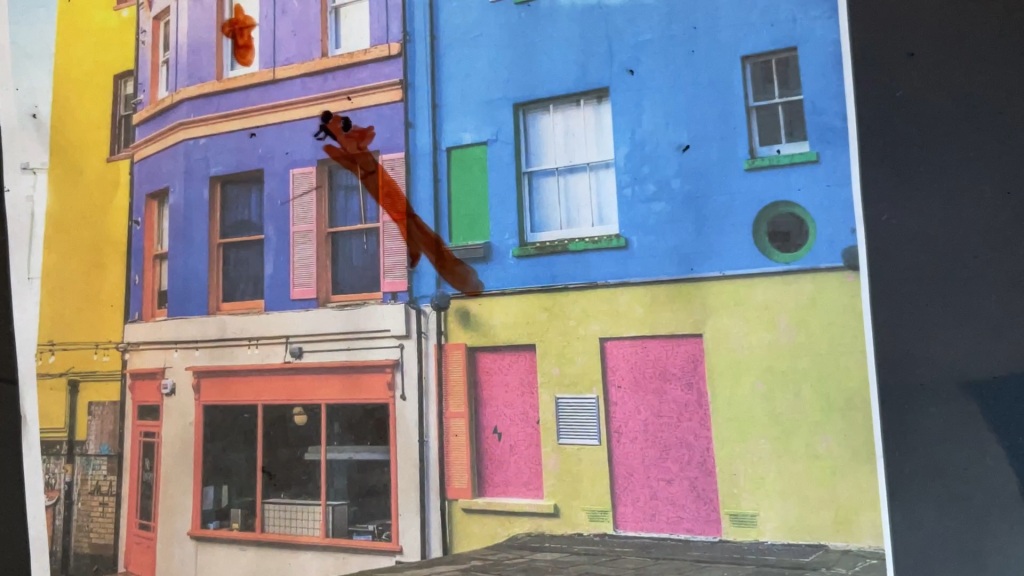


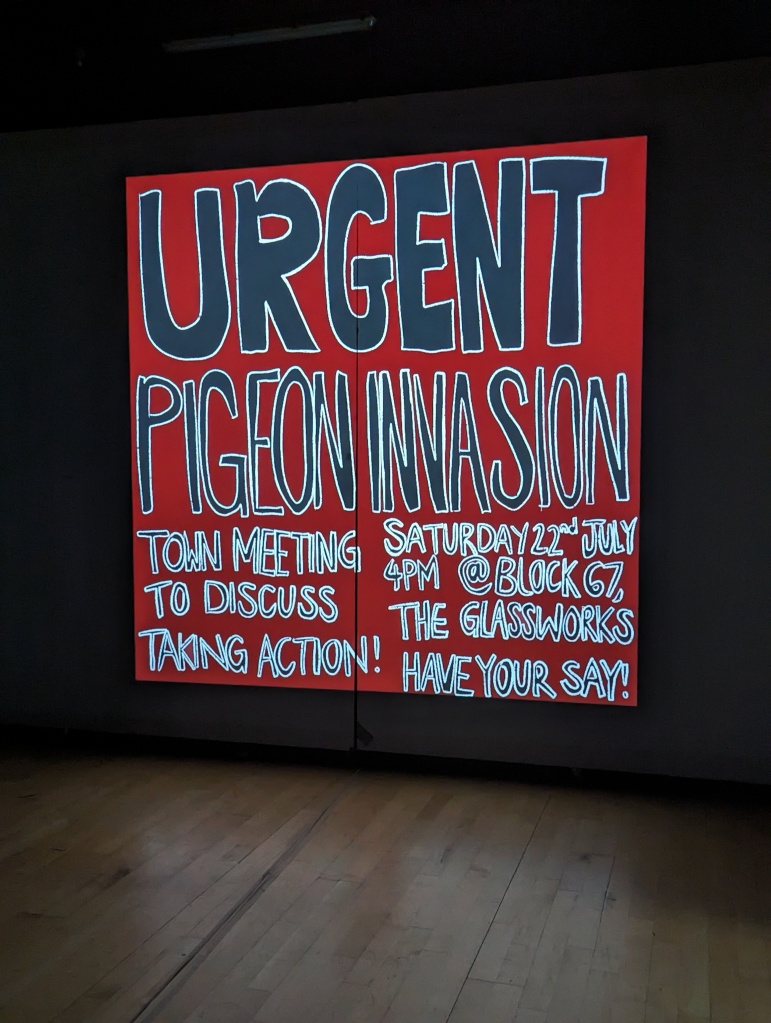




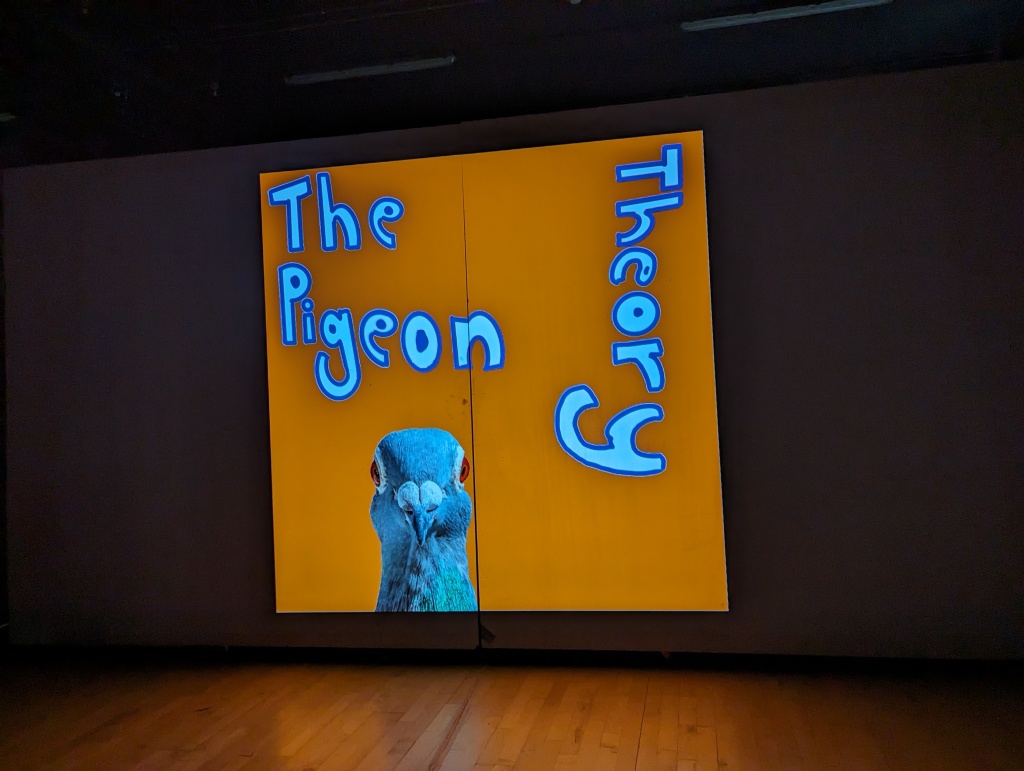

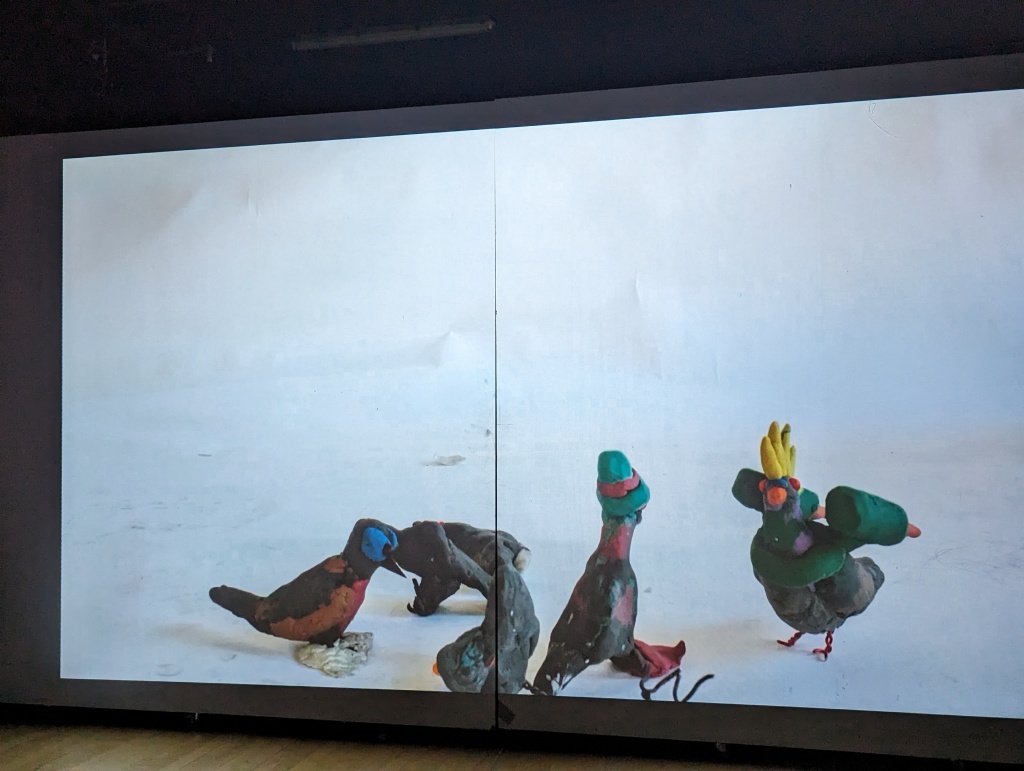

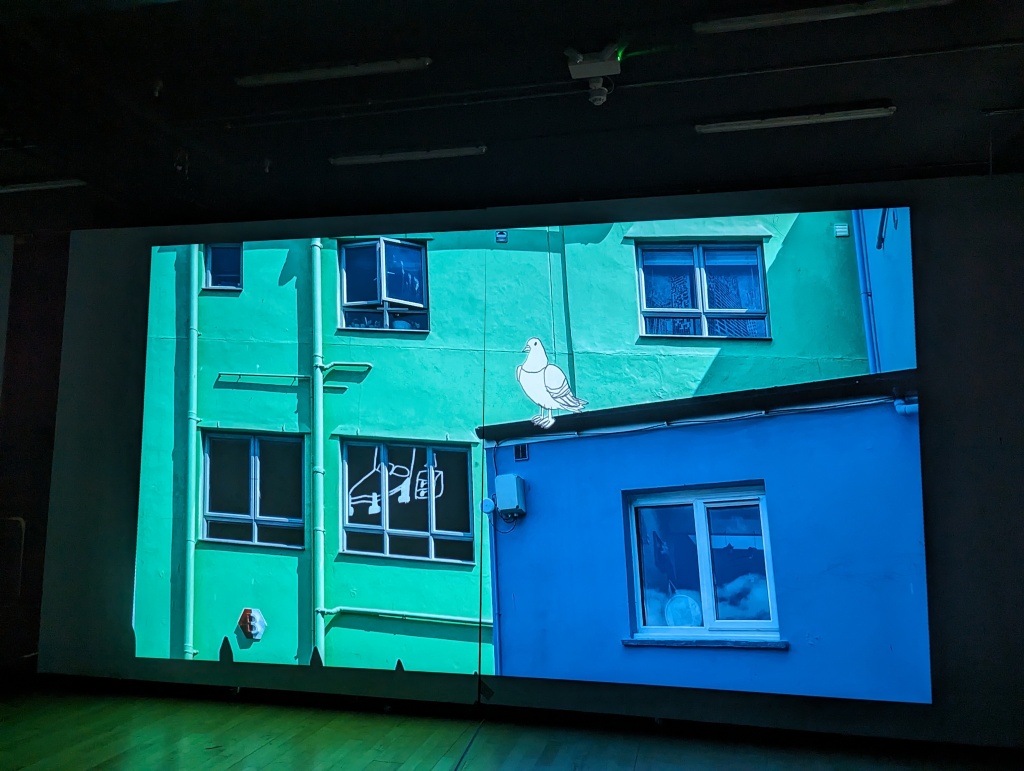
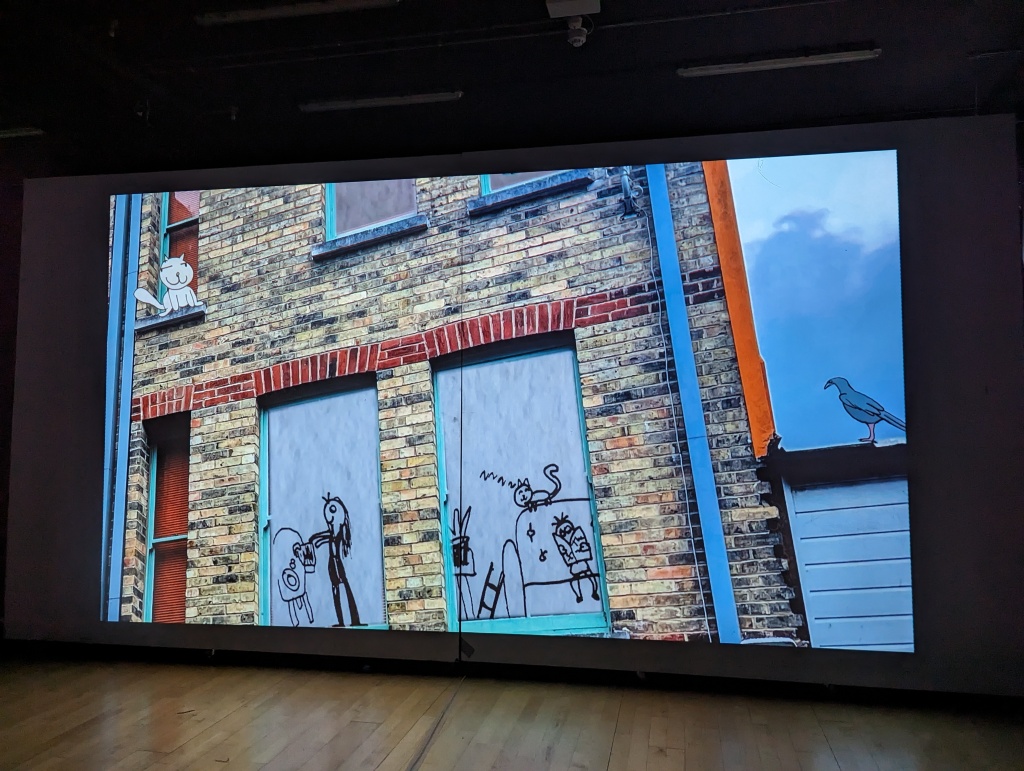
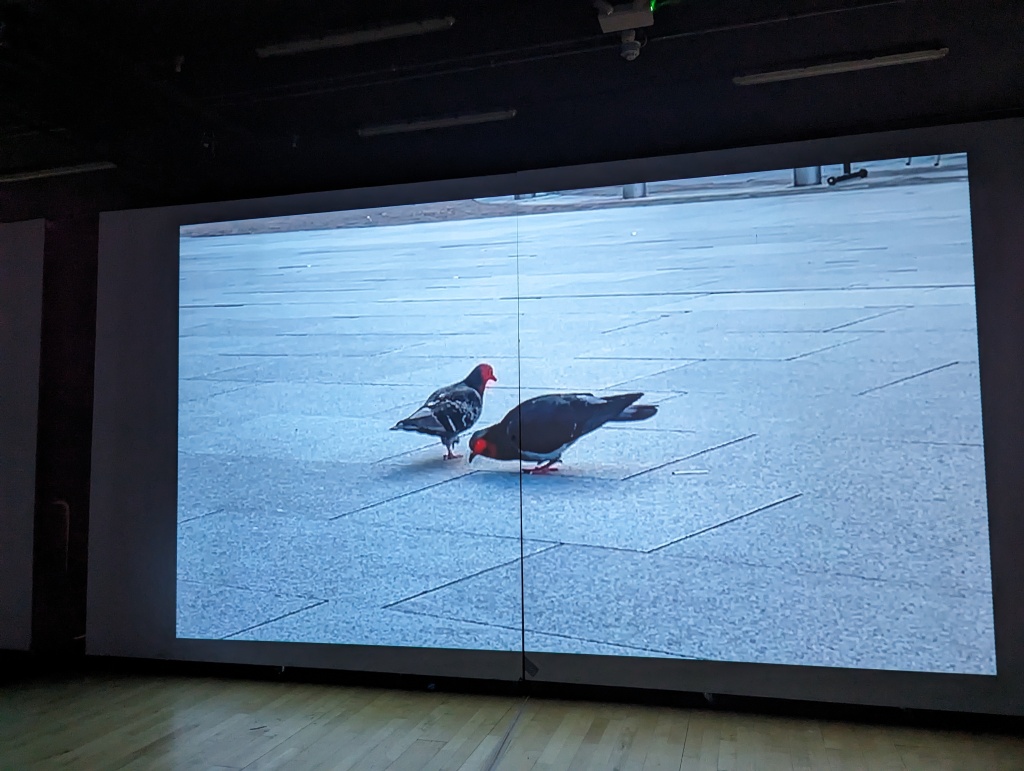


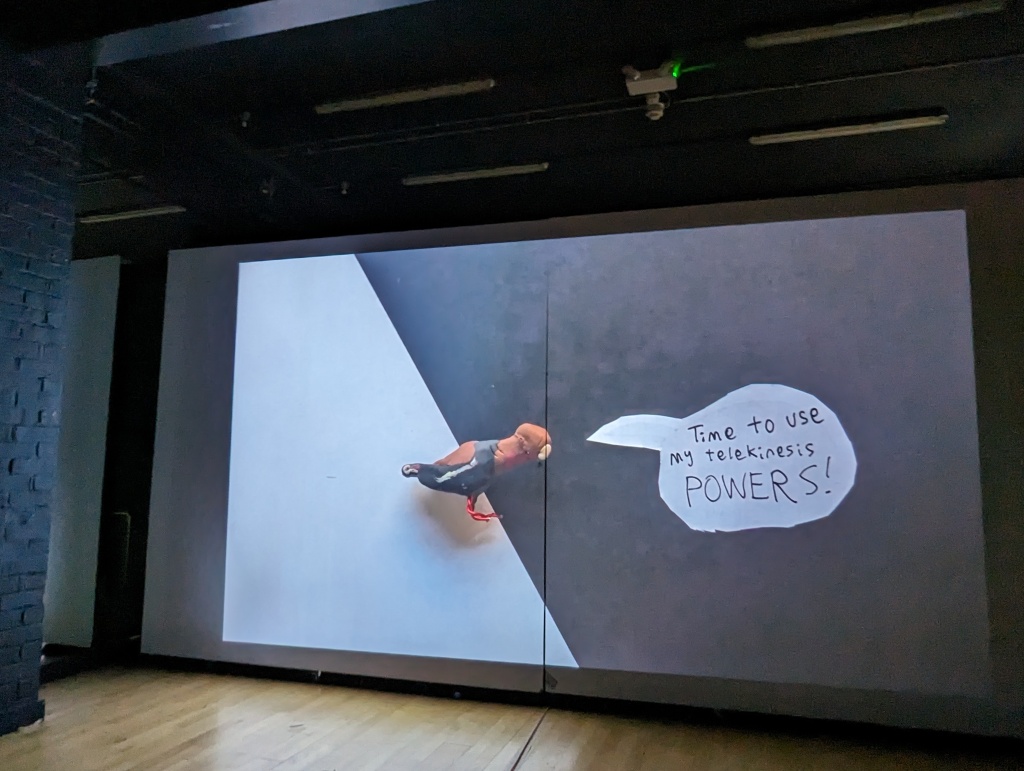


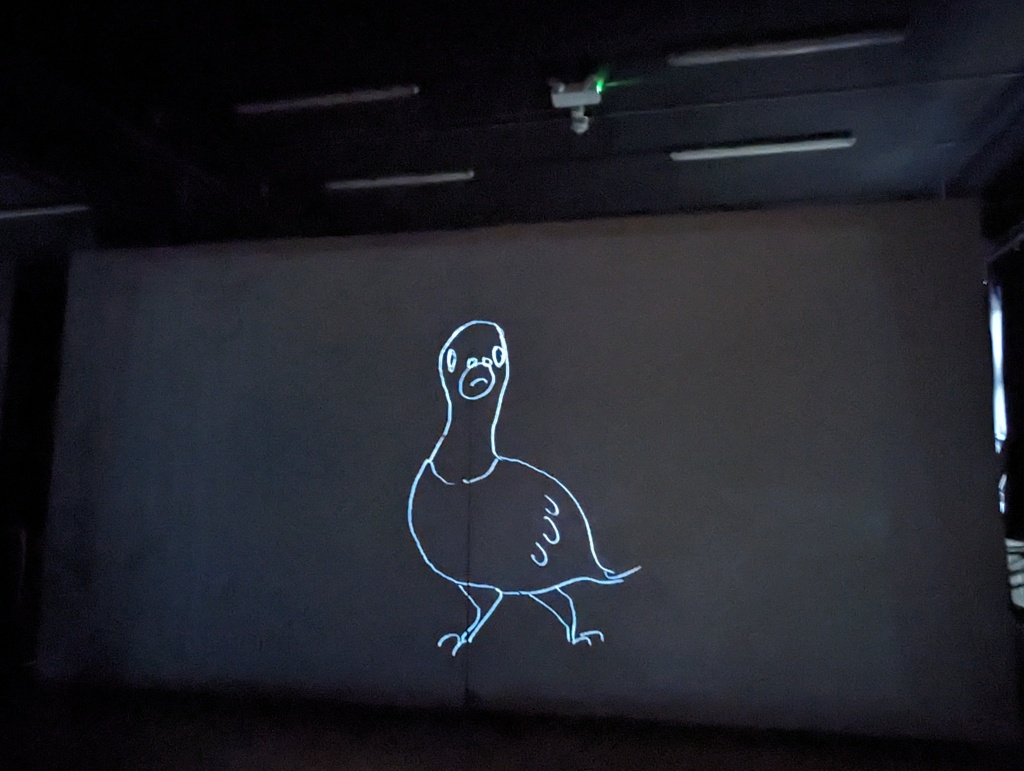


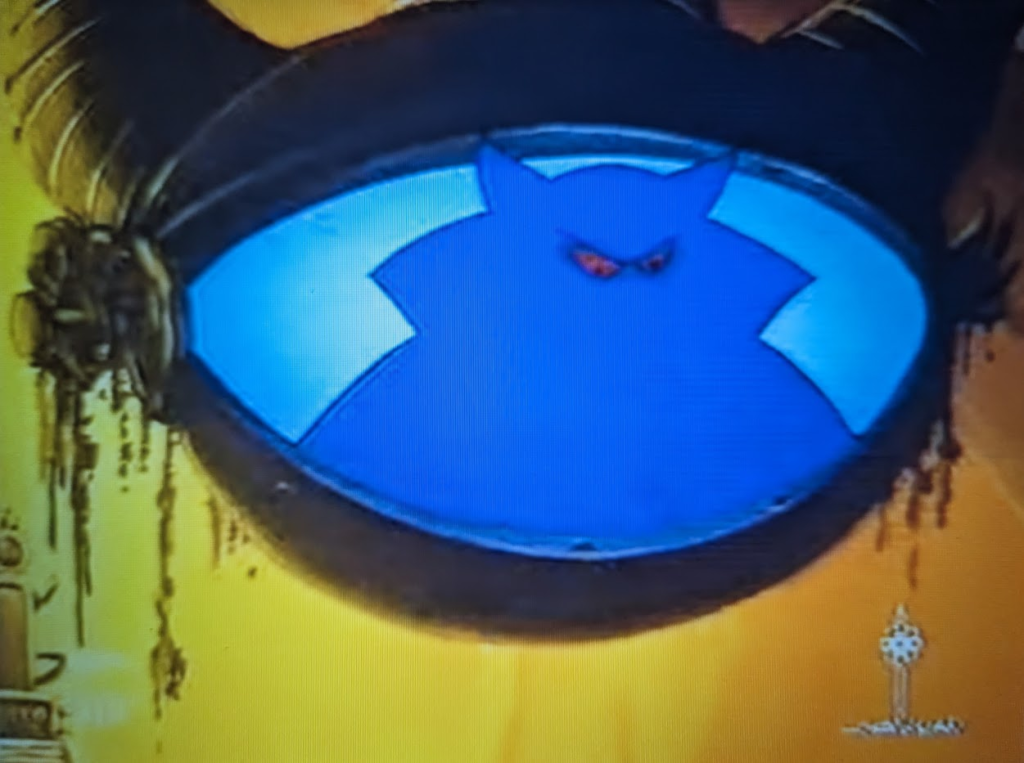


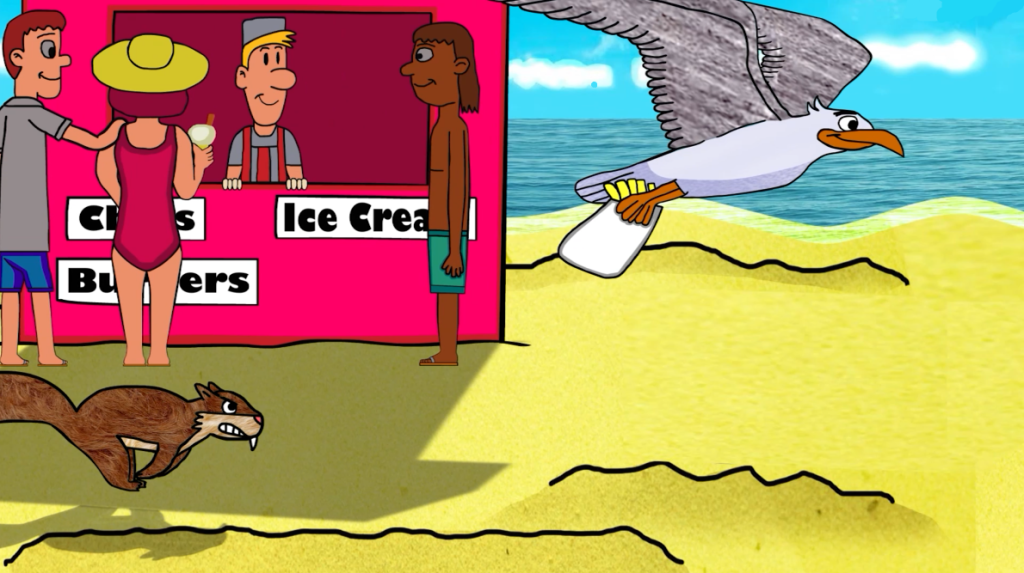


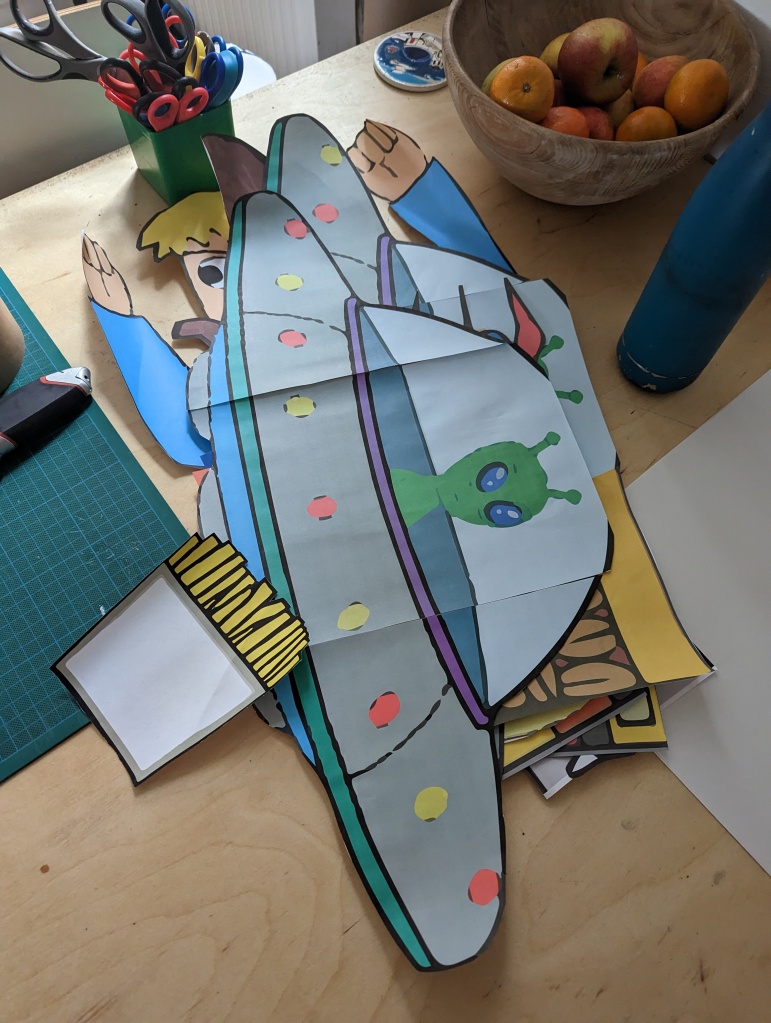


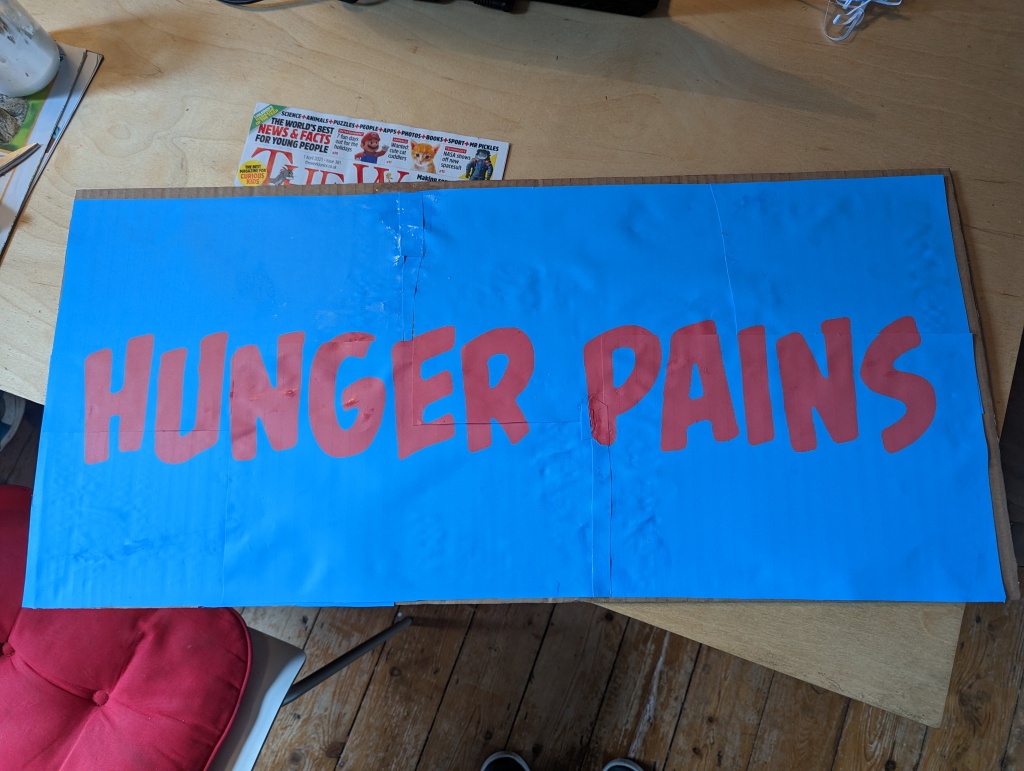


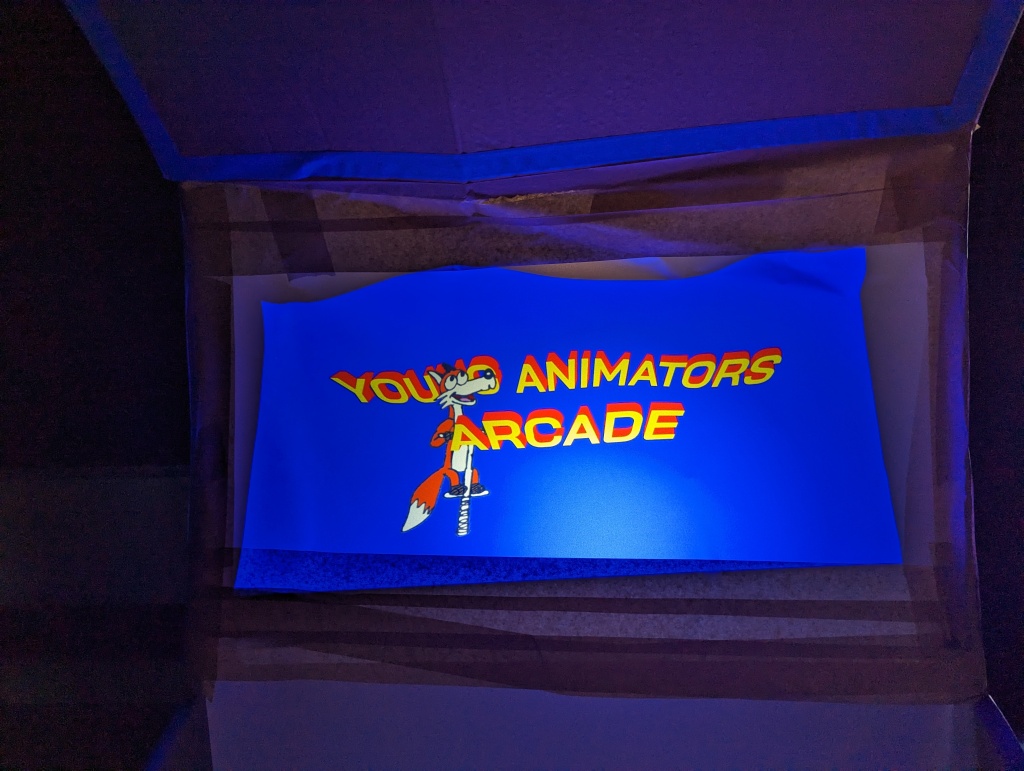
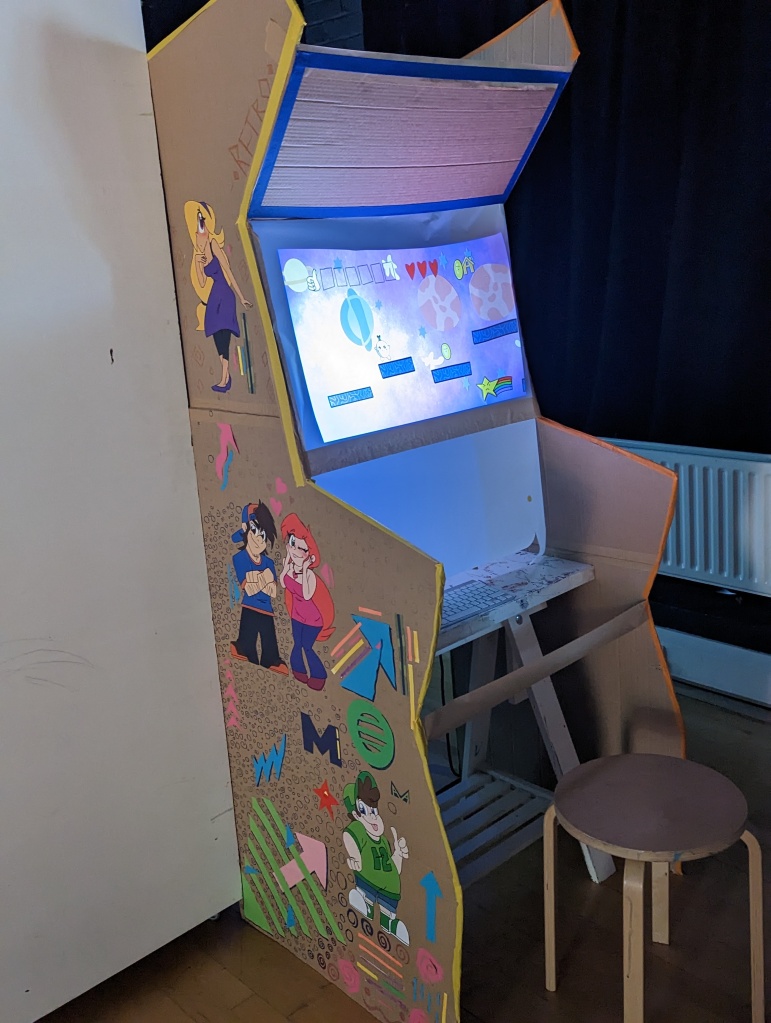


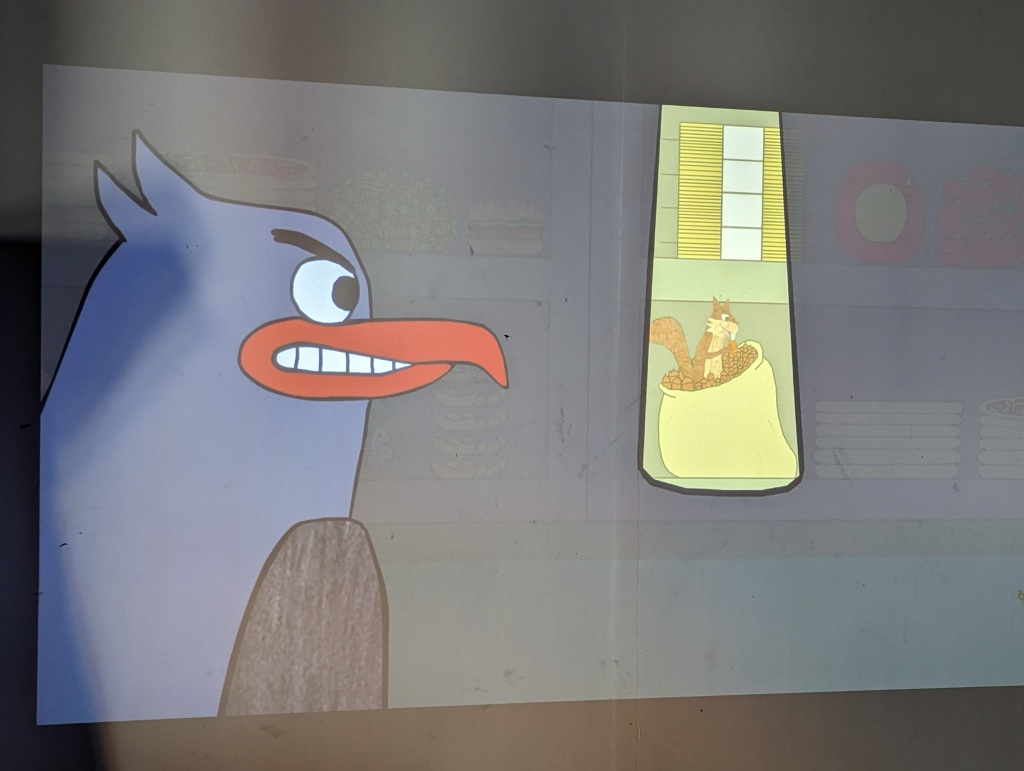


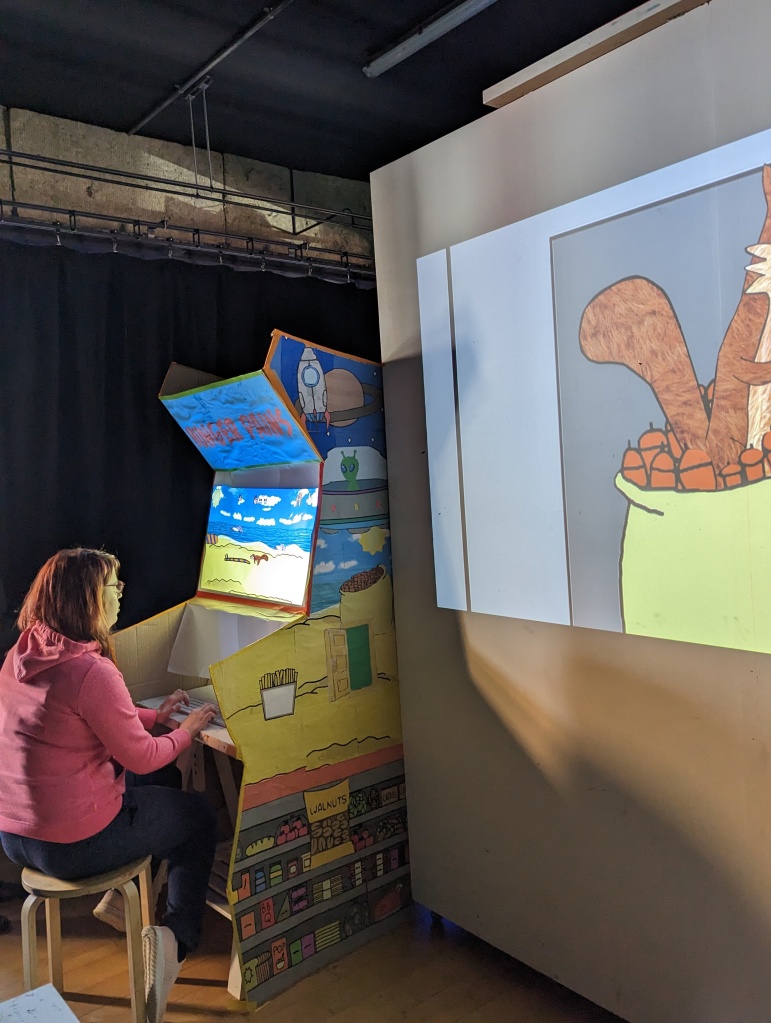
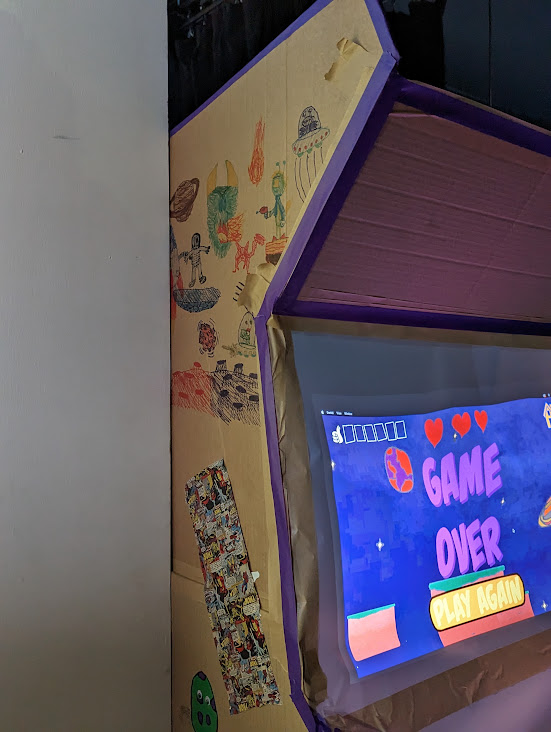


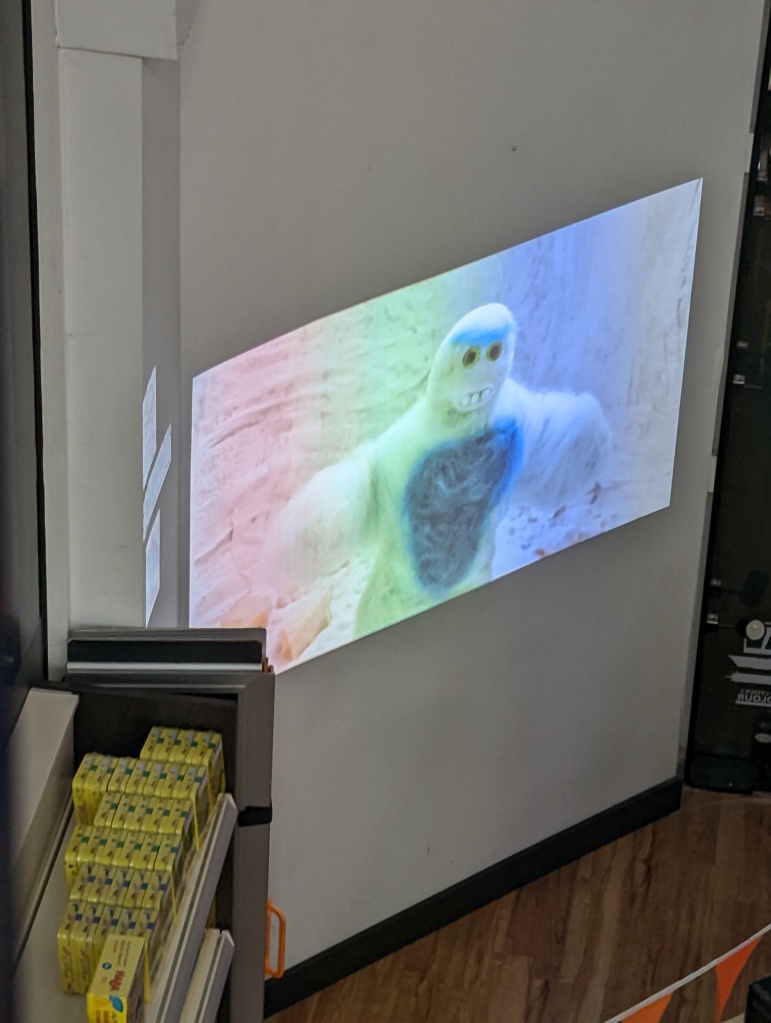
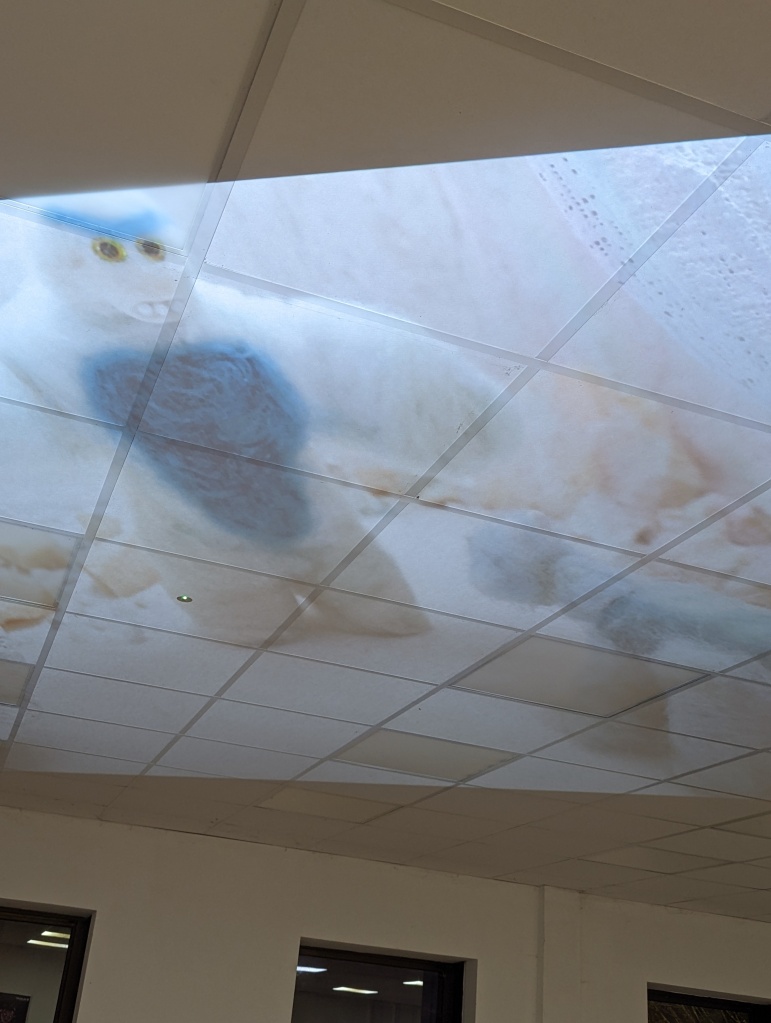


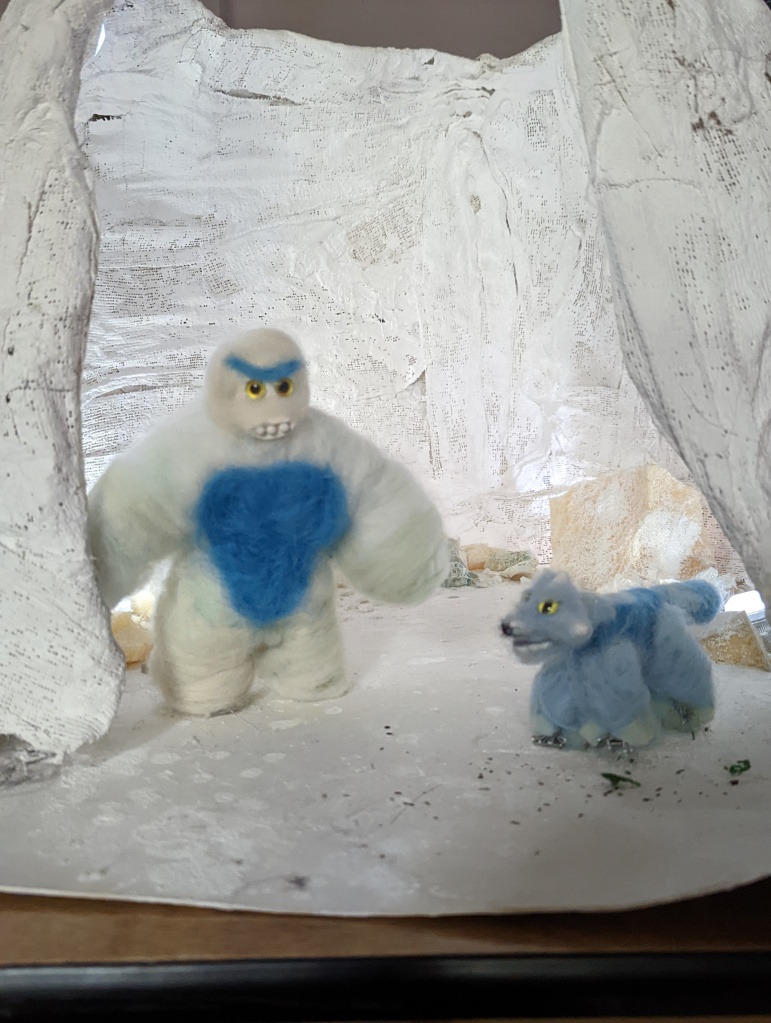
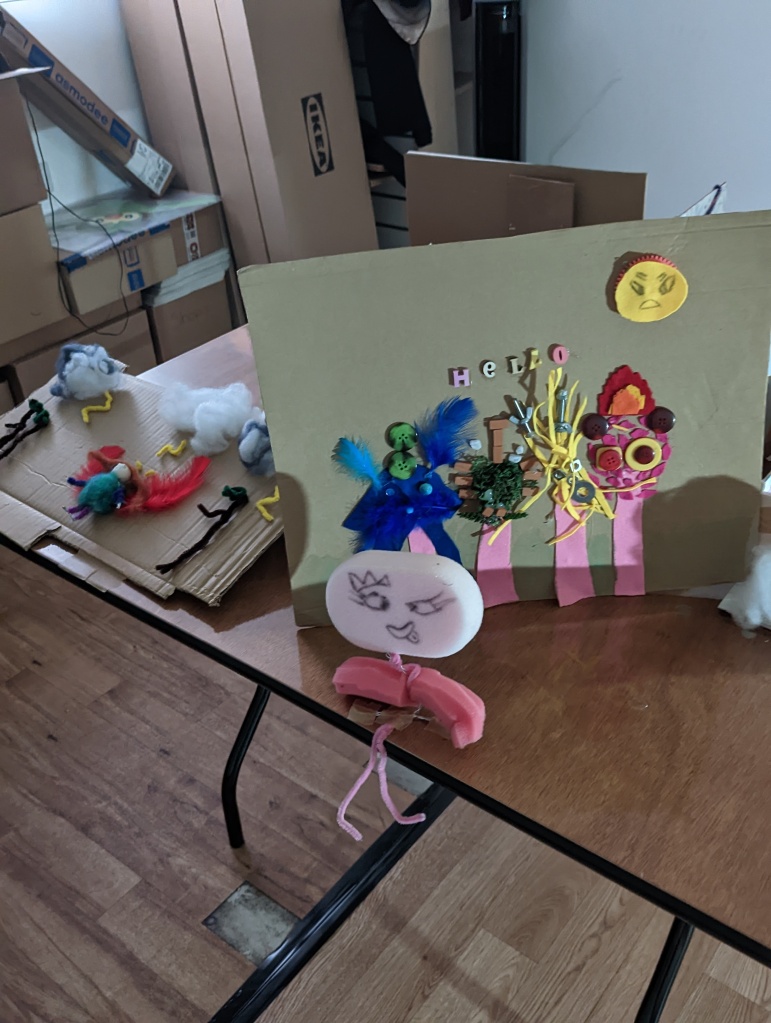


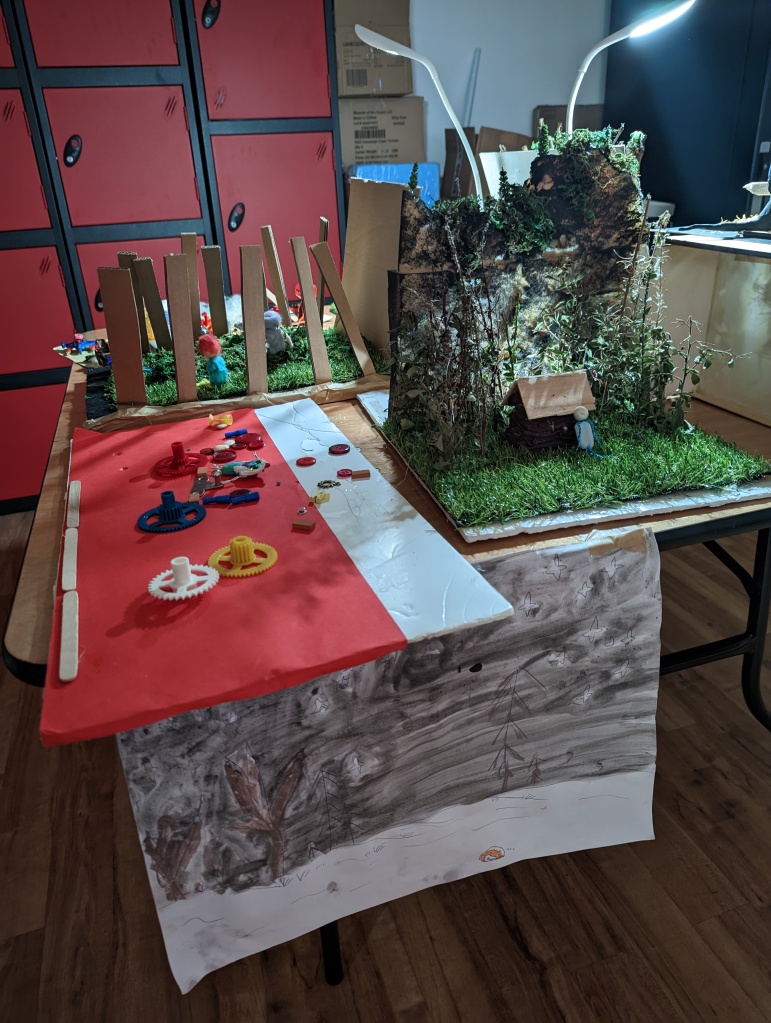


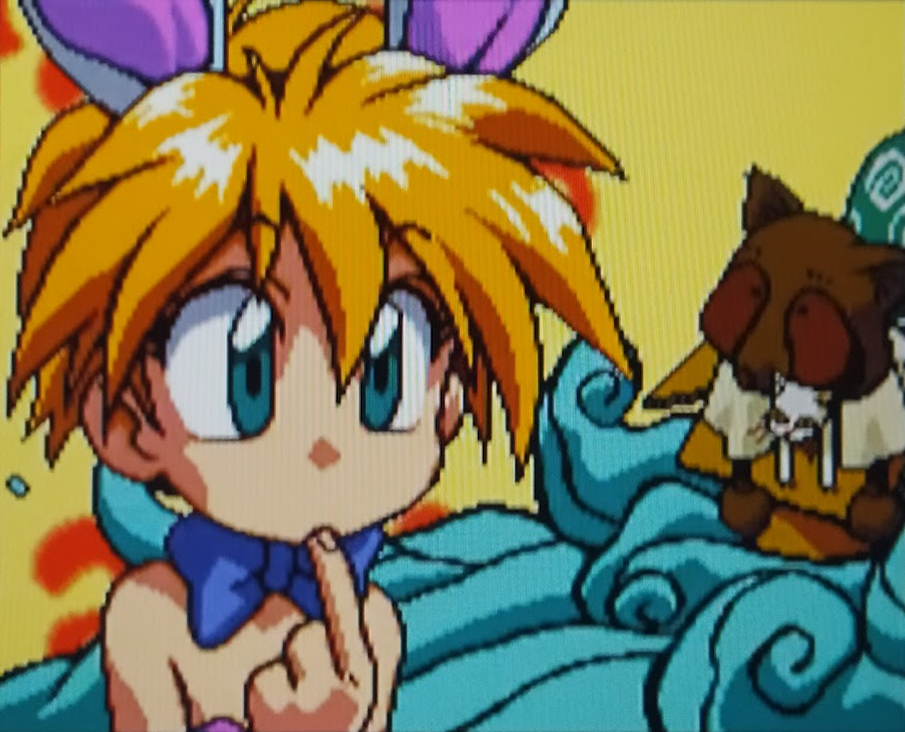
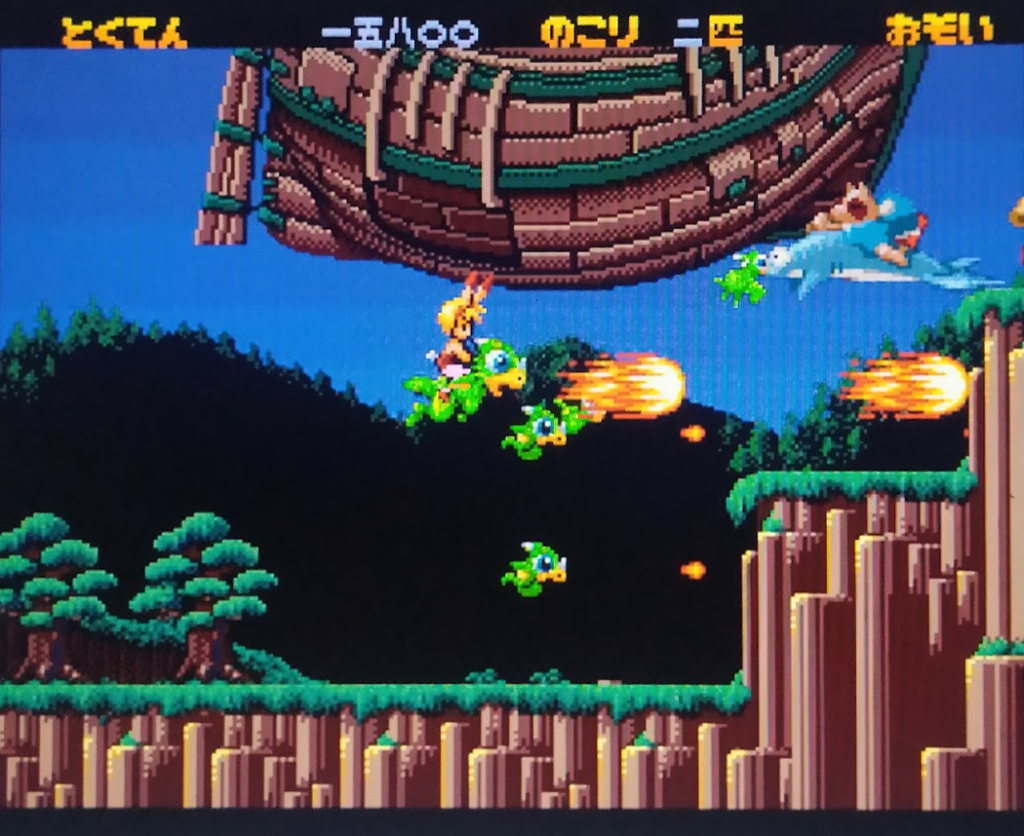
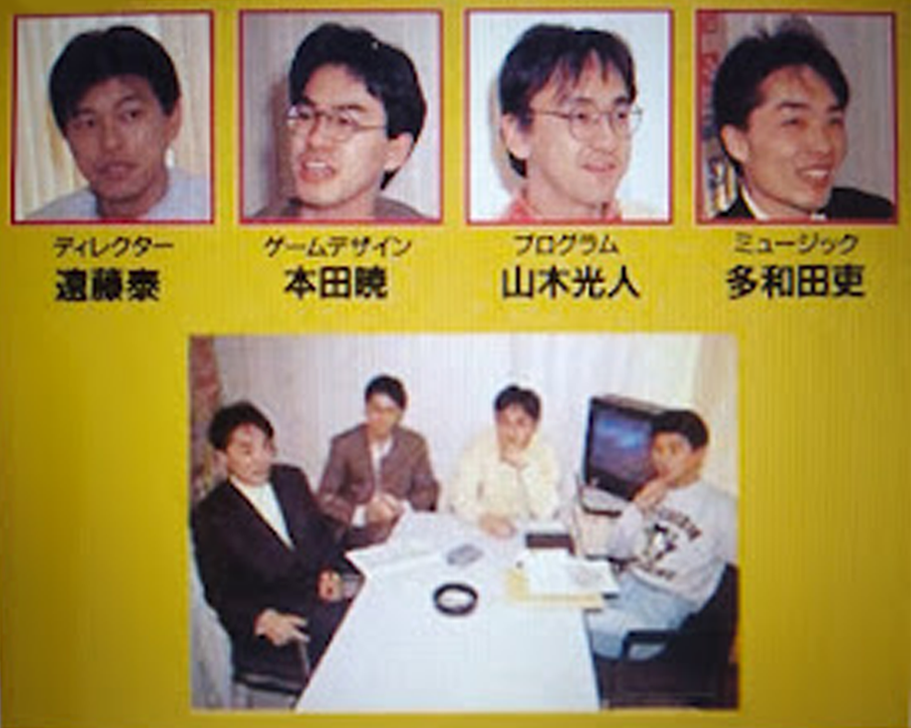


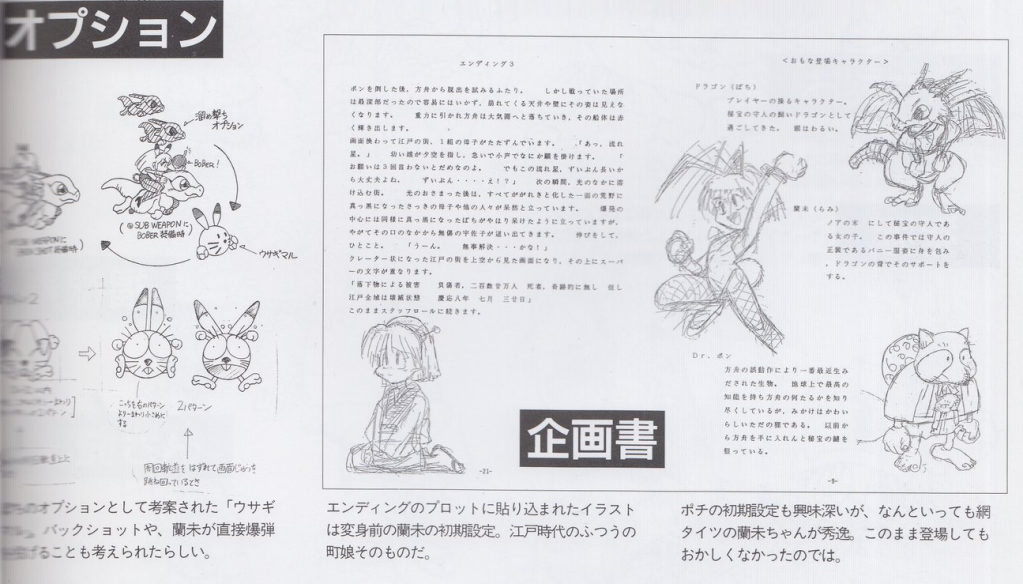


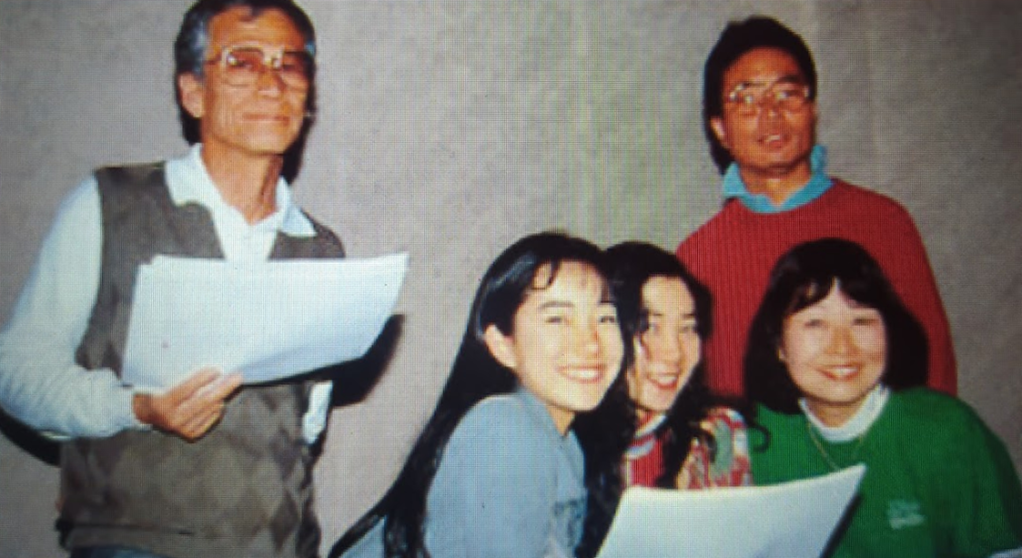


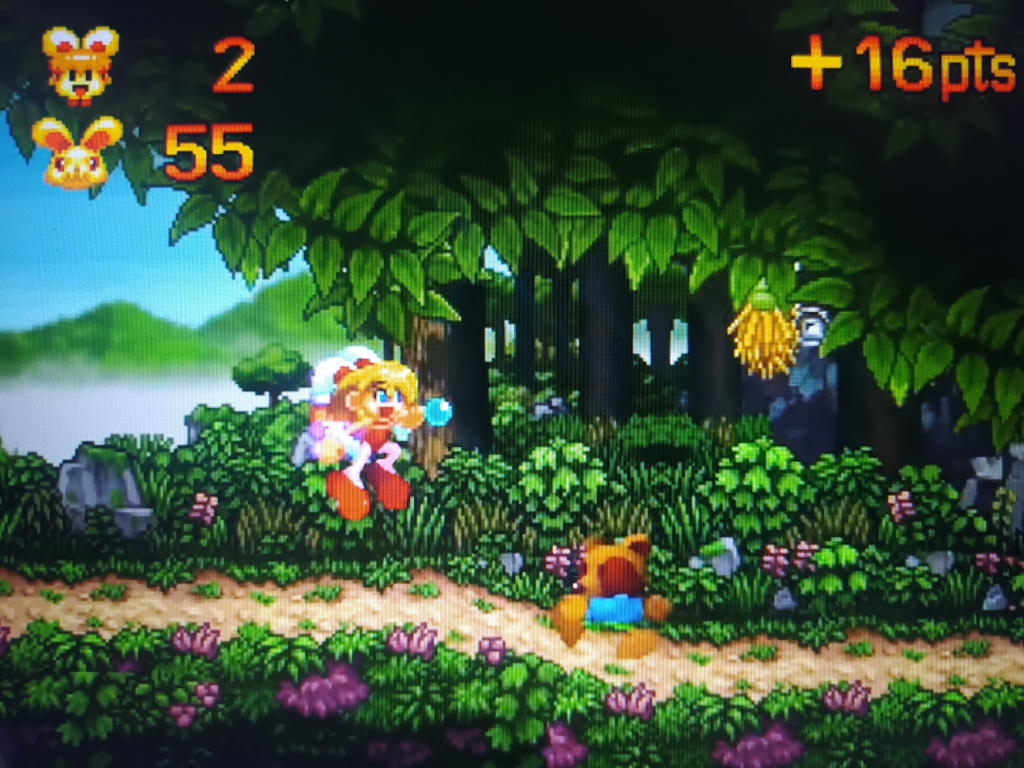
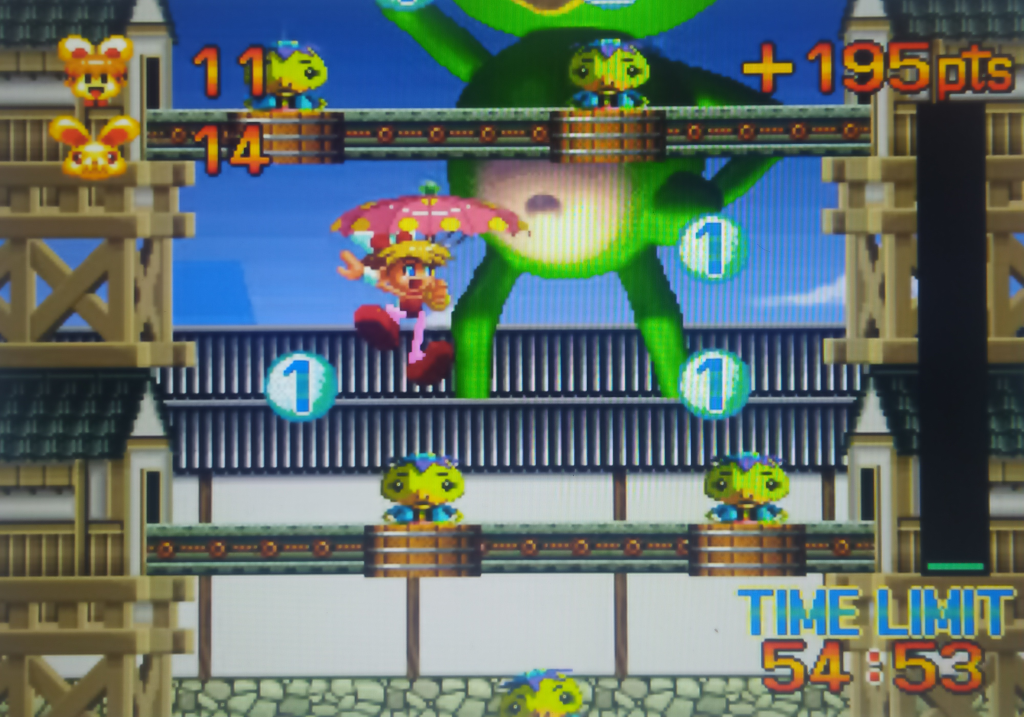

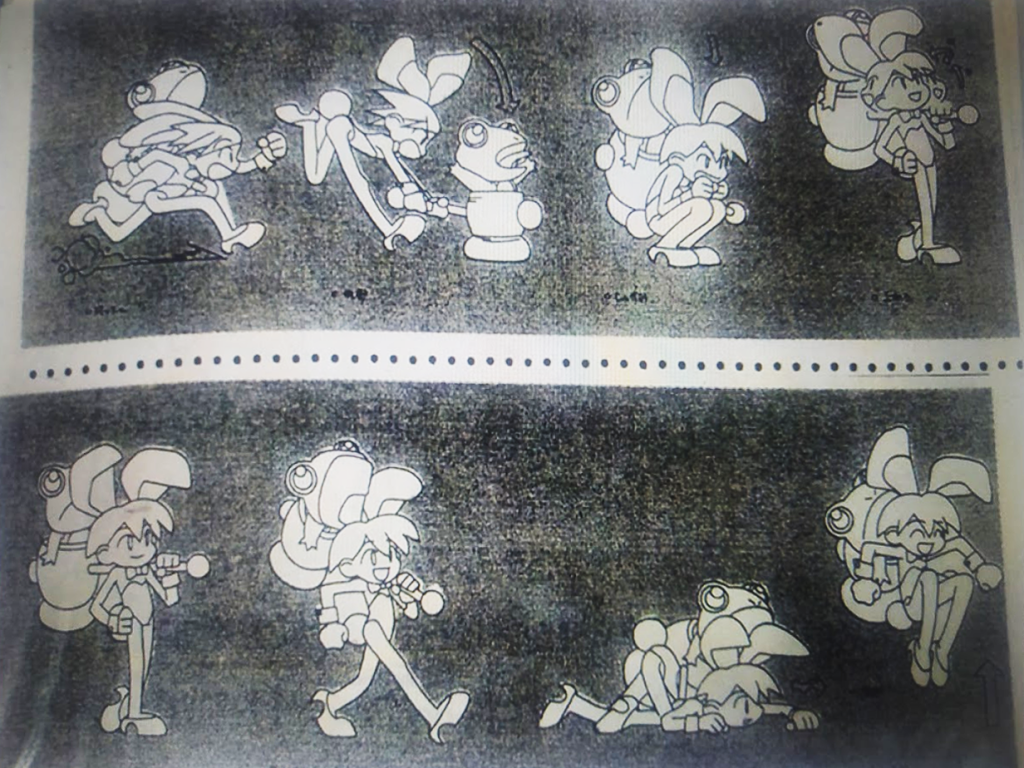
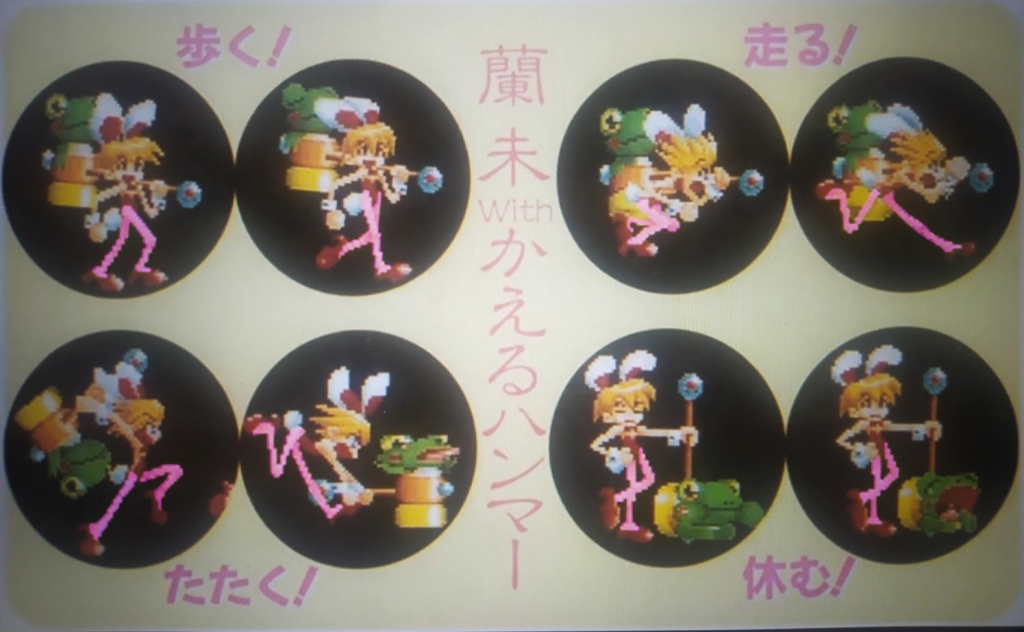

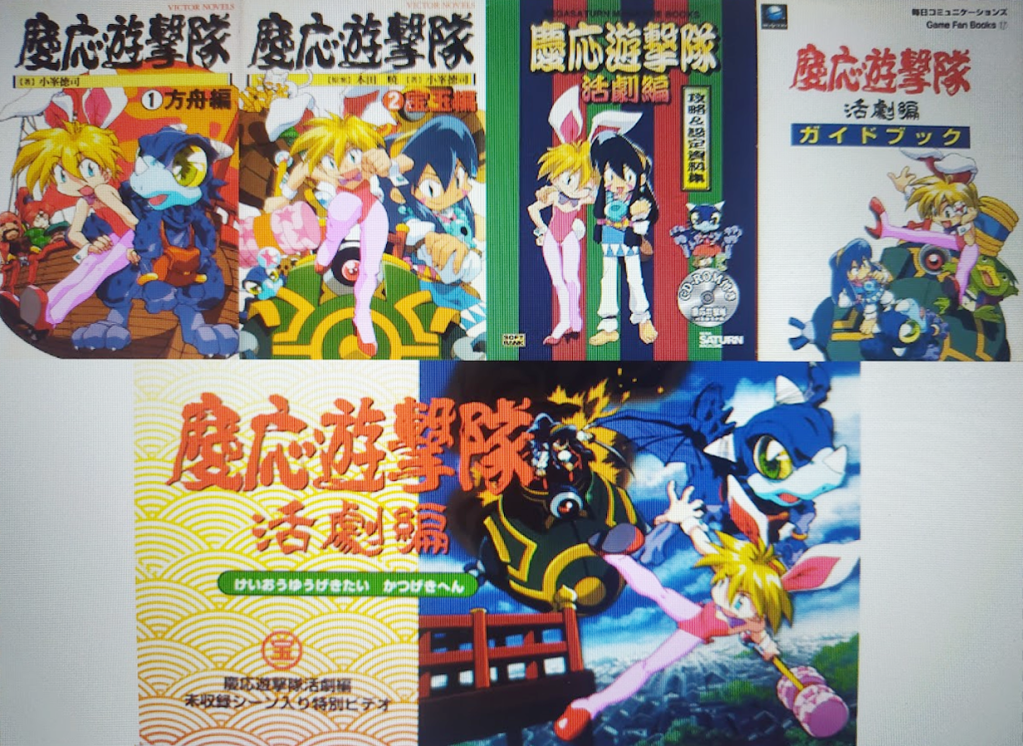


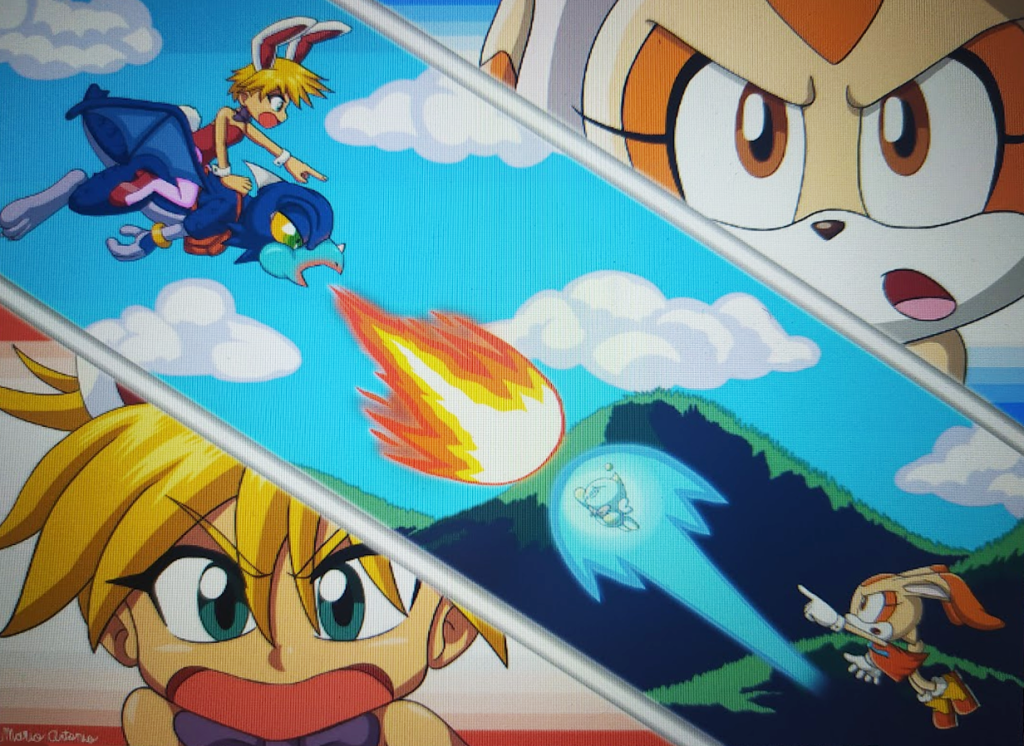

















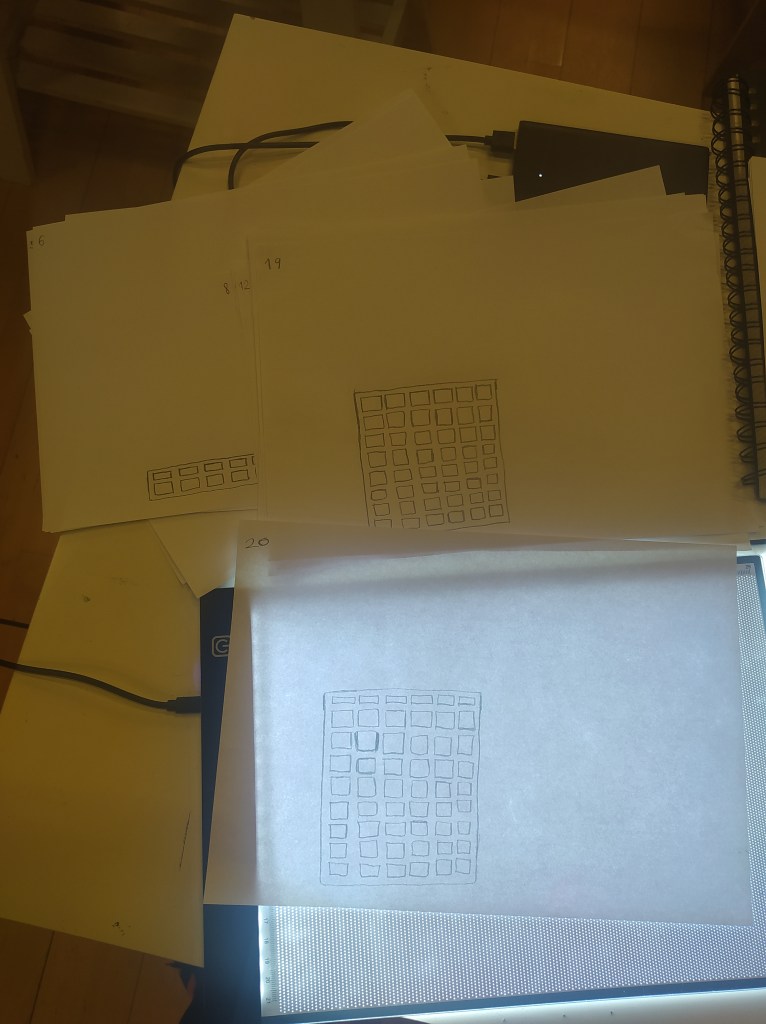


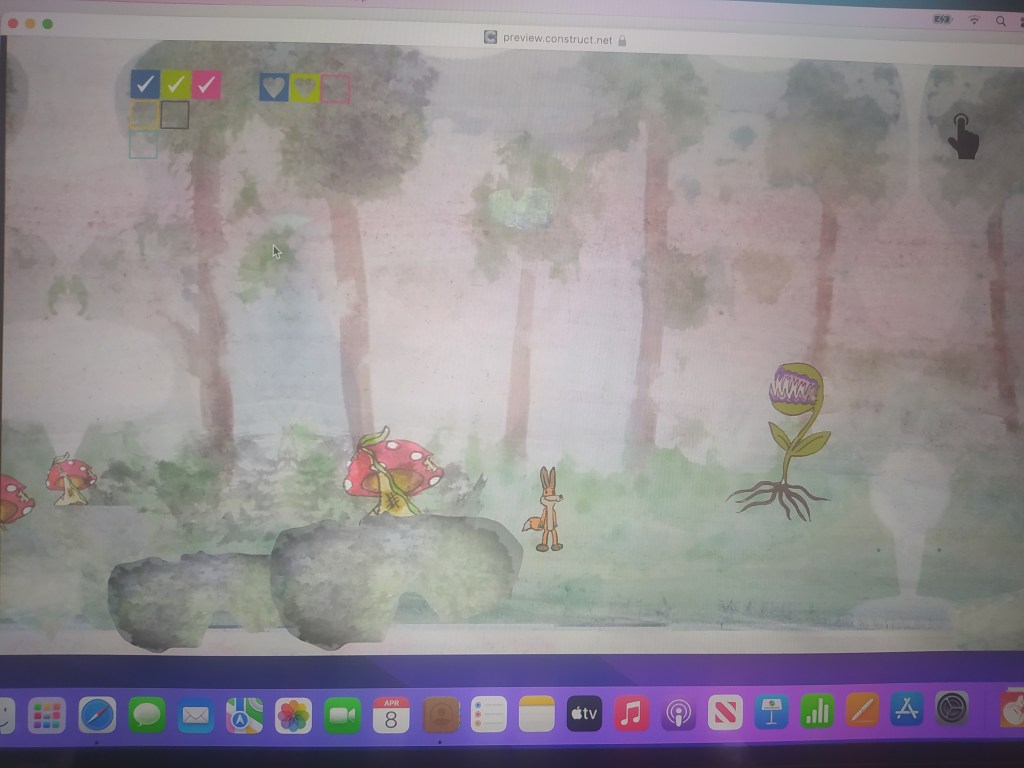



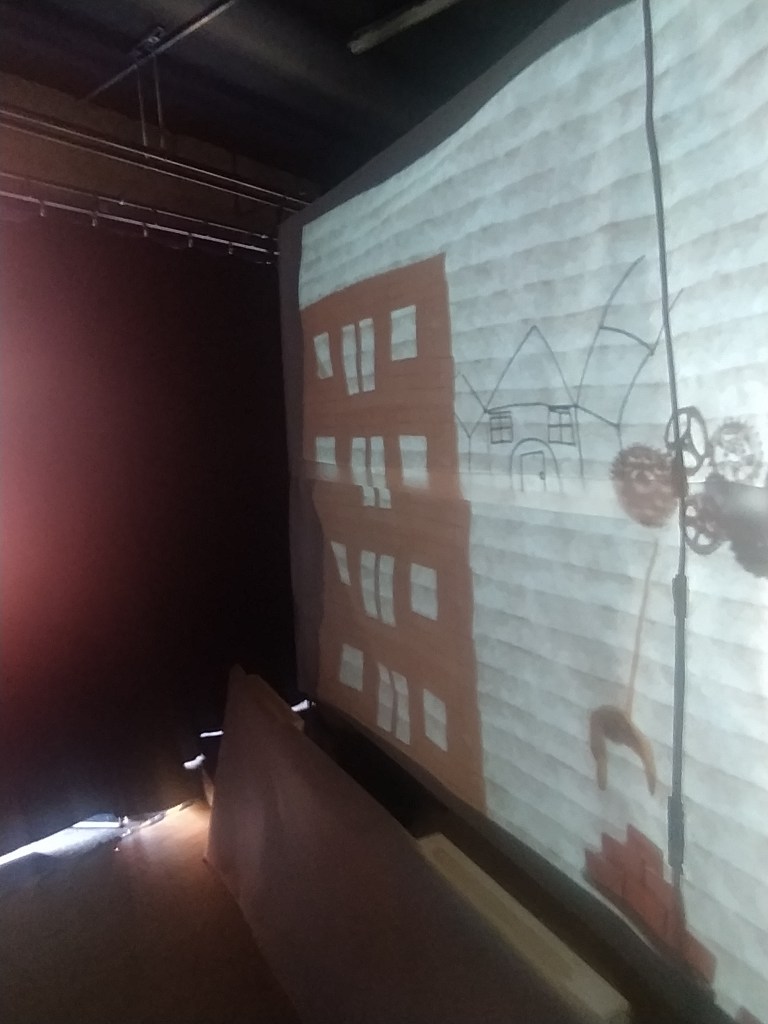
 mysuperendeavour
![[4]](https://www.soaringrabbit.com/kfs/res/books/kfsus_img/kfsus_7-8.jpg)
![[5]](https://animeartbookonline.com/wp-content/uploads/2018/09/IMG_9172.jpg?v=79cba1185463)
![[9]](https://www.soaringrabbit.com/kfs/res/books/kfsus_img/kfsus_11-12.jpg)
![[26]](https://web.archive.org/web/20230510212641/https://p1-d9ebd2ee.imageflux.jp/c%21/w=1280,h=1280,a=0,u=1,q=75/101026/IMG20230504194400.jpg)
![[29]](https://www.soaringrabbit.com/kfs/res/packaging/kfsjapdemo_coverinserts.jpg)
![[44]](https://www.soaringrabbit.com/kfs/res/books/kfs2pal_img/kfs2pal_4-5.jpg)
![[46]](https://www.soaringrabbit.com/kfs/res/books/kfs2pal_img/kfs2pal_6-7.jpg)
![[47]](https://www.soaringrabbit.com/kfs/res/books/kfs2pal_img/kfs2pal_8-9.jpg)
![[64]](https://www.soaringrabbit.com/kfs/res/books/kfs2pal_img/kfs2pal_14-15.jpg)
![[73]](https://web.archive.org/web/20230102211231/https://static.mercdn.net/item/detail/orig/photos/m21850411377_3.jpg?1644745871)
![[94]](https://www.soaringrabbit.com/kfs/res/books/rami_img/rami_1-2.jpg)
![[100]](https://www.soaringrabbit.com/kfs/res/books/rami_img/rami_27-28.jpg)
![[200]](https://www.soaringrabbit.com/kfs/res/books/kfsus_img/kfsus_13-14.jpg)
![[203]](https://www.soaringrabbit.com/kfs/res/books/kfs2pal_img/kfs2pal_10-11.jpg)
![[229]](https://animeartbookonline.com/wp-content/uploads/2018/09/IMG_9171.jpg?v=7516fd43adaa)
![[283]](https://www.soaringrabbit.com/kfs/res/books/kfsus_img/kfsus_15-16.jpg)
![[314]](https://animeartbookonline.com/wp-content/uploads/2018/09/IMG_9173.jpg?v=7516fd43adaa)
![[371]](https://www.soaringrabbit.com/kfs/res/books/rami_img/rami_5-6.jpg)
![[403]](https://mysuperendeavour.uk/wp-content/uploads/2022/12/89ba4-keio_flying_squadron_2528mega_drive2529_09.gif)
![[404]](https://mysuperendeavour.uk/wp-content/uploads/2022/12/8c75c-keio_flying_squadron_2_2528saturn2529_10.gif)
![[405]](https://www.soaringrabbit.com/kfs/res/books/kfsus_img/kfsus_9-10.jpg)
![[413]](https://mysuperendeavour.uk/wp-content/uploads/2022/12/8a9d1-keio_flying_squadron_2528mega_drive2529_36.png)
![[414]](https://mysuperendeavour.uk/wp-content/uploads/2022/12/02ae8-keio_flying_squadron_2528mega_drive2529_20.gif)


![[97]](https://i.ebayimg.com/images/g/7zkAAOSwnlll8hPT/s-l1600.jpg)