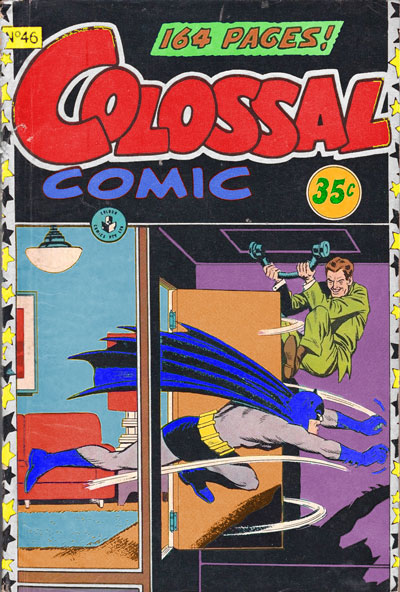
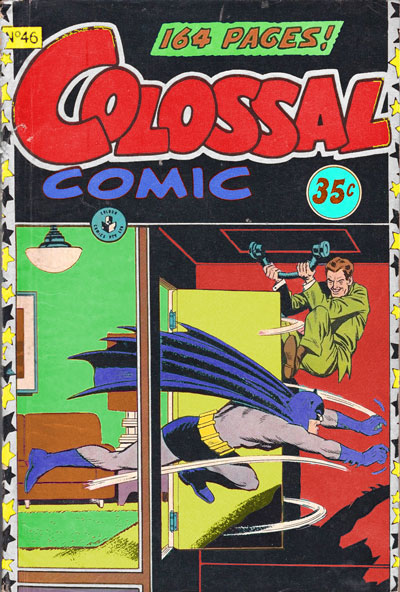
In September 2021, I had a Zoom session where I learned about changing the hue, saturation and value in images and saving copies of them, using Adobe Photoshop. I used Colossal Comic Issue 46 (1958). One version of the cover uses a split complementary colour scheme consisting of blue for the first wall and rug (emphasising action and the fact that Batman is a superhero running out of the room in pursuit of a criminal), purple for the second wall (emphasising that the villain is hiding behind the room’s door), and orange for the carpet and door (emphasising Batman’s surprise at the criminal’s presumed trap and the reader’s surprise upon seeing the events occur). With this one I did not stick to any colour rules. Another version uses an analogous colour scheme consisting of red for the second wall, yellow for the couch, picture and lamp, and green for the first wall and rug, with the same emphasis as the first version. The third version uses a triadic/analogous colour scheme consisting of blue for the couch, picture and lamp, purple for the first wall and rug, magenta for the stars on the cover’s border, orange for the carpet and door, and green for the second wall. I think that the first edit would work best, because of its alternate colours, including blue for the room’s first wall and rug, which fits with Batman’s hero status, since he is shown running out of the room into the villain’s trap. In comparison to the original, the blue colour has a bigger emphasis on action, in contrast to the yellow colour in the original.
In September 2021, I had a Zoom session where I learned about the use of colour in visual communication. I learned about primary colours and complementary colours from looking at a colour wheel.
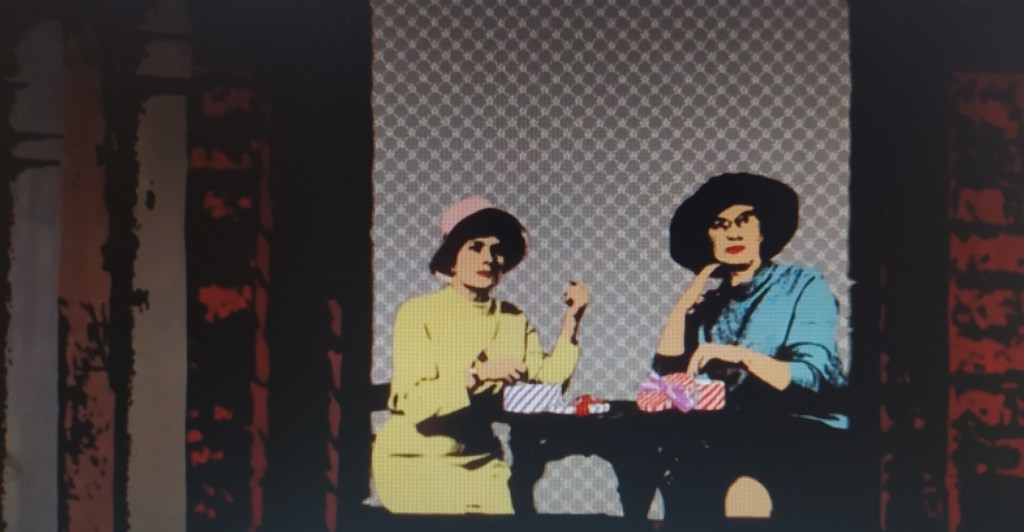
The first image from Yellow Submarine (1968) uses an analogous colour scheme, consisting of bright and cheerful, saturated colours like yellow, orange, red and pink for the submarine, and darker colours like brown, grey and desaturated blues and greens for the buildings, street lamp and man. The second image uses a complementary colour scheme consisting of a dark green for the football grounds and red for the football players to emphasise action, excitement and participation, against the dull, grey sky. The submarine’s inclusion in the first two images makes it feel like it is from a different world, opposite the subdued, moody landscape. The third image uses a triadic colour scheme consisting of enthusiastic yellow and blue colours for the ladies’ clothes to illustrate confidence and friendship as they look at the person taking a photograph of them, in contrast to the supposedly ‘dull and grey’ background, and red for the building.
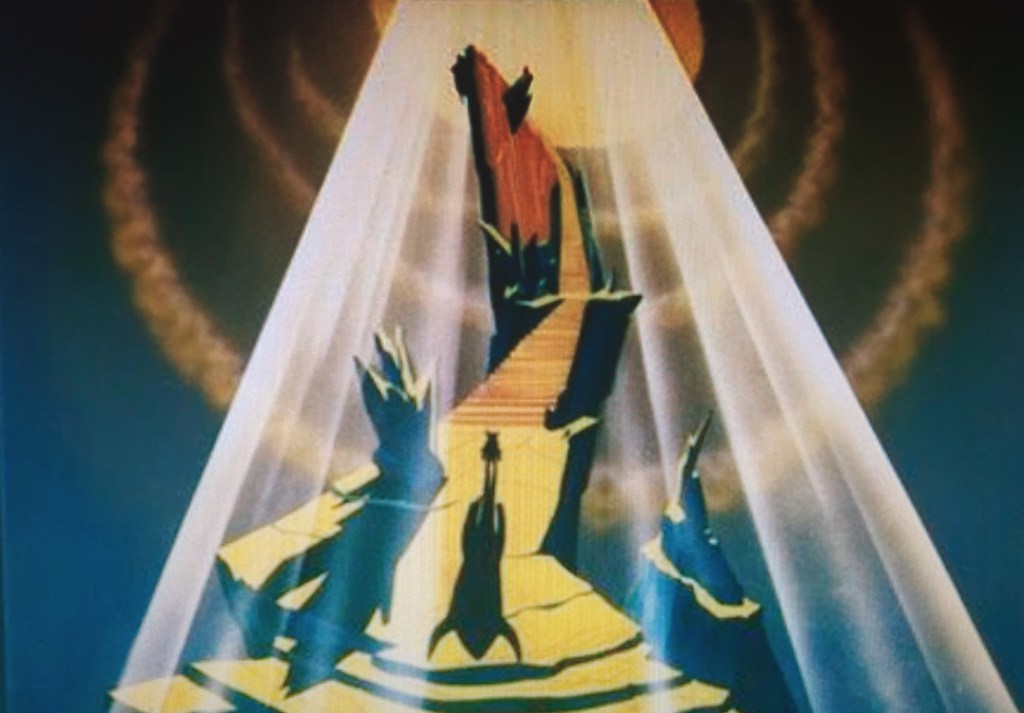
The first image from What’s Opera, Doc? (1957) uses a triadic color scheme consisting of blue-green for the small hill, yellow for Elmer Fudd’s Wagnerian Viking armor, and pink for the sky and Bugs Bunny’s sleeves and skirt, emphasizing love, playfulness and innocence. The second image uses a complimentary (initially thought to be analogous) color scheme consisting of black, blue-green and brown for the sky and shadows and a bright yellow for the mountain, stairs and shining sun, giving it a harmonious appearance and emphasizing entering the afterlife.
This image of Colossal Comic Issue 8 (1958) uses a triadic colour scheme consisting of blue for ‘COLOSSAL’, red for ‘148 PAGES!’ and ‘COMIC’, and yellow for the background, emphasising that Superman, Batman and Robin are all superheroes, with the reader’s eye being drawn around the cover’s composition in a bit of a spiral, which consists of Superman holding a camera and flying (emphasising action), Robin taking a photograph of Superman with a camera, Batman taking a photograph of Robin with a camera, and the comic’s title ‘COLOSSAL’. The artist specifically guides the reader to look at the whole of the design in that order.
This image of The Three Month Rule uses a split complementary colour scheme consisting of a bold red colour for the woman’s shirt and earring, orange for the skin and green for the background. These three primary colours, along with the woman being on her own on the cover, compliment to the book’s title, suggesting and emphasising strength and determination to follow the rule.
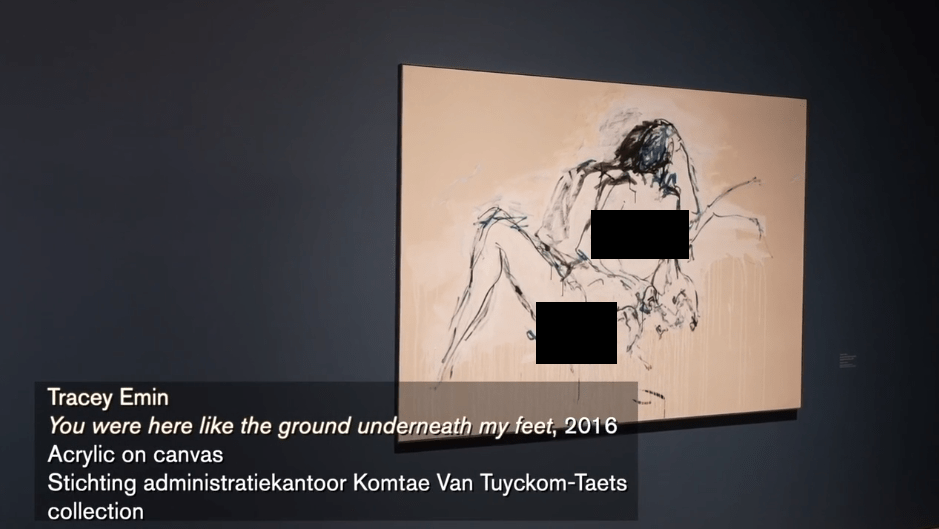
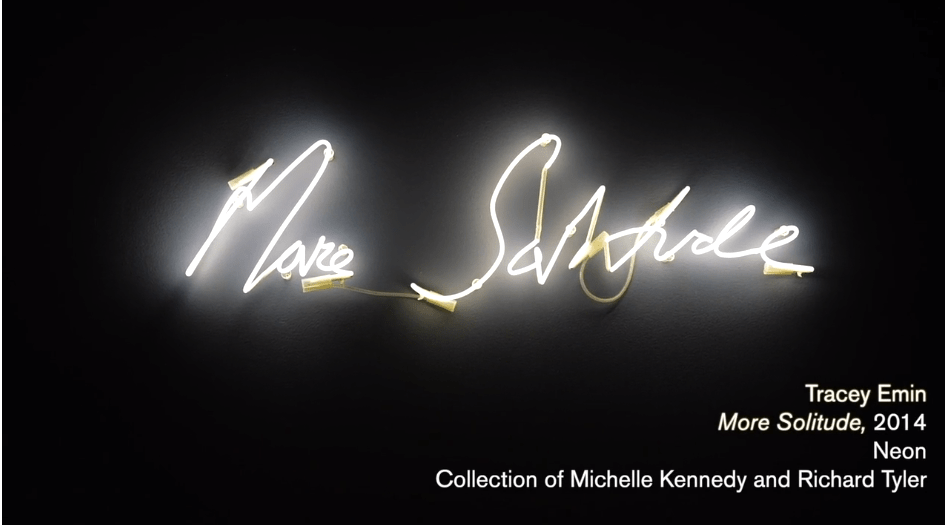
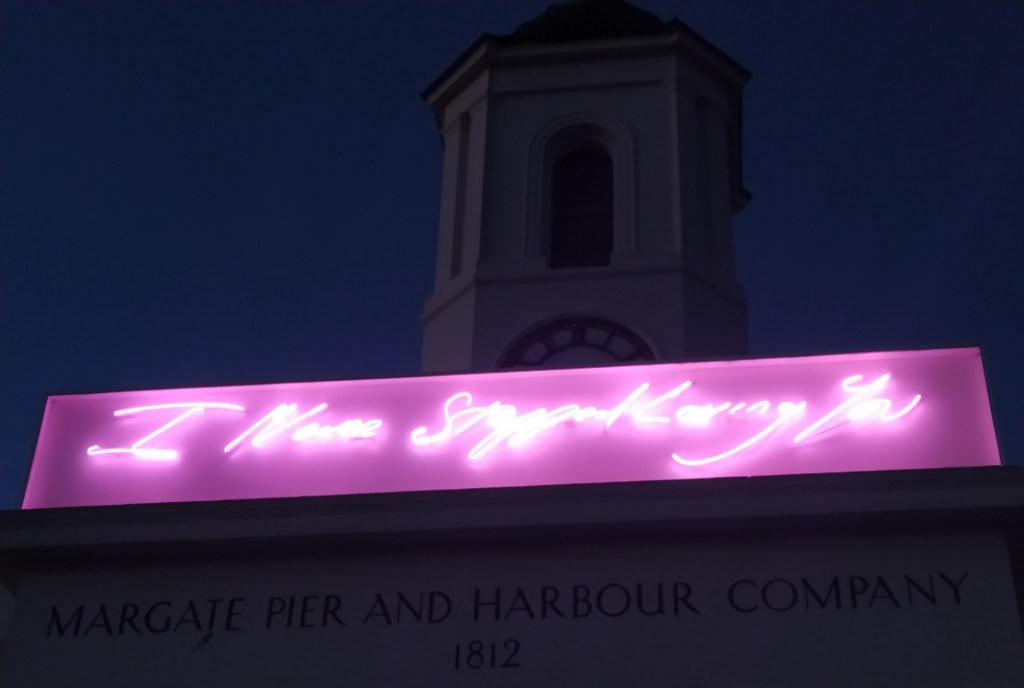
On 1 April 2021, I took a virtual/visual tour of an exhibition of the works of established English artist Tracey Emin and Norwegian expressionist and painter Edvard Munch at 5:55pm. The tour is part of a larger exhibition that people can visit in person from May 2021. There I saw a variety of paintings and other works of art. The art forms involved are paintings, writing, sculptures and neon lights (the paintings were made using oil paint, crayon, acrylic paint, pencil, watercolour paint, neon lights (normal and white) and bronze with white patina). I found the work fascinating.
I liked the usage of different art styles in Emin’s and Munch’s paintings because it helps give a variety to their expressions. I did not like the fact that due to the tour being virtual, you can’t see the names of the artists next to their work, making it difficult to identify which paintings are by Emin or Munch. It was impossible to get up close to the works of art as one would if you visited a gallery in person because this is a virtual tour. It is also impossible to zoom in to get a clearer look. The unexpected thing in the exhibition was the powerful use of explicit, personal, adult language and content explored in Emin and Munch’s works.
The exhibition made me feel empathetic towards Emin and Munch, because their work, explicit messages in their art and the titles of the art pieces paint a very clear picture of their interpretation of their early lives and their feelings. Out of the two artists in the exhibition, I think that Emin’s childhood has had a huge influence on her.
Artists can use different techniques and mediums of art like watercolour, pencil, acrylic paint and neon text for their work. At age 18, Emin became aware of and was fascinated by Munch’s work. She felt an infinity with him and saw him as ‘a friend in art’. This inspired her to explore the problems of the human condition and reference Munch in her work, explaining the two artists’ similarity in colour and the usage of dark topics (abuse and loss) and emotional language. Emin has a wide range of skills as an artist. For example, in ‘Seated Female Nude with Blue Stockings’ she uses watercolour paint; in ‘The only place you came to me was in my sleep’ and ‘There is nothing left but you’, she uses bronze sculptures with white patina. In ‘You were here like the ground underneath my feet’, she uses acrylic paint. Other examples of her work include the usage of writing in the tour, oil pastel, pencil and white neon text (‘MY C**T IS WET WITH FEAR’). Emin’s paintings have an abstract look, express sexuality and use explicit language. In contrast to Emin, Munch’s paintings (some of which Emin has chosen to use) change everyday life into art, use watercolour paint (‘Reclining Female Nude’), oil paints and crayon (‘Sitting Nude: Morning’ and ‘Weeping Woman’), expressed his faceted relationship with women, and seem more realistic and conservative in terms of today’s perspective. Born 100 years apart, I feel that both artists complement each other in their subjects and expressions.
From looking at the paintings, I get the feeling that Emin and Munch’s work are powerful and fitting for today’s discussion of women and emotions, because people are stuck at home due to the coronavirus pandemic. Therefore, the title is appropriate and powerful. On a personal note, the virtual tour has given me a good impression of art from a woman’s perspective.
From 6 July 2020 to 28 August 2020, I took part in a brand new project run by Arts Education Exchange, doing so for seven out of eight weeks, as I was on holiday in Nottingham on the seventh week. This project is known as Creative Transitions. I did many drawings, paintings, illustrations, collages, comics, mind maps and reviews for them as my tasks. Here is my work.
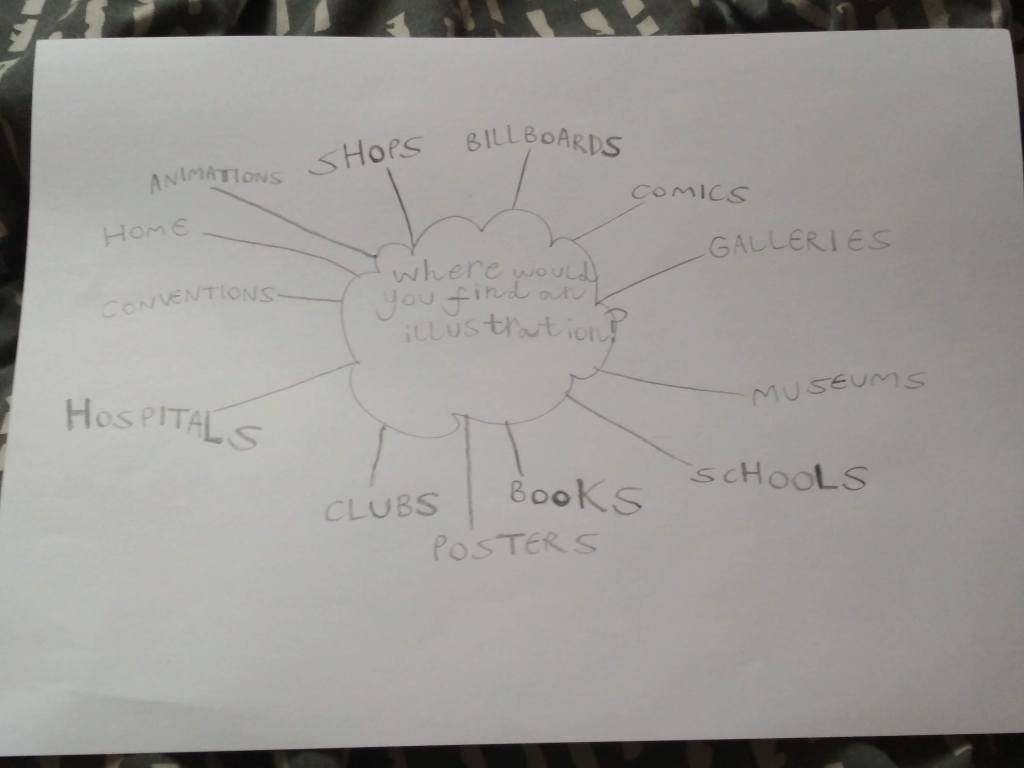
Illustration Mind Map 1 (Week 1, Day 1).
Illustration Mind Map 2 (Week 1, Day 1).
Shading (Week 1, Day 1). From my first day, I learned that adding shading gives objects more depth.
Viewfinder (Week 1, Day 2). I found this experiment a bit funny. You look through a hole and see the same things in reality, but in a different way. It narrows your view and you can only see what you want to see.
Line Drawing (Week 1, Day 2). I found drawing without taking the pencil off the paper hard, but I managed to keep it on the paper.
Shading Patterns/Textures (Week 1, Day 2). I found this experiment to be creatively fun, and I would use it for quick sketches and use it as reference for more detailed drawings in the future.
Positive Emotions (Week 1, Day 3).
Negative Emotions (Week 1, Day 3).
Mark Making Sheet (Week 1, Day 3).
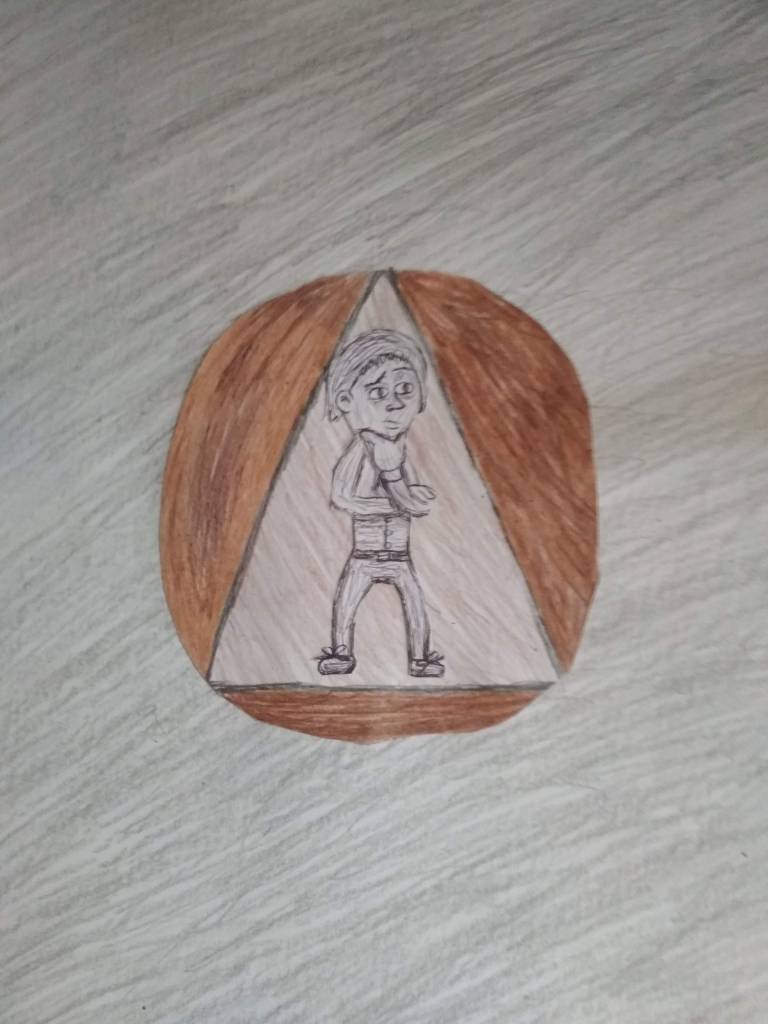
Illustrator Cutout (Week 1, Day 3). I found doing this activity very interesting. The emotion is confusion. I learned that colours and shapes can be used to express emotion and add depth to a picture.
Collage Plant (Week 1, Day 4). I found making this collage plant interesting. It was lovely to use scissors to cut the different shapes, and I have heard of John Stezaker, but I will research his works and that of Romare Bearden for future collage projects.
Character Polaroids (Week 2, Day 1). I thought that doing this activity was sort of helpful. It helps me learn more about polaroids and different emotions.
Collage Head Inspired by Mathilde Aubier (Week 2, Day 2). I think that Mathilde Aubier’s abstract usage of collage in her works are spectacularly brilliant, with bright and expressive colours. I found doing this picture challenging at first, but I eventually got the hang of it. I learned that even within an abstract design, placement is still important.
Character Splodge Animal List (Week 2, Day 3).
Character Splodges (Week 2, Day 3). I learned that splodges/blotches can be turned into a work of art and be used to express different concepts.
Faces in Places Hat Cat (Week 2, Day 3). This is my example of ‘Faces in Places’.
Line Figure Movements (Week 2, Day 4). I am pleased with the result. I enjoyed doing this activity.
Narrative and Comics (Week 3, Day 1). I learnt that comics and illustrations can be used to ‘narrate’ people’s lives or a political context, build up descriptions alongside images, and add tons of humour to short stories, express emotions and express the artist/author’s opinions.
Quick Character Comic (Week 3, Day 1). I enjoyed making the comic.
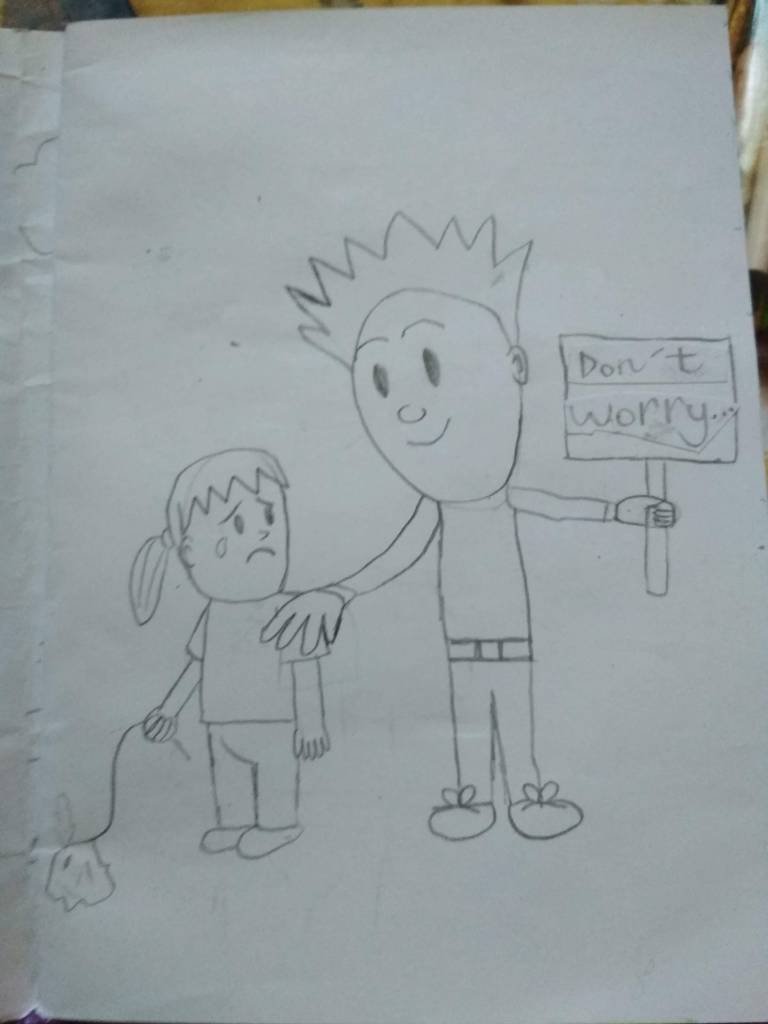
Positive Vibe Comic 1 (Week 3, Day 2).
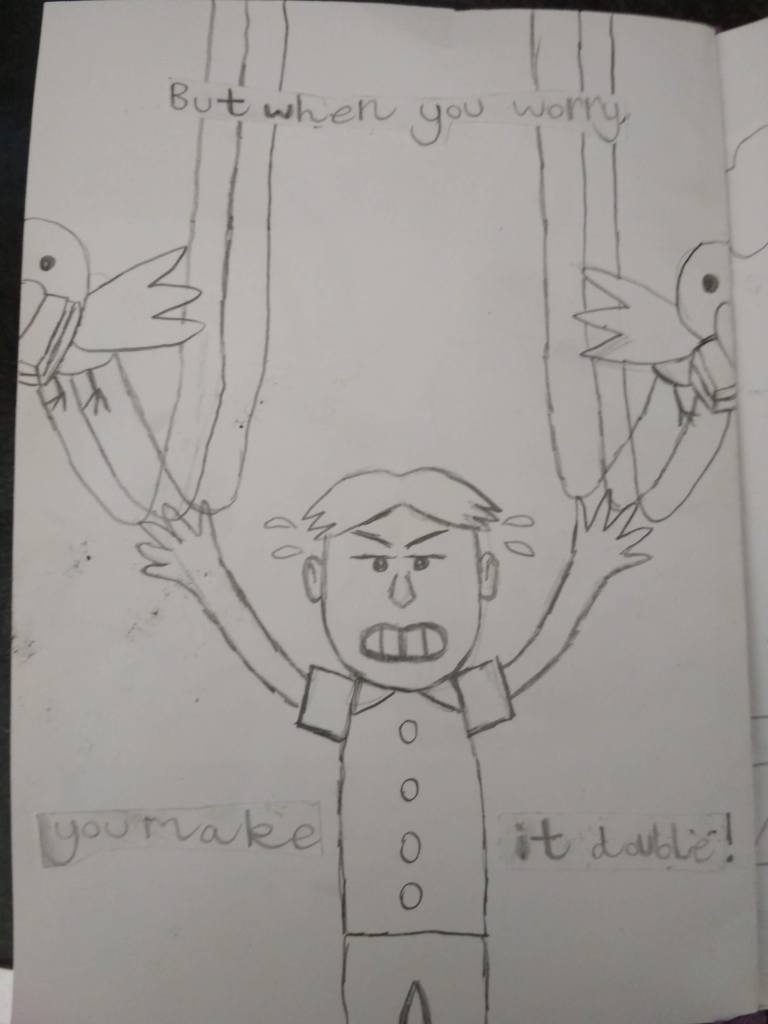
Positive Vibe Comic 2 (Week 3, Day 2).
Positive Vibe Comic 3 (Week 3, Day 2).
Positive Vibe Comic 4 (Week 3, Day 2).
Positive Vibe Comic 5 (Week 3, Day 2).
Positive Vibe Comic 6 (Week 3, Day 2).
Positive Vibe Comic 7 (Week 3, Day 2).
Positive Vibe Comic 8 (Week 3, Day 2).
Positive Vibe Comic 9 (Week 3, Day 2).
Photograph Narrative 1 (Week 3, Day 3). A man is afraid of the loud music coming out of the speaker.
Photograph Narrative 2 (Week 3, Day 3). The man notices a knob to control the volume, and turns it down.
Photograph Narrative 3 (Week 3, Day 3). The music stops and the speaker disappears. The man celebrates peace and quiet.
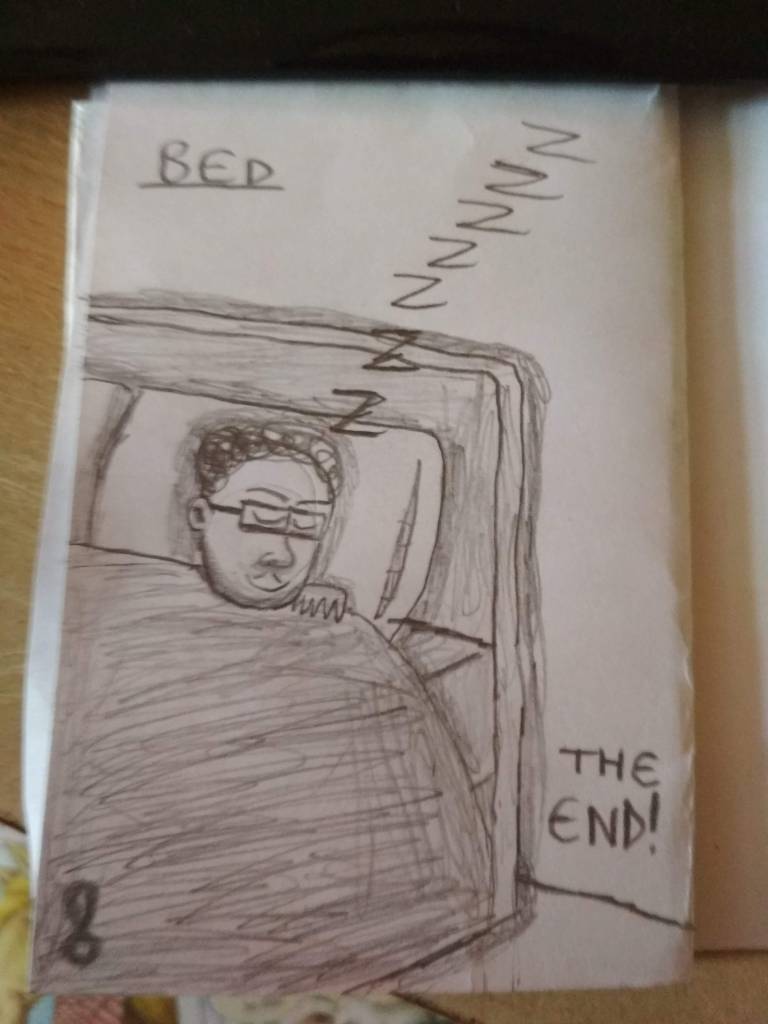
Minicomic 1 (Week 3, Day 4). I enjoyed making the Positive Vibe Comic and the Minicomic, and I also liked making the Comic Narrative and Quick Character Comic from Day 1 and Photograph Narrative from Day 3. I found some activities challenging, like trying to do research for Comic Narrative and Quick Character Comic on Day 1.
Minicomic 2 (Week 3, Day 4).
Minicomic 3 (Week 3, Day 4).
Minicomic 4 (Week 3, Day 4).
Minicomic 5 (Week 3, Day 4).
Minicomic 6 (Week 3, Day 4).
Minicomic 7 (Week 3, Day 4).
Minicomic 8 (Week 3, Day 4).
Minicomic 9 (Week 3, Day 4).
Poster 1 (Week 4, Day 1). More importantly, this poster is just sort of a subtle reminder to keep safe. I didn’t really want to mention the coronavirus outbreak.
Poster 2 (Week 4, Day 2). I chose the grid composition, found the composition advice helpful, and learned that the artist can try to entice the viewer with the composition, which gives the art more structure.
Poster Question Answers (Week 4, Day 3).
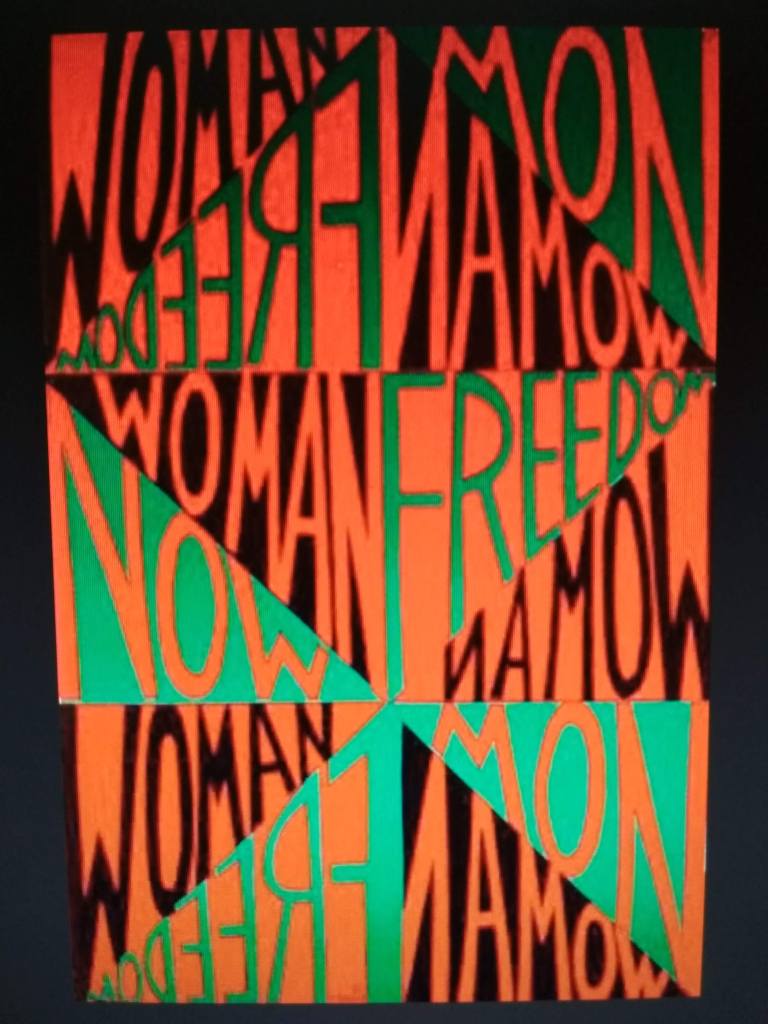
Illustration by Faith Ringgold from 1971.
Faith Ringgold used red, green and black colors in her poster because they represent strength and determination.
Ringgold is fighting for freedom, justice, and gender and racial equality, and is fighting against racism and exclusion with the poster.
Ringgold used cut-and-pasted colored paper divided into 12 triangles to give the poster an abstract look.
The thirds composition framework was used in the poster.
I think that the typography used in the poster is powerful, and affirmative of feminist activism. Ringgold chose this style of text because it is bold and represents strong emotion.
Illustration by Emory Douglas from 1971.
Emory Douglas used red, beige and black colors for his poster, which seems to represent the boy in the foreground (beige and black) and the sun in the background (red), representing the dawn of a new day.
Douglas’ poster is a message of hope and solidarity, a message still relevant today with the Black Lives Matter movement.
Douglas used collage in his poster to show different stages of children (Black Panther cubs) enjoying social programmes created for the black community.
The oval composition framework is used in the poster.
I think that the typography used in the poster is encouraging resilience, and it is used in the poster because it tells black people to never give up hope.
Illustration by Shepard Fairey from 2007.
Shepard Fairey used solid red, beige and (light and dark) blue colors for his poster because it fits the political theme and matches with the American flag’s colors.
Fairey is facilitating a positive association with Barack Obama’s likeness, and protests against negative associations and racism with the poster. The poster is a strong message for the political climate in America at the beginning of the presidential campaign. Around the world, Obama is seen as a figure of hope for many black people.
Fairey used a photograph of John F. Kennedy as a reference for the poster and gave it a stylized stencil look, and it is generally considered iconic.
The grid composition framework was used in the poster.
I think that the typography used in the poster is positive, helpful and inspirational. It uses bold text to reinforce the poster’s strong message.
Illustration by an unknown illustrator from an unknown year.
The unknown illustrator used pink and black colors for her poster because they are symbols of feminism and activism.
The illustrator is fighting for power, justice, work and equality, and is fighting against exclusion of women with the poster.
The illustrator used coloured cardboard and cut-outs to make the poster to give it a fitting look for the feminine activism.
The oval composition framework was used in the poster.
I think that the typography used in the other posters is powerful, and affirmative of feminist activism. The other illustrators chose this style of text because it is bold and represents strong emotion. The main illustrator, however did not use typography in her poster, though the feminist symbol remains.
Illustration by Peter Piech from 1980.
Peter Piech used red, white and blue colors for his poster because they are colors of peace.
Piech is fighting for peace and truce, and protests against war with the poster. The poster is a helpful message for people, encouraging them to be friendly towards each other and understand their feelings, and teaches them that “love not fear must dominate the relationship between individuals and between nations.”
Piech used a Linocut print for the poster to give it a beautiful look.
The Z composition framework was used in the poster.
I think that the typography used in the poster is positive, helpful and kind. It uses bold text to encourage people to be friends.
Poster 3 (Week 4, Day 4). I used the thirds composition framework in my poster, used shading/textures in my drawings, used bold text in my typography and drew over all the letters in black pen to make the text stand out from the drawings.
The Botanical Mind Review (Week 5, Day 1).
Three Things About Plants:
Plants first appeared on Earth more than 450 million years ago.
Plants account for 80% of the weight of all living things, a source of shelter, sustenance, fuel, tools, decoration, adornment, medicine and myth.
Plants are fundamental to the existence of all life on Earth, from producing breathable atmosphere, to harvesting the energy of the sun, and converting it to food and fuel for every form of living organism.
Leftover Plant/Art Fact: Nature operates through patterns in repetitive form.
Three Interesting Arts: I find Carl Jung’s The Philosophical Tree in The Cosmic Tree interesting because of its elegant blue colours and the glowing white object located in the centre of the tree, like a light in a lantern. The Cosmic Tree is a universal archetype that appears in the symbolism and mythologies of many civilisations, and represents the Axis Mundi (World Axis), which connects the physical and transcendental realms of the universe. From the giant Yggsdrasil, that connected the Nine Worlds of Norse mythology, to the ‘Tree of Knowledge’ in the Garden of Eden, a sacred tree’s motif is often associated with the figure of a snake, an emblem of shamanic experience, rising from the shadows to the spiritual plane.
I find Ernst Haeckel’s Peromedusae in Sacred Geometry interesting because of its special flower-like rope design. Certain patterns or designs are used in art and science, which reoccurs across cultures and through time when echoing the fractal and spiral geometries included in plant-forms and flowers and the psychoactive visions induced by mind-manifesting plant medicines. Serving as blueprints for the world, they reveal an encoded, vegetal intelligence by connecting the macro-cosmos to the micro-cosmos.
I find Bruce Conner’s Psychedelicatessen Owner in As Within, So Without interesting because of its usage of collage of found jewelry-like illustrations featuring plants; black, white, grey and brown colours, and inclusion of the third or inner eye, meaning that Conner was capable of microscopic and macroscopic vision; and representation of the visions induced by mind-manifesting plant medicines. In his concept of the archetypes, Carl Jung perceived continuities between the forms of physical and psychic reality, essential patterns (regularities of form and structure) that appear in nature and arise naturally in the mind. The many mandalas that appear in his Liber Novus (Red Book) were made with a method named Active Imagination, an attempt to ‘form in matter’ his innermost thoughts and the structure of his psyche. The mandala is one of the oldest spiritual symbols in the world, attempting to represent the universe schematically while also operating as a meditation device, a gateway enabling transformative states of consciousness. Although they are common to many different traditions of eastern and western mysticism, they have also been created by a number of contemporary and modern artists.
Three Art Techniques: collage, pastel and pencil on paper, oil on canvas.
I learned that most of Delfina Muñoz de Toro’s work is colourful and includes red, orange, yellow, green, blue and other bright colours. I liked the details, colours and placement of drawing. What I did not like about her work is that there is barely any information about the process of her work online.
Botanical Illustration (Week 5, Day 2). I enjoyed doing the process, and I would go for a different type of plant if I were to do this again. It would be interesting to draw a different plant and perhaps different features.
Floral Plate Design (Week 5, Day 3). One of the flowers in the design is a rose. I drew that rose because we don’t have any of them in our garden.
Silent Nature Comic (Week 5, Day 4).
Animal Illustration (Week 6, Day 1).
Ali Mac is a freelance illustrator based in New York City. She holds a B.A. in Studio Art from Williams College and an M.S. degree in Communications Design from Pratt Institute. In 2014, Mac, feeling inspired by her grandmother (who was also an artist), founded her eponymous stationery line (formerly LARK+RAVEN) to showcase her portfolio of colorful, one-of-a-kind patterns and illustrations. Her career began as a designer for Jonathan Adler, where she gained experience designing for collaborations with Paperless Post, Toms, Lifeguard Press, Barnes and Noble, Dylan’s Candy Bar, and Ebay. This was before she went on to create her own bold and bright world with Sharpies. I feel connected to Ali Mac’s art style because it involves collage, and Mac puts the method to brilliant use when making her unusual, brightly colored patterns and illustrations. Illustrations of animals can be used to tell generations about animals, how they behave and where they are located, and be given as a portrait of a beloved pet, used for self-reflection, used for inspiration, used to express faith, used to illustrate affinity with the natural world, used to illustrate power, and shape the way that we think about them. I found doing this activity a little difficult because I had to make the drawing as realistic as possible (including lighting on the squirrel’s tail). The drawing is based on a photograph of a squirrel that I took during a walk.
Drawing Animals Using Shapes (Week 6, Day 2). I found doing this activity fun. The only downside of this was trying to draw the legs right.
Watercolour Animal Illustration (Week 6, Day 3).
Mythical Creature (Week 6, Day 4). I enjoyed making it.
Reflecting, Building Confidence, and Sharing Skills (Week 8, Day 1).
The illustration work that I am most proud of is the mythical creature.
I overcame the challenge of doing the line drawing.
I got better at doing illustrations with shading/textures, like my ball drawing on Week 1.
I know I can use different methods of making illustrations, like using photography as reference for my line figure movements and drawing around my hand and other objects to make my shading/texture patterns.
I would like to work more on my planned ideas and designs before doing illustrations.
I will keep practising my realistic details in my illustration works.
I would like to know more about collage as a technique.
‘Interview’ Questions for Grace (Week 8, Day 5):
When and how did your career begin?
Grace: My career began in 2015 when I was working in a small design company.
What inspired you to do illustrations?
Grace: My inspiration for illustrations comes from my creativity, reading, comics and my parents.
How do you make your illustrations?
Grace: I make illustrations using printing, paints, pen, pencil, ink, stencils, collage (mostly) and cutouts (mostly).
Were your parents illustrators as well?
Grace: My parents were not illustrators. My mother is an outdoor gardener, and my father used to be a writer, reviewer and musician.
Where do you see yourself in five years?
Grace: I see myself as still working and experimenting and keeping up motivation to make work, making a book of illustrations, doing bigger illustrations, and making record sleeves and music posters.
How to Use the Wet on Wet Watercolour Technique (Week 8, Day 2).
Creative Transitions Mini-Exhibition (Week 8, Day 3).
I like how Peony Gent’s illustrations are presented as following each other vertically in rows of boxes layered over a white background, with the first boxes having one illustration and the rest of the boxes each having two illustrations, which makes their layout clear, easy to navigate, balanced and consistent, and makes the clean illustrations come to life. The first two boxes are black, while the others are white.
I like how Diana Ejaita’s illustrations and videos are presented as being arranged in columns in the grid boxes and layered over a white background. The only downsides to this are that some of the illustrations and the videos are too big and the number of illustrations changes from one to three to four, making their layout unclear, difficult to navigate, unbalanced and inconsistent.
I like how Eve Lloyd Knight’s illustrations are presented as being grouped in colour and arranged in two columns in a brick-like layout layered over a white background, which makes the layout clear, easy to navigate, balanced and consistent (in colour). Most columns on Knight’s website have an illustration that is grouped in two sizes.
Reflecting, Building Confidence, and Sharing Skills 2 (Week 8, Day 4).
The illustration work that I am most proud of is the positive vibe comic.
I overcame the challenge of doing the four-panel narrative comic.
I got better at doing paintings with three-dimensional shading/textures, like my botanical illustration on Week 5 and my wet on wet watercolour animal illustration on Week 6.
I know I can use different methods of making illustrations, like using different composition frameworks for my Creative Leap poster and silent nature comic and drawing over pencil lines using a pen or marker in my Round ‘Em Up Soap poster and my How to Use the Wet on Wet Watercolour Technique comic.
I would like to work more on realistic designs and details in my illustrations.
I will keep practising my research skills, which will result in the discovery of new ideas.
I would like to know more about shading as a technique to create a different perspective.
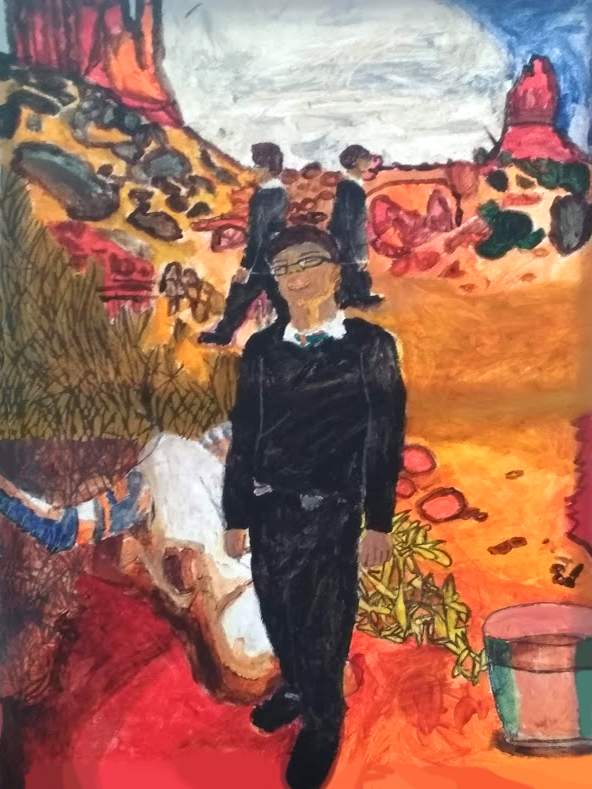
In 2017, my Art class were doing our out-of-place projects. I painted and drew a picture of three thirsty clones of myself in a North American desert, the clone in the centre standing in front of a cow skull and next to a big glass of water. The big glass of water is out of place as water is scarce in the desert, but is needed to stay alive. This painting was exhibited at the Turner Contemporary as part of the 2017 Thanet Schools Art Competition, and stayed there for a week. It was then taken back to school to be exhibited around there and locally in an art gallery in Ramsgate. I was finally able to take it home on 11 October 2019.
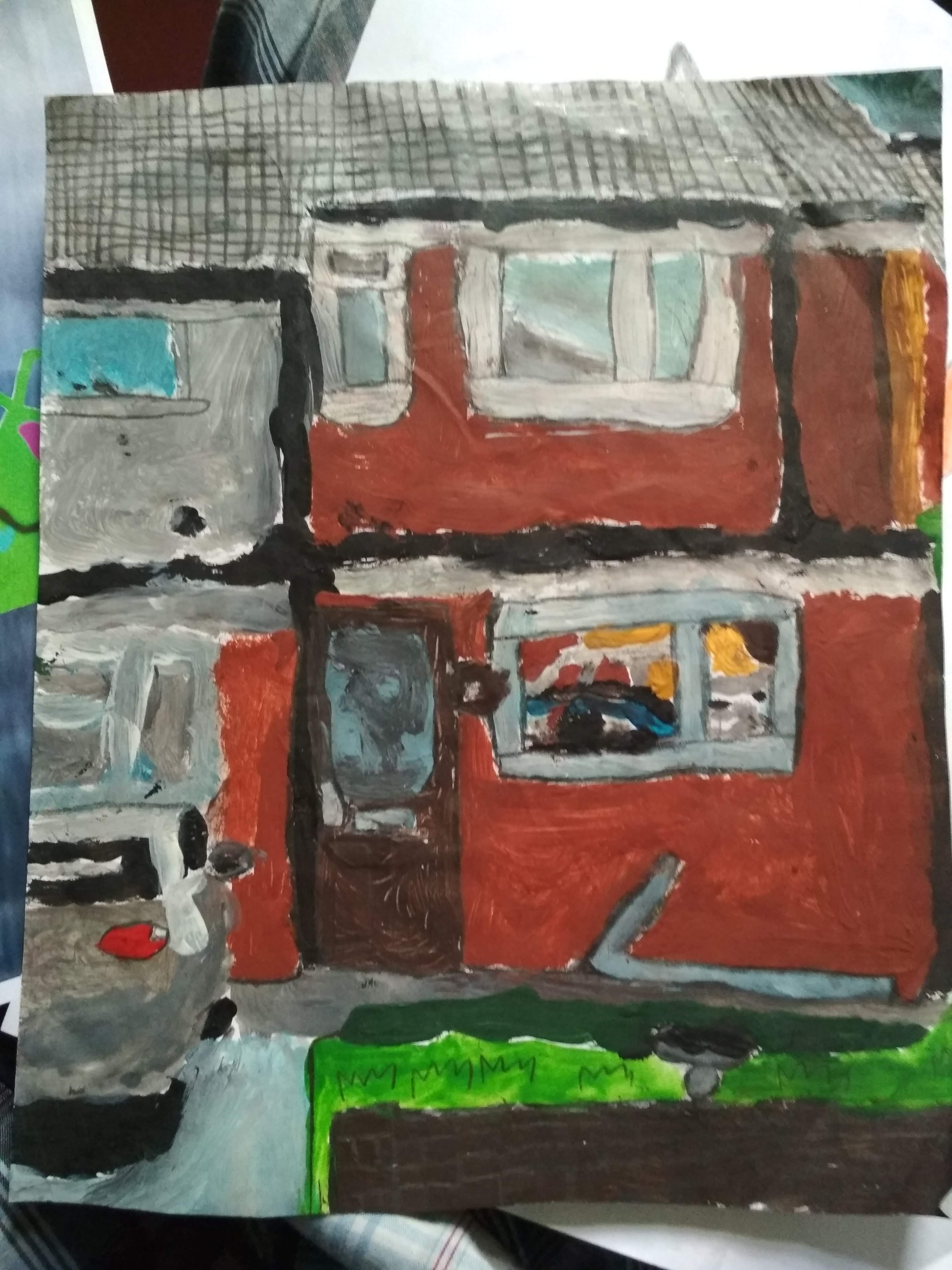
My house.
On 20 January 2018, I drew a picture of my house and used acrylic paint to colour in the picture, and used a printed print screen of my house from Google Maps for reference.
Welcome to Fuzzyville!
On 2 February 2019, my father and I were at his friend John’s art studio. I used coloured chalk and colour in a surrealist picture named Welcome to Fuzzyville!, which depicts a 10-year-old boy named Oliver M. (based on myself) arriving in an unusual, jagged, fuzzy-looking city (with red, orange, yellow, green and blue buildings and blue, jagged, fuzzy clouds in the magenta sky) and looking around in astonishment.
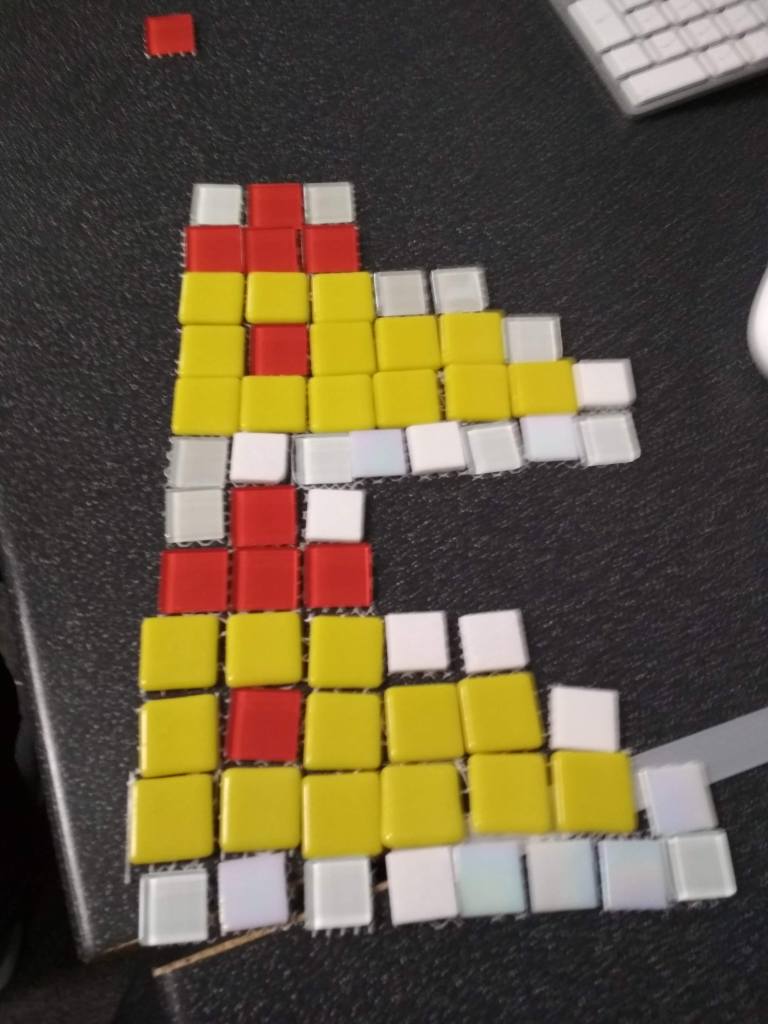
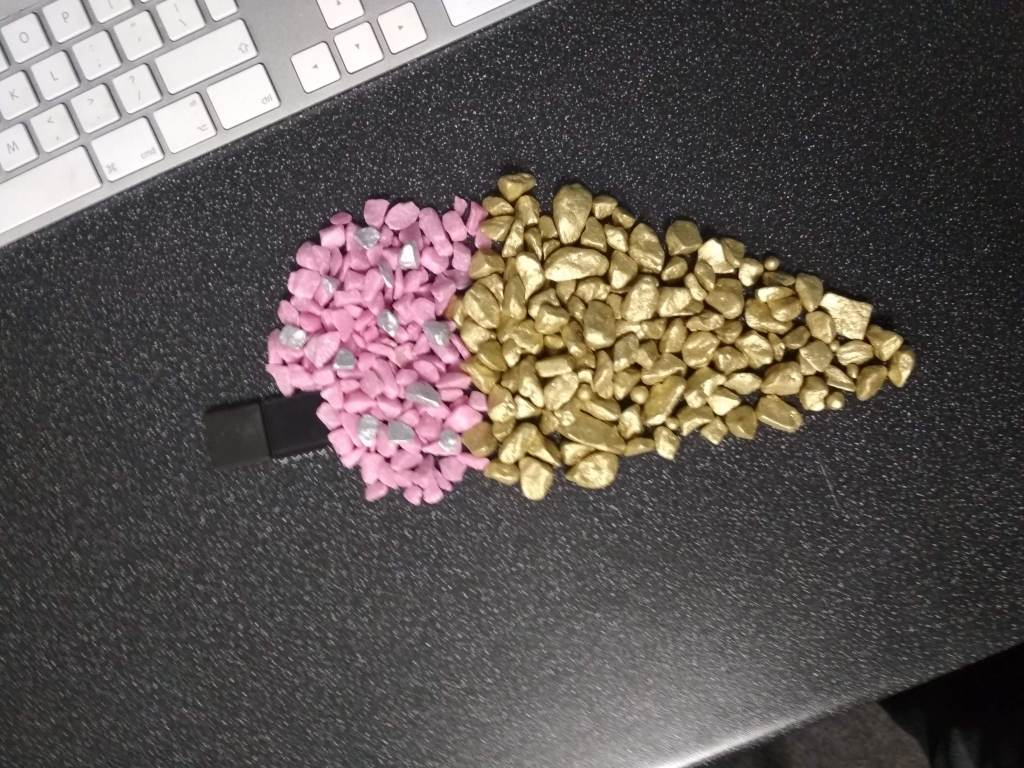
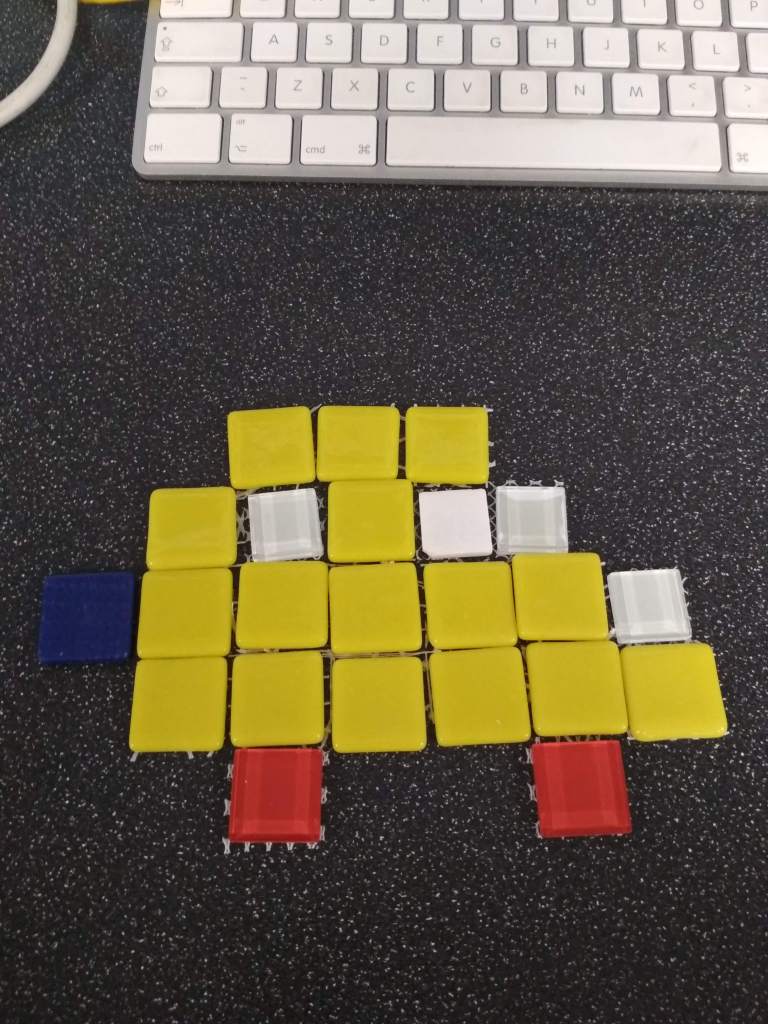
On 18 March 2019, my class from college went to the Charles Dickens Mosaics on Saint Peters Road to study its mosaic pictures and murals for our research for our mosaic projects. On 19 March 2019, we used little stones and tiles to make some mosaic pictures. I made mosaic pictures of a pair of shoes, an ice cream and a car.
My pair of shoes.
My ice cream.
My car.
For my mosaic project, I chose to make a mosaic address marker. I did an analysis of three examples of my chosen craftwork (three other mosaic address markers), and designed the draft mosaic address marker (on 27 March 2019) and the final mosaic address marker (2 April 2019). Both were designed using the following equipment: a pencil, some pieces of paper, a rubber, stones, tiles, sand, poly(vinyl acetate) glue, a spoon to mix the sand and poly(vinyl acetate) glue, and a piece of wood.
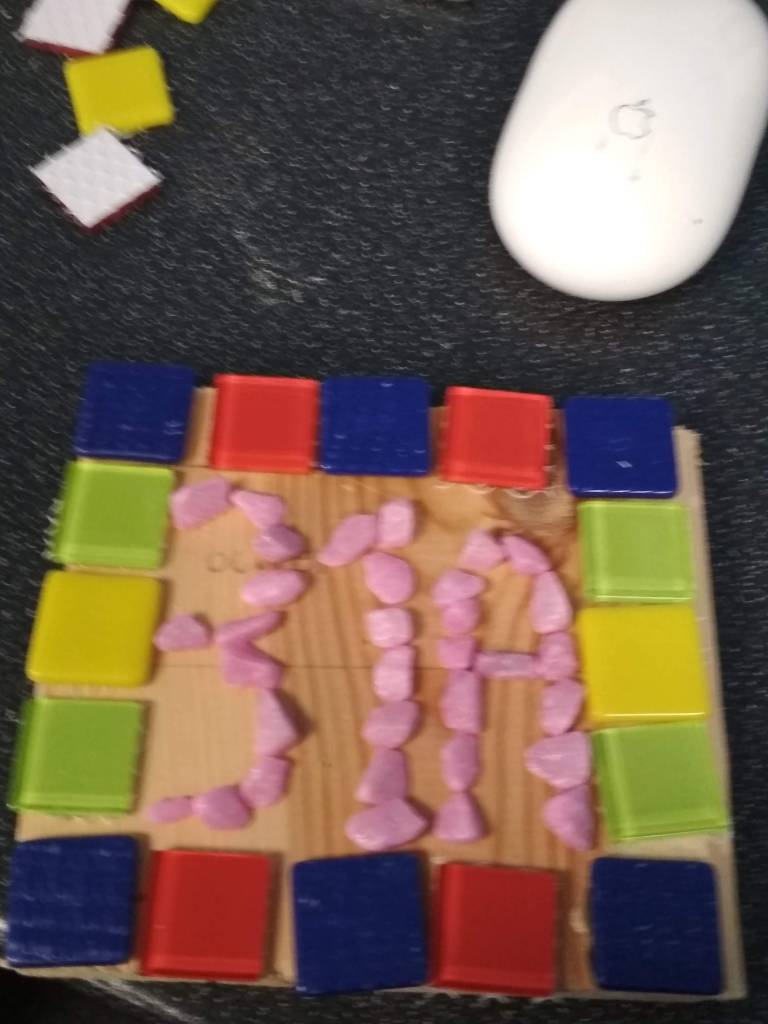
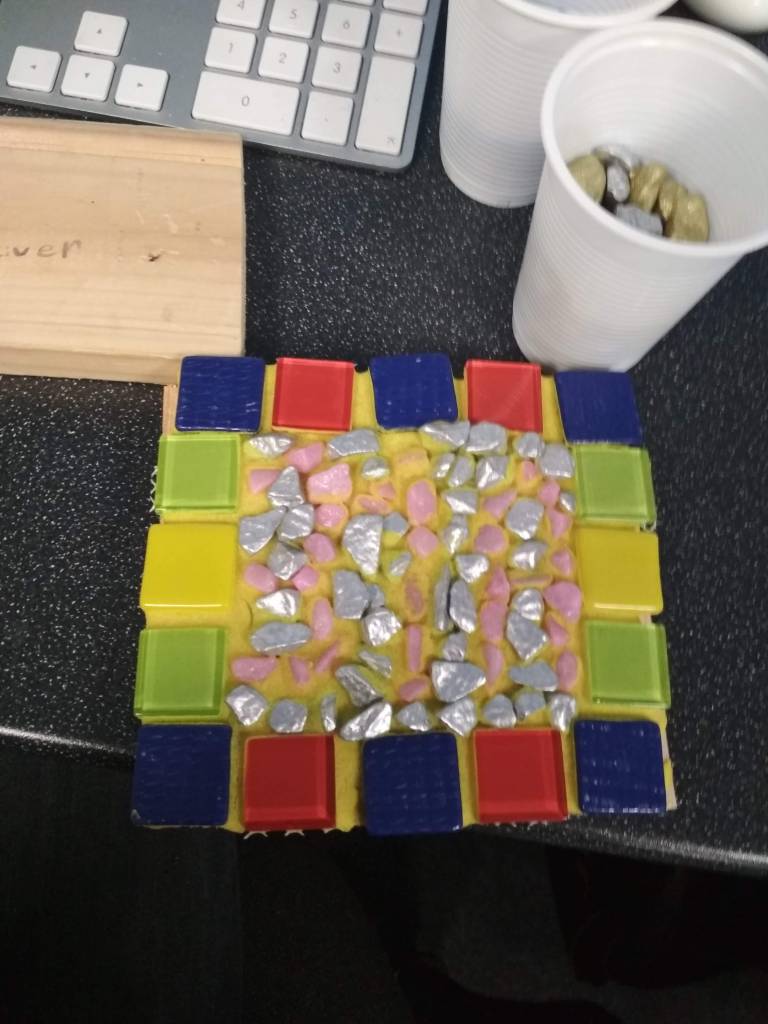
The draft mosaic address marker without its background.
The draft mosaic address marker with its background.
The draft mosaic address marker was designed using big, flat tiles (coloured red, yellow, green and blue) for the border, grey stones for the background, pink stones for the address marker numbers, and a piece of wood. I think my design is good, but I put too much glue on the piece of wood, making the address numbers ’31A’ (made from the pink stones) impossible to read. Here are my improvements for the next time: I could add more colours to my mosaic address marker, put less glue on the piece of wood and use smaller tiles or stones in my mosaic address marker.
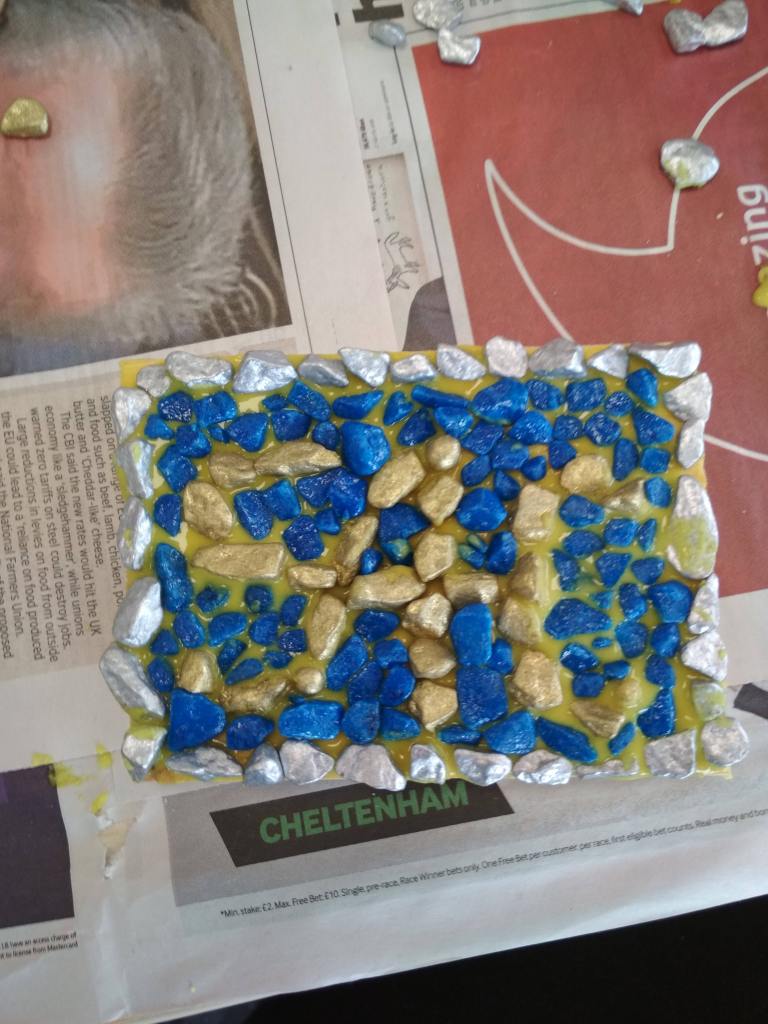
The final mosaic address marker.
The final mosaic address marker was designed using small, grey stones for the border, small blue stones for the background, small golden stones for the visible address marker numbers, and a piece of wood, and used less glue than the draft mosaic address marker.
I got my fingers covered in glue when I was trying to rearrange the stones in the draft mosaic address marker and the final mosaic address marker. Tasting or swallowing glue could cause an illness. Glue causes irritation to the skin and eyes, and may also cause allergies to people who are allergic to glue. I got to take the draft mosaic address marker and the final mosaic address marker home on 2 April 2019.
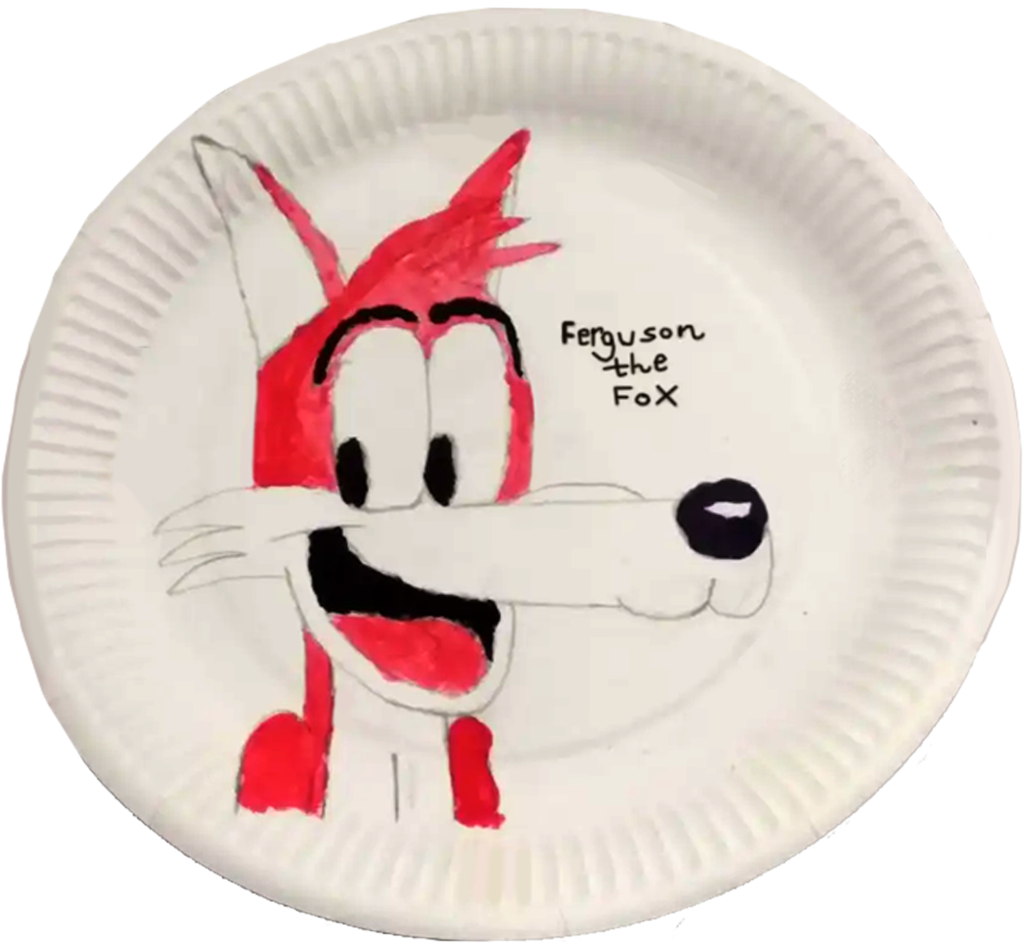
Ferguson the Fox.
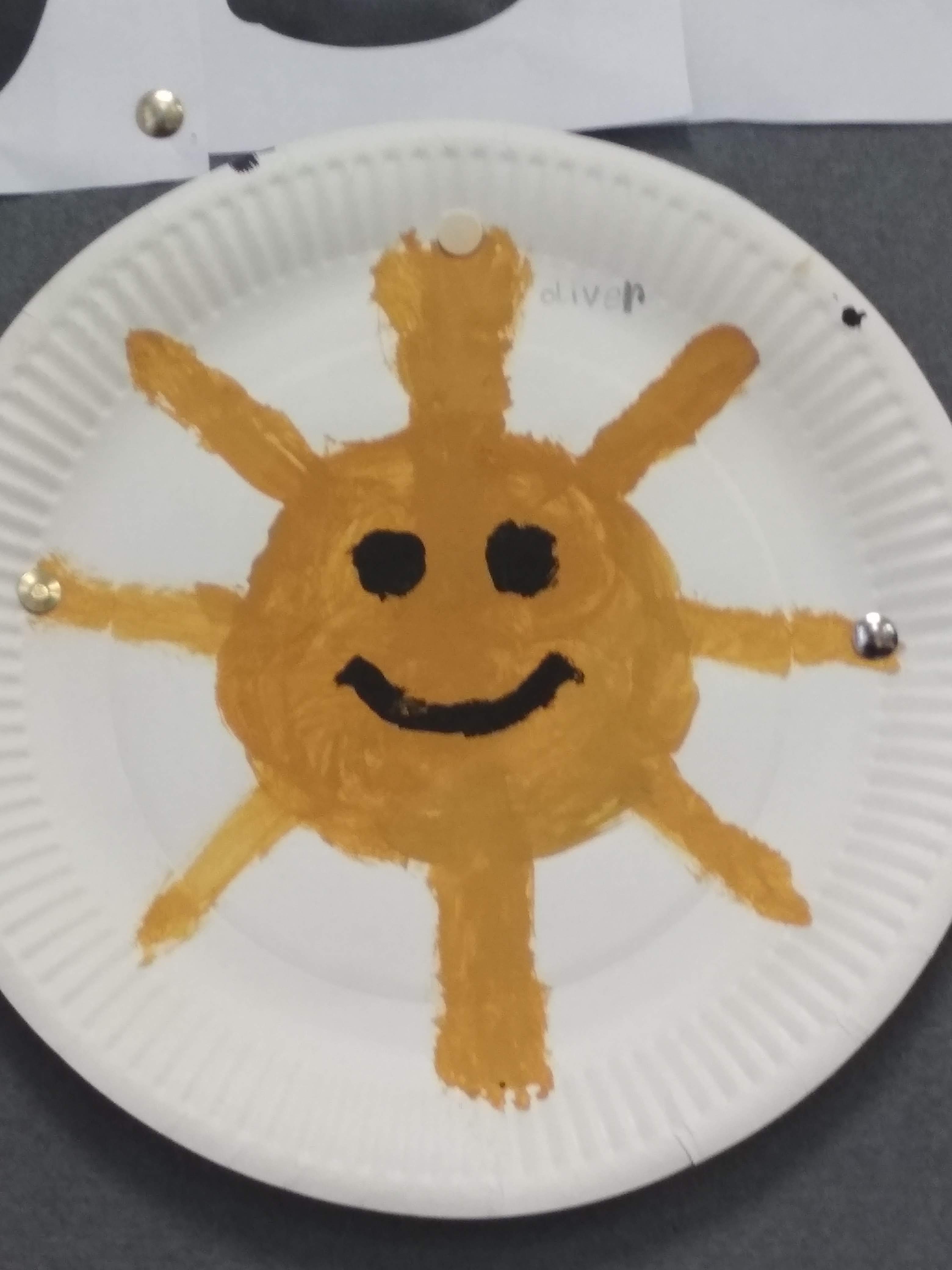
My sun.
On 27 March 2019, in my Personal Social Achievement lesson, I drew and painted a fox named Ferguson the Fox (I based his design on Tom Cat from Tom and Jerry) and a cute sun on paper plates. The drawings were pinned to the Student Gallery wall, and stayed there from that day to 27 June 2019.
Ride ’em…in the Rain!
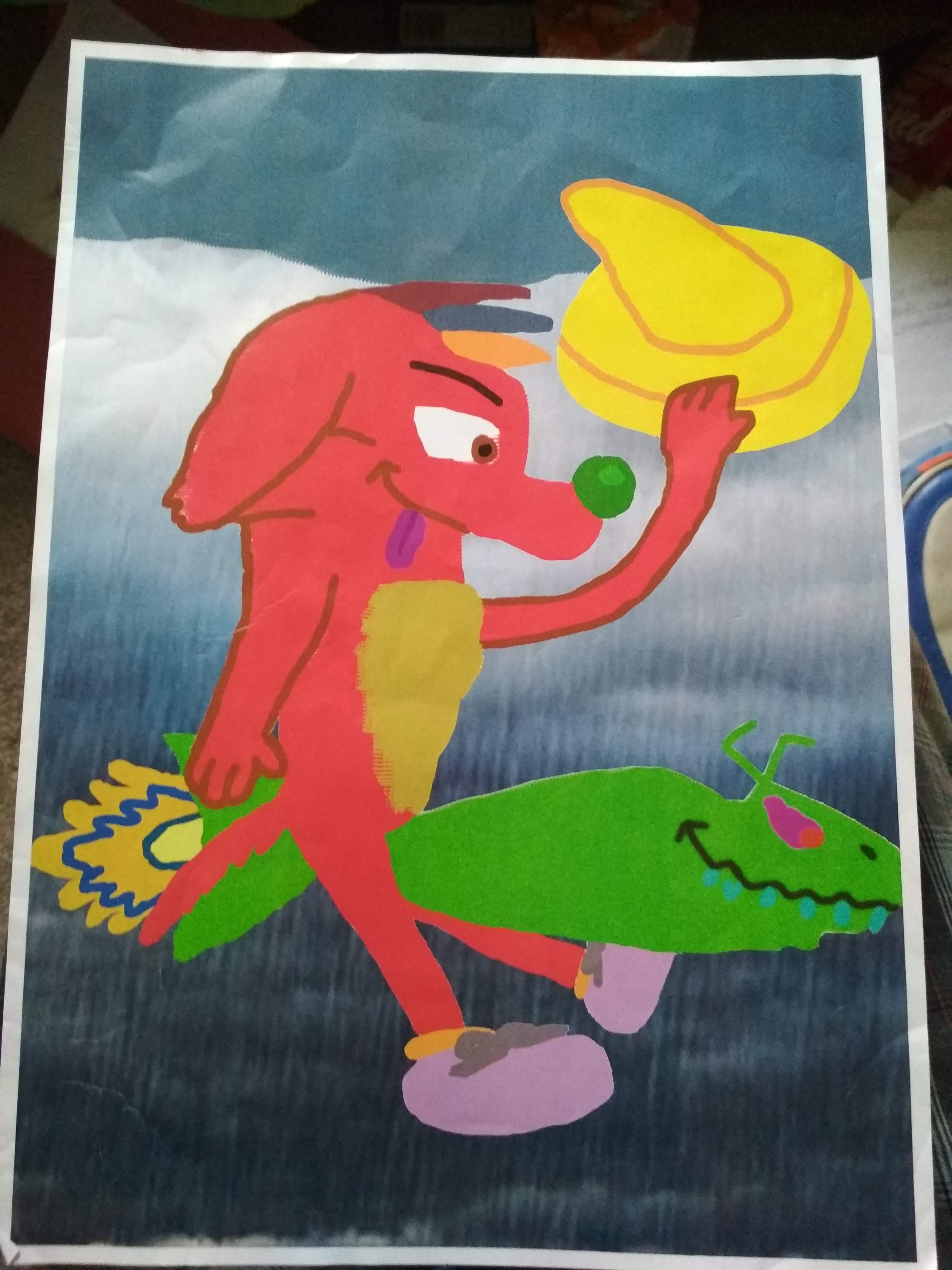
On 23 April 2019, I got to take a surrealist picture that I made on Adobe Photoshop home. The picture is named Ride ’em…in the Rain!, and depicts a red, green-nosed Mexican dog (with hairs somewhat similar to Crash Bandicoot) riding on a green missile with ant-like antennae and a crocodile-like face and waving his sombrero during a stormy, rainy day, which is out of place as no person could ride a missile when it is raining in real life. The picture was inspired by the scene in which Major Kong rides the H-bomb in Doctor Strangelove (1964).
Tiddles the Tabby.
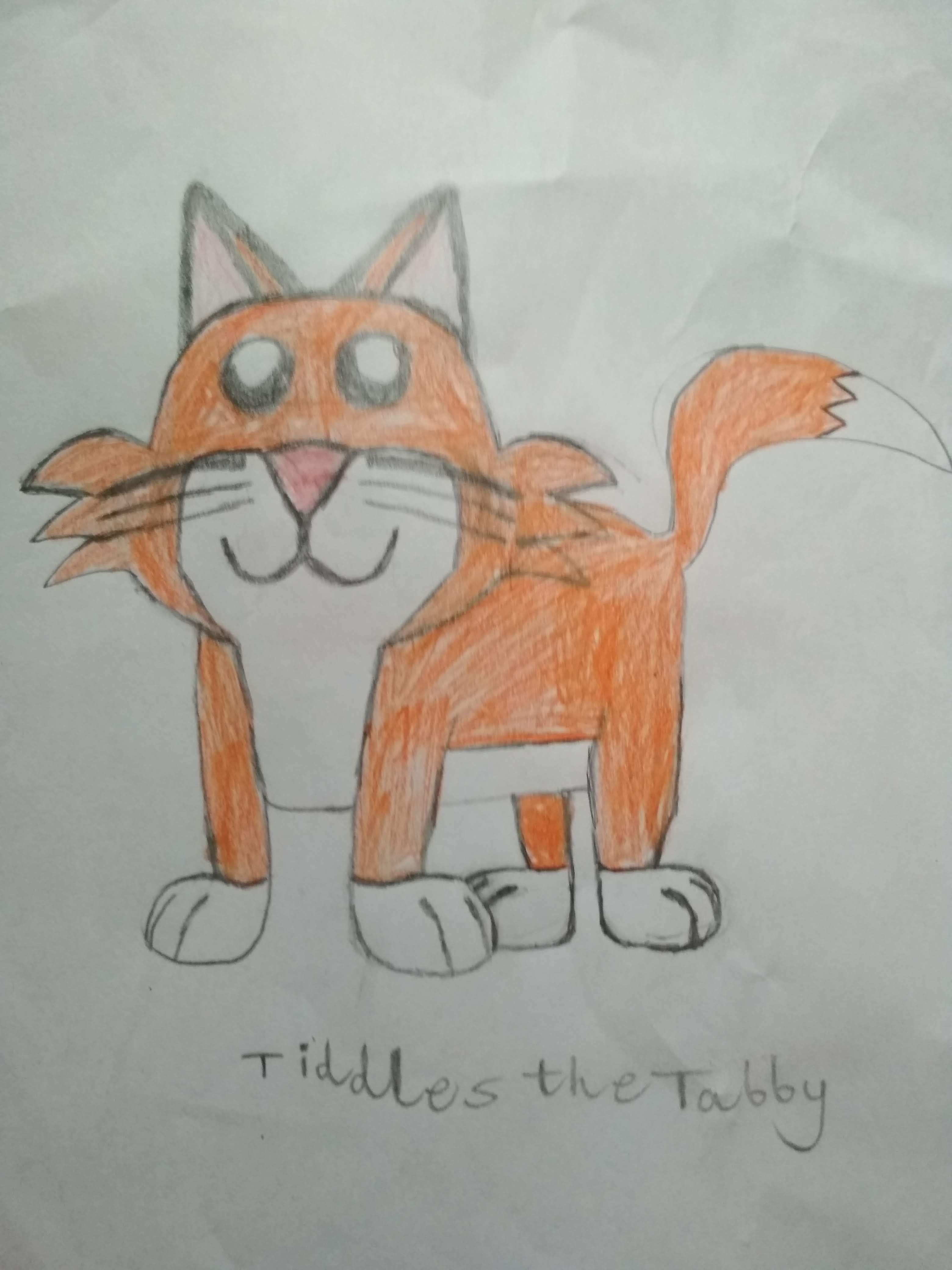
On 3 May 2019, I drew a picture of a kitten named Tiddles the Tabby, and showed it to my mother, and she liked it.
Dead Ringer.
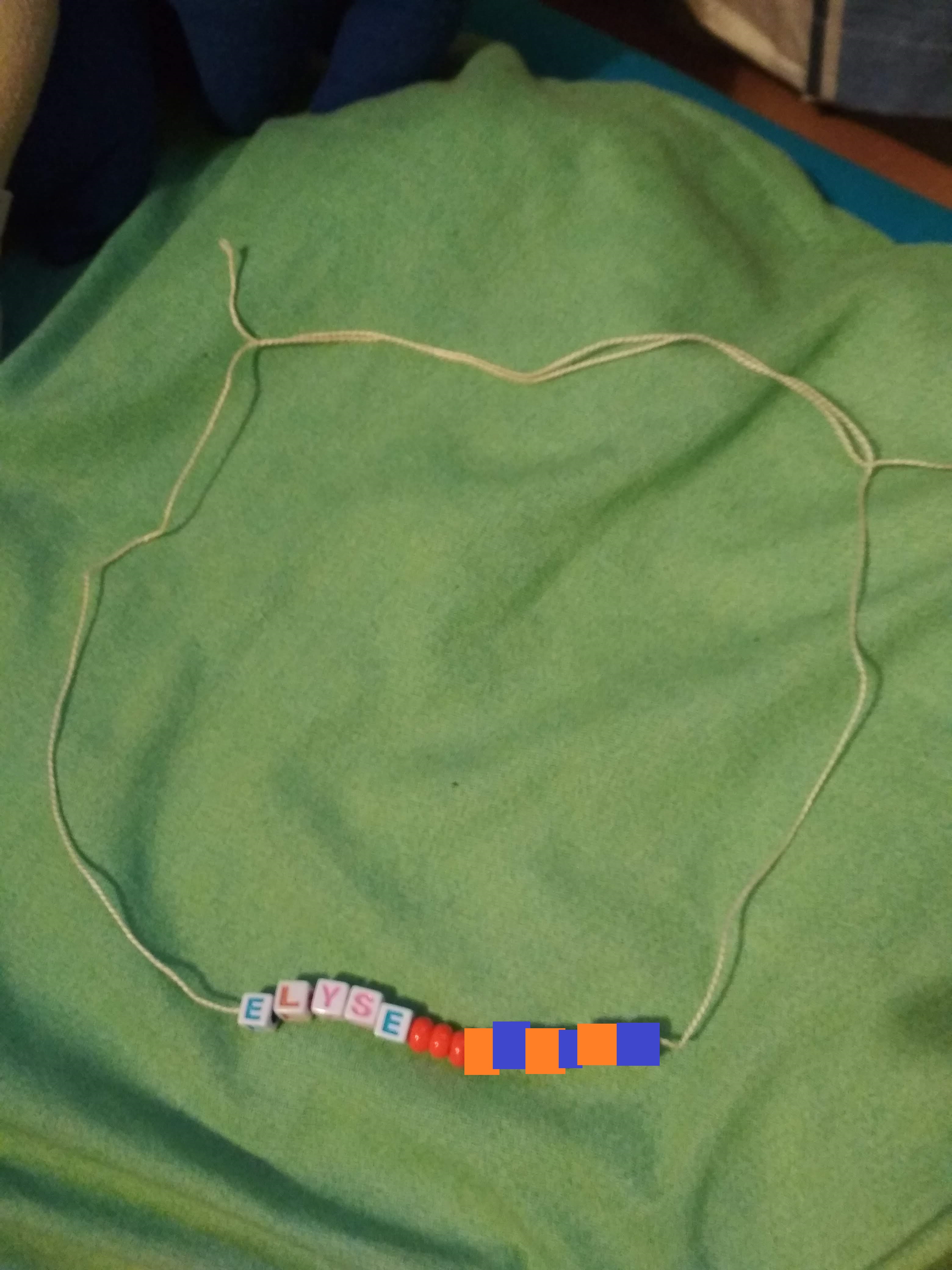
My first name necklace.
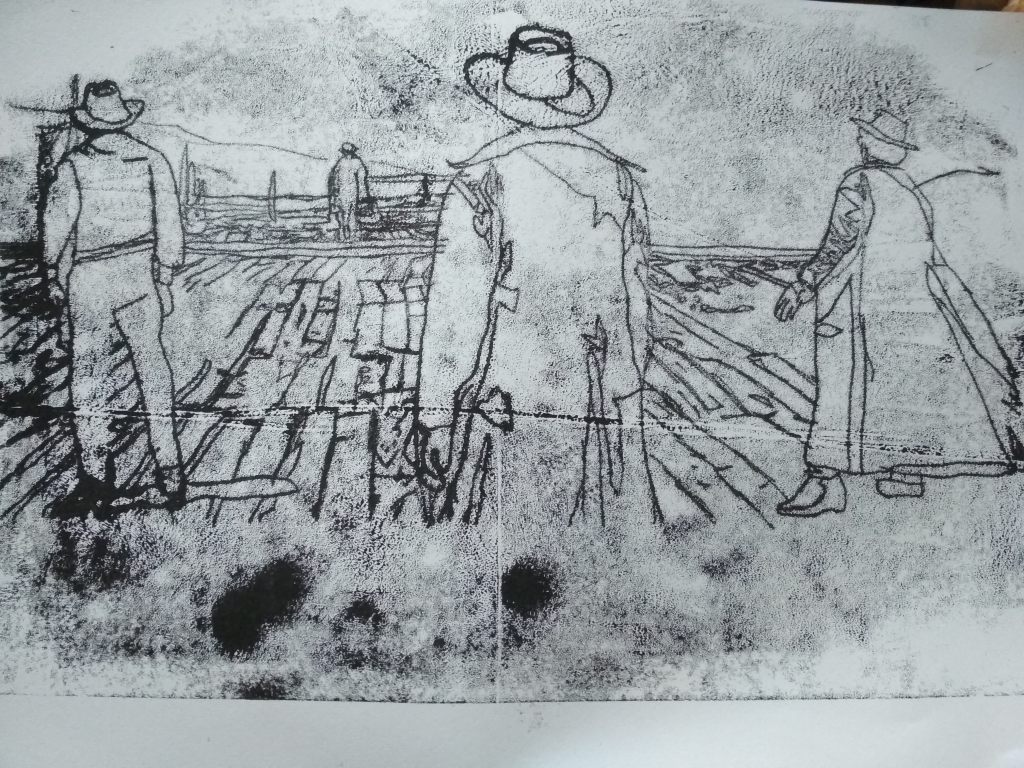
My original ink drawing of the still photograph taken from The Good, the Bad and the Ugly.
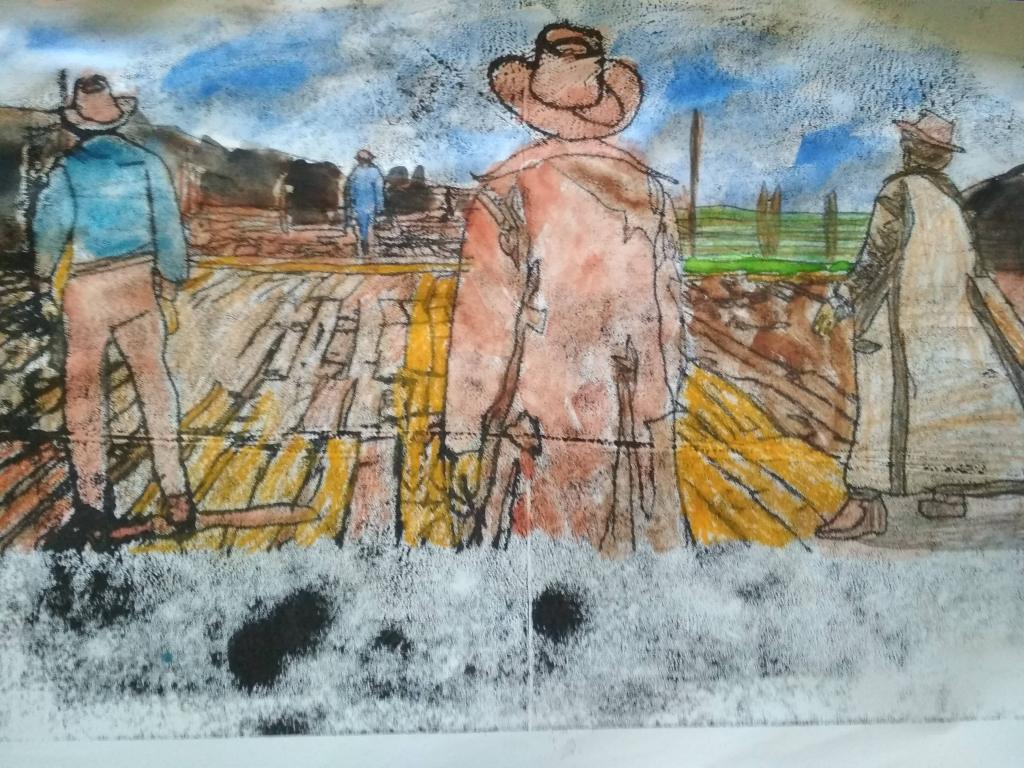
My coloured ink drawing of the still photograph taken from The Good, the Bad and the Ugly.
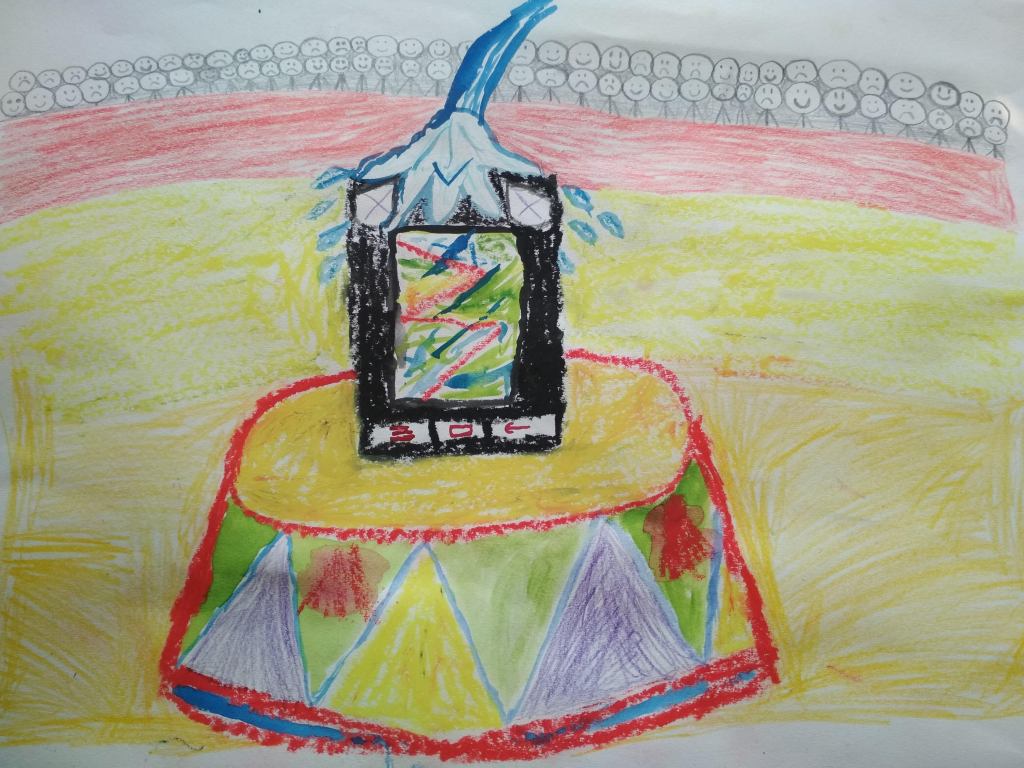
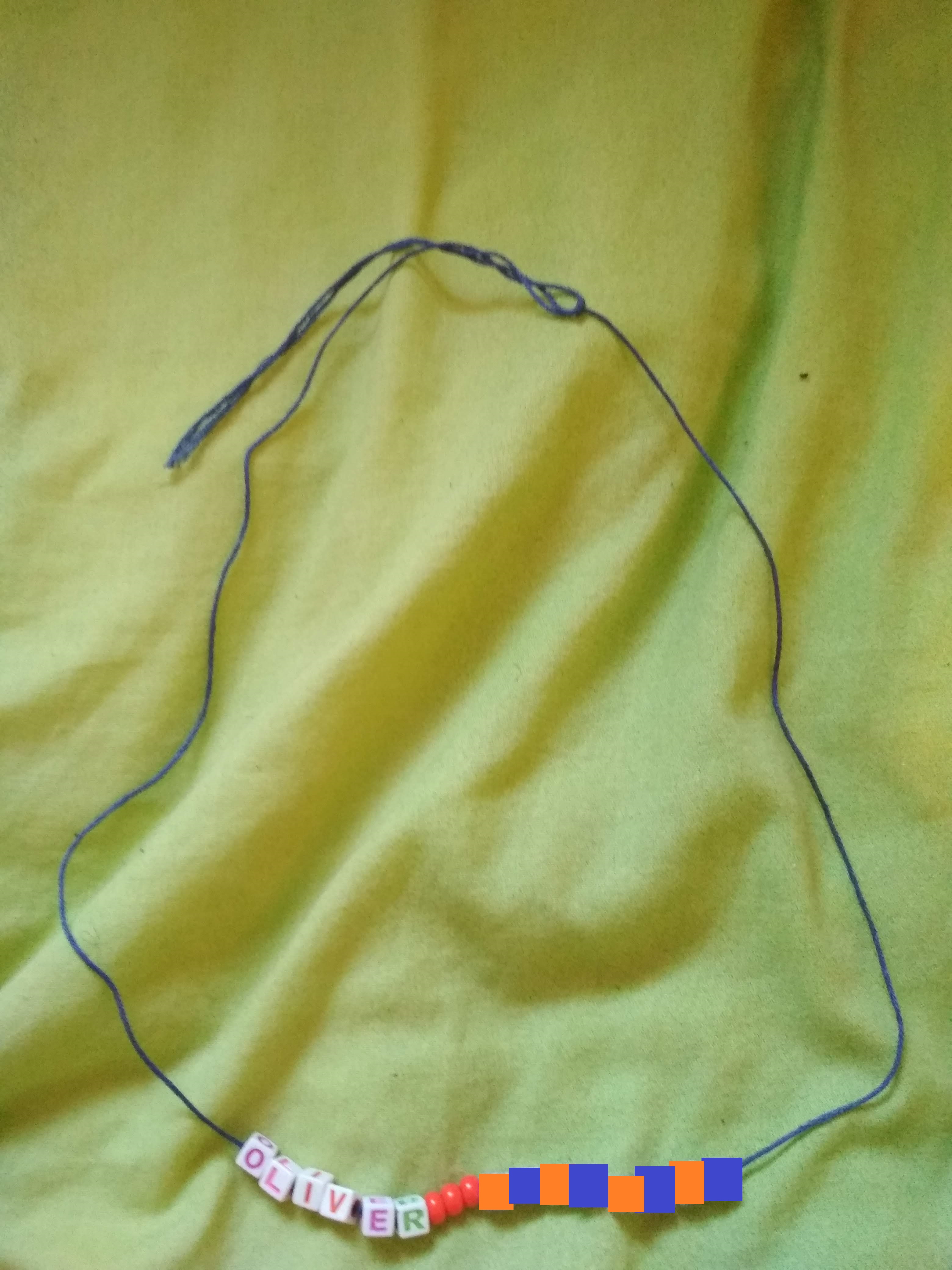
On 22 May 2019, I had a Taster session in Art and Design, and made a picture named Dead Ringer. The picture depicts a phone (which looks exactly like my old Xiaomi Redmi 4X phone, explaining the meaning of “dead ringer”) getting splashed with water by an unseen bully or troublemaker at a circus and dying (phones ring, and water is dangerous to electronics like phones; the phone’s death explains the picture’s title and is a pun on “dead ringer”). Half of the audience focuses sadly on the phone, while the other half of the audience focuses happily on the other acts and performances in the circus. The picture was made using a combination of watercolour paint, oil pastels and coloured pencil. I got to take the picture home, along with a necklace with my name on it (which I made in one of my Personal Social Achievement lessons) and ink drawings of some other pictures, two of them being ink drawings of a still photograph taken from The Good, the Bad and the Ugly (1966). I coloured in one of the ink drawings of the still photograph taken from The Good, the Bad and the Ugly. The ink drawings were made in a Taster session in Art and Design on 14 May 2019.
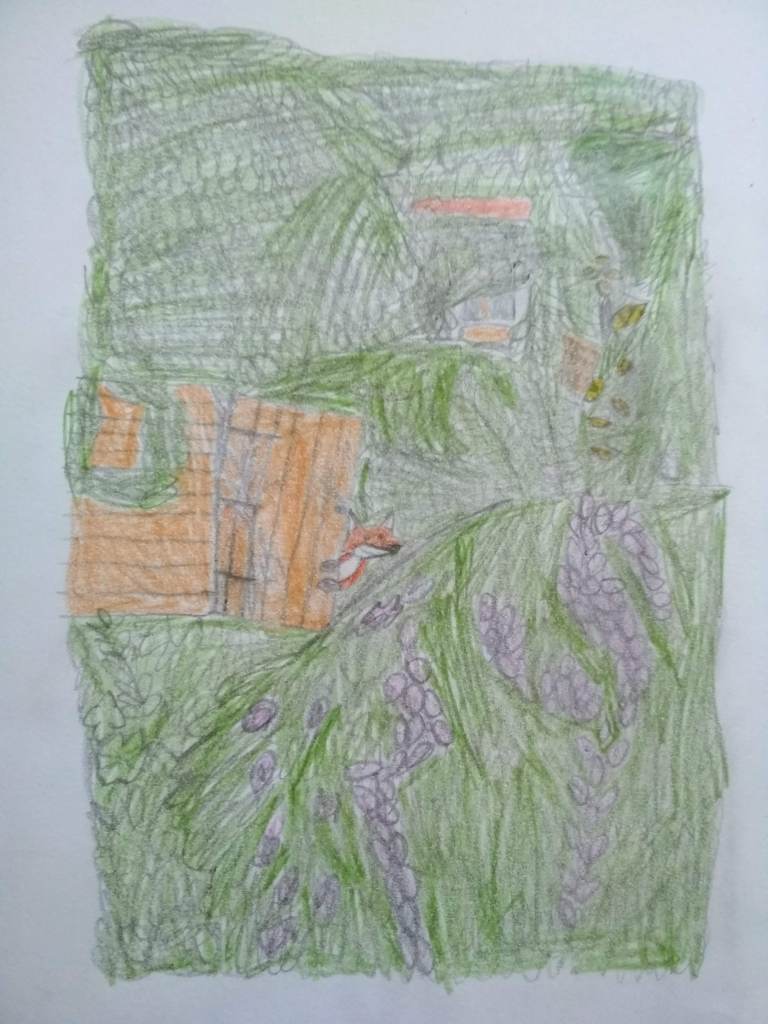
On 25 May 2019, I was in my father’s bedroom drawing a picture of the garden outside his flat. I put lots of detail in the picture, including the flowers, grass, bushes, et cetera. There used to be a fox and her noisy kits living in the shed with its door hanging off one of its hinges in the garden. Because of that, I added the fox peeking out from behind the shed’s door in the picture.
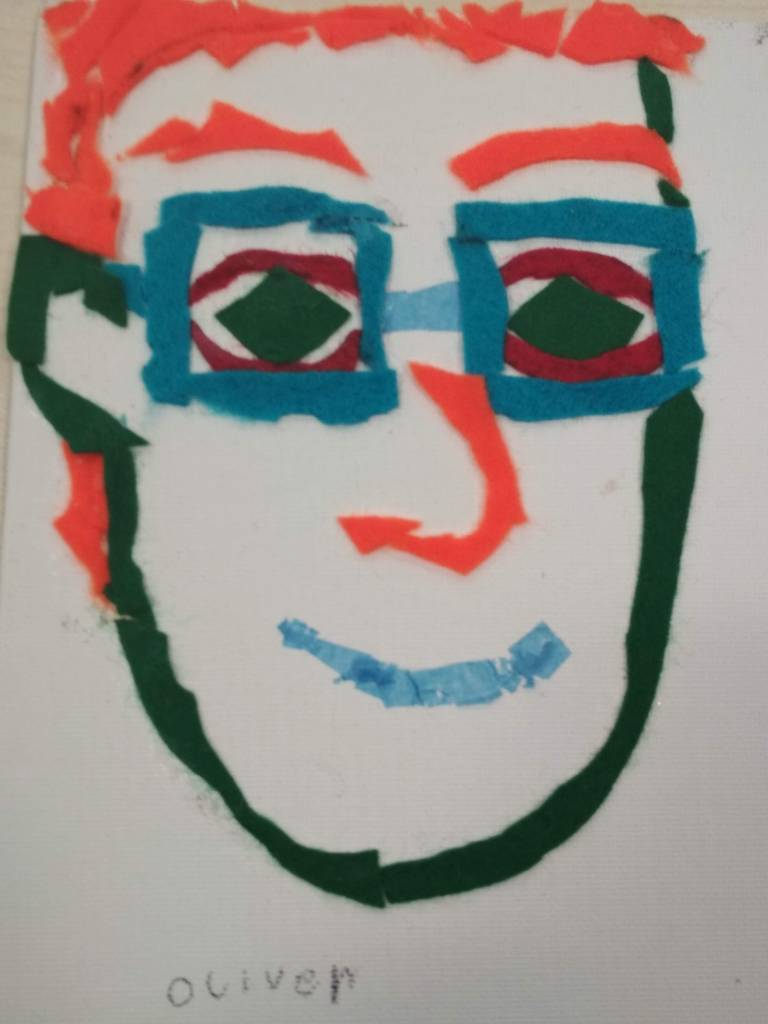
My blue paper and coloured fabric strip self-portrait.
My second name necklace.
My sister’s name necklace.
On 5 June 2019, in my Personal Social Achievement lesson, I made a self-portrait of myself. I used glue to “paint” the outline of my head on a white canvas, and pasted blue paper and strips of coloured fabric onto the outline of my head, my hair, my ears, my glasses, my eyes, my nose and my mouth. The self-portrait was pinned to the Student Gallery wall, and stayed there from that day to 27 June 2019. I made a second necklace with my name on it and a necklace with my sister’s name on it, and got to take them home.
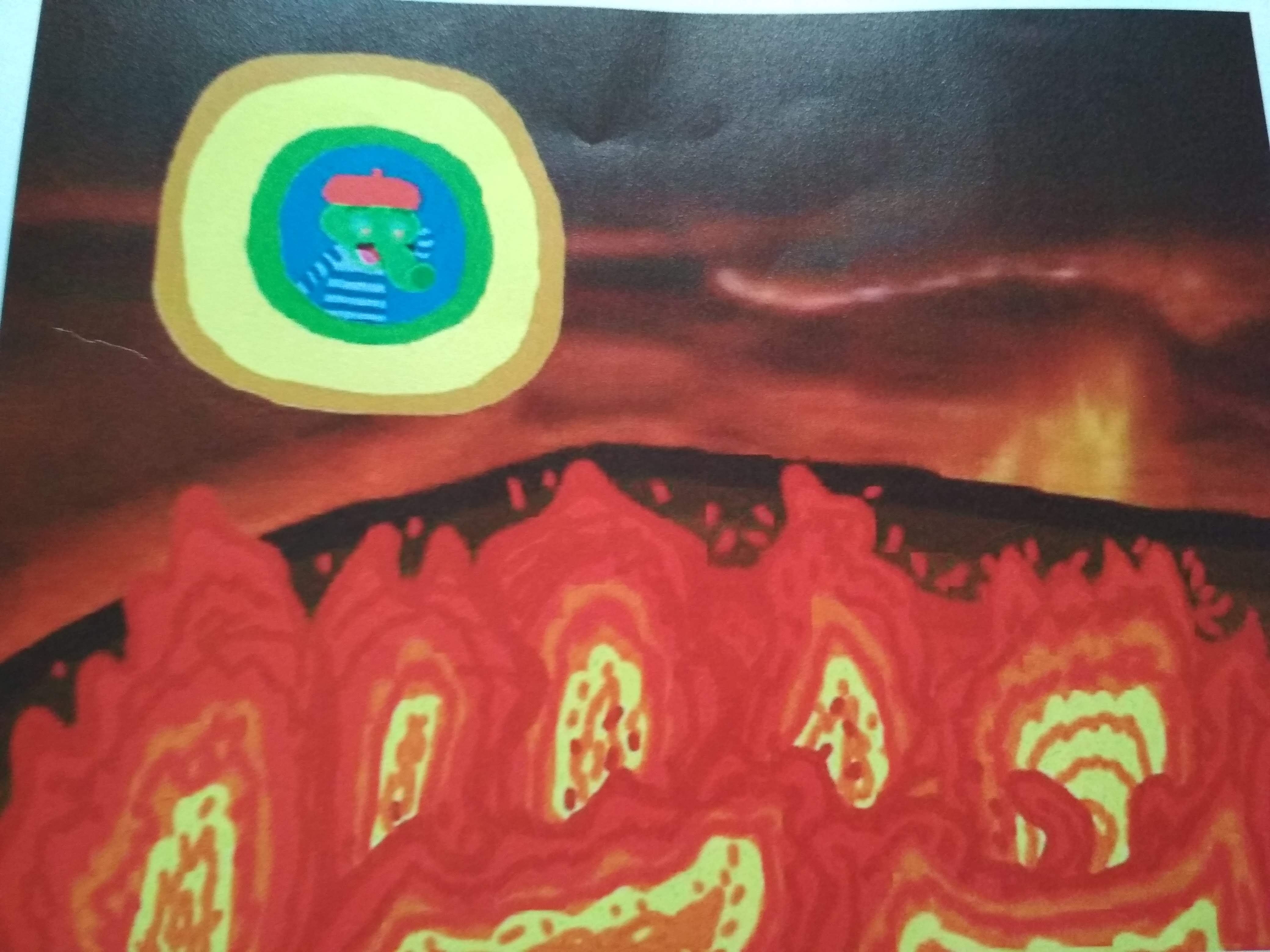
Sacré Burn!
On 10 June 2019, I made a surrealist picture on Adobe Photoshop. The picture is named Sacré Burn!, and depicts a French elephant-like alien peeking out of a drum and, to his surprise and horror, seeing a dark pit filled with detailed fiery flames in a dark cave, which is out of place as no person could survive in such a dangerous cave. The picture’s name is a cross between ‘Sacré bleu!’, a French expression of surprise, exasperation or dismay, and “burn”, which is what fire does.
Under the Weather.
On 18 June 2019, I made a surrealist picture on Adobe Photoshop. The picture is named Under the Weather, and depicts Ferguson the Fox lying in his bed and feeling ill, complete with a thermometer in his mouth, while the sky pours with rain outside, and a rain cloud rains on him, which visually explains the meaning of “under the weather”. I was originally going to use Oliver M. in the picture, but decided to use Ferguson instead. Ferguson was originally going to have his tongue hanging out of his mouth instead of the thermometer.
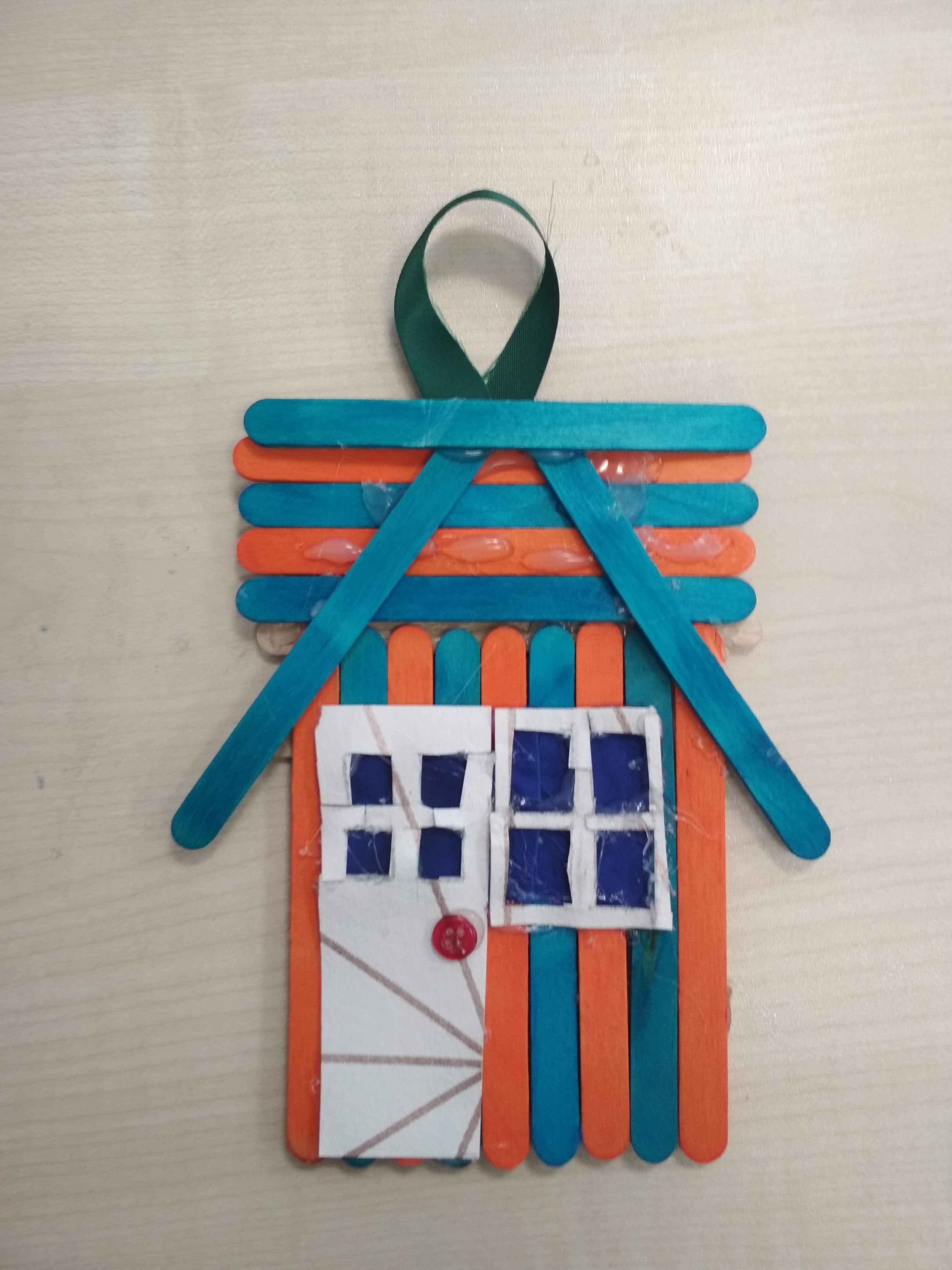
My popsicle stick house.
On 19 June 2019, in my Personal Social Achievement lesson, I made a house using popsicle sticks, orange popsicle sticks, blue popsicle sticks, a glue gun, blue pieces of cloth, paper, a pencil, a rubber, a little red button and a green ribbon. The house was pinned to the Student Gallery wall, and stayed there from that day to 27 June 2019.
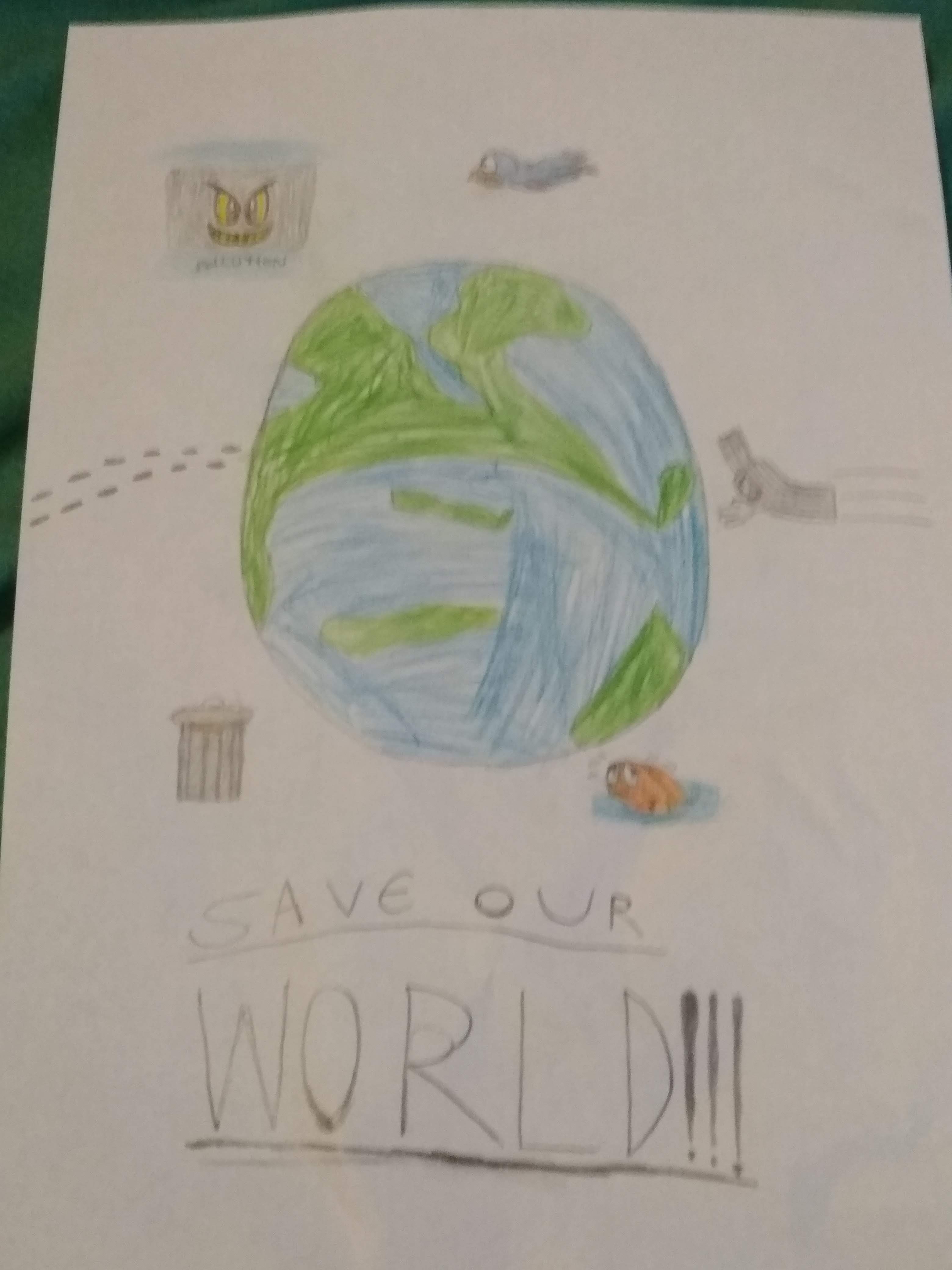
My poster about saving the planet.
On 21 June 2019, I made a poster about saving our planet. My sister was thinking about setting up an Instagram account for saving our planet, so I designed the poster for it. The poster depicts the Earth surrounded by an evil plastic bottle diving towards the sea, a fish afraid of meeting his demise, which is caused by plastics in the sea; a bird with a blood-filled cut in his body, footprints from the humans, signifying our responsibility; a rubbish bin, and pollution in the sky, represented by a pair of devious, yellow eyes with red pupils and a devilish smile with yellow teeth.
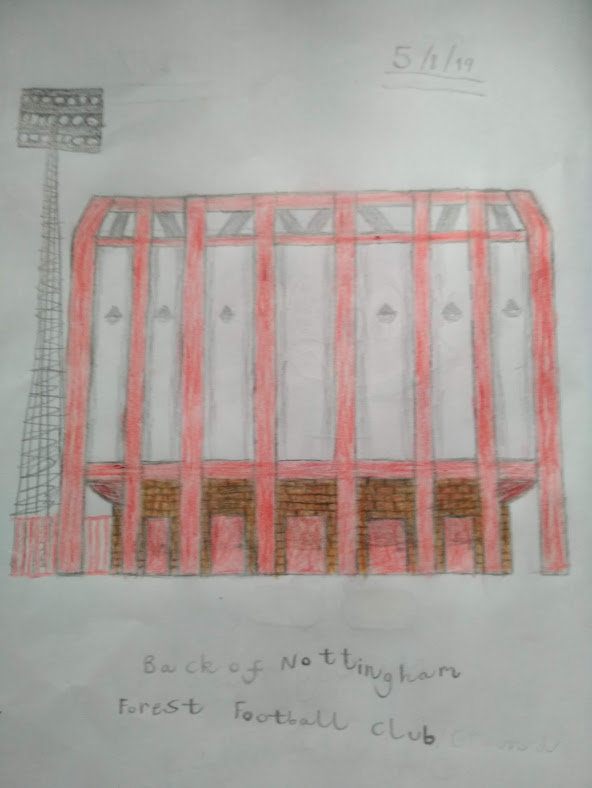
The back of Nottingham Forest Football Club.
On 4 August 2019, I was in my mother’s friend’s son’s bedroom drawing a picture of the back of Nottingham Forest Football Club. The picture was finished on 5 August 2019.
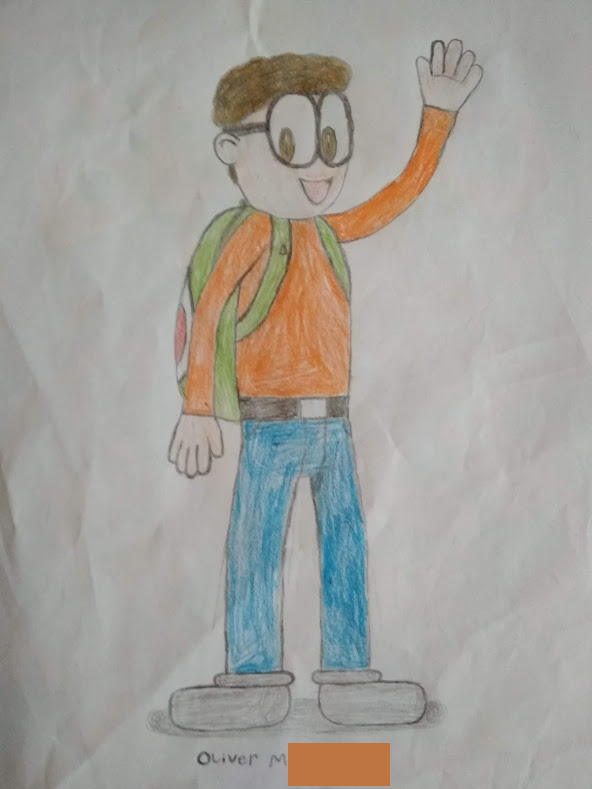
My drawing of my 10-year-old self.
On 24 September 2019, I began drawing a picture of Oliver M., and finished it on 25 September 2019. Being a 10-year-old was a good time in my life, because I had the toys that I could play with, was energetic and fun-loving, played with other children, and took part in many activities.
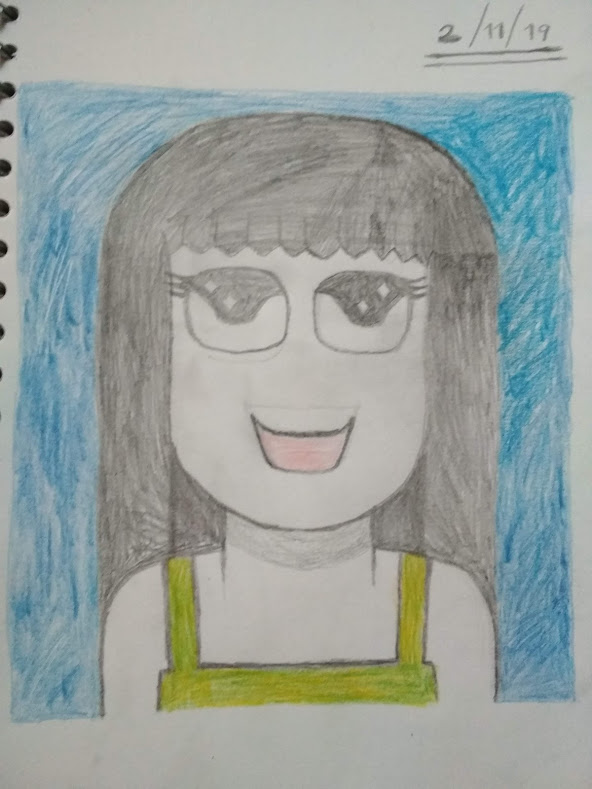
My Goth girl picture.
On 1 November 2019, I began drawing a picture of a Goth girl with black hair and sparkly, dark eyes, which I found harrowing, and finished it on 2 November 2019. This is my take on a painting that I encountered at a possible college placement on 31 October 2019. The painting was done by a student at the college, and I was told that the painting had a mixed review because of the creepy look of the Goth girl depicted in it. However, it was given to one of the teachers as a present, and therefore, it was displayed on a shelf in her office in the college until June 2020.
Oliver and the Stinkbombs.
I began production of a 77-second short film titled Oliver and the Stinkbombs in September 2019, and finished it and uploaded it to YouTube on 12 November 2019. The film’s plot goes like this: Gary Smith sneaks a stinkbomb into Oliver M.’s sandwich before running off. Oliver walks up to the table and sits at it and takes a bite out of his sandwich, causing the stinkbomb inside to burst and emit a ghastly, grizzly, stinky stench. Oliver coughs and gags, and Gary laughs and points at him from outside. Oliver angrily yells, “GARY!”, and chases after Gary, telling him, “Get back here, you dirty prankster!” Gary runs off, and Oliver screeches to a halt (like a Hanna-Barbera character) when coming across a box of stinkbombs that Gary bought from a joke shop. He declares, “He can’t get away with a disgusting prank like that. I’ll show him!” The next scene shows Oliver in a hangar, standing on one of the wings of Gary’s futuristic-looking plane. He sneaks one of Gary’s stinkbombs into a parachute pack, and runs off with the box of stinkbombs. Later, Gary is flying his plane in the sky. Oliver watches Gary with a telescope from inside a bush, and says, “Here he comes.” He then jumps out of the bush and lands on a see-saw, sending the box of stinkbombs flying into the sky towards Gary’s plane. A huge, loud, stinky explosion occurs. Gary, wearing his parachute, falls from the explosion, coughing and gagging. He laments, “My stinkbombs!”, and he shakes his fist at Oliver, saying, “I’ll get you for this, Oliver!”, and pulls the ripcord of his parachute, which causes the stinkbomb inside his parachute to burst. Gary is trapped in a stinky cloud and coughs and gags, and lands in a pigsty with a giant SPLAT! Oliver waves at the viewer, ending the film. The film can be viewed here.
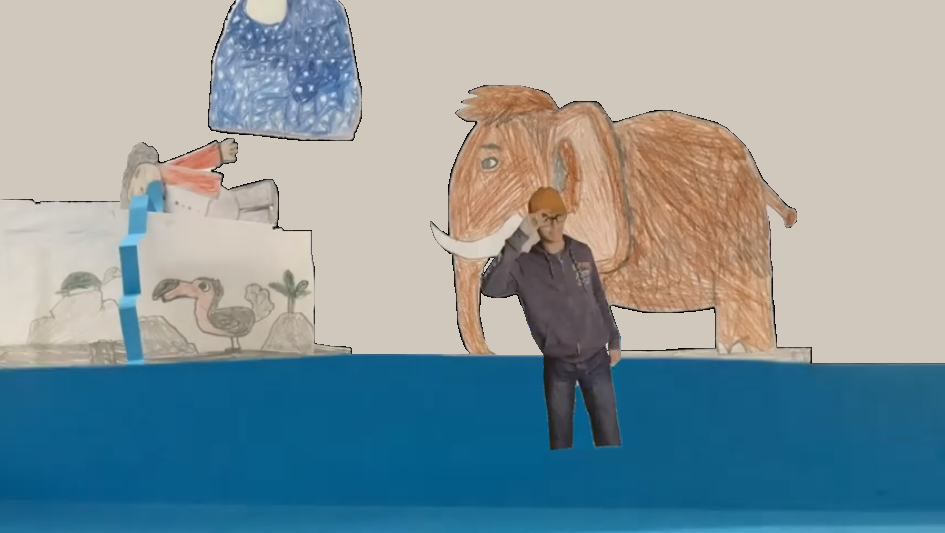
On 28 September 2019, I began drawing and cutting out characters and props to use in my scene for a book project done by Young Animators Club for the Folkestone Book Festival. The scene was adapted from The World’s Worst Children‘s (2016) Dribbling Drew. I finished drawing and cutting out the characters and props and animated the scene on 12 October 2019. On 26 October 2019, photographs of myself bending/leaning forward were taken, and I edited the background around myself out on Adobe Photoshop, and printed the photographs out. On 30 November 2019, I cut out the photographs of myself and animated them against a white background. The scene shows Drew walking across the museum, climbing onto a glass case with a dodo in it and sleeping and flooding the museum with his sea of dribble, and I am then shown wading through the sea of dribble. The scene can be viewed here and here. I also did a surprise stop motion animation with some big cardboard robots/aliens (made by children in a project from the previous week). I animated the big robots/aliens, while another student animated the little robot/alien.
A Week in the Life of Dad and I.
I began production of a 72-second short film titled A Week in the Life of Dad and I in October 2019, and finished it and uploaded it to YouTube on 16 January 2020. The film was made using Adobe Animate CC and was based on my holiday in Denmark in July 2019. The film’s plot begins on Monday, with Oliver M. and his father planning to go to the Westway Sports and Fitness Centre to play table tennis. However, it began raining outside, so they watched two films (Ready Player One (2018) and Alpha (2018)) on Oliver’s father’s computer together. One bright sunny Tuesday, Oliver and his father went to the Westway Sports and Fitness Centre to play table tennis. On Wednesday, Oliver and his father flew to Denmark and went for a walk in Skanseparken in Nørresundby (Oliver’s father used to play there when he was a child). On Thursday, Oliver and his father went to the very top of Denmark known as Grenen. On Friday, Oliver and his father came across an automatic car-like lawn mower named Robert, and went to Lindholm Høje, a Viking burial site and former settlement. On Saturday, Oliver and his father went to Nordsøen Oceanarium, where they saw seals swimming around and being fed some fish and blowing raspberries, and Ørnereservatet: Eagleworld, where they saw different types of eagles and falcons, including a Verreaux’s eagle/African black eagle. On Sunday, Oliver and his father flew back to London, and after all that activity, Oliver had a nap on his father’s bed, which ends the film. The film can be viewed here.
My National Book Token for World Book Day’s Design a National Book Token Competition.
On 27 February 2020, I designed a National Book Token for World Book Day’s Design a National Book Token Competition, depicting a boy reading an orange book while he is surrounded by a red star, a yellow star, a green star, a blue spiral and an orange, purple and pink spiral.
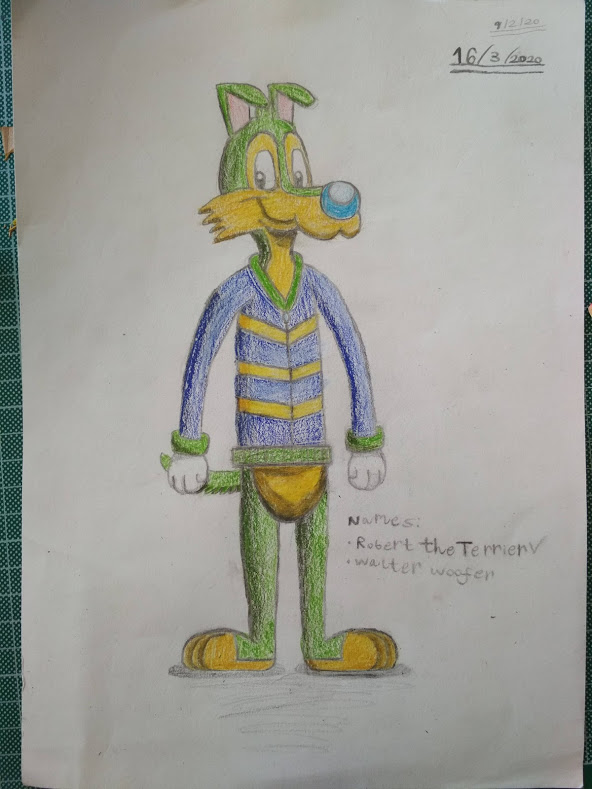
Robert the Terrier.
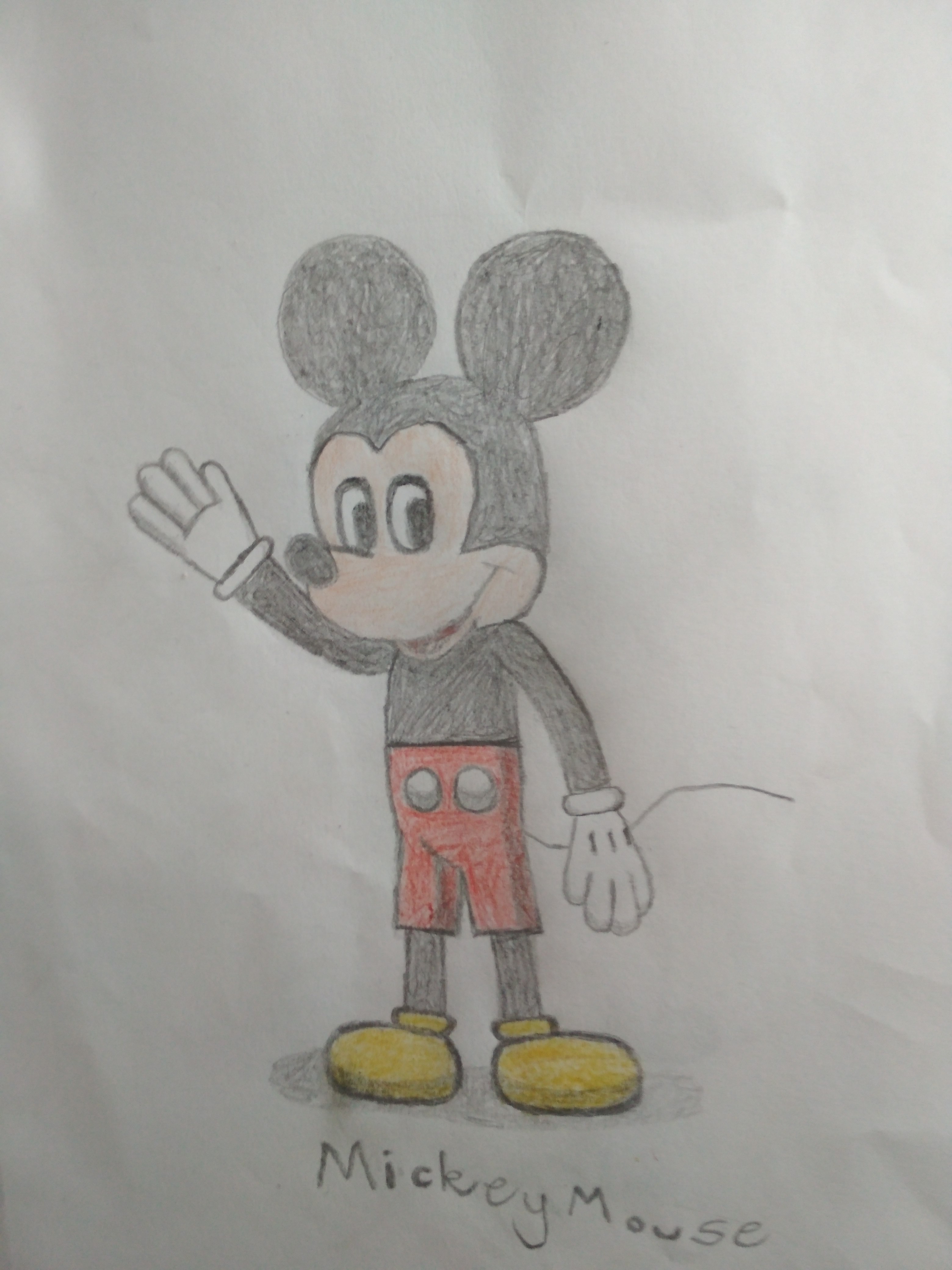
On 5 February 2020, I began drawing a dog named Robert the Terrier. The picture was finished on 9 February 2020. On 16 March 2020, I coloured Robert in, gave him shading, and gave him his name. I was originally going to name him “Walter Woofer”. Robert has green fur, a head and face similar to Tramp from Lady and the Tramp (1955), with yellow Sylvester the Cat-like cheeks, a Scooby-Doo-like muzzle and a blue Wowser-like nose; and big Bugs Bunny-like feet with yellow toes, and he wears a blue Conker the Squirrel-like cardigan with yellow stripes and white Mickey Mouse-like gloves.
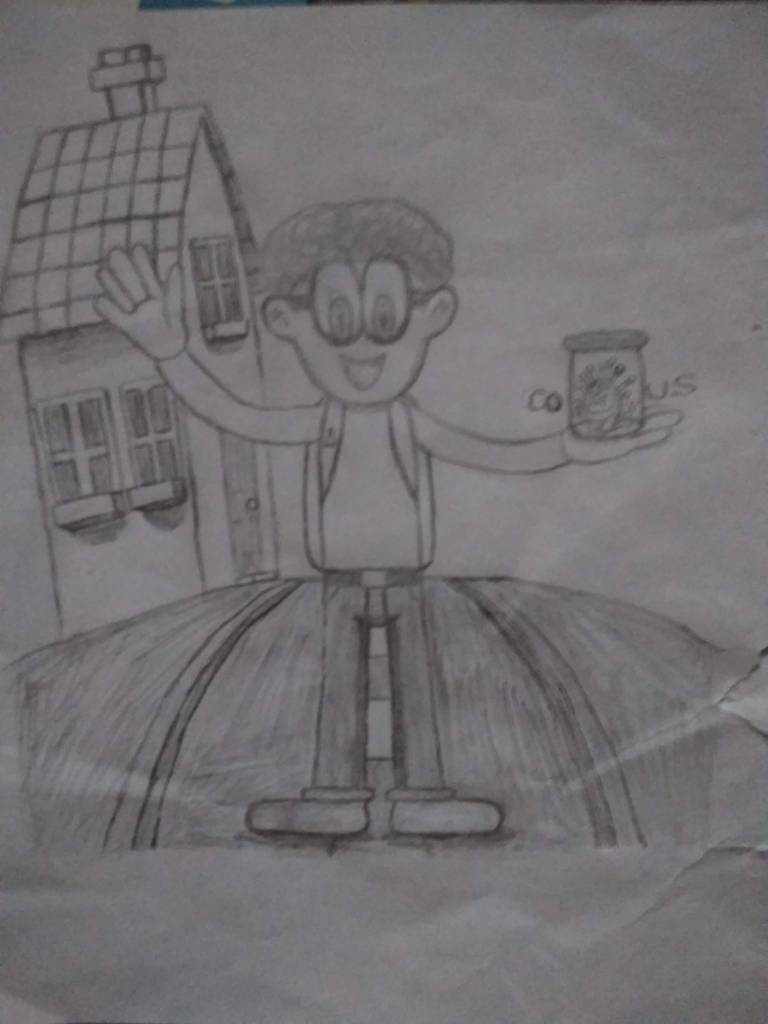
The draft version of Captured Coronavirus.
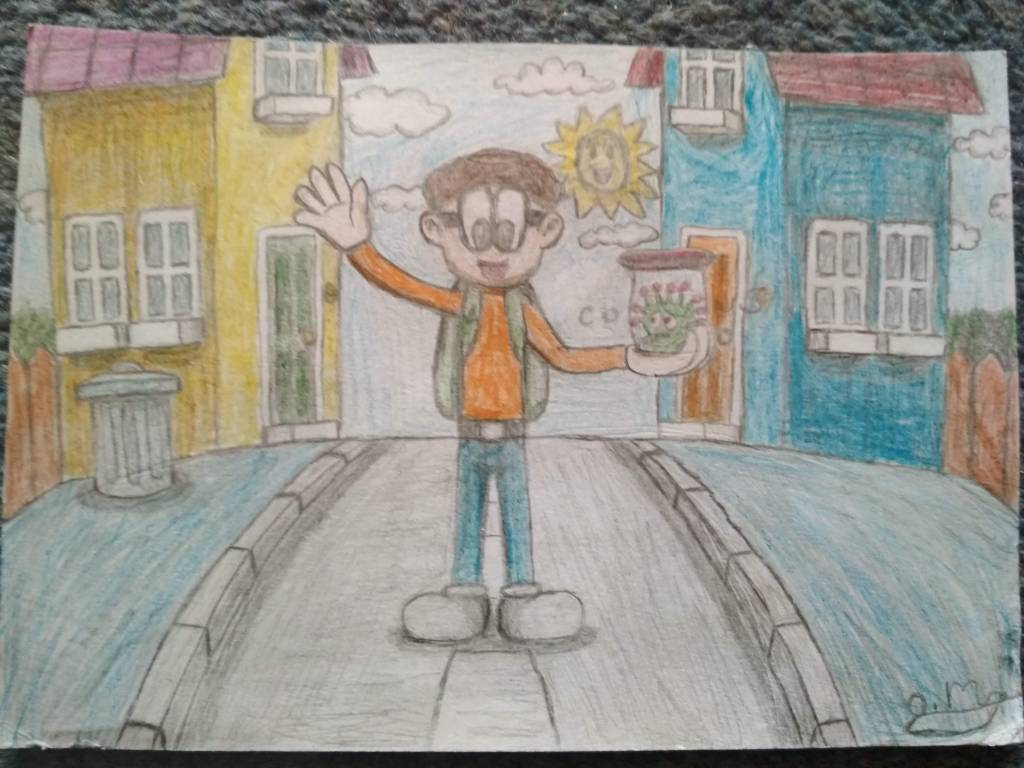
Captured Coronavirus.
On 31 March 2020, I drew a draft version of a picture for a postcard to post to Arts Education Exchange, named Captured Coronavirus. The picture depicts Oliver M. standing in the middle of the temporarily carless road outside two houses, waving and holding a jar with the coronavirus trapped inside, begging to be freed, which symbolises the fact that the virus is gone and Oliver can now go outside. I drew and coloured in the final version of the picture during the first week of April 2020, finishing it on 7 April 2020. On 9 April 2020, I posted the postcard to Arts Education Exchange through the letter box.
How to Use the Toilet.
I began production on a 72-second educational short film titled How to Use the Toilet in March 2020, and finished it and uploaded it to YouTube on 1 May 2020. The film was made using Moho 12 as an entry for the Canterbury Anifest’s Animation in Isolation competition, and teaches autistic people who may have sound sensitivity about using the toilet and keeping safe. The film’s plot begins with Oliver M. drinking from a glass and beginning to walk away. Suddenly, he starts shaking and has a sensation to go and use the toilet. He says, “When I feel that my bladder is bulging after I have consumed food or liquid, I may have a sensation to go and use the toilet.” Oliver then sees a toilet, and enters it. After that, he tells the viewer, “Using the toilet requires many, many steps, like sitting on the toilet if you are a girl, or standing if you are a boy. The important steps afterward are wiping your private parts and bottom, putting your pants back on, flushing the toilet and washing your hands.” After the important steps are shown and explained, Oliver is shown holding a pointer. He says, “We must always remember these steps in order to keep ourselves safe from dangerous germs and viruses.” As he says this, he taps on a picture of a green, grinning germ, who laughs evilly. The scene cuts to a young boy who finds flushing the toilet frightening. Oliver says, “For some people who find flushing the toilet frightening, especially if they are at a young age and have sound sensitivity, they can wear ear-defenders or focus on something positive.” He walks up to the boy and gives a pair of ear-defenders to him. The boy is then seen coming out of the toilet wearing the ear-defenders after using and flushing it, with Oliver congratulating him with a thumbs up, saying, “Well done!” Oliver then waves at the viewer, ending the film. The film can be viewed here.
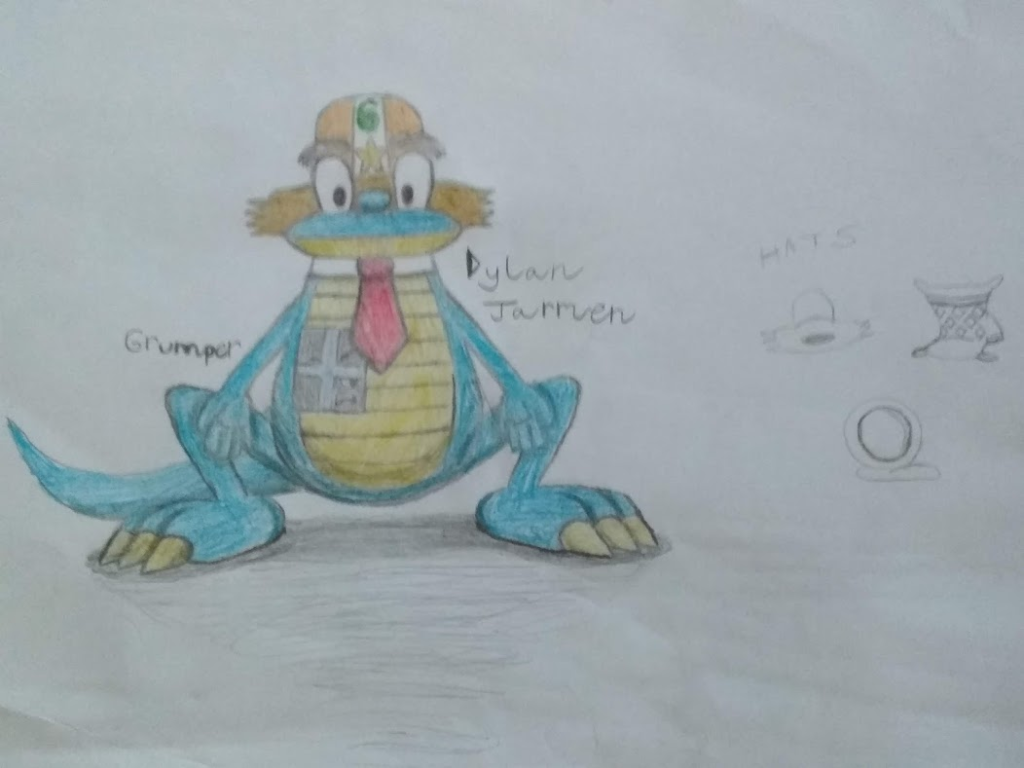
Dylan Jarmen and Grumper.
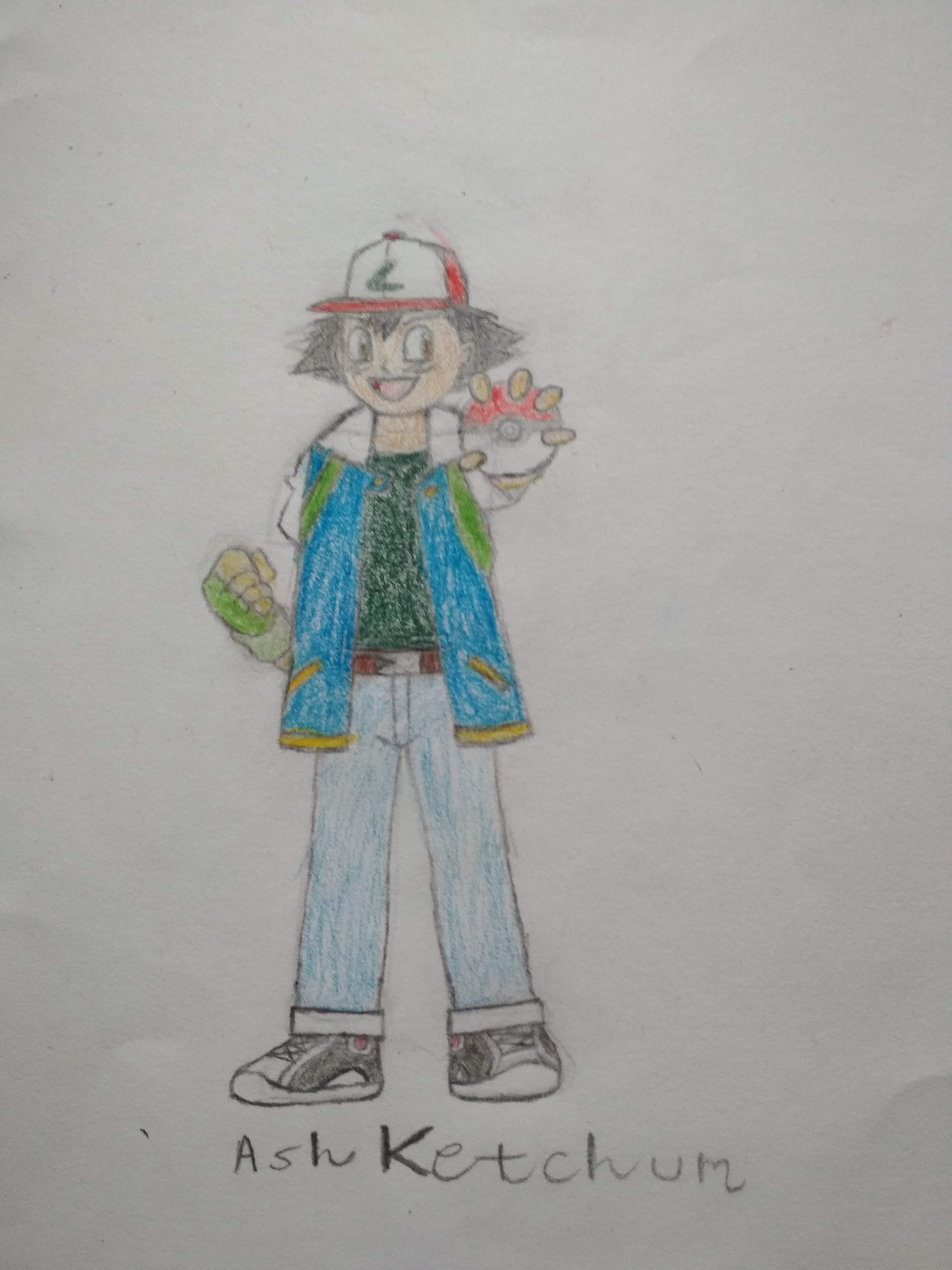
On 29 April 2020, I began drawing a frog-jar hybrid named Dylan Jarmen. The picture was finished on 8 May 2020. I based Dylan on a jar in the British Museum, and his name comes from the fact that he was inspired by the jar. Dylan hails from Texas, is coloured blue and has big feet with yellow toenails and a kangaroo-like tail, and he wears a brown Ash Ketchum-like hat with a green spiral and a yellow star on it and a red Yogi Bear-like necktie. Living inside Dylan is a grumpy, purple gopher named Grumper.
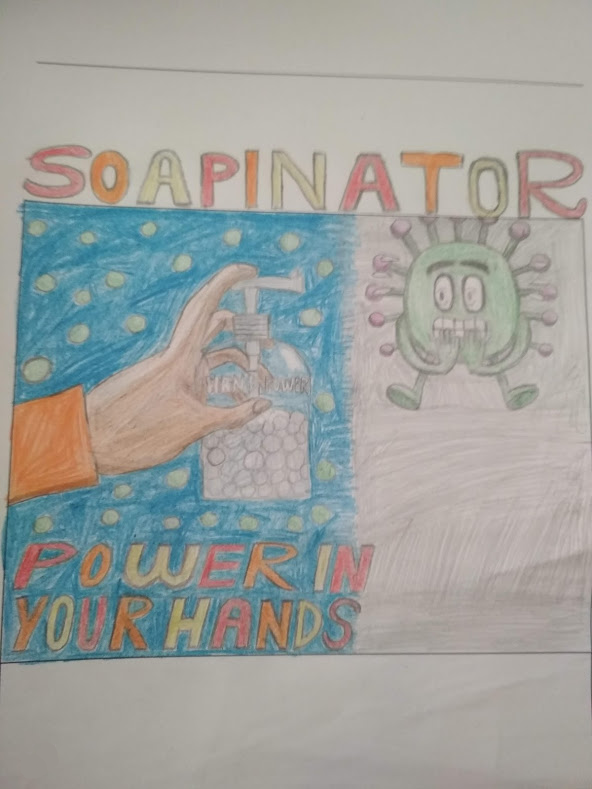
Soapinator: Power in your Hands.
On 12 June 2020, I drew a poster in response to Arts Education Exchange’s Illustration Activity Pack, and coloured it in. The poster is named Soapinator: Power in your Hands, and depicts a hand holding a hand wash bottle labelled ‘Hand Power’ and using it like a gun, aiming it at the panicking coronavirus. The title is a play on Terminator. The poster teaches people how to stay safe, be clean and avoid infecting others during the pandemic, and is a ‘Protect Others’ Poster.
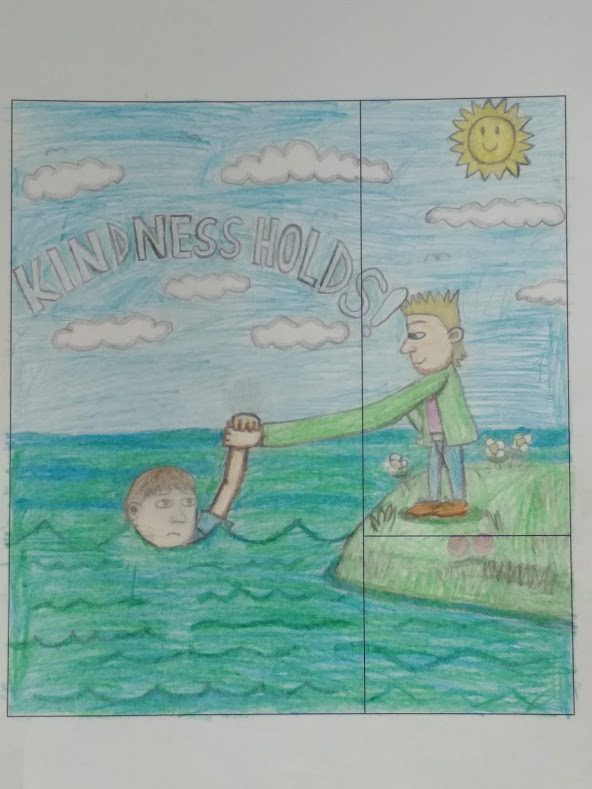
Kindness Holds!
On 19 June 2020, I drew a poster in response to Arts Education Exchange’s Illustration Activity Pack, and coloured it in on 20 June 2020. The poster is named Kindness Holds!, and depicts a man stretching out his arm to help a teenage boy onto the shore from the sea. The poster teaches people how kindness brings people together during the pandemic, and is a ‘Message of Solidarity’ Poster.
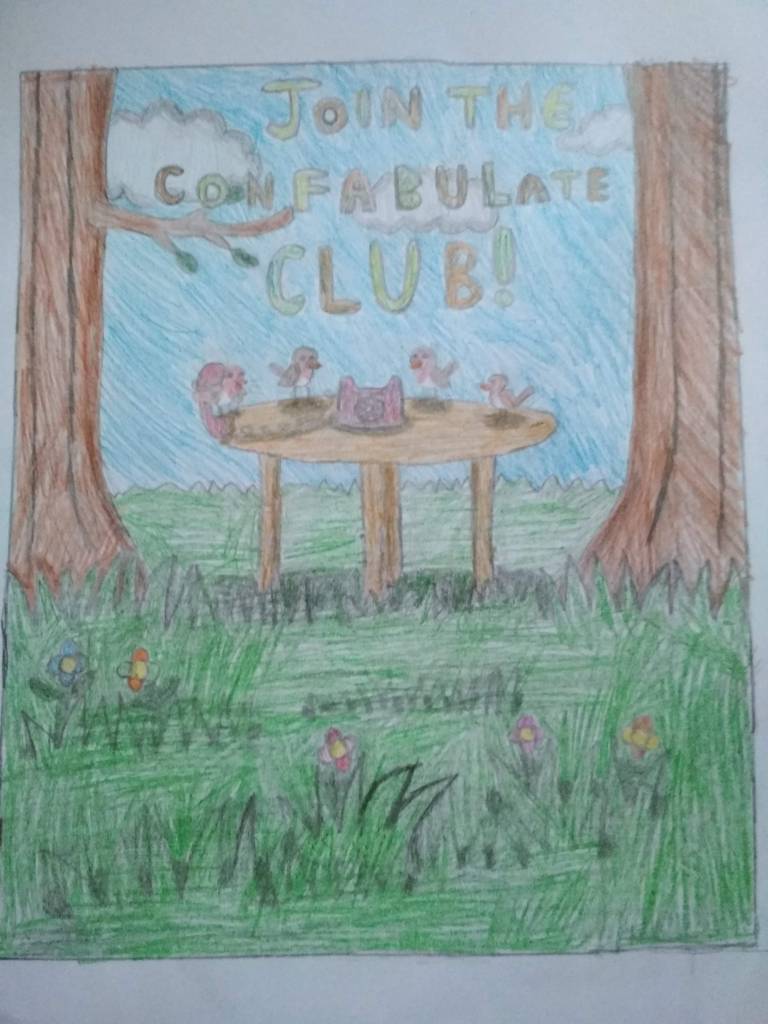
Join the Confabulate Club!
On 9 July 2020, I drew a poster in response to Arts Education Exchange’s Illustration Activity Pack, and coloured it in on 10 July 2020. The poster is named Join the Confabulate Club!, and depicts four robins standing on a small, round table in the middle of a garden. One of the robins is speaking to a friend of his on the telephone. The robins symbolise the renewing of social contact and growth. The poster is about maintaining our mental health during isolation, and is a ‘Mental Health’ Poster.
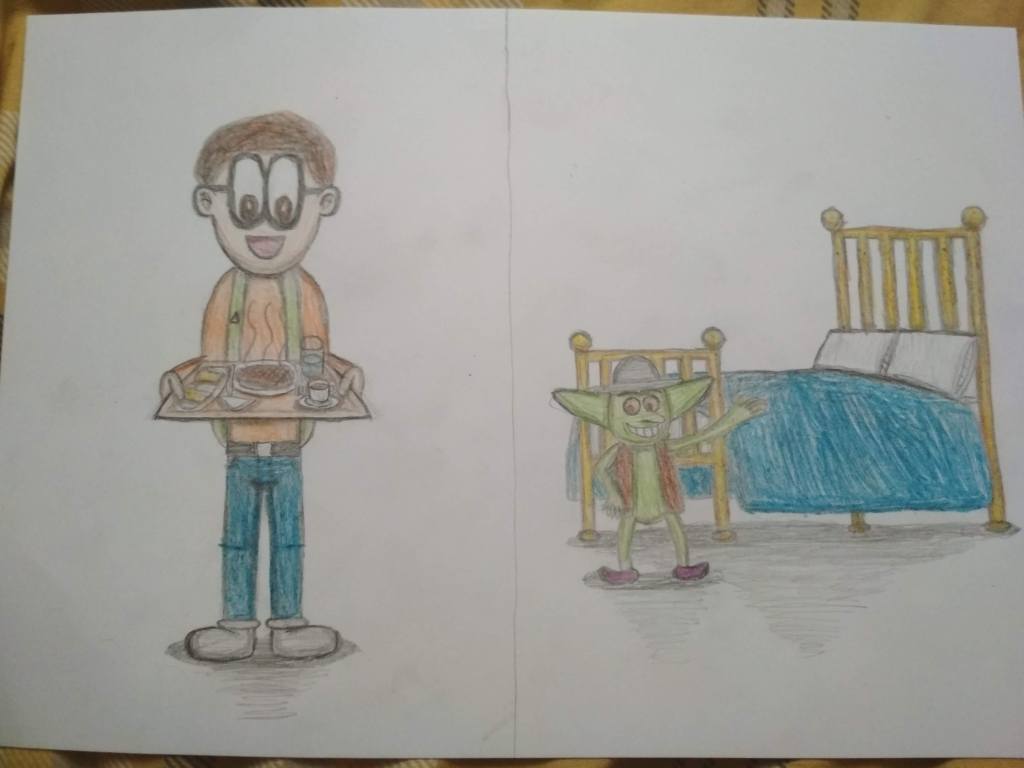
Help for the Homeless.
On 30 August 2020, I drew a picture named Help for the Homeless for a postcard, and coloured it in on 31 August 2020. The idea is to show some of the resources that can be helpful to the homeless people, and there is a charity in Folkestone that actually does this. The character of the young Oliver M. offers the homeless people a breakfast tray to keep them from starving, while Gary Smith offers them a big, nice, comfy bed to relax and sleep in and keep warm. This picture was originally going to be entered in the Secret Postcard Show in 2020, but due to the coronavirus outbreak, it was unlikely that it would happen.
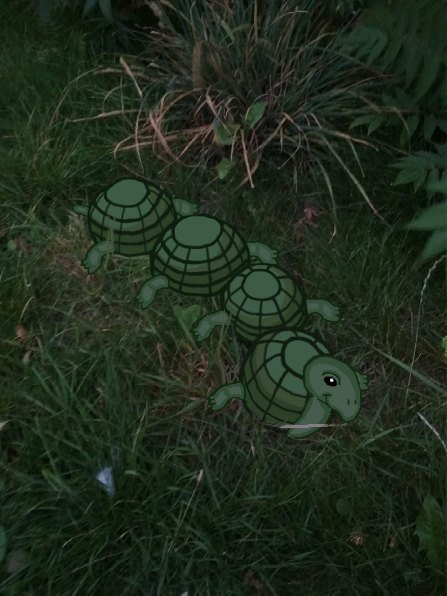
Caterturtle/Quadroshell.
On 18 September 2020, I edited a photograph that I took in the garden using Paint and Adobe Photoshop. The picture is named Caterturtle or Quadroshell. It depicts a turtle with four shells instead of the normal one shell, making it look like a caterpillar. If I were to find the caterturtle in real life, it would be in the wild. It would also be an anomaly in nature, and would be the ancestor of modern-day turtles (Charles Darwin’s theory of evolution by natural selection). The idea is about a creature that has never been heard of or discovered before, but lives in the imagination and is a part of lost natural history. It was intended to be entered in the Lost History exhibition on in September 2020.
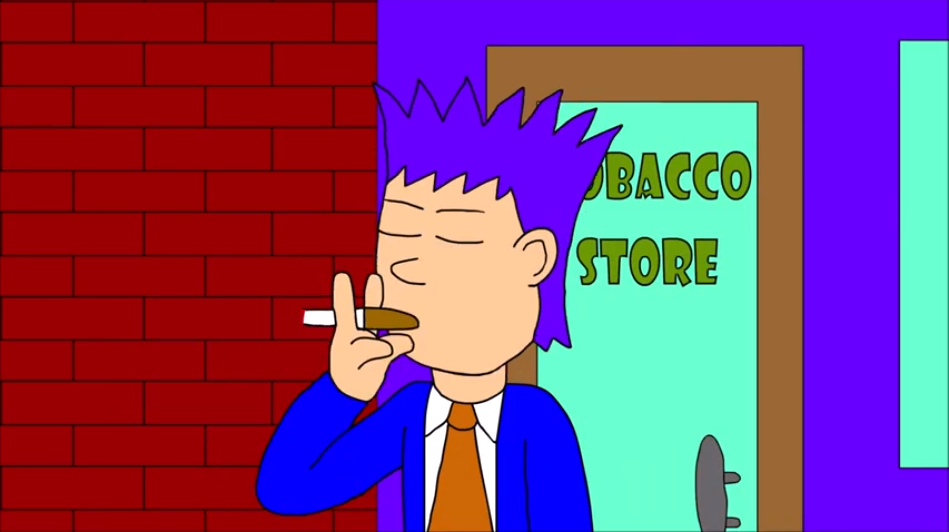
Dangers of Smoking.
I began production on a 55-second short film titled Dangers of Smoking in September 2020, finished it on 13 April 2021, and uploaded it to YouTube on 24 April 2021. The film was made using Adobe Animate CC as part of an assignment for one of my BTEC Information Technology units at school, and conveys the message to 14-19-year-olds that although people think that smoking relaxes the brain, it actually stimulates it and causes health problems. The film’s plot begins with a man walking into a tobacco store, and coming out holding a cigarette. He smokes the cigarette and blows a cloud of smoke into an old lady’s face. The camera zooms in on the man’s body to reveal his lungs and tranchea. The lungs and tranchea fill with brown-spotted tar with smoke billowing from it, while his heart beats at an alarming rate. The man, feeling the effects of the tar and fast heart-beating, throws the cigarette away and begins to cough (I remember hearing the coughing sound effect in the audiobook version of The World’s Worst Children 2‘s (2017) Humbert the Hungry Baby). Grey, squiggly lines indicating the man’s affected health and bad breath escape his mouth. His affected teeth turn green, and each time the man coughs, his teeth begin to turn brown. The scene cuts to a close-up shot of the coughing man’s mouth, showing his now-brown teeth, flapping tongue and slightly disfigured gums. After this, the man notices a young woman smoking, and takes the cigarette from her, much to her anger. He smokes the cigarette and blows a cloud of smoke, and the camera zooms in on the man’s head to reveal his brain. After a few seconds, the brain is suddenly struck by six lightning bolts, indicating its stimulation, and the man suffers from a stroke and falls to the ground, unconscious. The film ends with an iris out, and white text against a black background saying, ‘The screen of illusion: smoking is dangerous!’, with trails of smoke rising from the ‘d’ and ‘!’ of ‘dangerous!’ “Urgency” by Dylan Sitts is the song that plays throughout the film. The film can be viewed here.
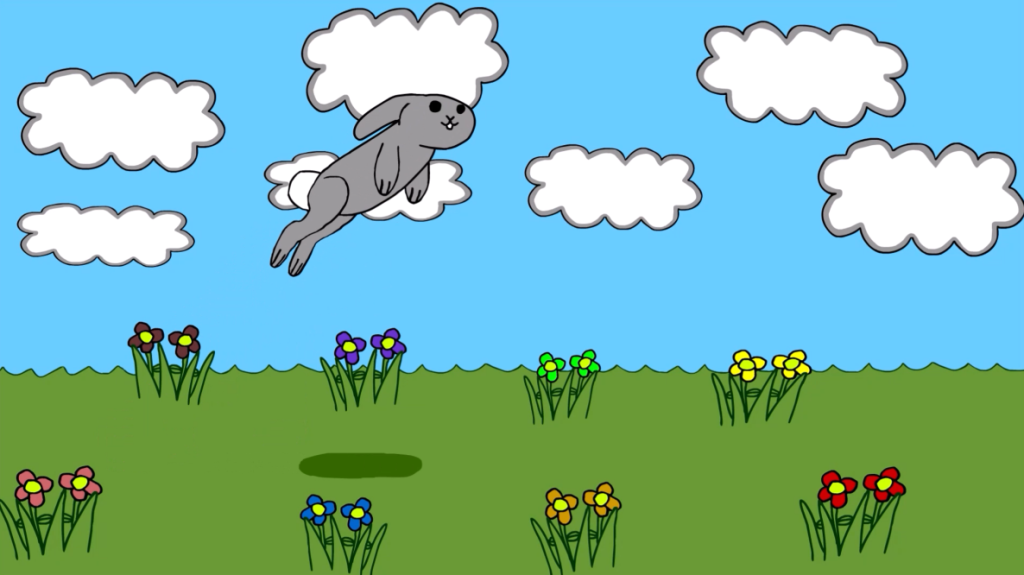
My ease-in and ease-out test animation.
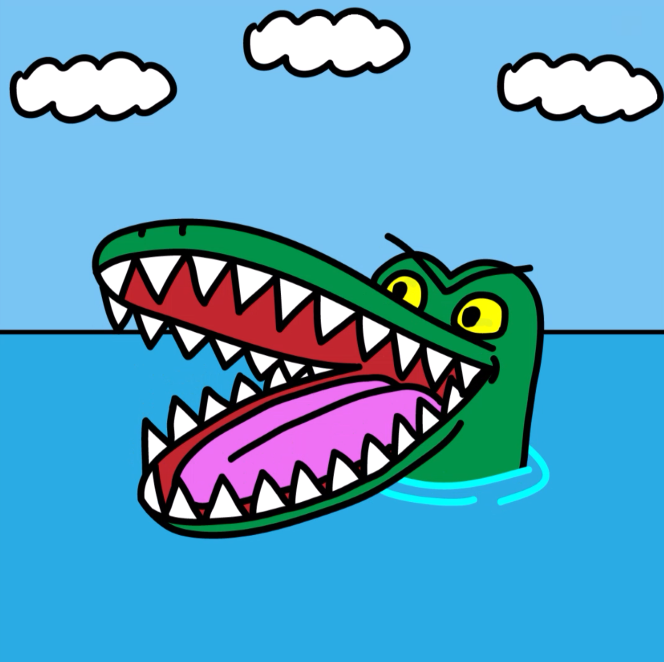
My crocodile GIF animation.
I began production of a 1-second animation of a rabbit jumping on 19 May 2021, finished it on 26 May 2021, and uploaded it to YouTube on 6 June 2021. The animation was made using Adobe Animate CC as a test of the software’s easing techniques/features in my spare time, and can be viewed here. I also produced a 5-second GIF animation of a crocodile snapping his jaws in June, using Adobe Illustrator, Photoshop and After Effects, and uploaded it on 30 August 2021 (video can be viewed here).
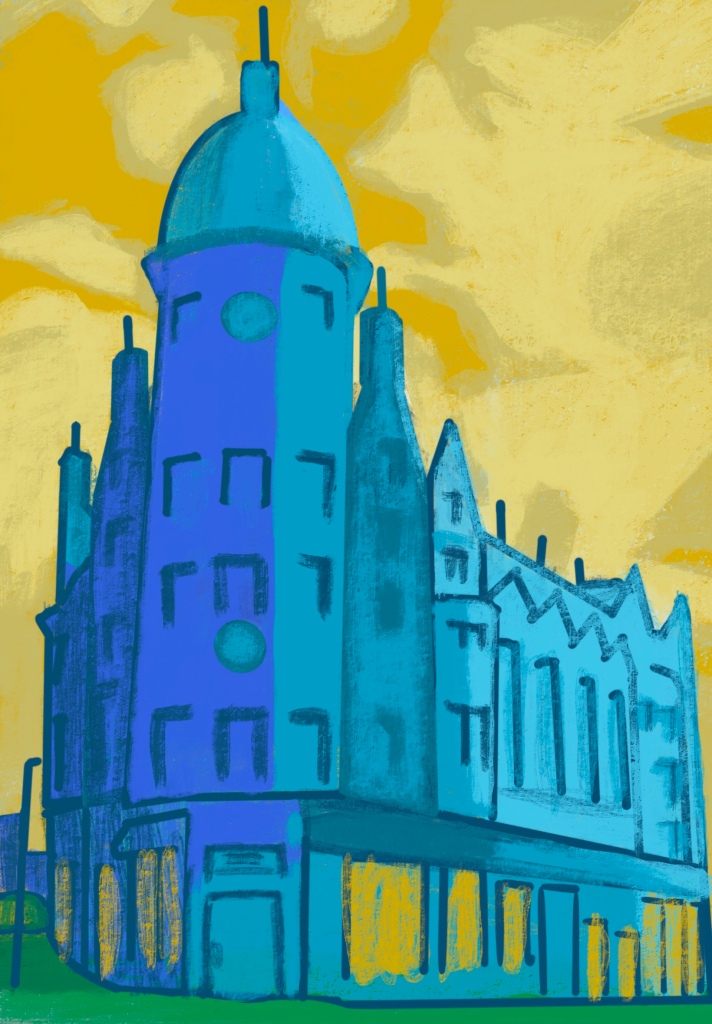
My abstract shape castle-church line drawing.
My watercolour building line drawing.
My Procreate-painted building line drawing.
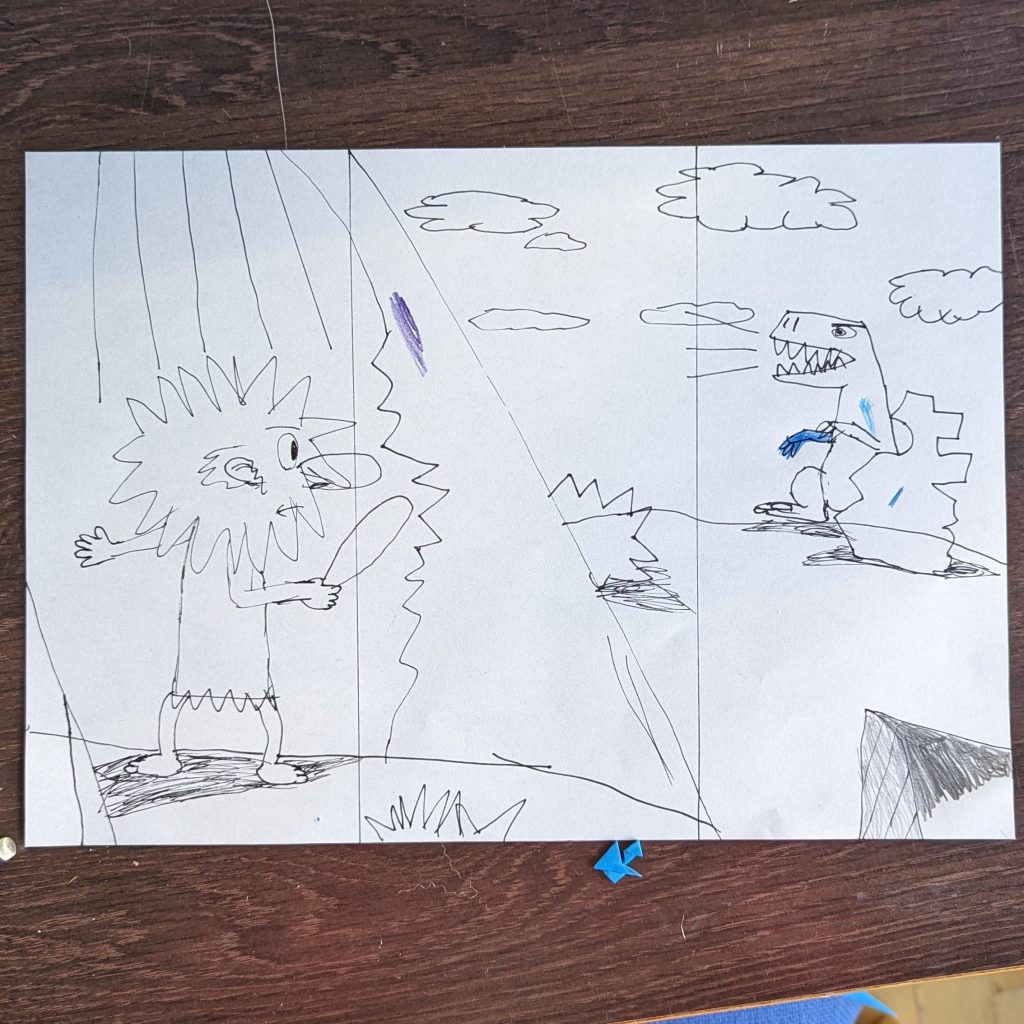
Reference drawing for prehistoric abstract shape paintings, with colour guide markings.
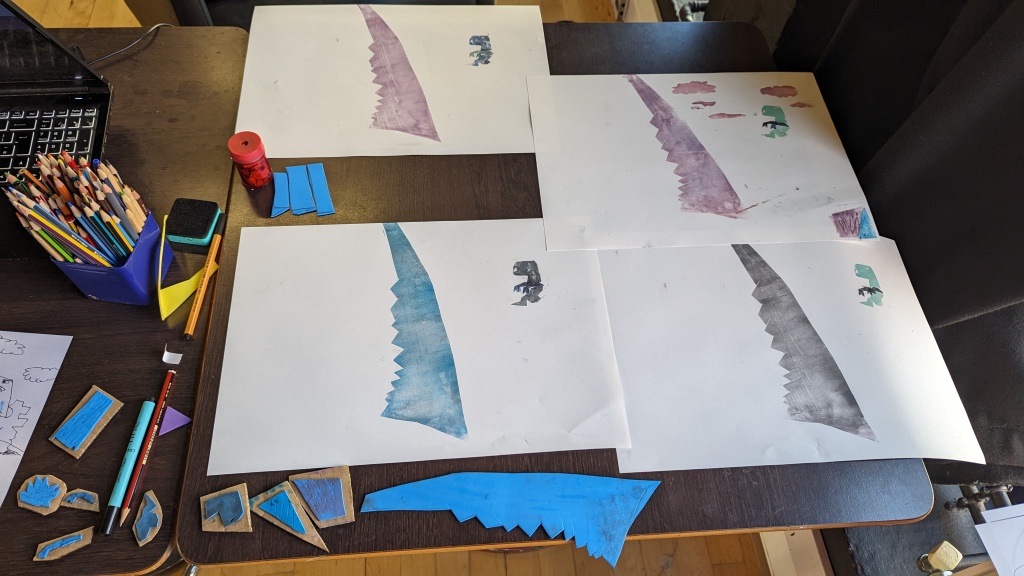
In-progress prehistoric abstract shape paintings and shape cutouts.
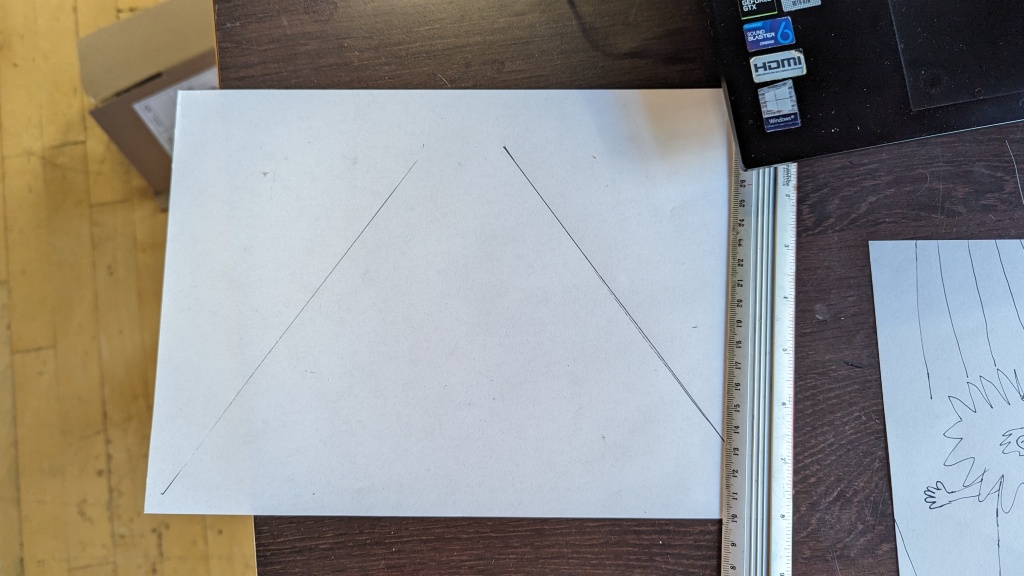
Paper with guide triangle for drawing in.
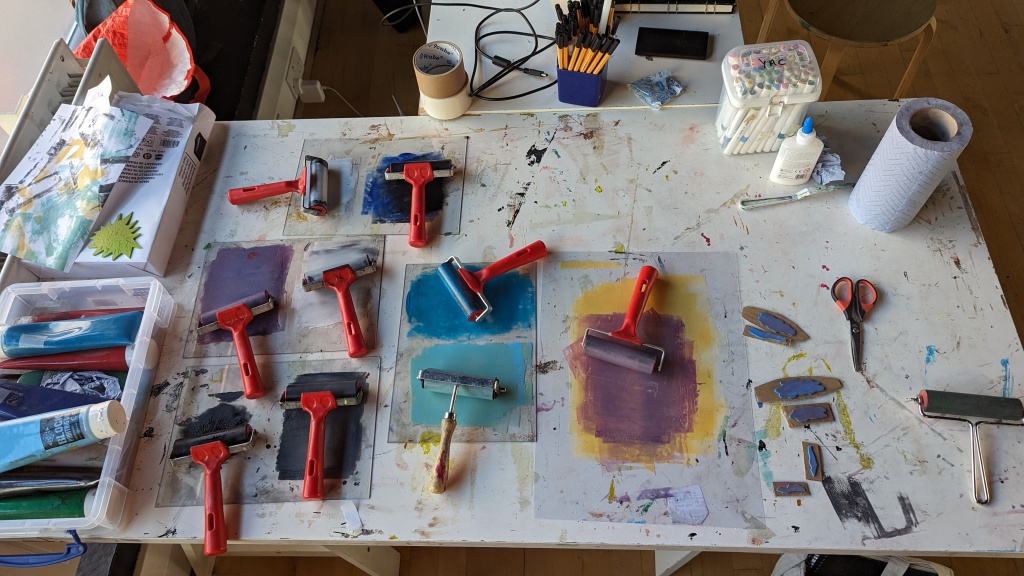
Equipment used for prehistoric abstract shape paintings.
Roller print example by Lydia Hibbert.
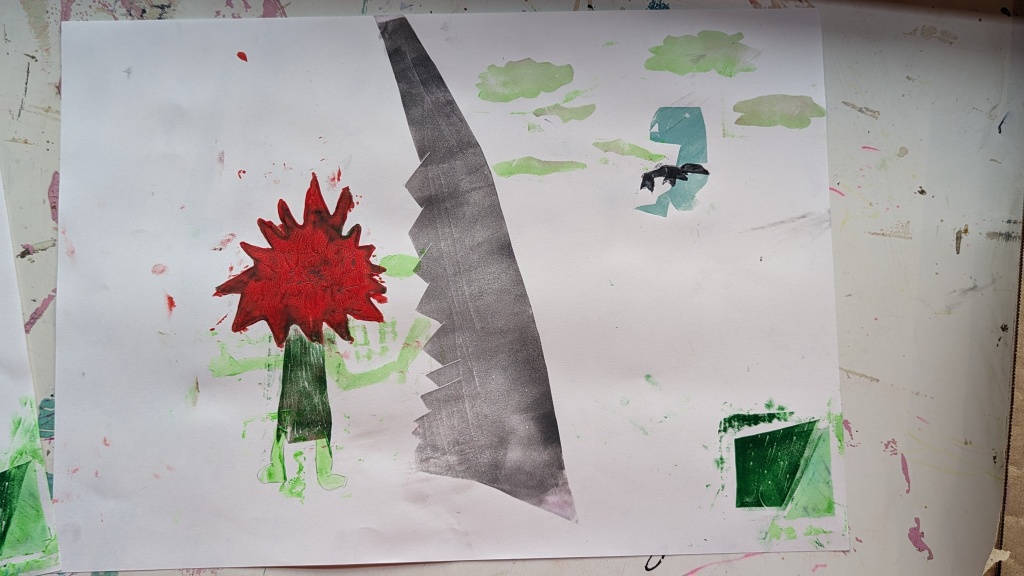
Finished first prehistoric abstract shape painting.
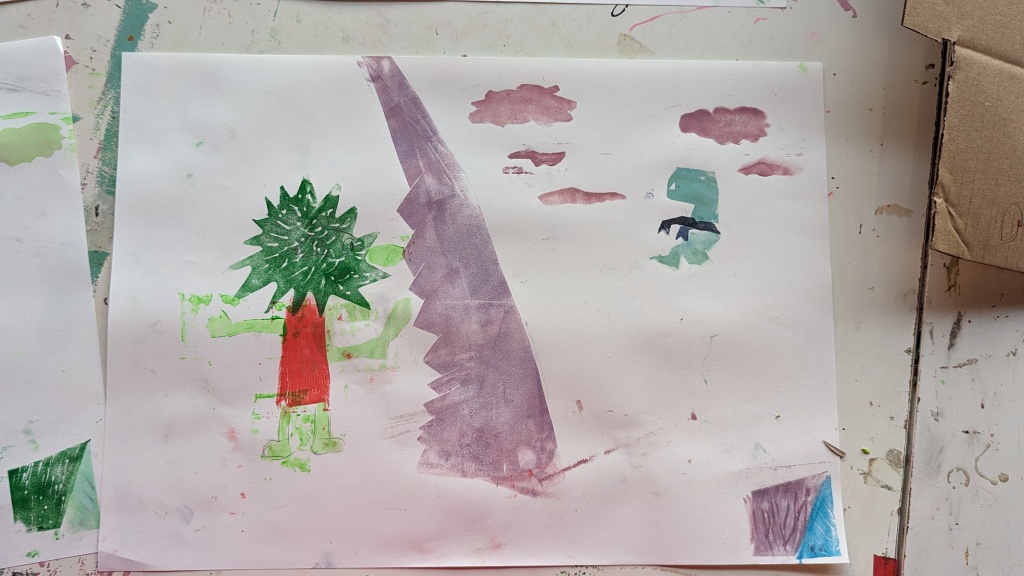
Finished second prehistoric abstract shape painting.
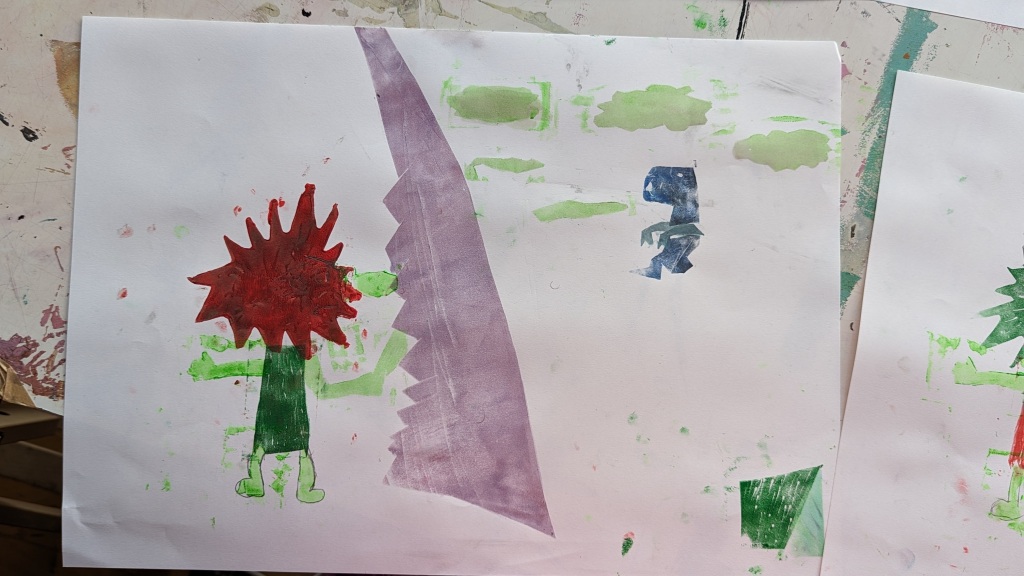
Finished third prehistoric abstract shape painting.
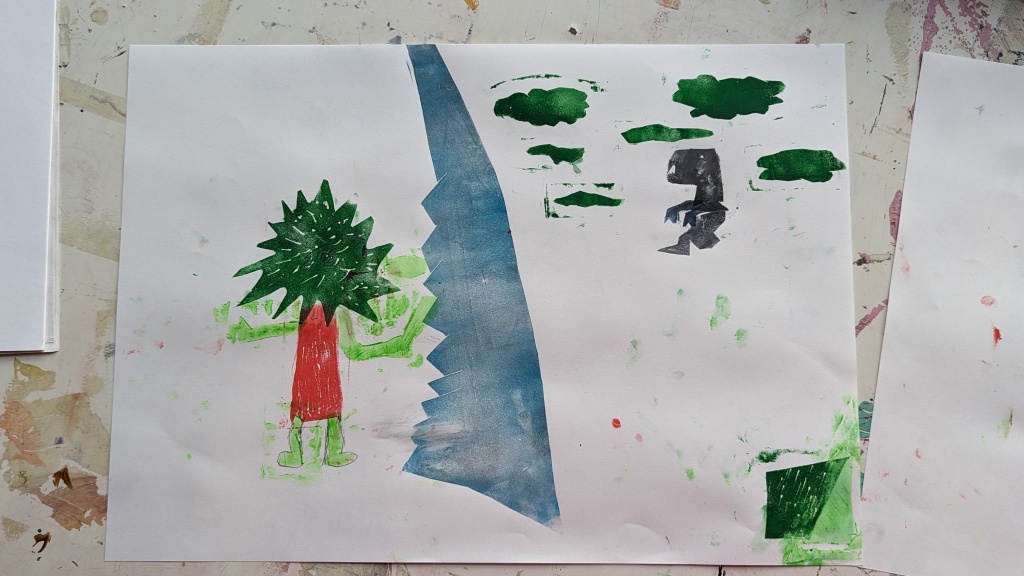
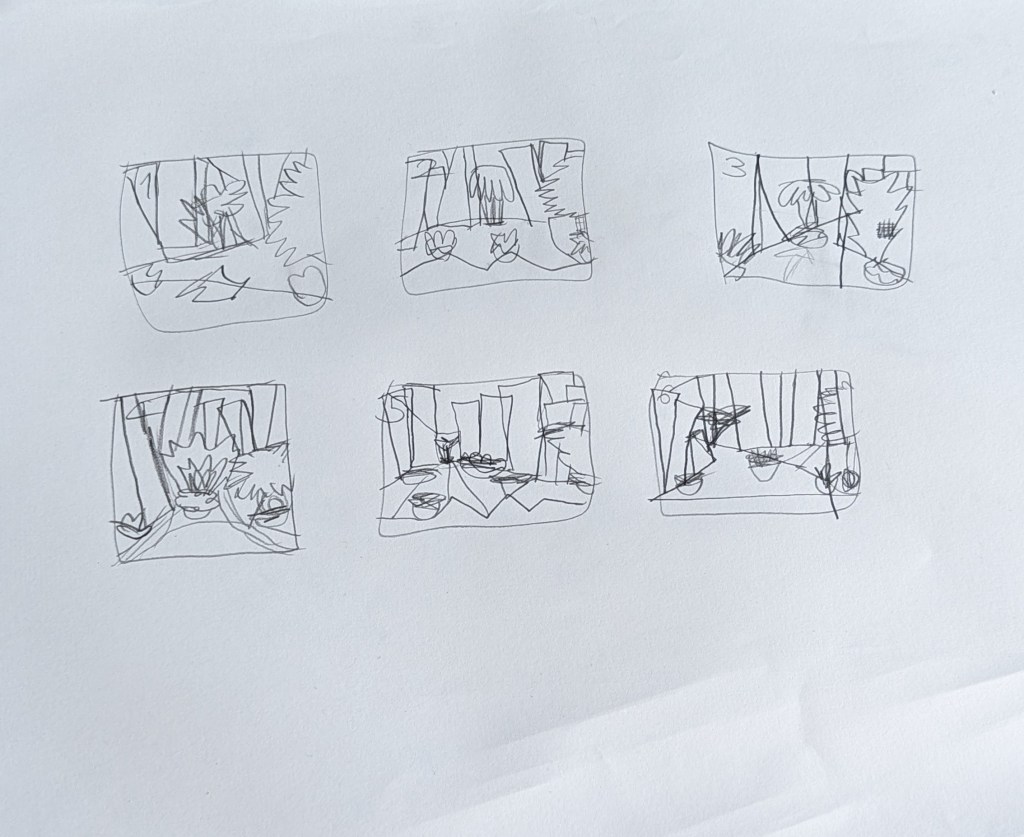
In August 2023, I did a watercolour-painted line drawing of six city buildings in the middle of the desert, with a colour scheme inspired by What’s Opera, Doc? (1957), and an abstract shape line drawing of castle towers and churches in Folkestone, made using Adobe Illustrator. I also did a line drawing of another Folkestone building on Procreate, using different paintbrushes and its Alpha Lock tool to add a What’s Opera, Doc?-inspired colour scheme, shading and detail to the buildings, cars, ground, sky and clouds. From August to September 2023, I used paint rollers and shape cutouts to make four prehistoric abstract shape paintings, in which a caveman lies in wait to beat an approaching dinosaur with his club, and did six city-corridor thumbnail drawings.
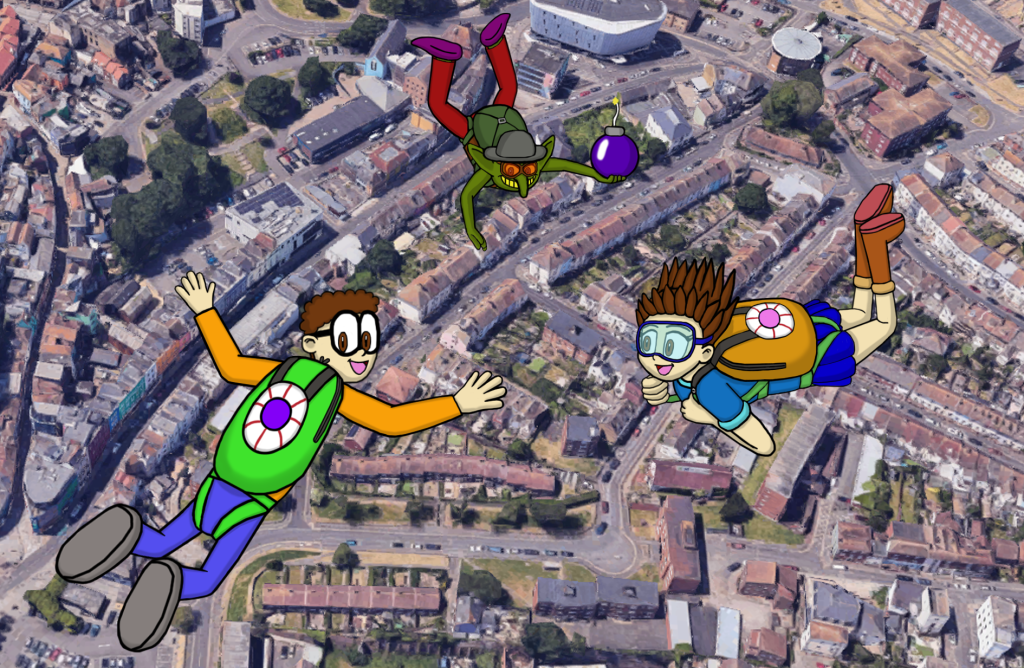
The Skydiving Race.
From November 2023 to December 2023, I drew a picture called The Skydiving Race to enter in the upcoming Secret Postcard Show in 2024. Oliver M. and a girl named Natsuki Marutani soar through the sky above Folkestone, enjoying the thrill of their jump, while the mischievous Gary Smith holds a bomb, scheming to distract them with it and win the race. The postcard can be viewed here.
Original sketch for my monoprint pigeon illustration.
My monoprint pigeon illustration.
Markings from my monoprint pigeon illustration.
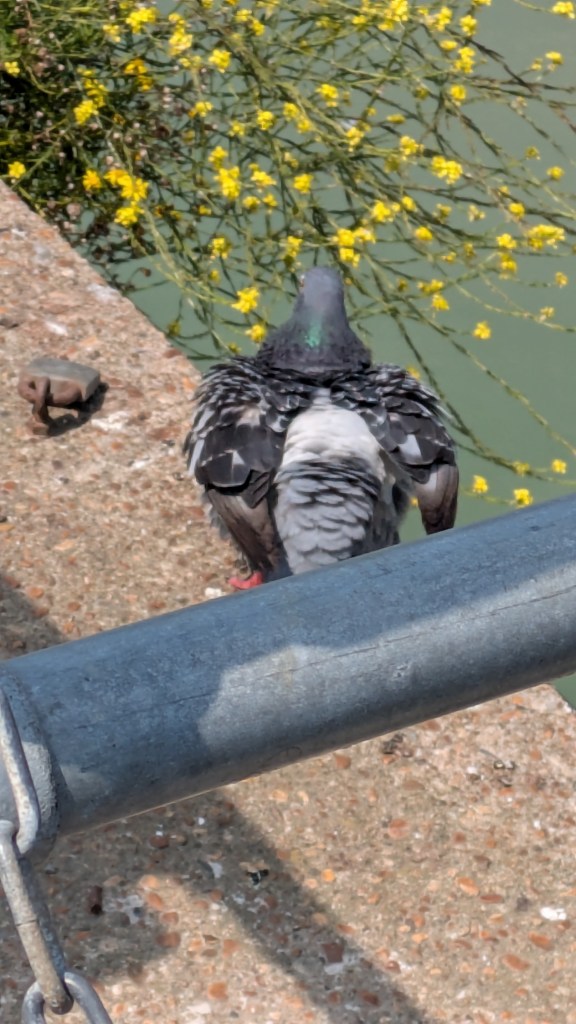
Original photograph of the pigeon ruffling his feathers.
My Procreate seagull paintbrush illustration.
Original photograph of the seagull standing on the boat and calling.
My graphite/acrylic pen crow illustration.
Original photograph of the crow in the churchyard.
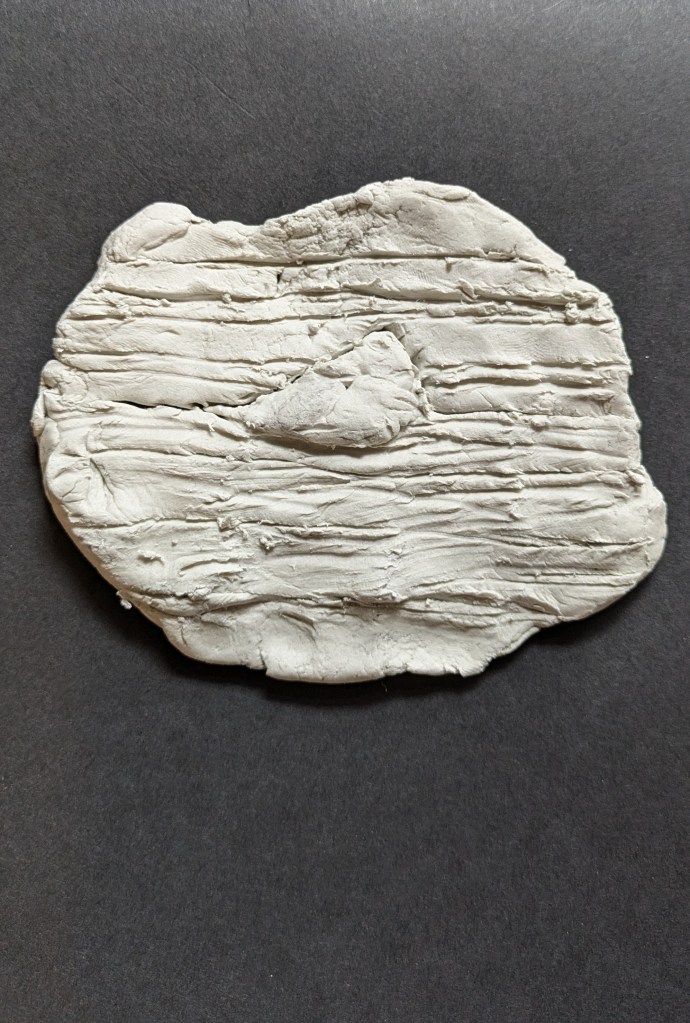
My relief clay seagull illustration.
My painted relief clay seagull illustration.
Original photograph of the seagull sitting on the bench.
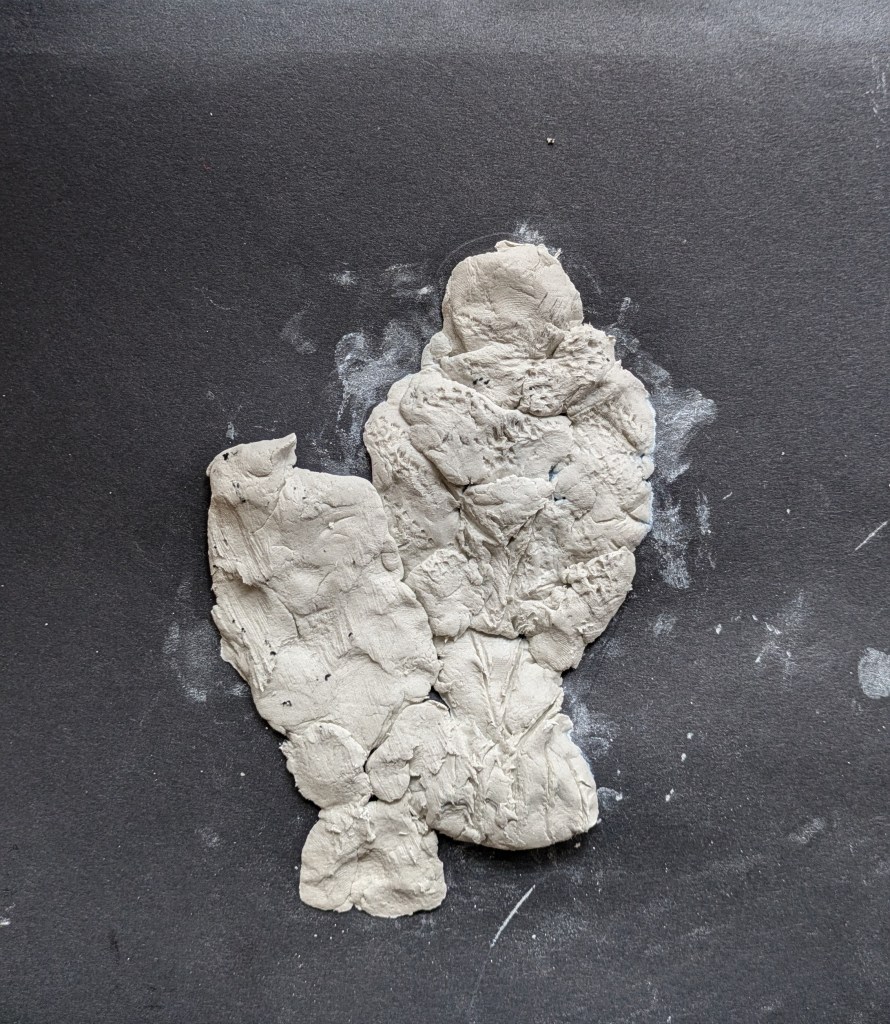
My relief clay pigeon illustration.
My painted relief clay pigeon illustration.
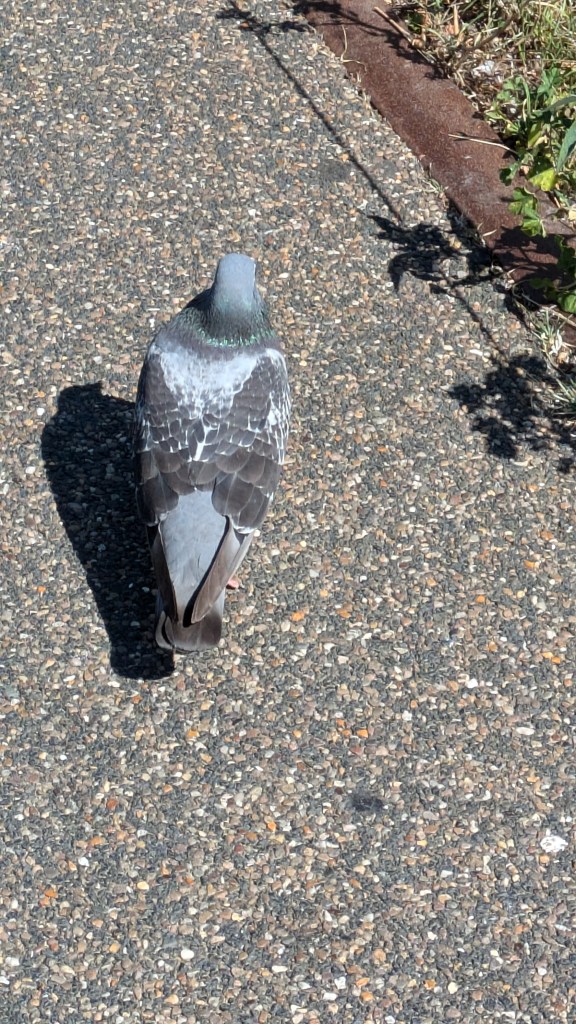
Original photograph of the pigeon and his shadow.
Relief clay duck foot by Kate Clements.
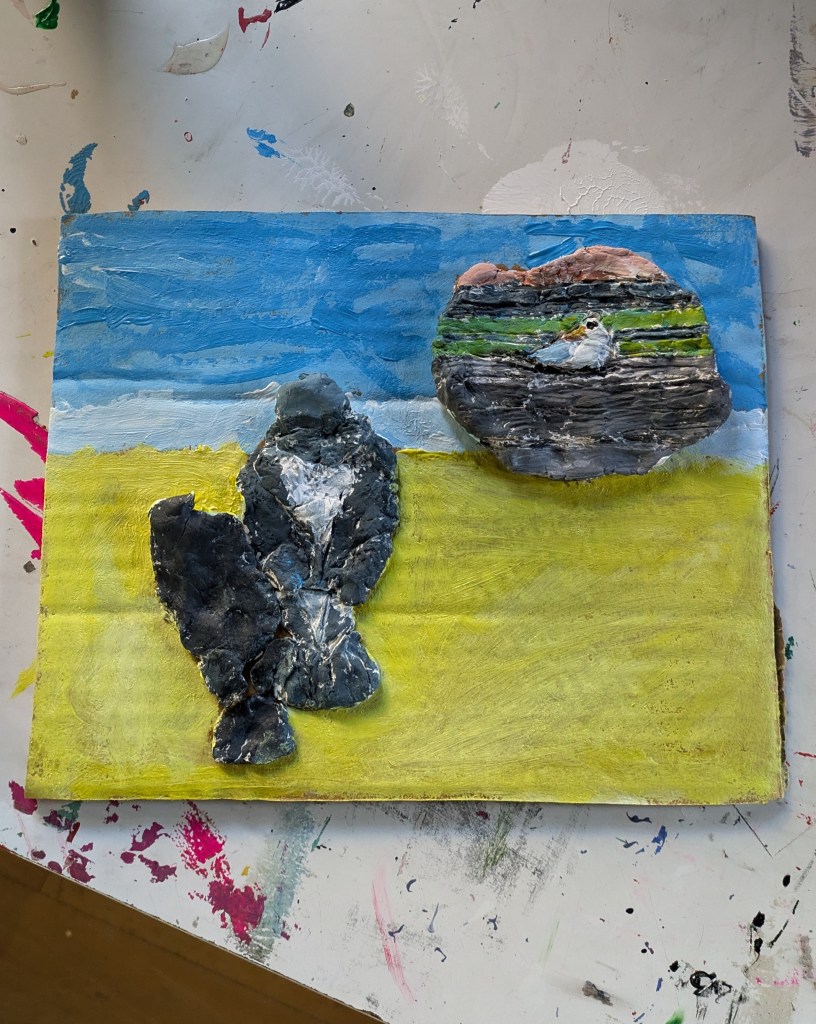
My relief clay illustrations on cardboard.
My relief clay illustrations on beach-painted cardboard.
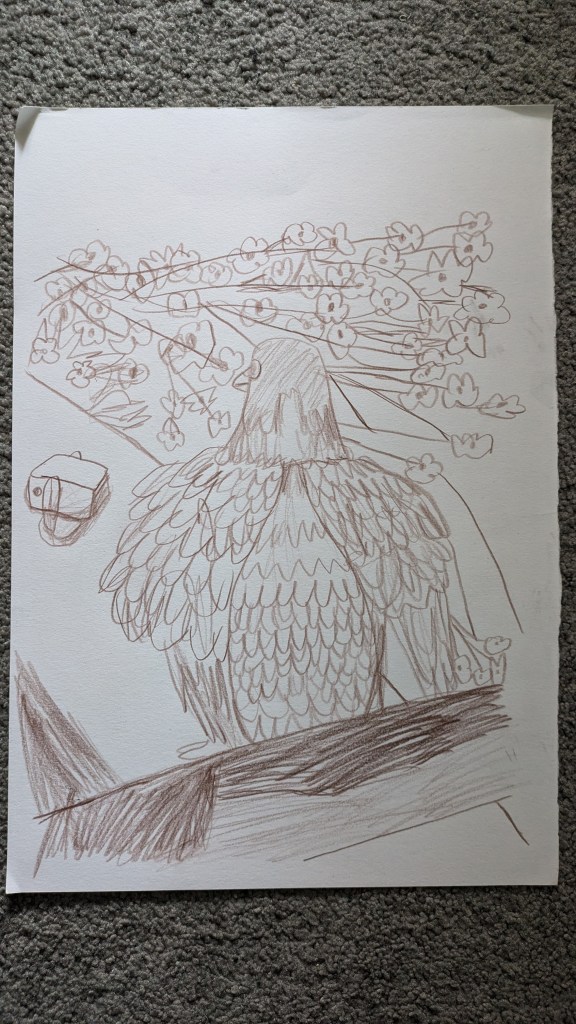
In July 2024, I began doing art based on photographs taken in Folkestone. One illustration was a monoprint illustration of a pigeon ruffling his feathers, and the other was a paintbrush illustration of a seagull standing on a boat and calling, done in Procreate. At the end of the month, I did a graphite/acrylic pen illustration of a crow in a churchyard. In August 2024, I did some relief clay illustrations of a seagull sitting on a bench and a pigeon and his shadow. In September 2024, I painted the illustrations and glued them to some cardboard, which was painted to look like a beach.
My Neptune beard animation for Animated Histories.
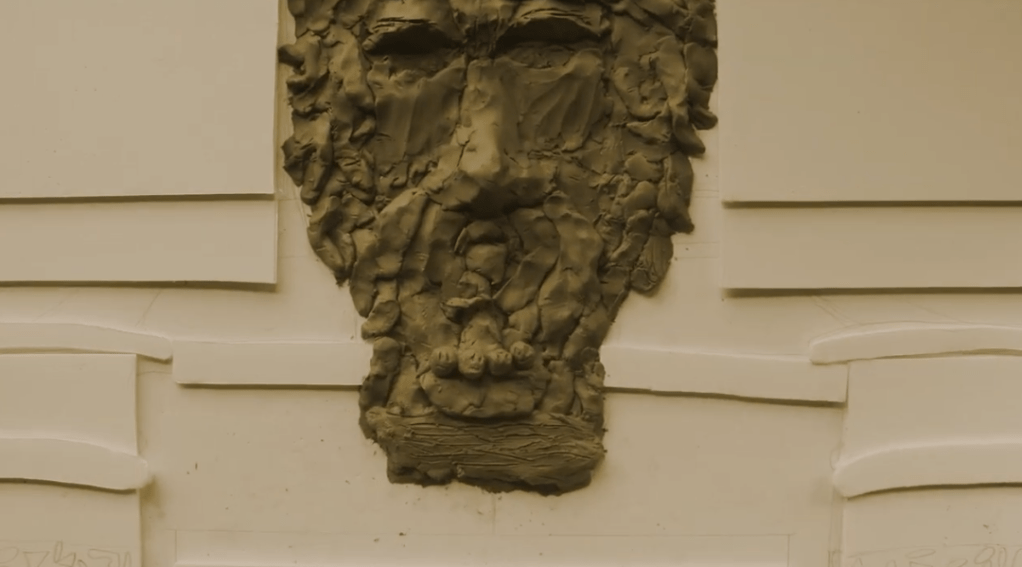
From October to December 2024, I did an animated short film about English history and heritage for the Animated HistoriesFilm Festival, ran in partnership with the Aardman Academy. It tells the story of the Belgian refugees’ arrival in Folkestone through the beard of the statue of Neptune’s head on the Customs House, as well as the building’s bombing in World War Two and Mahatma Gandhi’s arrival. First I recorded footage of myself walking up to the real life Customs House to introduce it, before it transitions to the animation. Next, I took photographs of the building and its statue head of Neptune, and used them as reference for building the exterior using white foam cardboard and making Neptune’s head out of relief clay. Many of the props and models used in the animation were also made of clay. The animation was produced and edited using Dragonframe and Adobe After Effects. I composited animated letters over the video footage at the beginning, reading ‘Customs House’ and cut out from newspapers and magazines. Then I gave the clay animation scene a yellowish hue to match the building’s colours in real life. During the parts where the Belgian refugees and Gandhi arrive, sound clips from British Pathé’s Mahatma Gandhi Arrives in the United Kingdom (1931) were used: “Well, here we are at Folkestone,” and “And just behind her comes Mister Ghandi.” The short ends with the camera zooming out from Neptune’s head and panning down to the doors, which open by themselves to take the viewer inside the building.














































 mysuperendeavour