R.I.P. Rachael Lillis

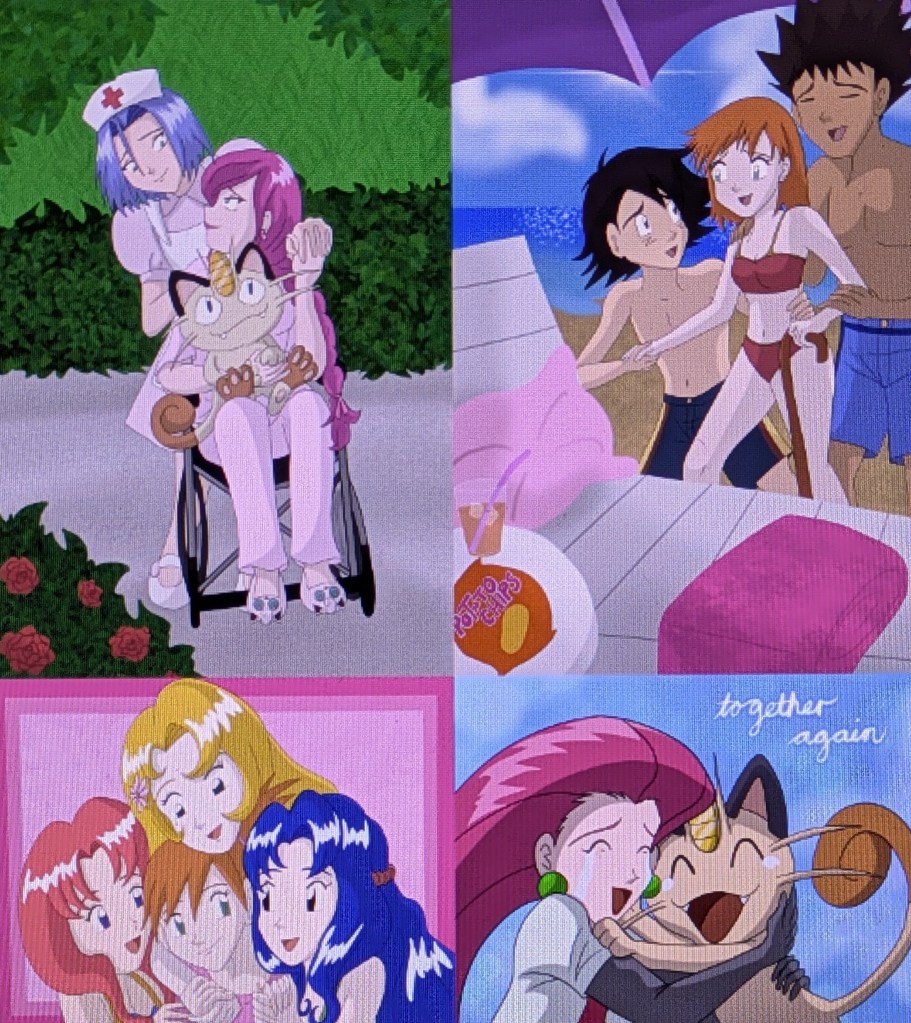
James, disguised as a nurse, takes care of Jessie and takes her for a long walk, while Ash Ketchum and Brock take Misty to the beach, thinking and hoping that her being near water would help her feel better and recover. Daisy, Violet and Lillie show support for Misty. Following Rachael Lillis’ death, Jessie reunites with Meowth in Heaven. Image © Stardust-Phantom. Pokémon characters © The Pokémon Company/Nintendo Company, Limited/Game Freak/Creatures/TV Tokyo/ShoPro/JR Kikaku. Edit © mysuperendeavour@WordPress.
A crying Togepi holds a Cascade Badge, its tears having formed a puddle with a reflection of Misty holding it. Image © Boss Logic. Misty, Jessie and Togepi © The Pokémon Company/Nintendo Company, Limited/Game Freak/Creatures/TV Tokyo/ShoPro/JR Kikaku.
Misty and Jessie’s souls watch their grieving friends from Heaven. Image © ShortyDante. Pokémon characters © The Pokémon Company/Nintendo Company, Limited/Game Freak/Creatures/TV Tokyo/ShoPro/JR Kikaku.

In May 2024, Rachael Lillis, best known for voicing Misty, Jessie, Jigglypuff and other characters in the original English dub of Pokémon, was announced by her sister, Laurie Orr, to have been diagnosed with breast cancer. The cancer had spread to her spine, which left her barely able to walk. Her insurance company put her in a hospital to receive care in January, but the noise in the hospital made it difficult for her to rest, and she was placed in a nursing home. Not helping was that at one point her doctor discontinued her treatment without explanation. Orr set up a GoFundMe campaign to help raise money for the cost of treatment. Several of Lillis’ fellow actors shared the campaign to help raise money for her care, and people around the world donated toward the cause, even just a few dollars. In a very short amount of time, the campaign had raised over $67,000. Orr would forward emails and comments to Lillis. When she saw the GoFundMe page with the comments and kind thoughts, she was moved to tears, comparing the response to the fund to It’s A Wonderful Life, when George Bailey learns just how much he is loved by his caring friends. She remembered many of the fans that she met at conventions, and related stories to them about the experience and all the people that she appreciated meeting. Plans were made to give Lillis better care and get her into rehabilitation to help regain muscle that was lost while she was in the nursing home due to the neglect that she experienced.[1][2] People on Twitter and DeviantArt did “Get Well” fanart in hope that Lillis would make a full recovery in future; some artists like Stardust-Phantom, Steamerthesteamtrain (a fan of Misty since 2008[3]) and Taipu556 depicted Misty and Jessie as suffering from cancer like her,[4][5][6][7][8] whereas _fairybees, Ultra-Shounen-Kai-Z, NintendoStar28 and streetgals9000 did art of Misty and Jessie posing and holding cancer awareness ribbon badges,[9] Jigglypuff giving a message to help Lillis,[10] Misty and her friends praying for Lillis’ recovery,[11] and Misty fighting Lillis’ cancer to save her life.[12] Unfortunately, on the night of August 10, 2024, shortly after moving out of the nursing home, Lillis passed away “peacefully, without pain” at the age of 55. The sad news was revealed by Orr and Veronica Taylor (the voice of Ash Ketchum in the original English dub) two days later on August 12, 2024. As news of Lillis’ passing spread online, Pokémon fans and other voice actors paid tribute to her with posts of their own, recounting how her work contributed to their childhood memories of watching the early seasons of the anime. Eric Stuart (the voice of Brock and second voice of James in the original English dub), called Lillis “his comedic partner in crime”, and told people to watch the original dub to celebrate her life. The Pokémon Twitter account posted a memorial message, which stated that her talent and work in the anime brought the characters to life, and that people will remember her for generations to come. It ended with thoughts and condolences for her friends and family. The campaign raised $98,000 by the time that Lillis died, with the money going toward her remaining bills, a memorial service and cancer research.[13][14][15][16][17] Lillis’ passing led to fans revisiting the ending of the English dub of Gotta Catch Ya Later! (which focused on Ash and Misty instead of the latter’s accomplishments as a Pokémon Trainer and friend in the original Japanese),[18][19] “Misty’s Song” from Pokémon 2.B.A. Master, “Under the Mistletoe” from Pokémon Christmas Bash, and Pokémon Ruby and Sapphire‘s promotional “It Takes Two” cover; ScorbunnyDream and MASTEROFEVIL commented, “This episode hits harder now that Misty’s original English voice is no longer with us,”[20][21] while Myles Wesley Kent posted, “Ash’s true love…is finally gone.” (As explained here by Zactoshi, the Japanese version had hints to PokéShipping, the romantic pairing of Ash and Misty, but 4Kids Entertainment made it a lot more obvious, sometimes adding suggestive shipping dialogue when there was not any to begin with. Former head writer Takeshi Shudo stated that there was never any “romance” intended in the anime, as Misty does not have romantic feelings for Ash and Shudo felt that it would be too distracting, but the other writers could not resist adding it anyway.[22][23][24][25][26] James Dorn of Expert Beacon stated that even though Ash and Misty have a close friendship with signs of mutual affection, their relationship remains strictly within friend territory.[27]) Several fans, including Kisaramoon,[28] SkylanderGuy2005,[29] Fre4k4life,[30] BunnyHeadproductions,[31] Boss Logic,[32][33][16][34] MysteryArt901,[35] Lapisfan2055,[36] Stardust-Phantom,[37] StuAnimeArt,[38][39] Elfilinfan,[40] thebestmlTBM,[41] DoraeArtDreams-Aspy,[42] Rakuneuro40,[43] Umbramatic,[44][45] TheAppleWing,[46] danielwartist,[47] still-a-fan,[48] NoahTigerDragon,[49] ShortyDante,[50] TheDborden,[51] CanyonCoyote/Gullfriend31,[52][53] MarioStrikerMurphy,[54][55] Miss-Barker,[56] ArtisticalManiac,[57] Rawshaw,[58] PSYLOD V and FlareVortex_,[59] TheMrRamonlle,[60] Diamond Dubs/ToniVA,[61] ImNotAllieZ,[62] FrankiLew,[63] PokeSonikkugirl12,[64][65] professoroak,[66] Lontoon22,[67] nijakingofhearts,[68] DojoAceFox,[69] Chris-theKid,[70] AelitaPandaZ,[71] ElijahDMGZ,[72] and Supersonia[73] did tribute art and animations in memory of Lillis, which depicted Misty, Jessie and Jigglypuff (and sometimes Utena Tenjou from Revolutionary Girl Utena[74][75][76]) as having passed away, with Steamerthesteamtrain commenting, “I’m sorry, but… Michele Knotz is #NotMyMisty. I know there is nothing we can do about Rachael, but Misty sadly died with her.”[77][78] On September 27, 2024, a memorial send off with Lillis’ sisters Brenda and Laurie and trumpet player Chris Tedesco was uploaded to YouTube,[79] in which her ashes were scattered in the ocean in Los Angeles. The video feels a lot like two scenes in Pokémon Shipwrecked; one where Ash and his friends (including Misty) and Team Rocket (including Jessie) are presumed by Officer Jenny to have died and “Taps” is played, and another where they find Team Rocket’s “drowned corpses” and, out of respect, decide to bury them at sea. On March 15, 2025, Lillis was posthumously included by the Children’s and Family Emmy Awards in its “In Memoriam” section.[80] On June 25, 2025, Taylor posted on Twitter that she, Tara Jayne Sands and Lisa Ortiz had been working with the Central Park Conservancy to dedicate a bench in Lillis’ honor in New York City.[81] On October 8, Taylor shared a closer look at the tribute and its inscription, “In honor of Rachael Lillis, whose iconic voice filled Saturday mornings, inspiring generations to come,” on Instagram.[82] On October 10, 2025, Steamerthesteamtrain said that when the bench was placed in Central Park, he received a thank-you letter from the American Cancer Society for a gift that he made in memory of Lillis in 2024.[83]

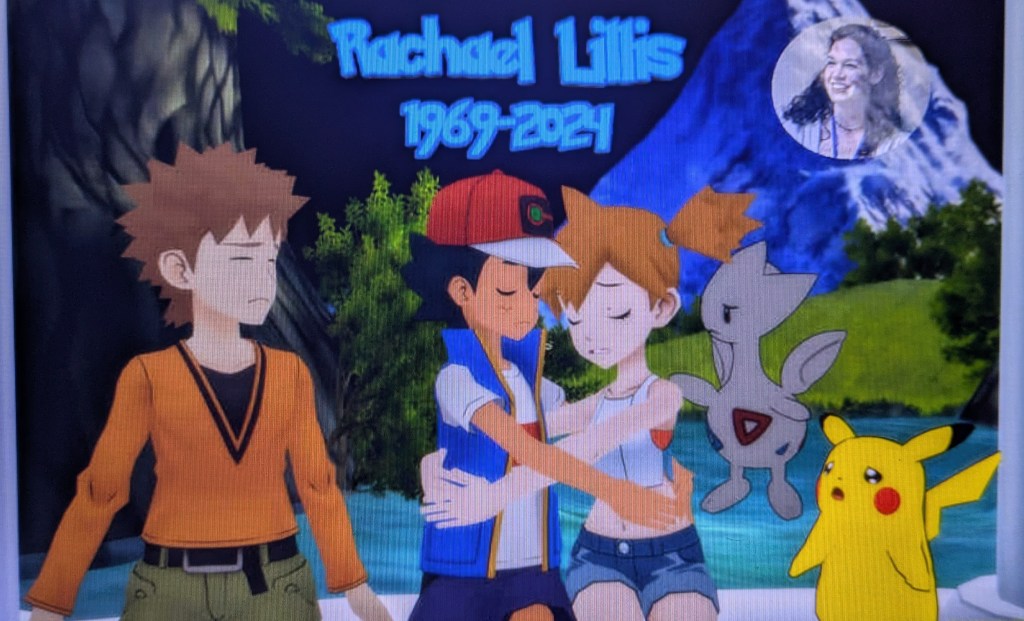
Ash Ketchum and Misty hug each other as the latter grieves the loss of Rachael Lillis. Image © BeeWinter55. Ash Ketchum, Pikachu, Misty, Brock and Togetic © The Pokémon Company/Nintendo Company, Limited/Game Freak/Creatures/TV Tokyo/ShoPro/JR Kikaku.
Rachael Lillis’s soul stands in the foreground, while Misty, Jessie and Jigglypuff look on in the background, seeing her off. Image © AwesomeCraft. Misty, Jessie and Jigglypuff © The Pokémon Company/Nintendo Company, Limited/Game Freak/Creatures/TV Tokyo/ShoPro/JR Kikaku.
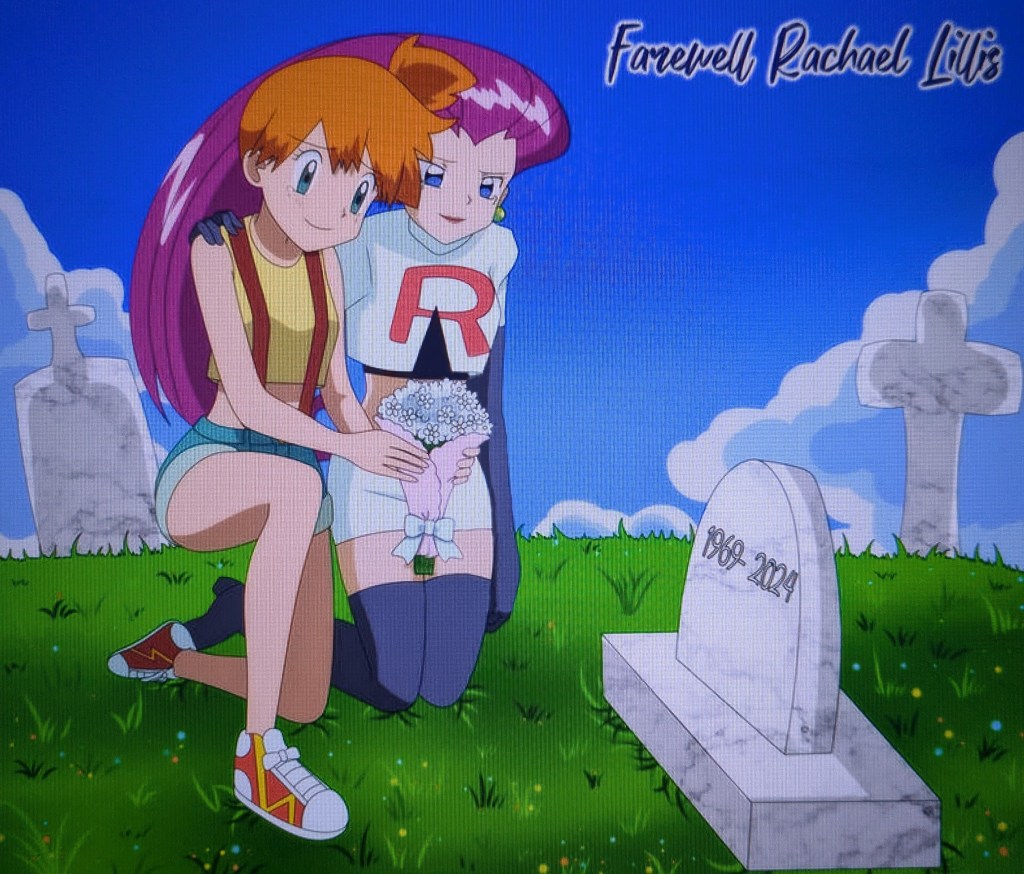
Misty and Jessie lay a small bouquet of flowers at Rachael Lillis’ grave. Image © StarMVenus. Misty and Jessie © The Pokémon Company/Nintendo Company, Limited/Game Freak/Creatures/TV Tokyo/ShoPro/JR Kikaku.
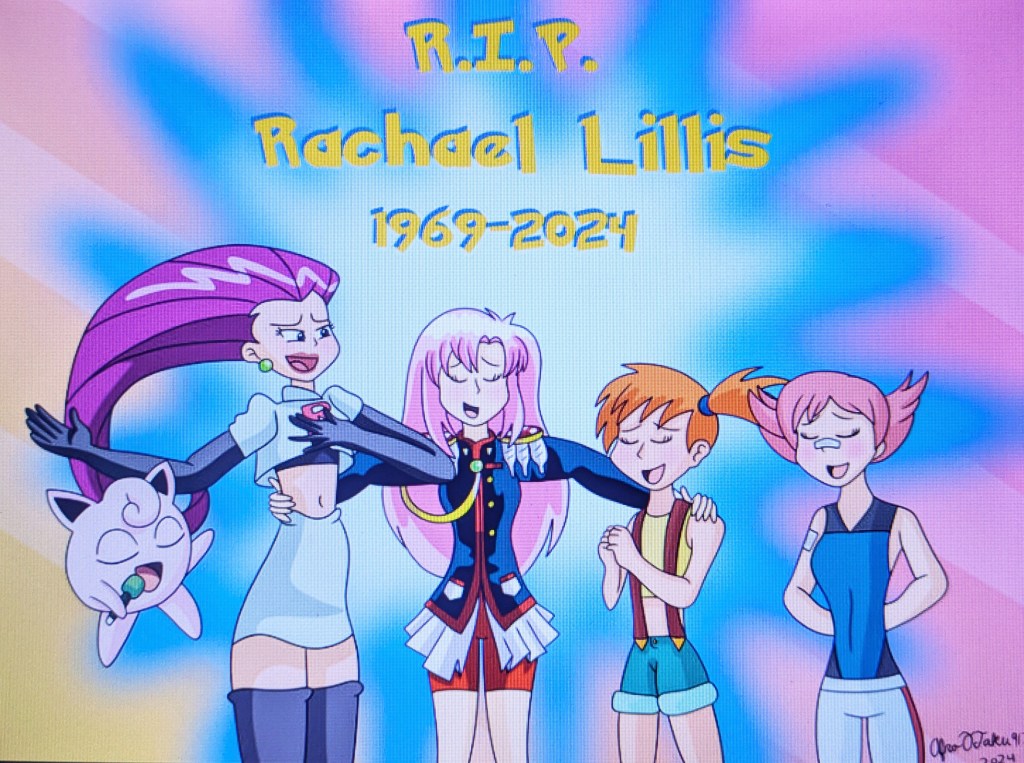
Misty, Jessie, Jigglypuff, Utena Tenjou and Maylene come together to sing in memory of Rachael Lillis. Image © AfroOtaku917. Misty, Jessie, Jigglypuff and Maylene © The Pokémon Company/Nintendo Company, Limited/Game Freak/Creatures/TV Tokyo/ShoPro/JR Kikaku. Utena Tenjou © Be-Papas/Chiho Saito/Shogakukan/Shokaku/TV Tokyo.
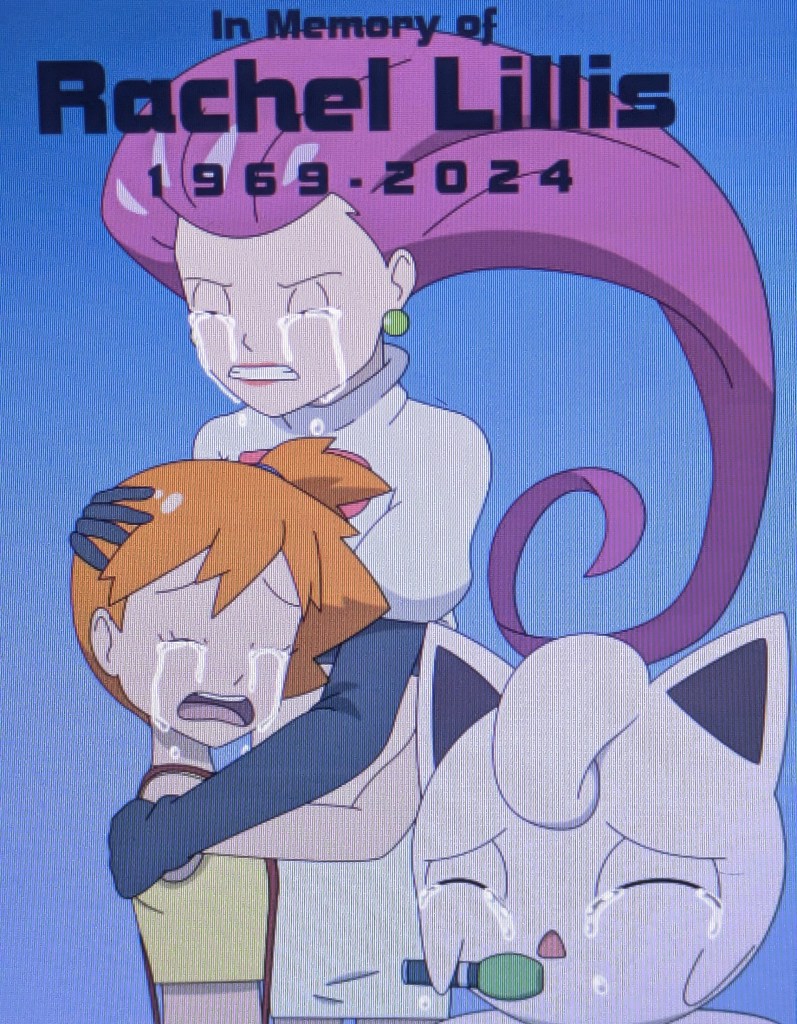
Misty, Jessie and Jigglypuff hug each other as they grieve over Rachael Lillis’ passing. Image © SmashArtPG. Misty, Jessie and Jigglypuff © The Pokémon Company/Nintendo Company, Limited/Game Freak/Creatures/TV Tokyo/ShoPro/JR Kikaku.
Rachael Lillis’ smiling soul is surrounded by her characters, all of whom bow their heads in memory of her. Image © JeenTheDrawing. Misty, Jessie, Jigglypuff, Torchic and Maylene © The Pokémon Company/Nintendo Company, Limited/Game Freak/Creatures/TV Tokyo/ShoPro/JR Kikaku. Utena Tenjou © Be-Papas/Chiho Saito/Shogakukan/Shokaku/TV Tokyo. Danny © SONIC Project. Ursula © SEGA Corporation. Tomoe Ame © Stan Sakai/Dark Horse Comics. Micott Bartsch © Sotsu/Sunrise. Amy © Tsugumi Ohba/Takeshi Obata/Shueisha/NHK/NEP/ShoPro.

On the other hand, there were some people who did not like the tributes, with Redditor MetaGear005 commenting on Boss Logic’s tribute, “No hate to the artist, but I really don’t like the art coming out that makes Misty (and Jessie) dead…”[34] otnesse commented, “Rachael Lillis falling to cancer was definitely a terrible thing to happen. Well, at least Misty got a dang good send-off ultimately by being allowed to resume her goal prior to Rachael falling to cancer, much less dying.”[84] BeeWinter55 said, “Just because Rachael is gone doesn’t mean the character Misty will fade away. Like when Robin Williams passed away years ago, people still remember him and continued making fanart of the characters he voiced like the Genie from Disney’s Aladdin.”[85] That said, there was also fanart showing Misty, Jessie and Jigglypuff (and Utena) alive and well and cancer-free, grieving the loss of their former voice actress, done by artists like JAH99,[86] BeeWinter55,[87][88] Soraheartsforme,[89] RamosArtStation,[90][91][92][93] BenevolentBlonde,[94] animoatku85jr,[95] DarkEclipticHeART,[96] REDTAILS-97,[97] Tedster7800,[98] MSlash67-Production,[99] SidabaTheToonLord,[100] WebWalker756,[101] 2K11CiNCo,[102] ArellArtChannel,[103] VoreyUD,[104] ariannagirlfanatic14,[105] ardoplasma41,[106] AwesomeCraft,[107] bradders16,[108] NickyVendetta,[109] Toongirl18,[110] AmyandLuigifan,[111] rosolinio/Commander_Steel,[112][113] ChunkyLappy,[114] BellatrixETAoyama,[115] Ecreau,[116] TheFlittleOne,[117] MrNintMan,[118] vanillawaffer3000,[119] Sincity2100,[120] StarMVenus,[121] MaddiiCake,[122] SmashArtPG,[123] MirzaDoesArt2,[124] and Kswimmer93.[125] Some of the art had Lillis’ Pokémon characters losing their voices due to her death, in a manner similar to Ariel from The Little Mermaid (one could argue that the “dead” tribute art represents the characters’ voices dying with the actress and not the characters themselves),[126][127][128][129][130] while a few were based on Speechless, the lithograph done in tribute to Mel Blanc (whom Lillis cited along with June Foray as one of her influences[131]).[132][133][134] Other tributes saw the characters engaging in activities such as carrying MysteryArt901’s Lucas on their shoulders,[135] swapping attire and swimming,[136] having dinner together,[137] and listening to James’ rambling about bottle caps.[138] Two tributes by OcaRockaRina and BeeWinter55 have them thanking Lillis for giving them (and other Pokémon) a voice.[139][140] While I understand why the “dead” tribute art was made, I personally lean towards the “grieving” tribute art. This is because 1) Misty, Jessie and Jigglypuff are seen alive in their final appearances in the anime, and Mayumi Iizuka, Megumi Hayashibara (their Japanese voice actresses), Michele Knotz (their current English voice actress), Ayane Sakura and Reba Buhr (Misty’s voice actresses in Pokémon Masters) could always reprise their roles, should the characters return; 2) they (and Utena) are accompanied in the “grieving” tribute art by other characters voiced by Lillis who are not shown dead, such as Maylene, Natalie from Ape Escape, Danny from Sonic X, and Tomoe Ame from Usagi Yojimbo and Teenage Mutant Ninja Turtles,[141][142][143] and 3) they still appear in fanart and fan comics to this day (done by artists like the aforementioned BeeWinter55,[144][145][146][147][148] TheBerryVoid,[149] Danthe25Man,[150][151][152] Monocromia01,[153] and vanillawaffer3000[154]), as well as fan animations and videos, including X-Rockets by ImNotAllieZ (voiced by her),[155][156][157] comic dubs by Diamond Dubs/ToniVA (voiced by her; Toni also did a cover of the Pokémon theme song as Misty and Jessie in tribute to Lillis[158])[159][160][161][162] Team Rocket is Blasting Back by Flaavii (voiced by Hannah Chapin),[163] Night of the Wild Gongachu by TheStupidHour (mentioned in the introduction as part of Team Rocket (Jessie only) and by James and Brock respectively, implying that they are alive within the video’s narrative),[164] How 4Kids Censored Pokémon by ChikoCheez (voiced by KittyHateMachineVA),[165] Ash Learns the Pokémon Leaks by Solid JJ (voiced by ValentinebabeVA),[166] and 2Snacks.[167] Some artists who previously did tribute art of Misty and Jessie suffering from cancer and/or dying would go on to do art where they are fine, portraying them as having gotten better and survived and/or been revived (something similar occurred when Dave Alvarez did tribute art of Granny rising to Heaven following the passing of June Foray in 2017,[168] yet in typical cartoon fashion she appeared fine two months later in New Looney Tunes, voiced by Candi Milo). For example, MysteryArt901 did art of Jigglypuff and Togetic mourning Lillis, Misty and Jessie while the former is comforted by Meowth and Pikachu,[35] and posted art of himself as a Majin from Dragon Ball comforting Misty and Jessie in September.[169] ImNotAllieZ did art of Misty, Jessie and Meowth in Heaven,[62] but would still upload X-Rocket episodes where they are alive. HollyLu uploaded an old drawing of Misty as an angel (made for McWizardX in 2002) after Lillis’ passing,[170] and did art and comics of her as an adult in the following months,[171][172] including the ongoing Christmas in Kanto.[173] After feeling that Misty died with Lillis, Steamerthesteamtrain posted art of his Pokésona Dennis and Misty as peasants in ancient Greece (although he would post art in 2025 of Dennis grieving Misty while imprisoned, the latter implied to have died trying to free him from the Roman tax collectors[174]),[175] being chased by Huggy Wuggy from Poppy Playtime during Halloween,[176] and on a date at McDonald’s to cope with the loss.[177] He would later post a Game Boy remake of MiyaToriyaka’s Returning on October 19, 2025, where Gary Oak finds Ash and Pikachu mourning Misty and comforts the former.[178][179] Taipu556 drew Ash tending to Misty and helping her recover,[8] then in the months following Lillis’ passing posted art of them surrounded by Ghost-type Pokémon during Halloween,[180] having a leaf fight during autumn,[181] and kissing each other during Christmas.[182] Flaavii did art of Jessie and Meowth walking to Heaven during the production of Team Rocket is Blasting Back, which was uploaded on August 29, 2024,[183][184] followed by art where Jessie is alive.[185] In an inversion of this, WumpaWebHead did art of Misty’s (accompanied by Togepi) “Get Well” card for Lillis,[186] but after Lillis died did art of his Spider-AU of the character, Aquatic Spinarak, mourning the original Misty.[187] Chris-theKid posted Poke Balls on November 20, 2024, where Team Rocket (including Jessie) meet Momo Ayase, Ken Takakura/Okarun and Turbo Granny from Dandadan,[188] and included Misty, Jessie and Jigglypuff in Media Memorial (2014-2024) the following month in December.[70] Bruedance uploaded an image named Silence, where Misty tearfully looks up at the sky, having lost her voice.[128] In December 2024, he posted Cerulean Winter Holidays Show, where Misty performs with Ash during the show, and Team Rocket (including Jessie) work on the lights and special effects from behind the stage; Misty performing and holding a microphone indicates that she got her voice back, albeit not done by Lillis.[189][190]

It is really tragic that Rachael Lillis had to go, having her life claimed by cancer at a young age. She may be gone, but her legacy and the characters that she voiced will live on. May she rest in peace.

Real Take

In his first sketch, Greg, accompanied by a barking Franky, nervously faces his ex-girlfriend, who criticises him for his inability to face conflict. Image © Oliver Mariager.
Greg reacts in response to the woman looking at him, before dropping his sketchbook. Image © Oliver Mariager.

Real Take is an animated short film about a young autistic adult who struggles with communication.

What is Real Take about?
The setting takes place in the park, in Greg’s sketchbook, outside the flower shop, and in his house. The characters in the film are Greg, his support dog Franky, his ex-girlfriend, the woman, the monster in Greg’s sketchbook, and the mugger.

Greg is a young man with autism. He lives alone with his support dog Franky. He uses a sketchbook to document moments and experiences in his life, as well as a calming tool. He looks back at sketches depicting his previous relationship with his girlfriend, the first of which has her telling Greg about his inability to face conflict. Responding to the ‘human’ call to be ‘better’, Greg tries to fit in with life around him. When meeting a woman in the park, he tries and tries again to navigate the moments and experiences of conflict and other strong emotions. He also confronts his difficulties regarding getting to know a new person. Can he be successful?

The film is about struggling to communicate and overcoming fear of conflict, and exposes misconceptions to do with neurodiversity. The main themes in Real Take are conflict, understanding, communication, empowerment, overcoming one’s fears, and standing up for others.

Realist elements:
Park.
Greg’s dislike of noise.
Greg’s fear of conflict.
Franky, the support dog.
Sketches depicting bad memories.
Greg’s ex-girlfriend.
Greg wanting things (such as a tub of soya spread in the refrigerator) to be in order.
Greg’s struggles to communicate.
Woman smiling and giving Greg’s dropped sketchbook to him.
Closed flower shop.
Greg’s house.
The mugger following and attacking the woman.
Franky’s confusion on whether to protect Greg or save the woman.
Franky biting the mugger’s leg.
Greg remembering his ex-girlfriend telling him about his inability to face conflict.
Greg gathering the courage to stand up to the mugger and take his knife away.
Greg’s sympathy towards the traumatised woman.

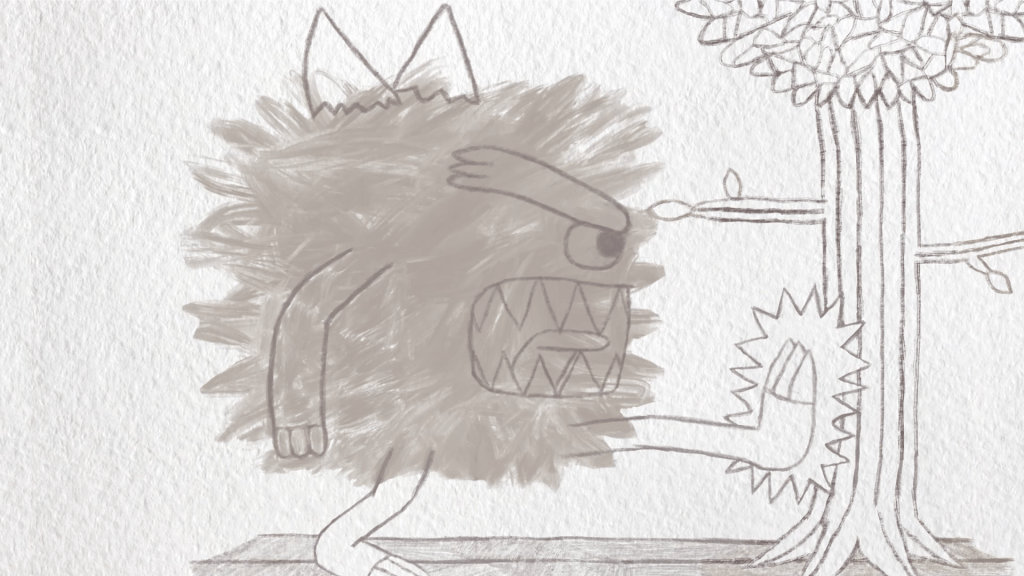
Greg draws a monster kicking a tree to express his anger over the closed flower shop. Image © Oliver Mariager.

Formalist elements:
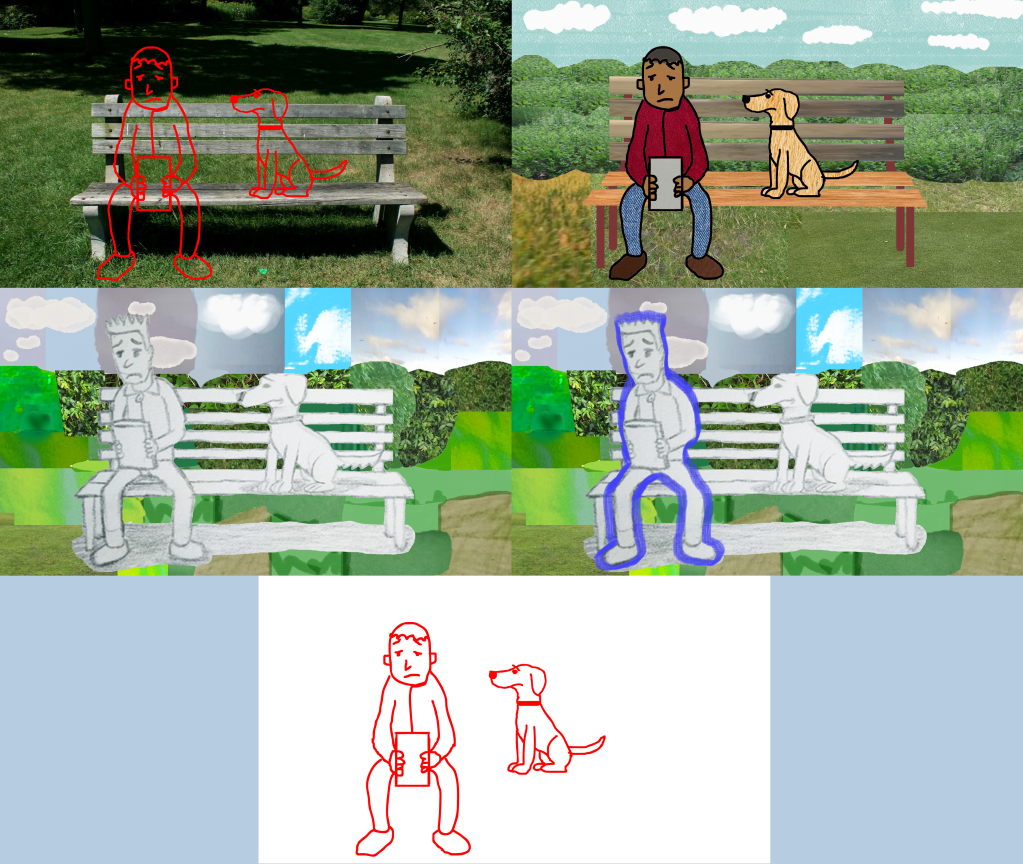
Greg having a blue border outline around himself when having negative thoughts (fantasy).
Point-of-view shots with Greg looking at his sketchbook and the woman and walking towards the mugger.
Animated sketches playing through Greg’s mind (fantasy).
Point-of-view close-up shot of Greg’s ex-girlfriend’s mouth (fantasy).
Text saying, ‘Nervous’ and ‘Say something!’ forming in Greg’s head (fantasy).
Knot forming over Greg’s stomach to represent his fear and agitation (fantasy).
Monster sketch to represent Greg’s anger (fantasy).

Perspective:
The film uses a subjective perspective as it mainly focuses on Greg and not on the other characters. Examples include his animated sketches, the blue outline enclosing him, his various expressions, point-of-view shots where he looks at his ex-girlfriend’s mouth and the woman, and loud foley sound effects (such as turning a page, Greg’s stomach rumbling or building, emotional drum noises), all of which make the viewer feel close to him.

Colour:
At the beginning, the film mostly uses cold, less saturated colours for the park scenes and the animated sketches, fitting with Greg;s somber mood and giving the sketches the appearance of a distant memory and a dark past. As the film progresses, the interior of Greg’s house and the park scenes during the afternoon use warm, brighter, more saturated colours. This represents the rise of Greg gathering the courage and determination to face conflict and stand up to the mugger, and his sympathy towards the woman in a happy open ending.

Editing:
Camera zooms and pans are used throughout the film, such as the first scene with Greg and Franky on the bench (the focal point), Greg looking at his sketches before and after they play in his mind, the mugger following the woman outside Greg’s house, which he does not notice (mise-en-scène); Franky’s confusion on whether to protect Greg or save the woman, et cetera. Fades are used between scenes to show the passage of time and change in tone, such as when the film fades from Greg’s angry monster sketch to Franky sleeping peacefully in his basket in Greg’s house.

Greg draws a bouquet of flowers in his sketchbook, unaware of sinister activity from outside… Image © Oliver Mariager.
Franky rushes over to save the woman from the mugger. Image © Oliver Mariager.

Action scene:
Greg is safe in his home, drawing in his sketchbook.
But he is unaware of the mugger, whom Franky notices.
Therefore, he walks out of his house to the park without worry.
But he hears the woman scream.
Therefore, he looks around and sees the mugger attacking her.
But Greg is apprehensive.
Therefore, Franky is confused on whether to protect his master or save the woman.
But he sees Greg panicking.
Therefore, he springs into action, biting the mugger’s leg.
But meanwhile. the shocked Greg does not know what to do.
Therefore, he remembers his ex-girlfriend telling him about his inability to face conflict.
But rather than acting scared, he gets more determined to face his fears.
Therefore, he takes the mugger’s knife away, and the mugger runs off.
But the woman is left traumatised by the event.
Therefore, Greg sympathetically shows her his sketches.

Test images, sketches and digital drawings of Greg and Franky on the bench. Image © Oliver Mariager.
Model sheet for Greg and Franky. Image © Oliver Mariager.
Concept art of Greg and Franky on the bench. Image © Oliver Mariager.
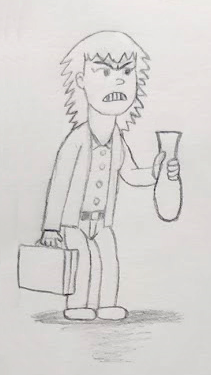
Concept art of Greg’s ex-girlfriend. Image © Oliver Mariager.
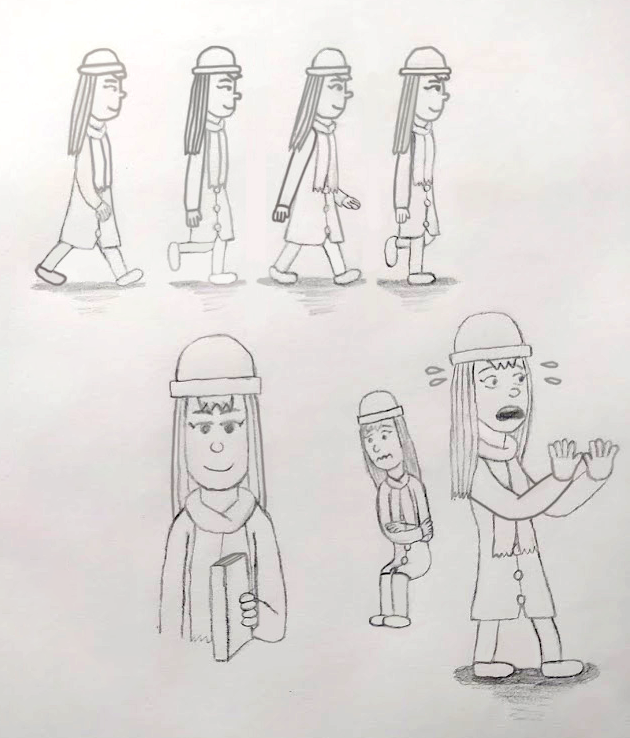
Model sheet, sketches and walk cycle for the woman. Image © Oliver Mariager.
Test colours for the woman (third one chosen). Image © Oliver Mariager.
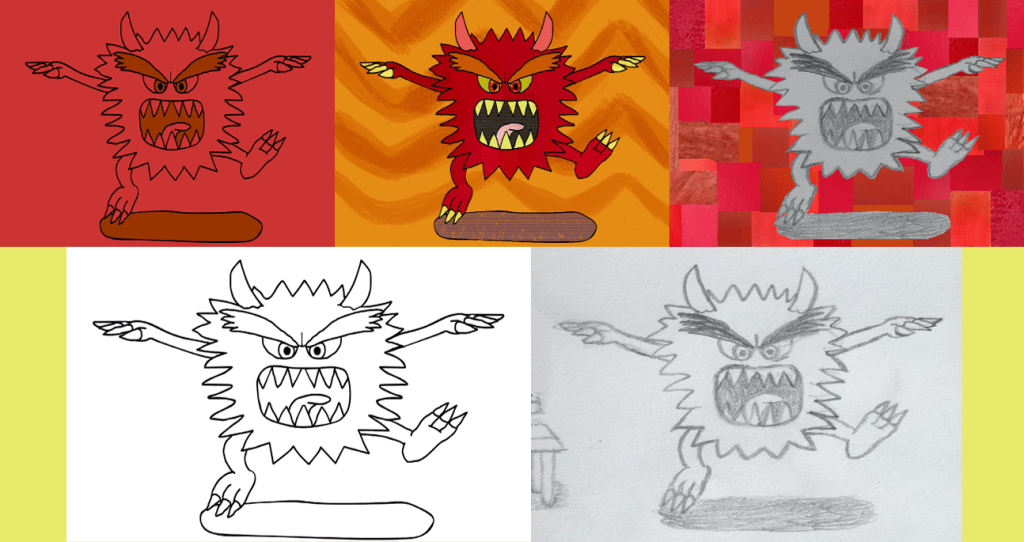
Test images, sketches and digital drawings of the monster in Greg’s sketchbook. Image © Oliver Mariager.
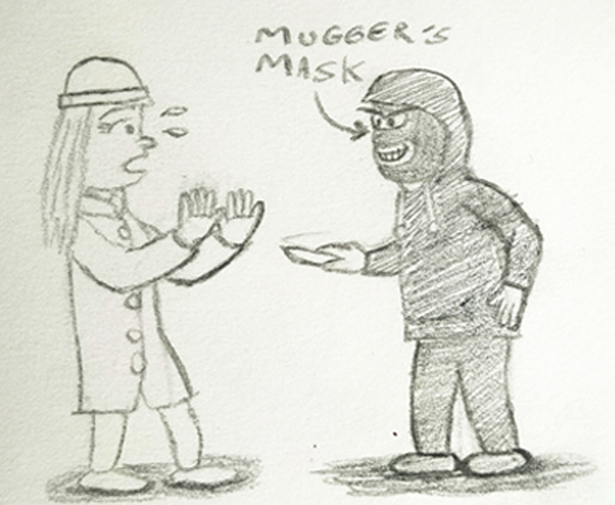
Concept art of the woman and the mugger. Image © Oliver Mariager.
Storyboard for in-between shot of Franky biting the mugger. Image © Oliver Mariager.
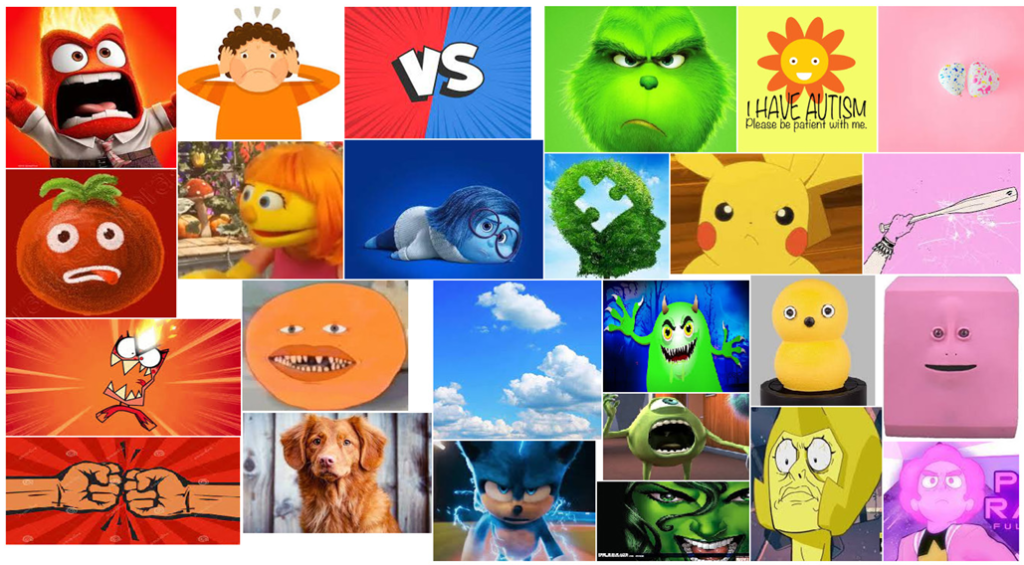
Moodboard of colour images representing autism. Images © The Walt Disney Company/Pixar Animation Studios/Cartoon Network/The Jim Henson Company/Xploshi/SEGA Corporation/Paramount Pictures/Dr. Suess/Universal Pictures/Illumination/Marvel Comics/The Pokémon Company/Nintendo Company, Limited/Game Freak/Creatures/TV Tokyo/ShoPro/JR Kikaku.

Why and how was the film made?:
Real Take was conceived in 2022 as an entry for Screen South’s Estuary on Film event. I did moodboards, concept art, the script and a schedule, and submitted them to Screen South. However, the idea was not chosen by the event, but I still wanted to make the film, so I continued. Production was part-time and lasted until this month. The film was made using Adobe Photoshop, Animate, After Effects and Premiere Pro.

Original photograph of the park bench used in the film.
Original photograph used when Greg stands up to the mugger.
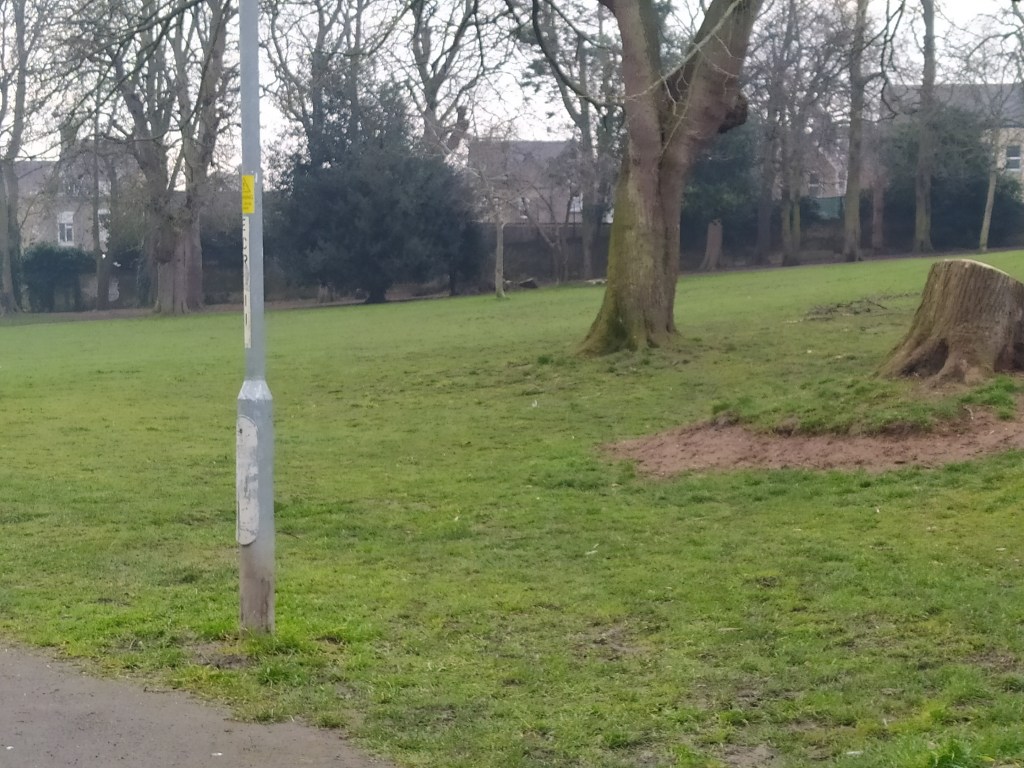
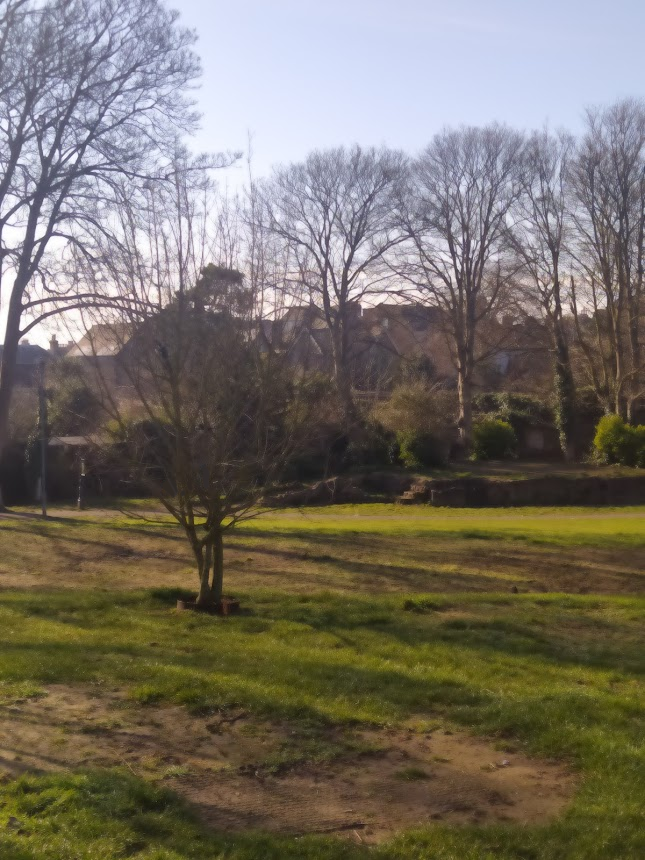
Original photograph used as a background in the film (the trees and some houses).
Original photograph used when the woman hands Greg’s sketchbook to him.
Test images and colours for Greg’s sofa (fifth one chosen). Images © Adobe Inc.
Test/mockup images for the exterior of Greg’s house (fifth one chosen). Image © Oliver Mariager.
Test/mockup image for the exterior of Greg’s house, with adjusted afternoon lighting and shadow colours and a colour swatch for said exterior. Image © Oliver Mariager.

Inspired by live action-animation films such as Who Framed Roger Rabbit and a real life roller coaster scene from Wandaland by Richard Noble,
I took photographs in a park in Ramsgate and used them as background, experimenting with them to represent the contrast between Greg’s world and the outside world. Adobe Stock images were also used as backgrounds for the park the flower shop and Greg’s house, with some being used as props in the latter. I watched other films for inspiration. Feeling My Way by Jonathan Hodgson had scenes with coloured outlines around rubbish bins and a square order around a man sitting in a laundromat, which inspired me to give Greg is blue outline to represent his nervousness, sadness, loneliness, restrictiveness and separation from his surroundings. Scenes from Mary and Max in which Mx wants logic and order I his life were used as inspiration for Greg pushing down a crease on his trouser leg at the beginning, and his reactions to the misplaced tub of soya spread in one of his sketches and the closed flower shop. His internal struggles to communicate were based on Louis’ nervous introduction in Louis’ Shoes. I took inspiration from Lambert the Sheepish Lion for Greg’s ex-girlfriend’s criticism of his inability to face conflict, and his initial cautiousness and bravery when standing up to the mugger. The knot forming over Greg’s stomach when he struggles to communicate with the woman was inspired by a scene in Utopia Portals by Jessica Ashman.

The idea of using animated pencil sketch scenes to show Greg’s bad experiences with conflict came from a scene in Feeling My Way with a pencil-drawn bicycle and Louis’ Mind Palace in Louis’ Shoes. The look of the sketches was also inspired by Musical Traumas by Miloš Tomić. Greg’s point-of-view shots when looking back at his sketches were initially going to depict bordered eyes, inspired by Riley Andersen’s emotions watching her father feed her broccoli in Inside Out. The sketches were originally planned to be done in Photoshop, but were done in Procreate instead, and edited in After Effects. For the sketch were Greg’s ex-girlfriend misplaces a tub of soya spread in the refrigerator, I added text saying, ’15 minutes later…’ This was inspired by the “dialogue text” scenes from The Man With Beautiful Eyes by Jonathan Hodgson, as were the ‘Nervous’ and ‘Say something!’ texts that appear in Greg’s head when he struggles to communicate.

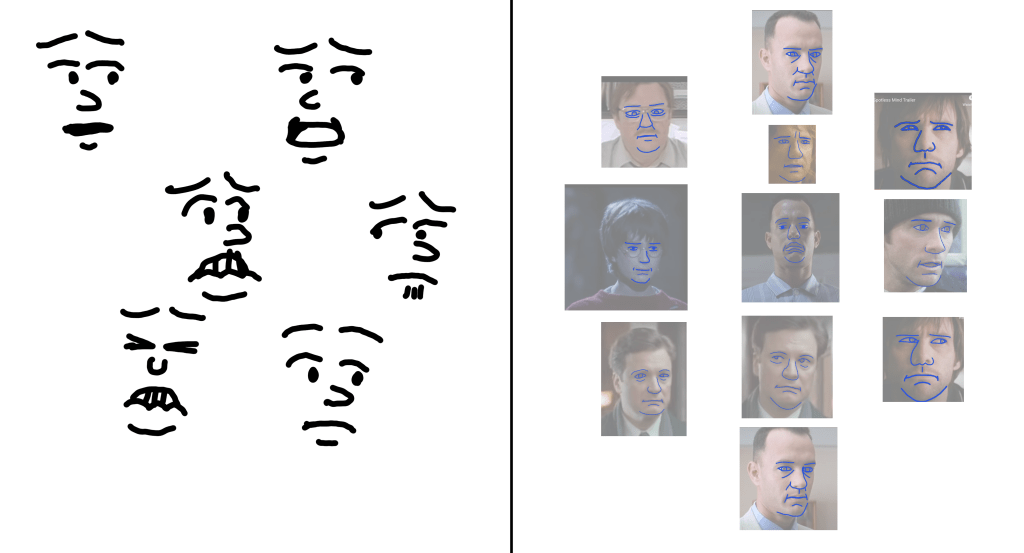
Test sketches of Greg’s nervous facial expressions and reference tracings of shocked, disbelieved, nervous and worried faces from films. Images © Oliver Mariager/Paramount Pictures/Warner Bros. Entertainment Inc./Focus Features.
Natural walk cycle for Greg. Image © Oliver Mariager.
Confident walk cycle for Greg. Image © Oliver Mariager.
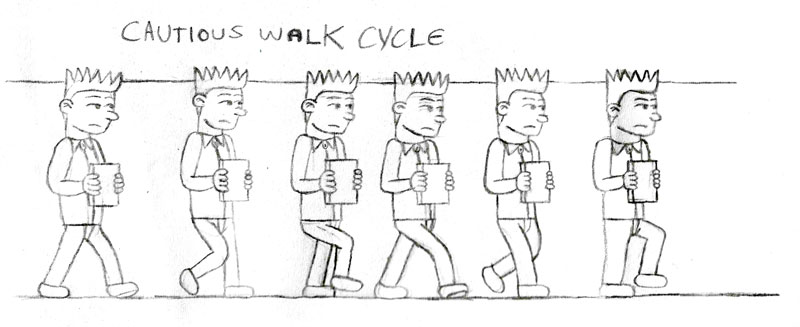
Cautious walk cycle for Greg (unused). Image © Oliver Mariager.
Test/reference sketches for Franky’s poses. Image © Oliver Mariager.
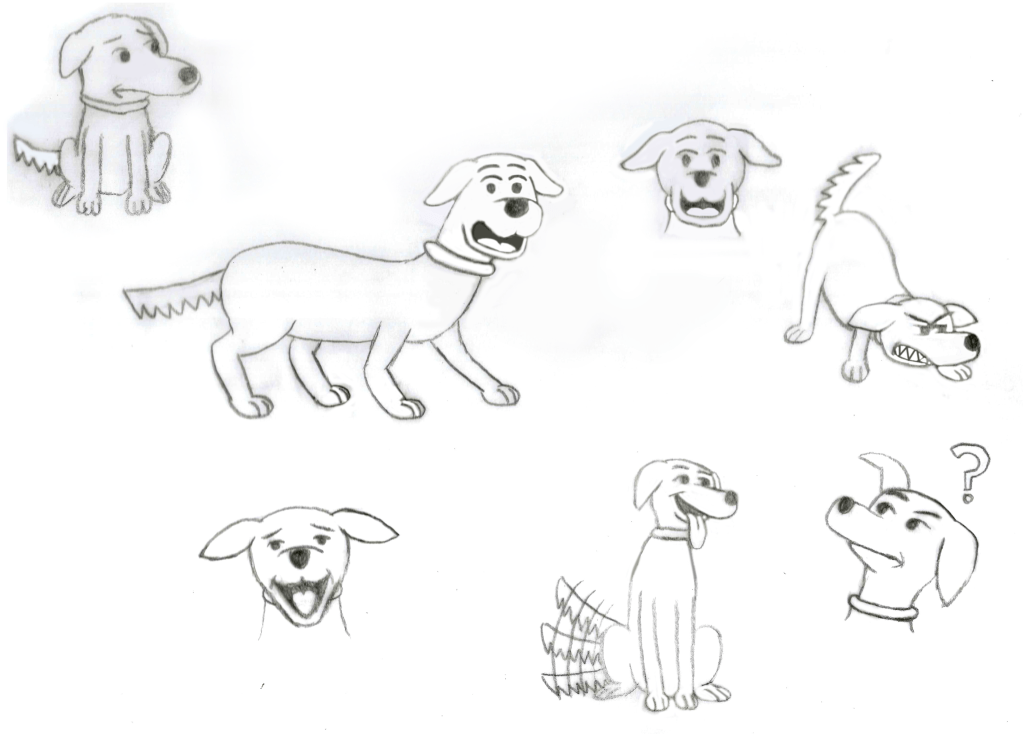
Model sheet for Franky, showing different expressions and poses for the character. Image © Oliver Mariager.

To create Greg’s nervous facial expressions in close-up shots, I traced shocked, disbelieved, nervous and worried faces from films such as Forrest Gump, Harry Potter and the Philospher’s Stone, Eternal Sunshine of the Spotless Mind and The Hobbit: An Unexpected Journey to use as reference. I used Richard Williams’ The Animator’s Survival Kit to creat neutral, calm/confident and cautious walk cycles for him. For Franky, I was inspired by Dug’s emotions from Up to depict Franky’s loyalty and care with wide eyes and a tilted head for his master Greg, and his uncertainty of whether to protect him or save the woman’ Carl’s sleeping pose in Despicable Me to fade from Greg’s monster sketch and animate Franky sleeping in his basket in Greg’s house; and Max’s confronting and shocked poses from The Secret Life of Pets and The Secret Life of Pets 2 to depict Franky’s alert when hearing the woman scream and deciding whether to protect Greg or save the woman, and his aggressive defence pose before charging over. When Franky bites the mugger’s leg, I used a scene from Animal Planet: Dog Bites Host as a reference when animating Franky moving his body forwards and around and wriggling his bottom. I also included the model sheet for Franky (based on reference sketches in the film’s title sequence. The music for the film was composed by Kate Wintie in Logic Pro X, with the addition of stock music provided by Randolph Matthews. I looked t film scenes where the music and sound effects build to add to the tension, like Anxiety by Mayshan Kelishadi and Joker. The technique of rotoscoping was used for three scenes that were difficult to animate: the woman’s arm handing Greg’s sketchbook to him, the mugger running away, and Greg kneeling down before calling Franky.

Genres:
The genres used in Real Take are realist-fiction (Greg’s dislike of noise and fear of conflict, Franky being Greg’s support dog, the sketchbook drawings showing Greg’s bad relationship with his ex-girlfriend, his struggles to communicate with the woman, et cetera) and fantasy (the sketches being animated, the monster sketch representing Greg’s anger).

Release:
The film was submitted to the Oska Bright Film Festival to be screened in 2026, but was not selected. It was selected as a finalist at the French Duck Film Festival. As of 6 November 2025, the film is available on the Creative Foundation’s website.

*Written in Notepad.

Breathe

The film’s title card.

From December 2023 to 2024, I was producing animated sequences for a short film named Breath or Breathe. I downloaded and installed Blender, where I started to familiarise myself with the layout of the software. First, I learned how to add an object and move it around, modify objects, and render a scene, and tried some modelling and sculpting tools. Next, I loaded my reference artwork in a new window, and used “Sculpt Mode” to create a sculpted fox head to animate at a later date. I then looked at some processes to help refine the features on the fox character. I added colour and material behaviours to the head and face, and briefly looked at the “Node” editing space. I learnt how to unwrap my model and was ready to paint, but there were problems with the addition of textures. Because of this, I decided to move on to making stop motion breath animations, using sand-on-glass, ink, chalk and watercolour paint. During walks in Folkestone, I took photographs of surfaces with relaxing, calm textures to use in my sequences, and recorded the tide in Folkestone Beach coming in. I worked on timing ‘in’, ‘hold’ and ‘out’, and repeated the breathing sequences for 10 breaths, each one treated slightly differently with effects such as “Bulge”. After that, I watched some footage of murmurations. For the tide, I created “Time Remap” keyframes for it coming in for 2 seconds, held for 4 seconds and out again for 2 seconds, and applied different colours to it using “Hue/Saturation”. Next, I created some particle swarms by using motion paths, inspired by the murmuration footage. I used bubbles and flying fish textures for mine. I even did an animation where I used the Geometry Options “Curvature” and “Segments” to make the texture background bulge out and in to simulate breathing, gave a “3D Text” animation effect to ‘Breathe’, and made it three-dimensional by extending the “Extrusion Depth”.

My first scene render in Blender. Blender © Blender Foundation.
Reference artwork for my fox head. Blender © Blender Foundation.
Sculpting the fox head. Blender © Blender Foundation.
My fox head in “Object Mode”. Blender © Blender Foundation.
My sand-on-glass breath animation.
My ink breath footage.
My watercolour paint breath animation.
My chalk breath animation.
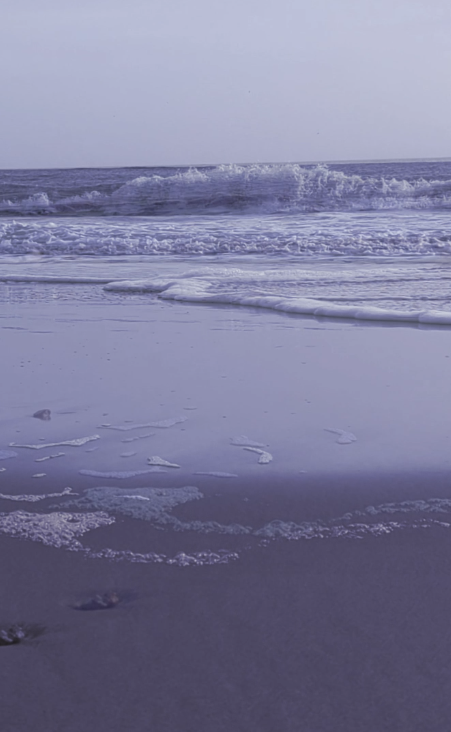
One of my surfaces with relaxing, calm textures.
Another of my surfaces with relaxing, calm textures.
My breathing background, which made use of the “Bulge” effect.
My breathing montbretia petal animation.
Botanical montbretia illustration used in my animation.
My test particle effect with bubbles.
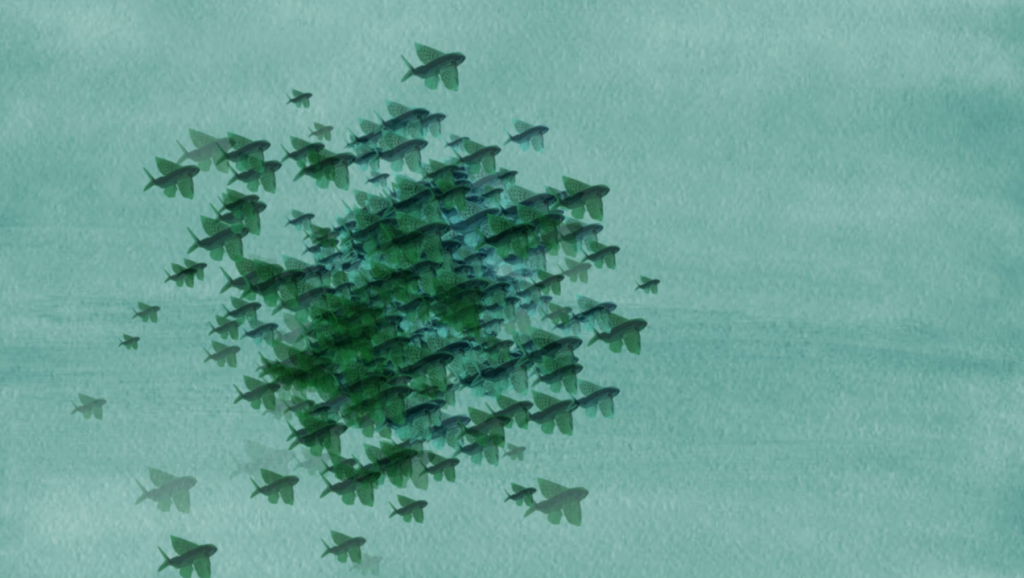
My test particle swarm and motion path with flying fish.
Flying fish textures used in my particle swarm.
My first coloured breathing tide footage.
My second coloured breathing tide footage.
My third coloured breathing tide footage.
My three-dimensional ‘Breathe’ title animation.
My three-dimensional breathing texture background, which made use of the Geometry Options “Curvature” and “Segments”.

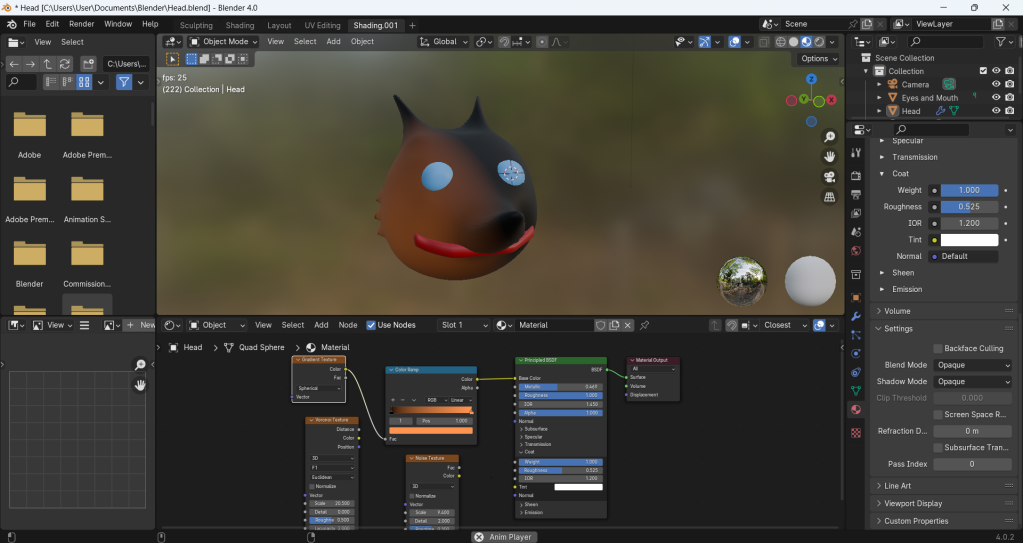
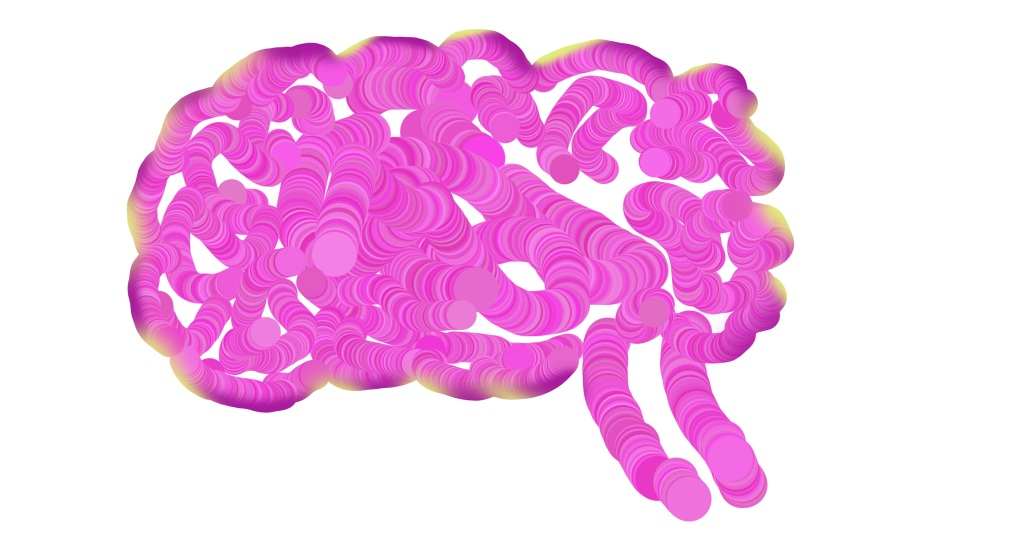
In late February, Lydia Hibbert and I began coming with ideas for the breath film’s introduction: narration, text, diagrams, a growing and shaking animated brain with eyes (visual representation of tension building), multiple layers and colours. We watched I Am Here by Eoin Duffy, Detention by Elle-Máijá Tailfeathers and David Seitz, Focus by Alex Boya, and The Fake Calendar by Meky Ottawa as research, and I made a moodboard of brain images in different art styles (illustrations, vector graphics, abstract, lineart, et cetera). Then I used different brush techniques in Photoshop (“Roundness”, “Hardness”, “Opacity”, “Flow”, “Spacing”, “Size”, “Angle”) to create early sketch designs for the brain. We returned to my Blender fox head, where I unwrapped the textures of the eyes, mouth and the head itself, added shading and experimented with “Noise”, “Voronoi” and “Gradient Textures” and the “Color Ramp”, and painted the model in “Texture Paint”. The next day, I experimented with some advanced brush settings, “Shape Dymanics”, “Scattering” and “Texture”, and did some drawings focusing on the shape of the object (brain) rather than the outline, using the “Layer Mask”.

In I Am Here, an abstract explorer realizes that ultimate meaning does not exist. Image © National Film Board of Canada.
In Detention, the camera zooms out to reveal a young boy locked behind the real walls of the Immigration Holding Centre and its imaginary borders, represented by different layers such as a slide and a fence, and thus gradually building the tension. Image © National Film Board of Canada.
In Focus, strange intestinal creatures slither toward each other in the mind of a girl, whose ordinary narration of her time at the shopping mall juxtaposes the surreal action occuring within, and, along with it, visually represents her attention deficit hyperactivity disorder. Image © National Film Board of Canada.
Reference diagram of brain. Image © BestChapter.com.
My brain reference moodboard.
Concept sketches for my brain, made using different brush techniques.
My shape-focused-instead-of-outline brain drawing, using the “Layer Mask”.
My fox head in “Viewport Shading Method/Material Preview Mode”. Blender © Blender Foundation.
First texture experiment on my fox head. Blender © Blender Foundation.
Second texture experiment on my fox head. Blender © Blender Foundation.
Third texture experiment on my fox head. Blender © Blender Foundation.
Fourth texture experiment on my fox head. Blender © Blender Foundation.
Unwrapping the fox head’s textures. Blender © Blender Foundation.
My fox head with painted textures (except for the mouth). Blender © Blender Foundation.

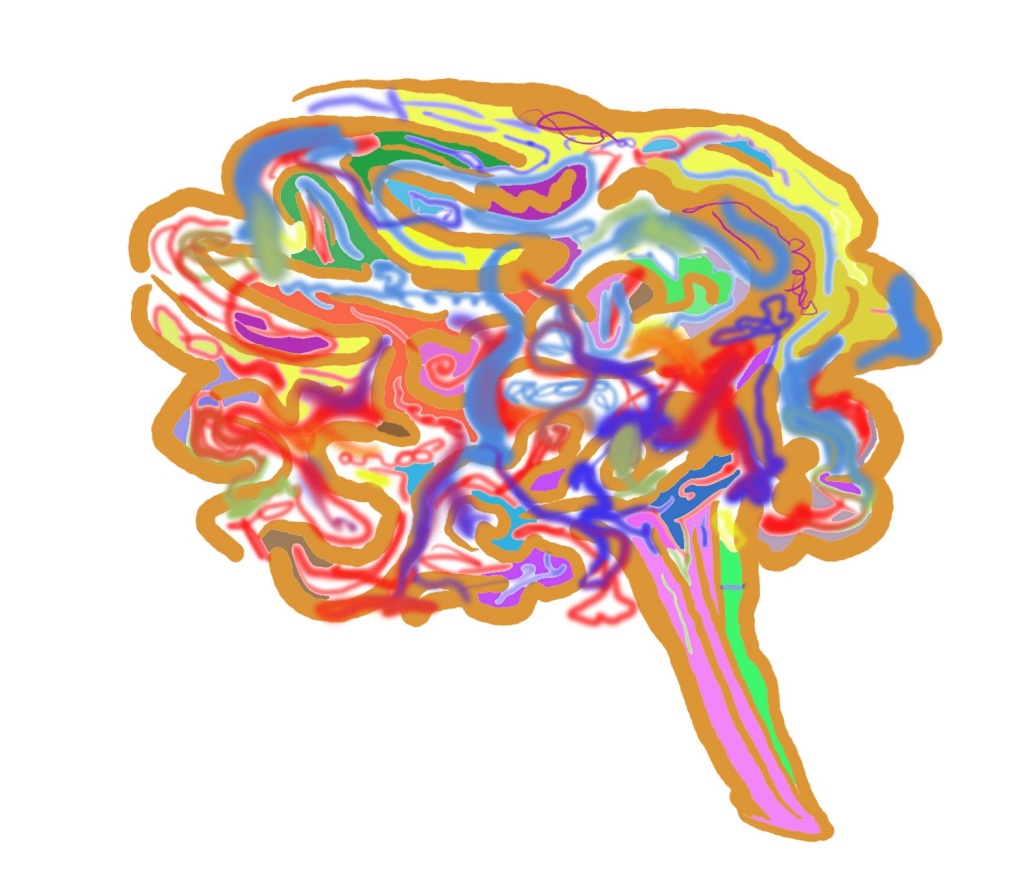
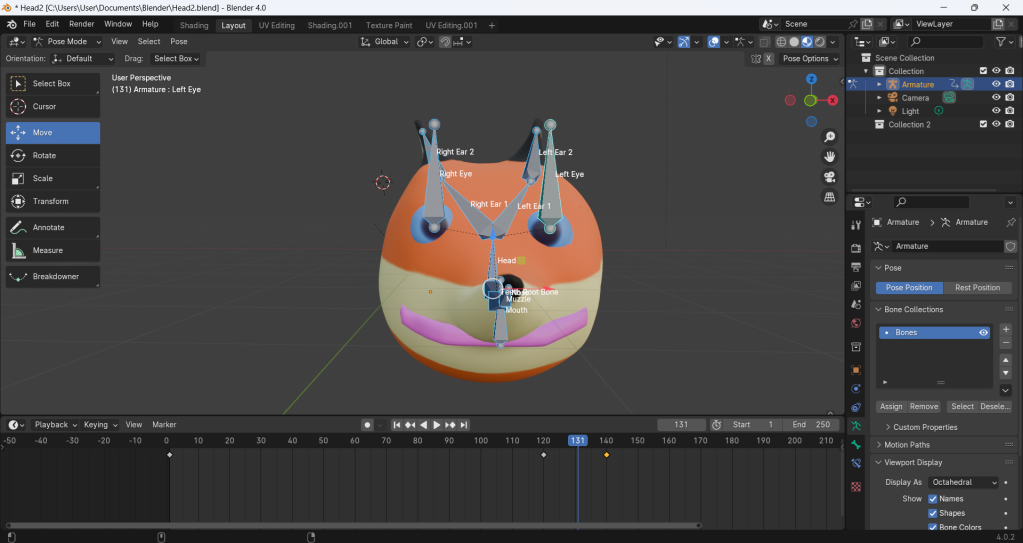
Between March and April, I looked at texture and colour. I experimented with “Color Dynamics”, “Shape Dynamics”, “Foreground Colors”, “Background Colors”, “Shading”, “Lighting”, the “Mixed Brush” (“Wet”, “Load” “Mix” and “Flow”), the “Paint Bucket”, “Gradients” and “Brush Modes”, using them to create some more designs for the brain. Next, I made notes on how the brains would be animated to convey emotion. For example, the blue brain in my “Color Dynamics” drawing would be for sadness and shake and wobble as if it were crying, and the “Shading and Lighting” brain would slowly grow and shrink to simulate breathing. Later in March, I added armatures to my Blender fox head’s ears, eyes, mouth and nose, and came up with the idea of having the brain fade into the background just before the breath sequences begin. I started creating and adding effects for the introduction’s poem, using “Particle Systems”, “Expressions” and “Linear Wipe”. The poem is:

‘I breathe to help calm my mind.
It dissipates stress and tension.
I fill my lungs through my nose to the count of four,
hold for the count of eight,
and release to the count of four.
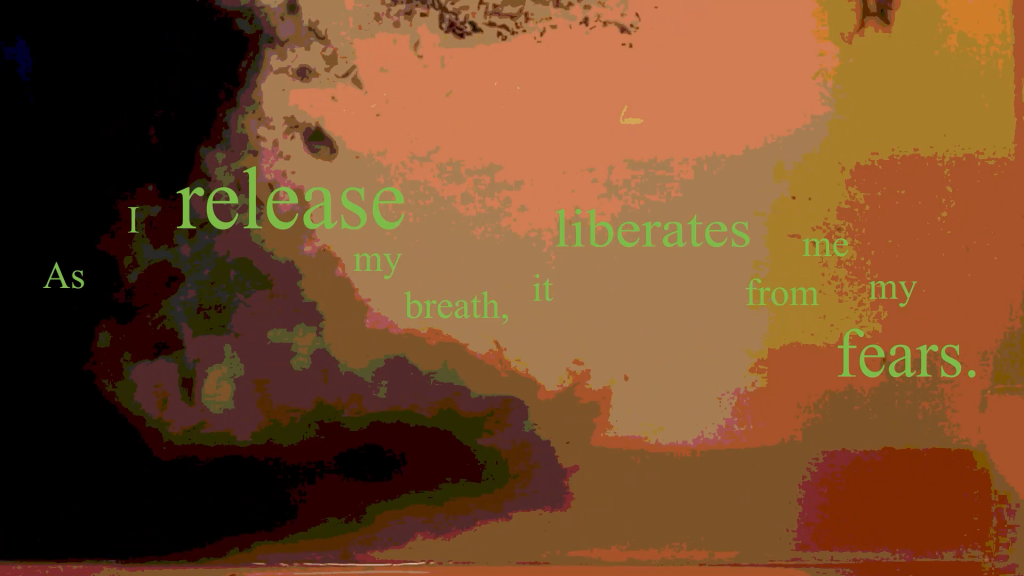
As I release my breath, it liberates me from my fears.
It evaporates stress,
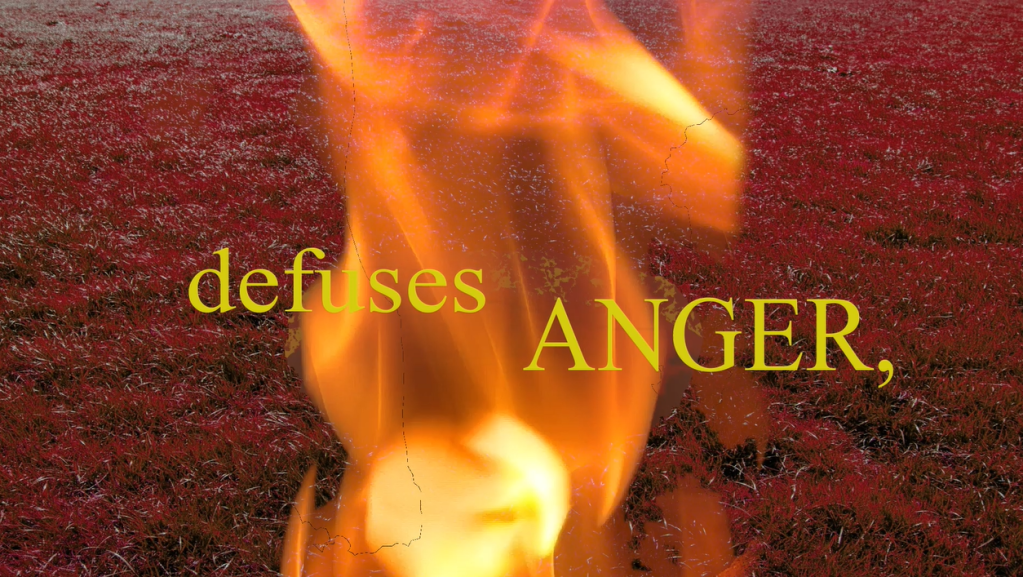
defuses anger,
decomposes sadness,
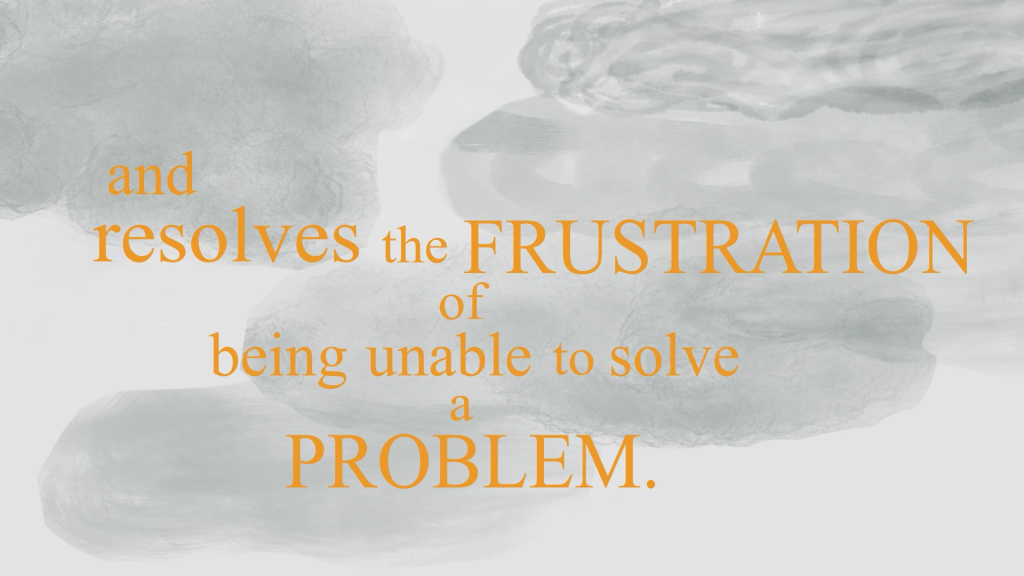
and resolves the frustration of being unable to solve a problem.’

We watched War Is Over! Inspired by the Music of John and Yoko by Dave Mullins and Brad Booker, Letter to a Pig by Tal Kantor and Amit R. Gicelter, Ninety-Five Senses by Jerusha Hess and Jared Hess, Our Uniform by Yegane Moghaddam, Pachyderme by Stéphanie Clément and Marc Rius, Kindness by Naomi Shihab Nye, Singularity by Marissa Davis, Un Corpo/A Body by Milena Tipaldo, Afterimages by Mackenzie Duan, Crossing to Ireland by Jean Maskell, The World by Jalal ad-Din Rumi, and If You Feel Terrible by Rebecca Wadlinger as research to get ideas for the introduction, such as isolating irrelevant parts, moving poems, dialogue, lip-syncing an animated mouth to dialogue (made using the “Slider Control” effect), transitions from text to imagery, filling the screen, repetition, morphing and deconstructing, overlays, and reversing footage. I made two breath sequences in Procreate to use in the film, one of which is used in the introduction.

My “Color Dynamics” drawings.
First “Color-Shape Dynamics” drawing.
Second “Color-Shape Dynamics” drawing.
My “Shading and Lighting” drawing.
My “Mixed Brush” and “Paint Bucket” drawing.
My gradient drawings.
My “Brush Mode” drawing.
My fox head in “Viewport Shading Method/Material Preview Mode” with painted textures. Blender © Blender Foundation.
My fox head in “Wireframe Mode” with armatures. Blender © Blender Foundation.
Opening verse of my introduction poem with fading text.
Animation frames for my lip-sync mouth.
A grey cloud floats in front of a shrinking turquoise triangle before turning brown.
The triangle turns into a sea to simulate breathing.
An abstract yellow and brown circle is squashed by a shrinking room.
The circle turns into a revolving breath cloud to simulate breathing, accompanied by the walls’ orange, waving lines.
Fourth verse of my introduction poem with scattered text.

In May, I included my ink breath animation in my film’s introduction, where I used the “Posterize” effect and scattered text. Next, I made a sequence in Procreate where the text ‘evaporates’, changing brushes between frames, and gave it a “Shatter” effect on the second to last frame. Behind the text is a transparent boiling animated texture background, inspired by watching How to Be Alone by Pádraig Ó Tuama and My Mother’s Coat by Marie-Margaux Tsakiri-Scanatovits. I designed a red grass background with a large hole in Photoshop and added footage of the fire in Lydia’s wood stove in After Effects, making a sequence where the fire shrinks into the hole. The shrinking fire represents defusing anger. Then I did a sequence where my botanical montbretia illustration’s petals shrivel up and the plant’s colour changes to blue, and the petals fall off as the plant withers and dies before they decompose. This represents decomposing sadness. Finally, I animated a sequence in Procreate and After Effects, with the three-dimensional camera zooming and passing through saturated, dissipating, layered clouds, which represents resolving the frustration of being unable to solve a problem. Near the end of the month, I learned how to rig the armature’s bones to the parts of my fox head with ‘Ctrl+P’, had a look at “Weight Paint” where the amount of different coloured paint depended on the weight influence on the bone, and pressed the ‘I’ key to add keyframes for moving, rotating, squashing and stretching the head in the timeline. We then went to record sound effects for my film, such as fans, outside ambience, birdsong and running tap water, and played around with them in Adobe Audition, giving them effects such as filters, pitch-shifting and reverbs.

My “Posterized” ink breath animation with scattered text.
My ‘evaporating’ text and transparent boiling animated texture background.
My ‘defusing anger’ fire animation.
My ‘decomposing sadness’ plant animation.
My ‘resolving frustration’ cloud animation.
My fox head’s armature in front of it in “Shaded Mode”. Blender © Blender Foundation.
My fox head in “Weight Paint” mode with blue and green paint. Blender © Blender Foundation.
Adding keyframes for my fox head’s movements. Blender © Blender Foundation.
Playing around with squash-and-stretch physics. Blender © Blender Foundation.

In June, I worked with Randolph Matthews, composing music for my film. I also added inhaling and exhaling keyframes to my fox head and exported the rendered animation as a PNG sequence. Next, I animated the fox’s eyes and mouth closing and opening when he inhales and exhales in Photoshop, and also began doing the end credits. The fox animation and end credits were finished in July. At the end of the month, Breathe was submitted to the Folkestone Documentary Festival. The film can be watched here.

Rendering my fox head animation.
My finished breathing fox head animation.

In August, we designed nine different posters for the film in Adobe Illustrator. Breathe was submitted to the Margate Film Festival, along with Sensory Chaos.

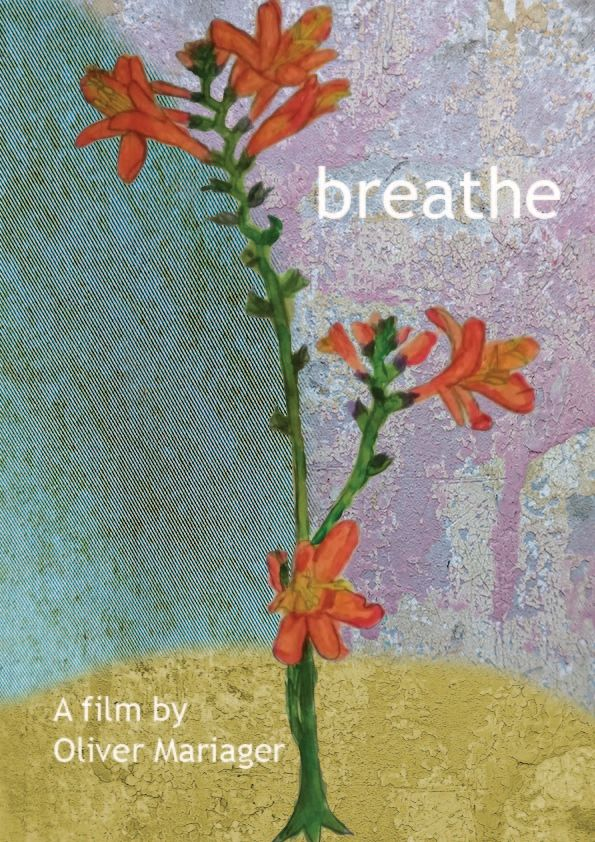
My first poster for Breathe.
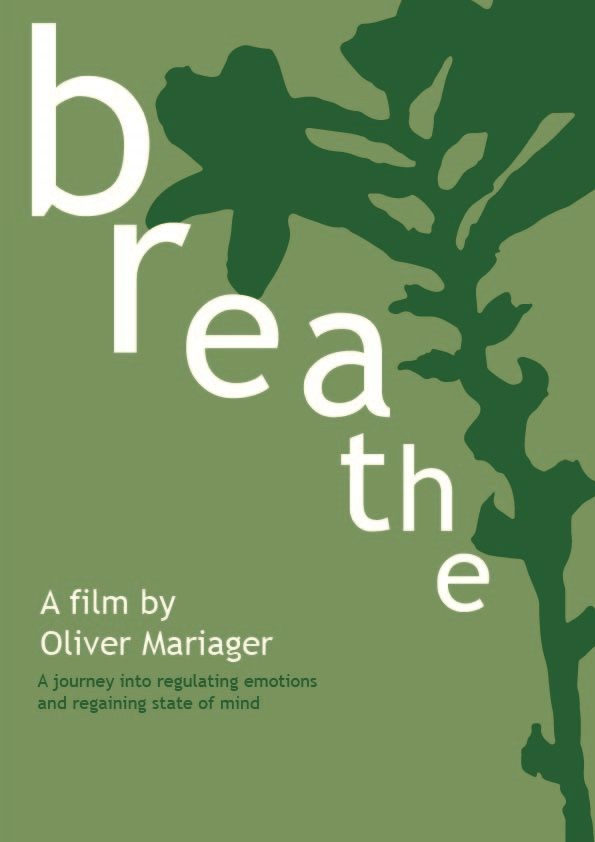
My second poster for Breathe.
My third poster for Breathe.
My fourth poster for Breathe.
My fifth poster for Breathe.
My sixth poster for Breathe.
My seventh poster for Breathe.
My eighth poster for Breathe.
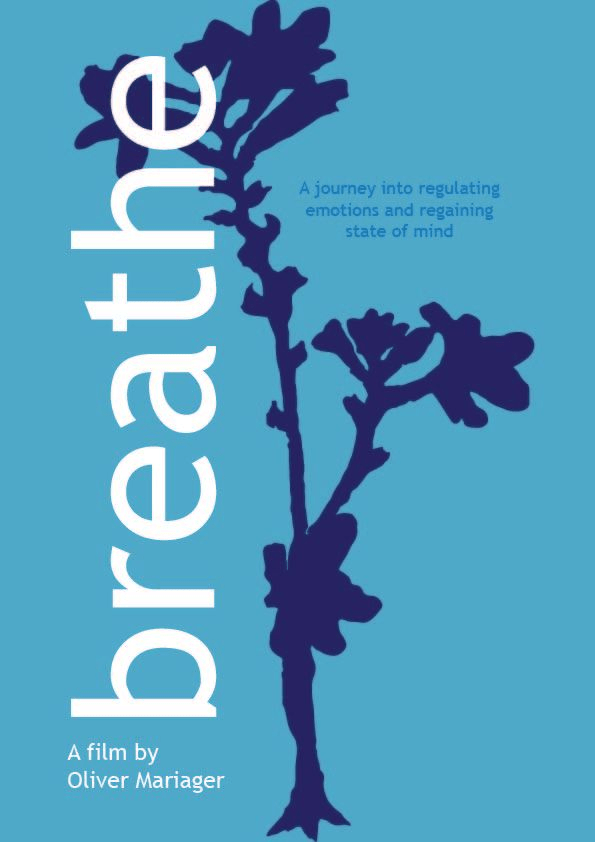
My chosen ninth poster for Breathe.

Folkestone Living Advent Calendars 2022-2023

The Folkestone Living Advent Calendar’s logo. Image © JimJam Arts.

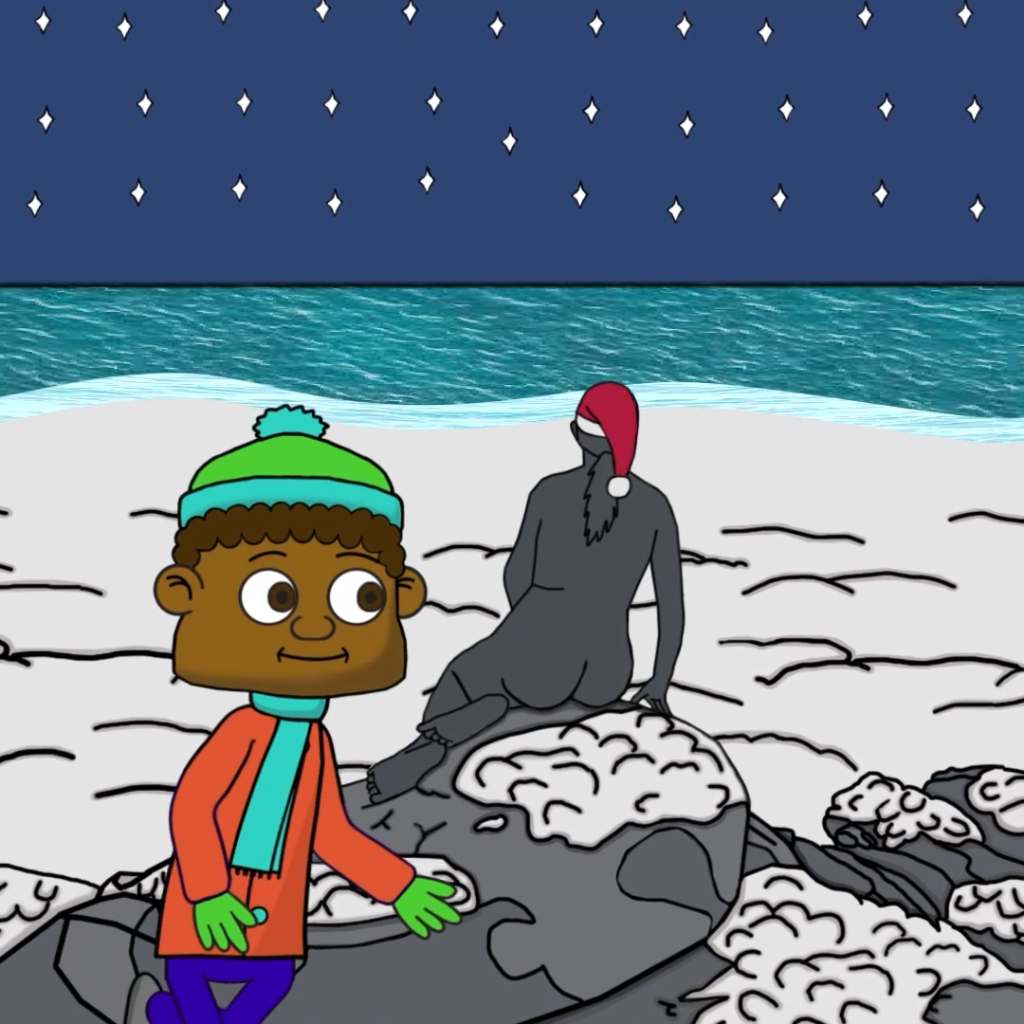
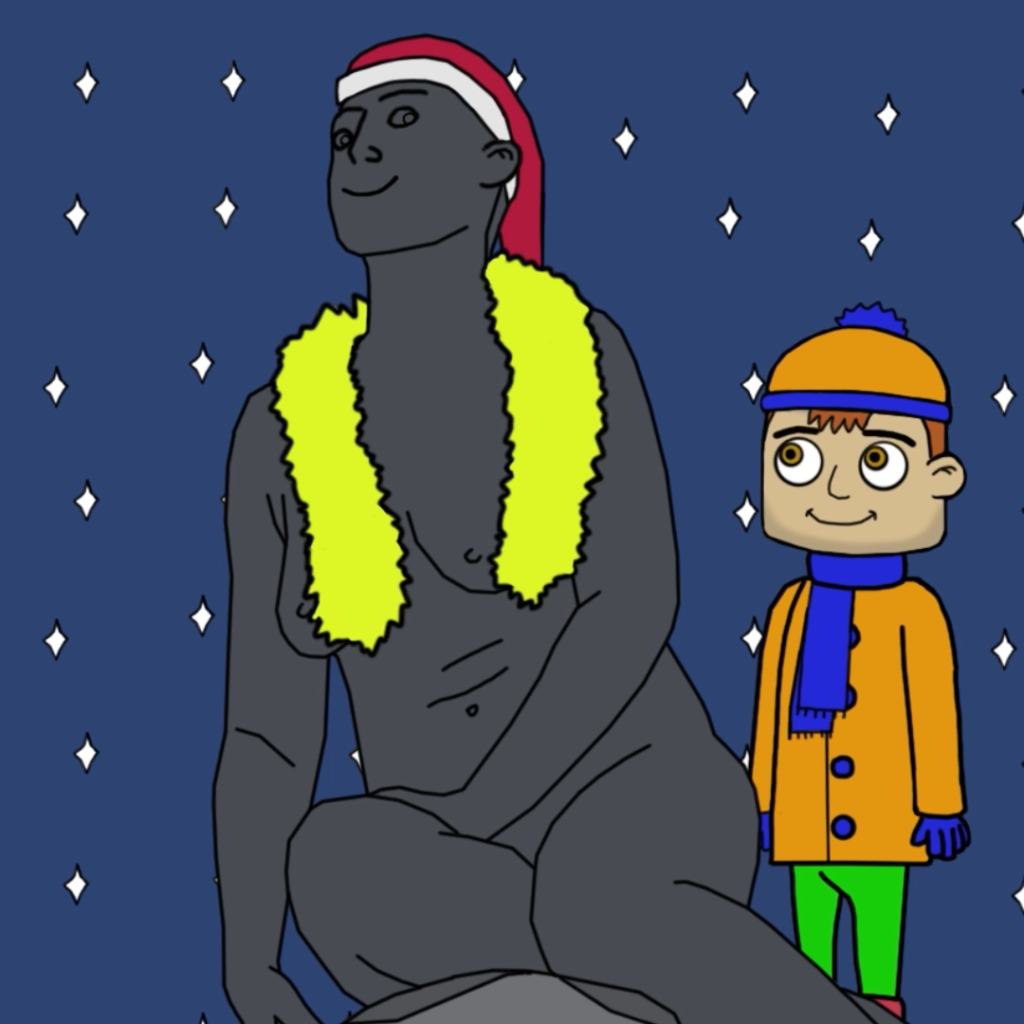
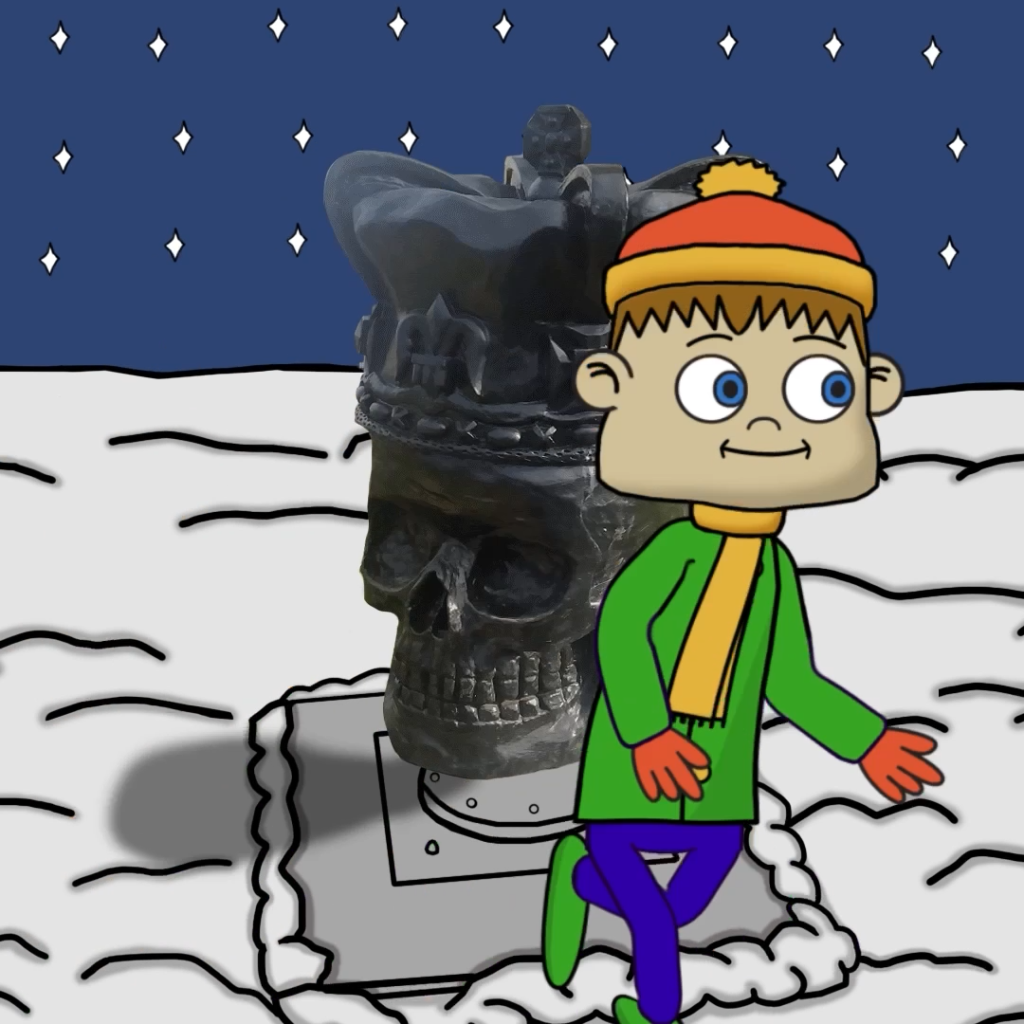
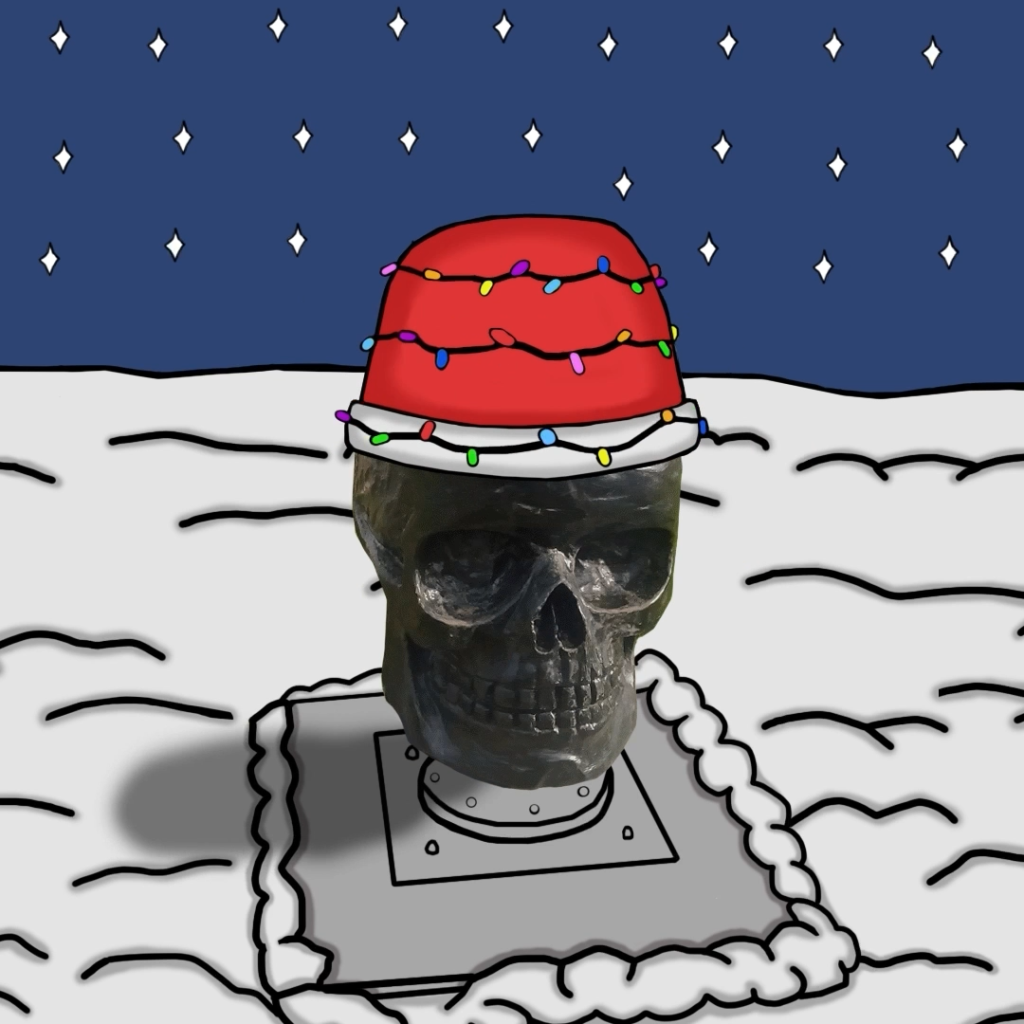
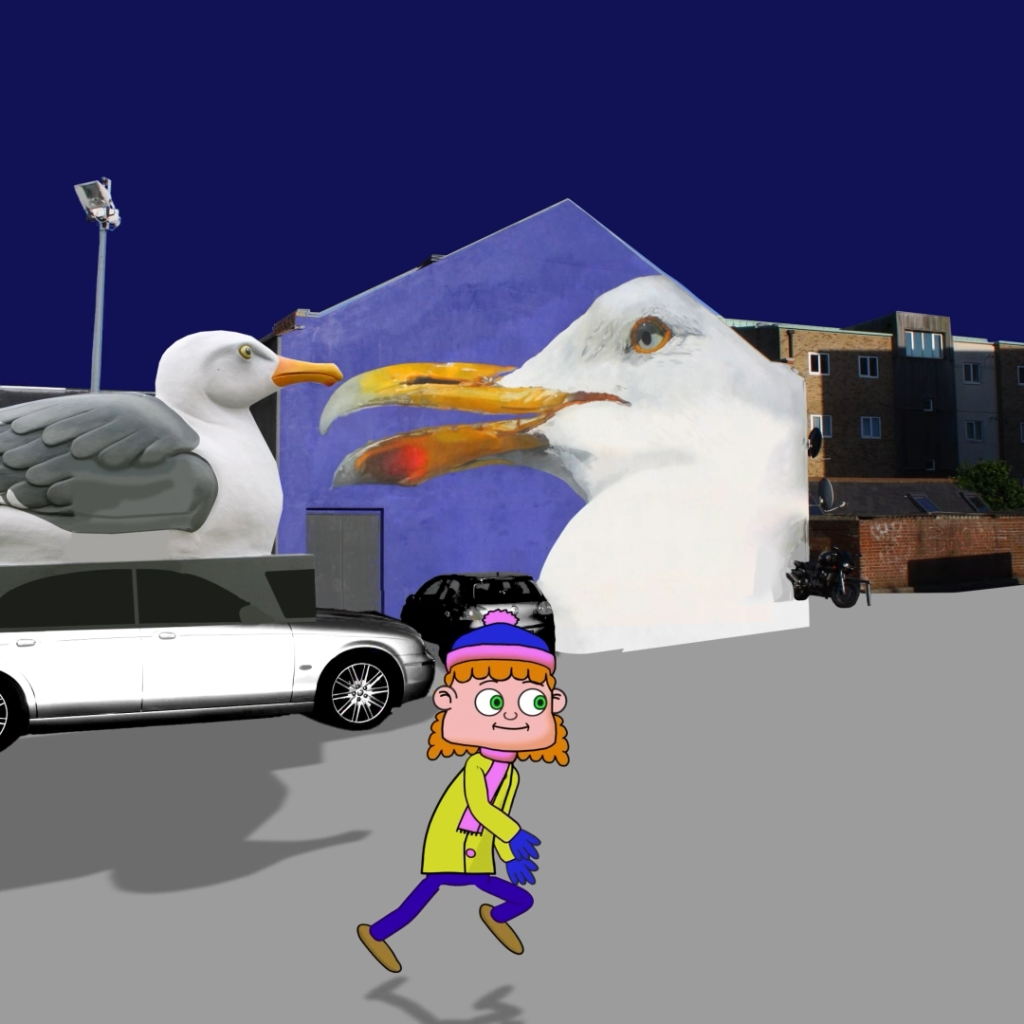
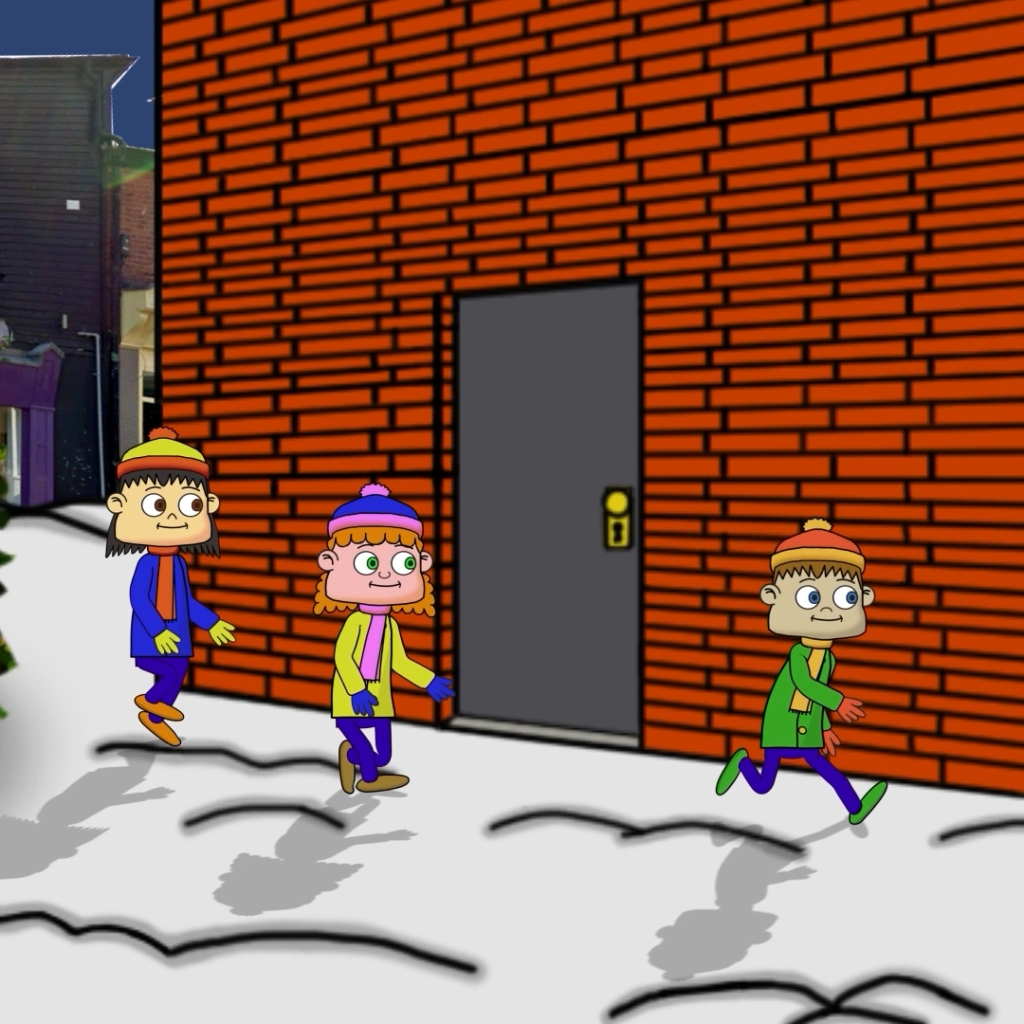
In November 2022, I did some animations for the Folkestone Living Advent Calendar. They include: a boy putting tinsel over Cornelia Parker’s Folkestone Mermaid’s neck like a scarf to invite her to the festive holiday fun and keep her from feeling left out; the Crowned Death skull’s crown changing into a Santa Claus hat with Christmas lights as children (named Jimmy, Joanne, Robert and Kimiko) run past him; Mark Dion’s Giant Seagull on Wheels parking near a street art seagull on a house to keep his company, before they watch a fireworks display and the children celebrate; and Jimmy giving Sophie Ryder’s Standing Lady-Hare and Dog a present, which brightens up their colours. The animations were made using Adobe After Effects, Photoshop and Character Animator (children walking and running).

Robert runs past the Folkestone Mermaid, who sits alone staring at the sea.
A boy gives the Folkestone Mermaid some tinsel to wear as a scarf, turning her frown upside down.
Jimmy runs past the rotating Crowned Death skull.
The Crowned Death skull’s crown changes into a Santa Claus hat with Christmas lights.
The Giant Seagull on Wheels parks near the surprised street art seagull as Joanne skips across the car park.
Jimmy, Joanne, Robert and Kimiko celebrate the fireworks display.
Jimmy, Joanne and Kimiko walk and run past an old brick building.
The Standing Lady-Hare and Dog gloomily hang their heads as they watch the children from the shadows.
Jimmy kindly gives the Standing Lady-Hare and Dog a present…
…brightening their spirits and colours!

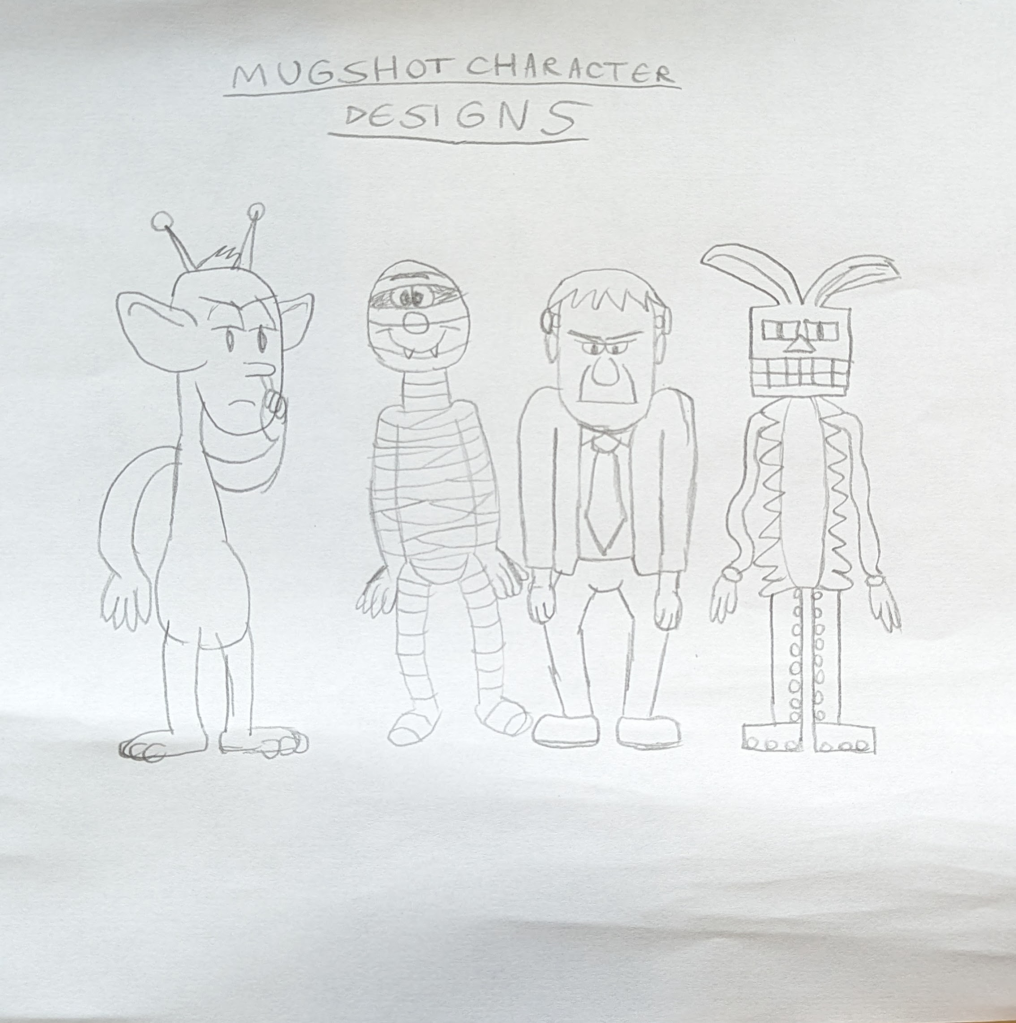
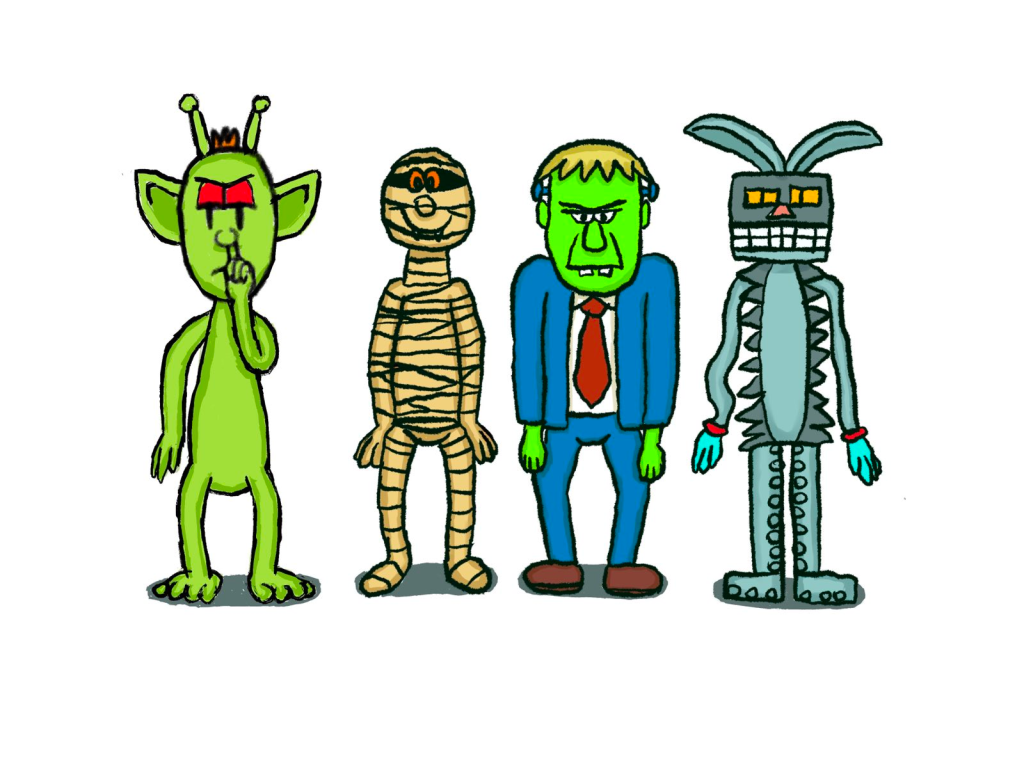
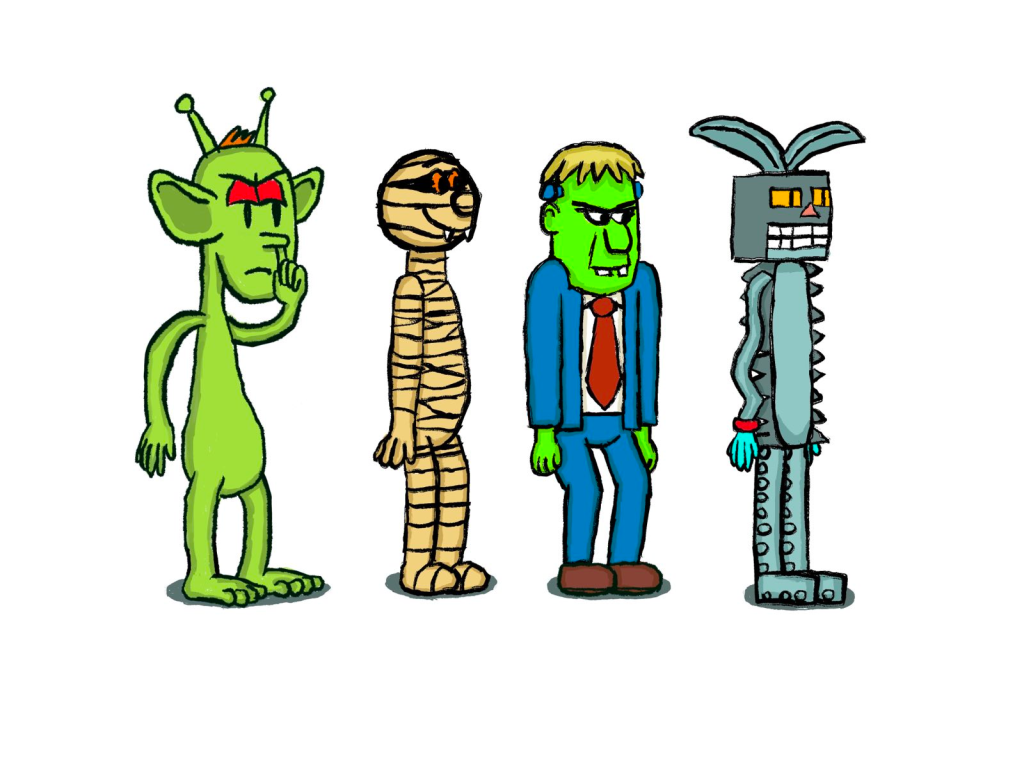
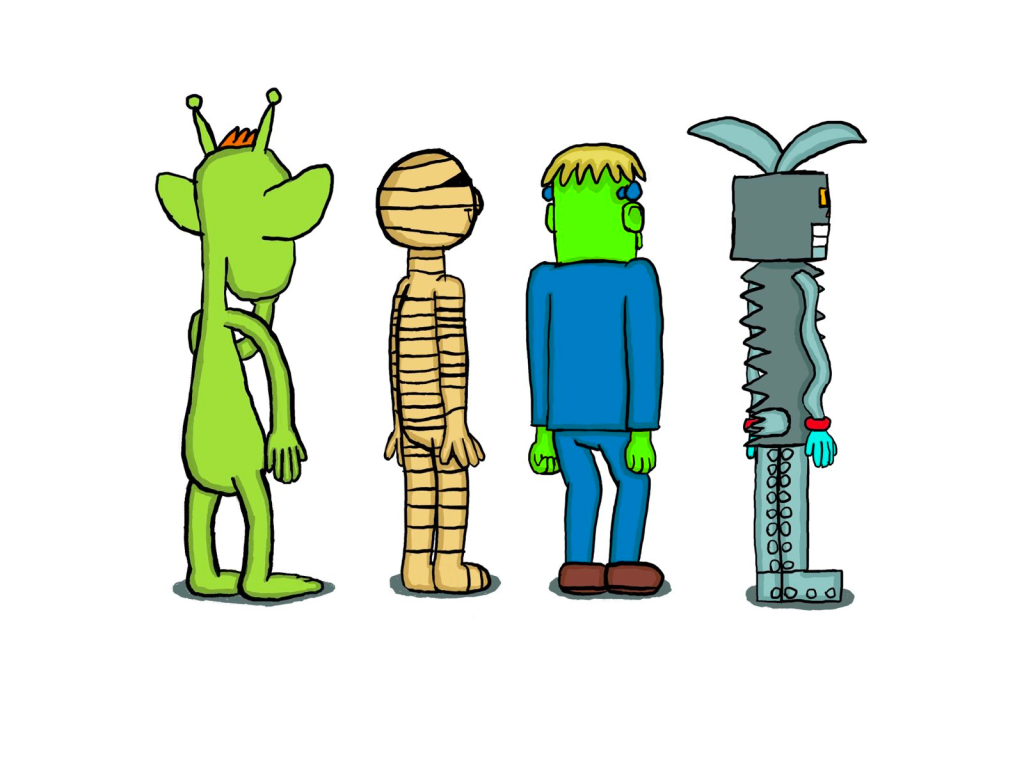
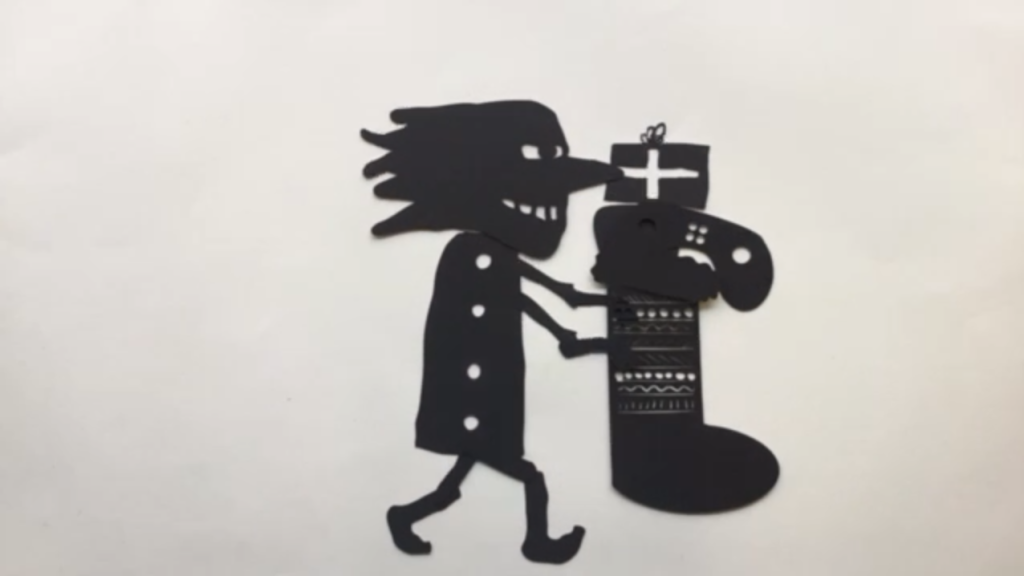
In November 2023, I produced three animations for an exhibition/live performance for the Folkestone Living Advent Calendar, named The Trial of Jack Frost. I used Procreate to make a mugshot turnaround of four characters (a grumpy alien picking his nose, a goofy mummy with vampire fangs, a Boris Johnson-caricatured Frankenstein’s monster and a robot rabbit), and did a stop motion laser cutout silhouette segment of Jack Frost stealing a stocking full of presents. The cutouts were drawn in Procreate and edited in Adobe Illustrator. They were then exported separately as a layered rig with labeled layers from Photoshop to be used in a title sequence for the exhibition, made using After Effects. In it, Jack drops down from above, bouncing on the spot when he lands. He points at his name, ‘Jack Frost’, in the title, its cutout-style letters flying and rolling into place. Then his name moves down a little to make way for ‘The Trial of’, much to Jack’s displeasure. I was given instructions on how to animate Jack and the letters. First, I set the anchor point for each body part in After Effects using the “Pan Behind Tool”. Next, I made an image sequence for the head positions and Time Remapped them. After that, I arranged and imported all the assets (including the letters). We downloaded Duik and installed the plugin to After Effects, and learned how to create arms and set up the armature for both arms, set up and saved workspaces that best suited the task. Then, I used the “Shy” switches to clean up my timeline and keyframed my “C” layers. I animated the rigged two-dimensional puppet, added the animated letters and used the “Posterize Time” effect to give the effect of a stop motion sequence, before exporting the film and uploading it to Dropbox. The exhibition opened today at 5:30pm, and was open between 6pm-7pm.

Concept art/designs for my mugshot turnaround characters.
First mugshot turnaround frame.
Second mugshot turnaround frame.
Third mugshot turnaround frame.
Fourth mugshot turnaround frame.
Fifth mugshot turnaround frame.
Jack Frost steals a stocking full of Christmas presents and sneaks away.
Jack Frost grins and points at his name in the exhibition’s title card…
…only to become cross upon learning that the title says that he is on trial!

Haunted House Experience

The exhibition’s title card.

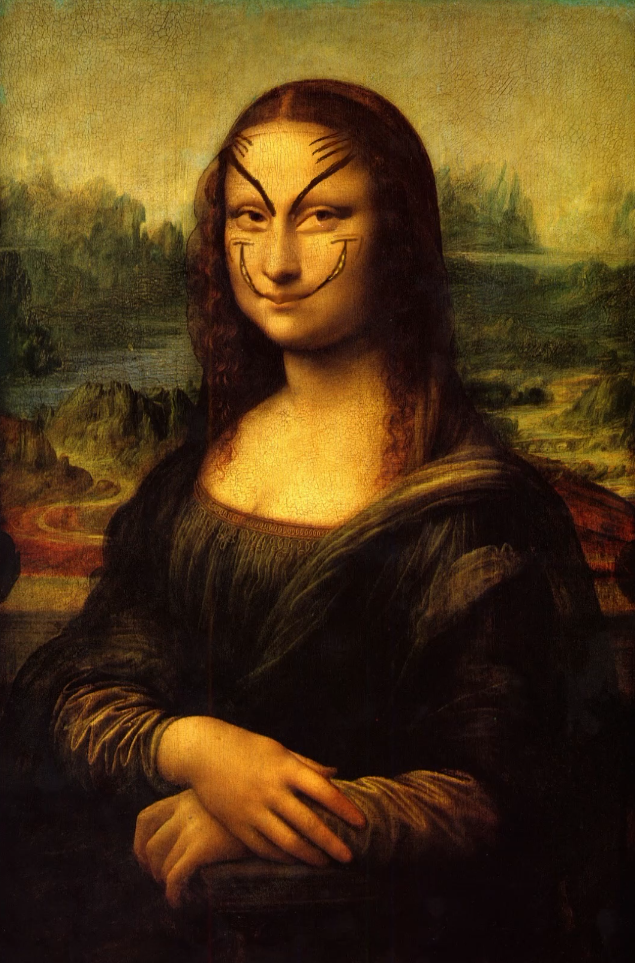
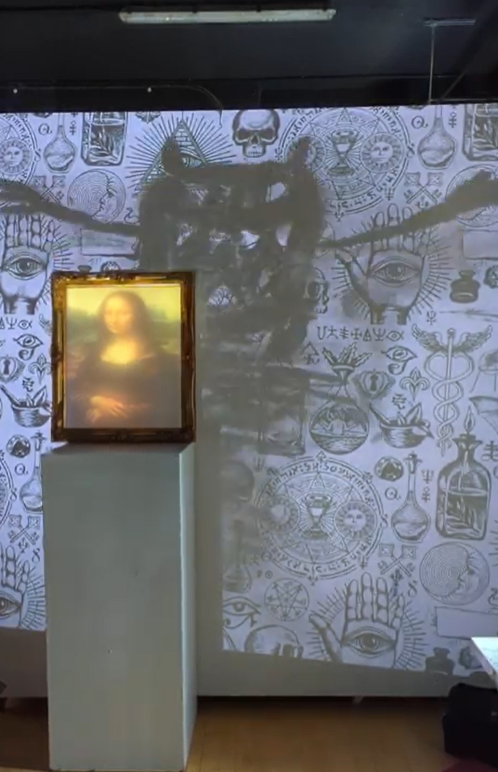
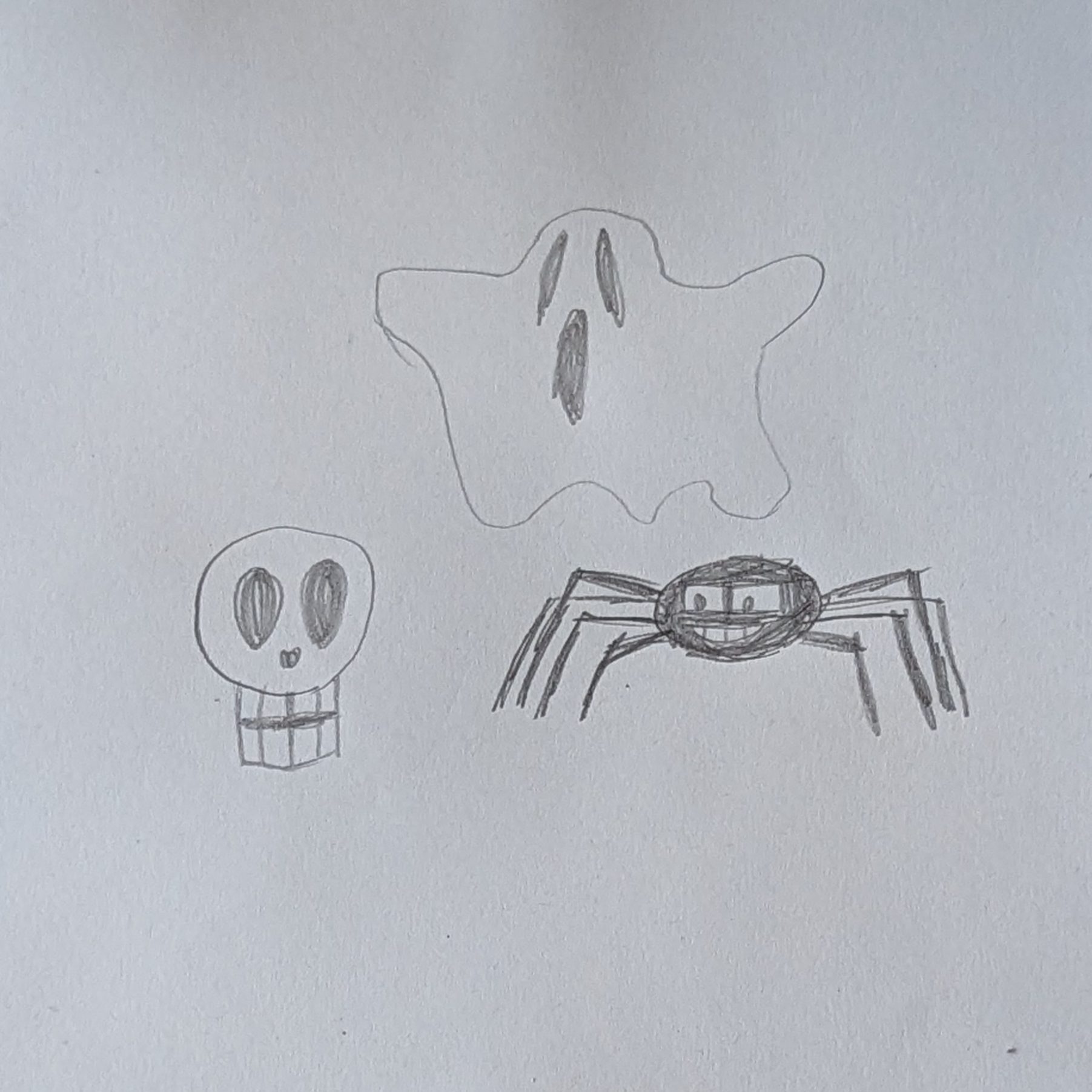
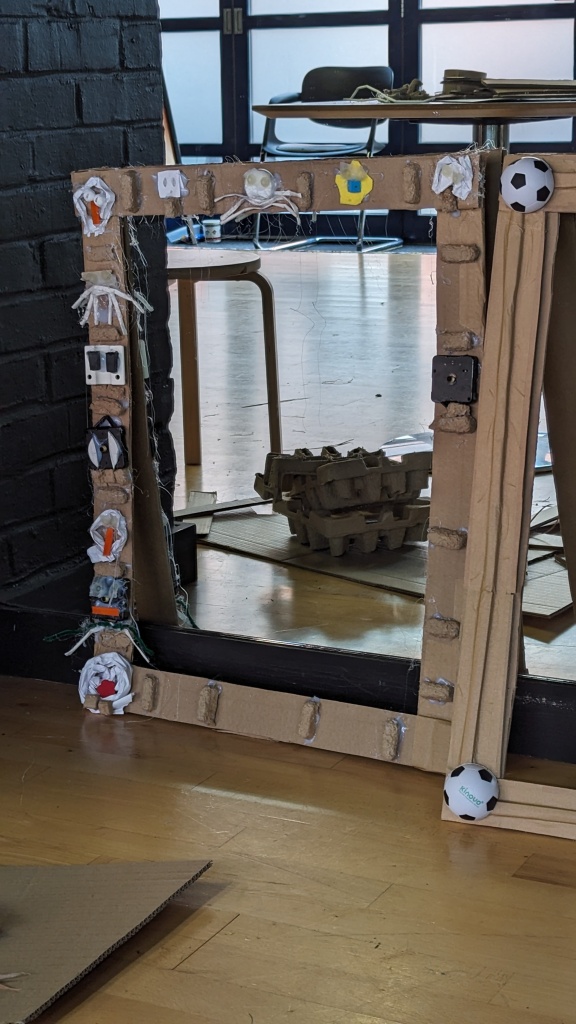
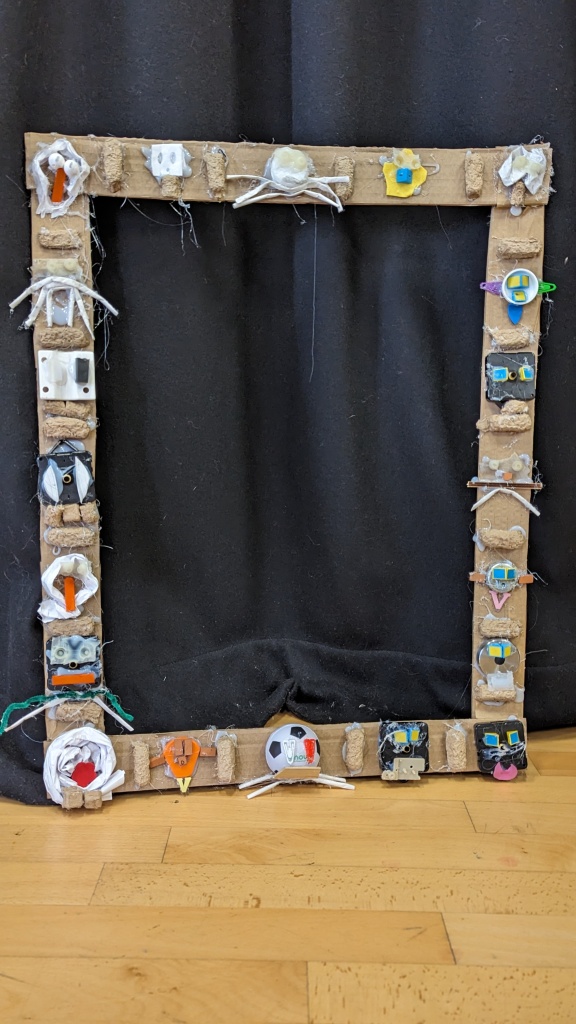
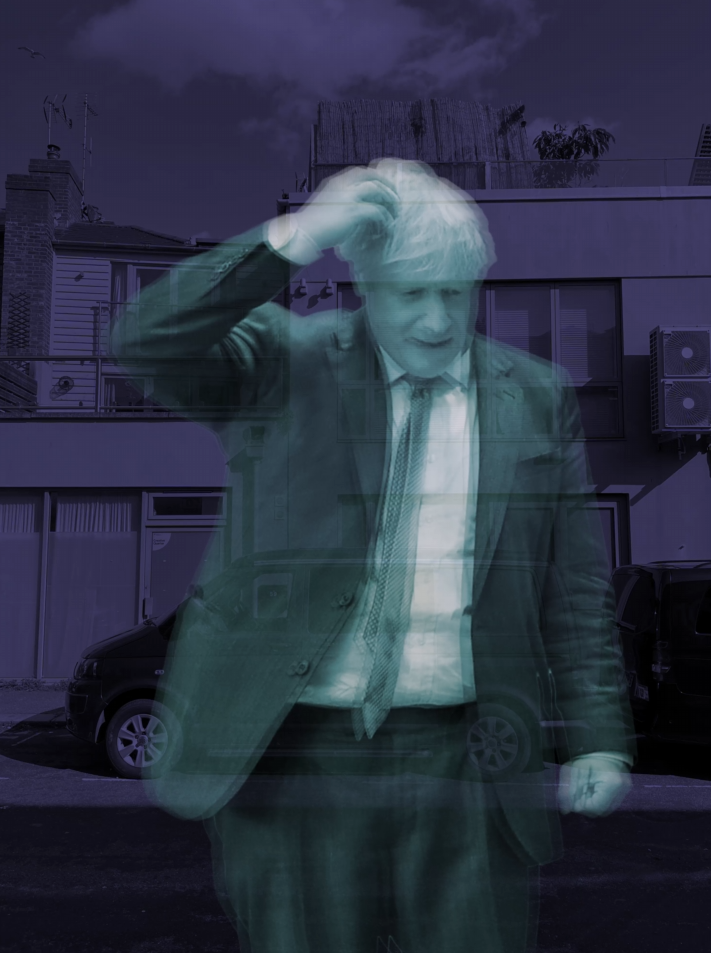
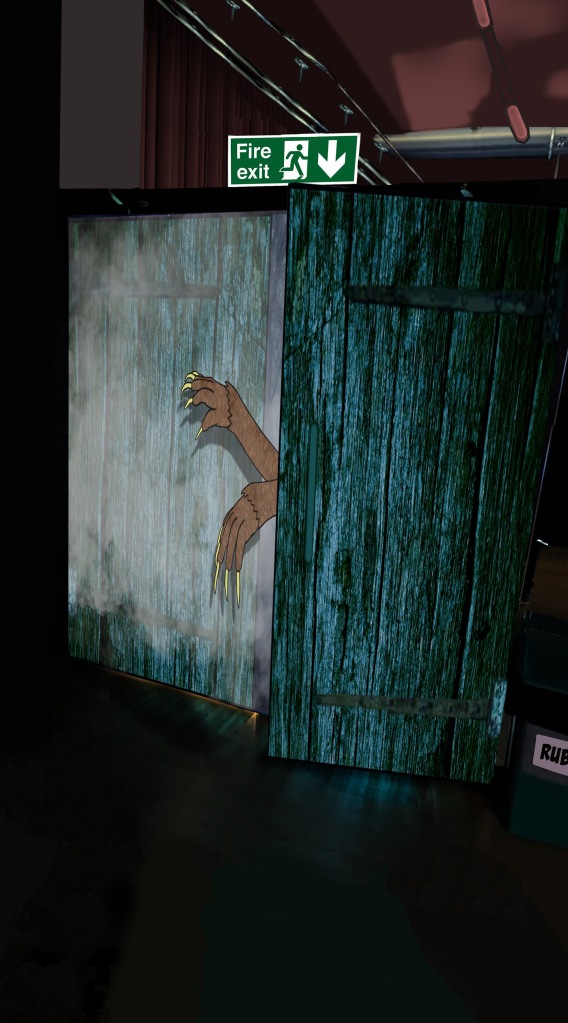
From September 2023 to October 2023, I was at Young Animators Club doing projected animations for use in a walkthrough exhibition named Haunted House Experience. Using Adobe After Effects, Photoshop and Procreate, I produced Grincha Lisa, in which Lisa del Giocondo (the Mona Lisa) does a Grinch smile for a few seconds after sporting her usual calm expression; a William Kentridge-style stop motion chalk animation of a shadowy, Tasmanian Devil-like monster, known as the Psyclone Ghoul, who grows and leaps out at the viewer before disappearing; a dancing stop motion Irish spider and a brown claymation spider, the confused ghost of Boris Johnson (a satirical symbolisation of the end of his position as Prime Minister of the United Kingdom), and spiders, skulls, ghosts (voiced by pitch-shifted archive recordings of Miranda Richardson as the mummy from the audiobook version of Horrid Henry and the Mummy’s Curse) and Johnson bursting through the doors, accompanied with smoke and lightning and followed by the claws of a growling werewolf. I also made a golden decorated picture frame using cardboard, spray paint, cutouts and small objects, and produced an advert for the exhibition in which someone approaches Block 67 as lightning flashes and thunderclaps are heard, and waits outside the doors before the werewolf’s claws appear.
Grincha Lisa. Image © Leonardo da Vinci. Edit © mysuperendeavour@WordPress.
In-progress Psyclone Ghoul drawing.
Behind-the-scenes work on the Psyclone Ghoul.
My Psyclone Ghoul emerges from behind the Grincha Lisa.
My dancing stop motion Irish spider puppet.
Concept art for my ghost, skull and spider decorations for my picture frame.
In-progress decorated picture frame.
Nearly completed decorated picture frame.
Finished decorated picture frame.
In-progress claymation spider.
Finished claymotion spider.
Boris Johnson rises from his grave outside Block 67, confused about his ghostly appearance, how he died and how he ended up here.
A person approaches Block 67 during a dark, stormy night…
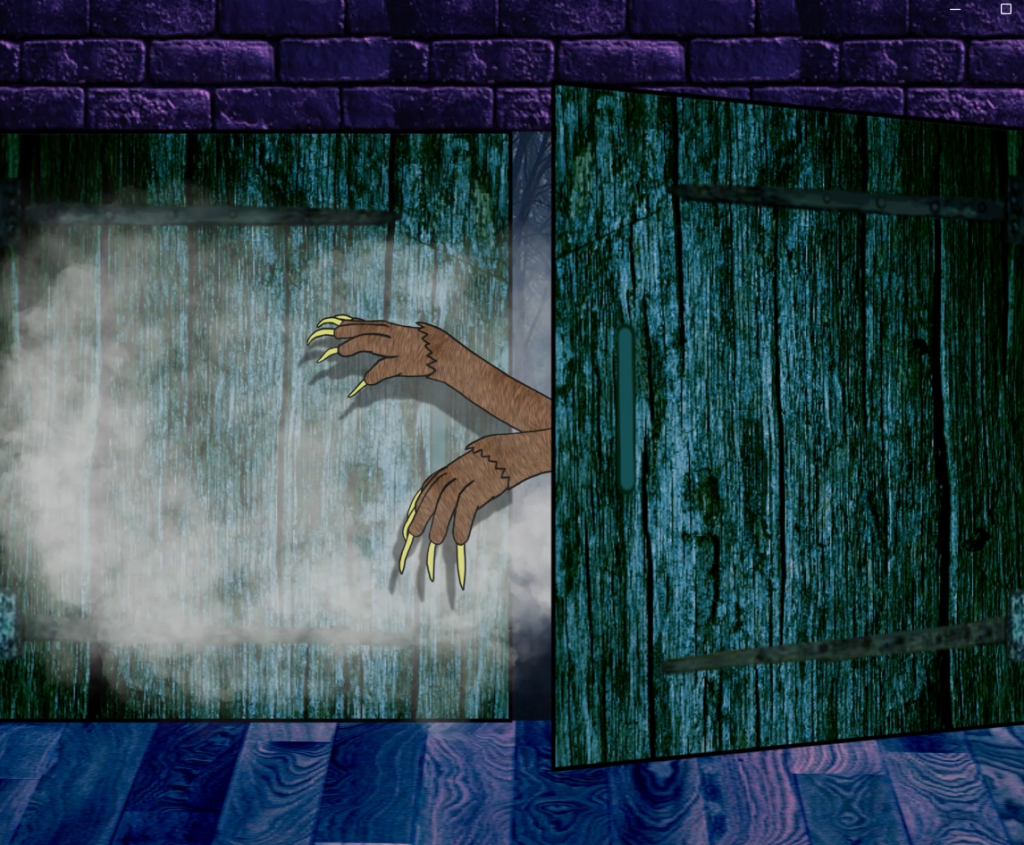
…and is greeted by the hairy, razor-sharp claws of a werewolf!
Projection test with four spiders entering the haunted house.
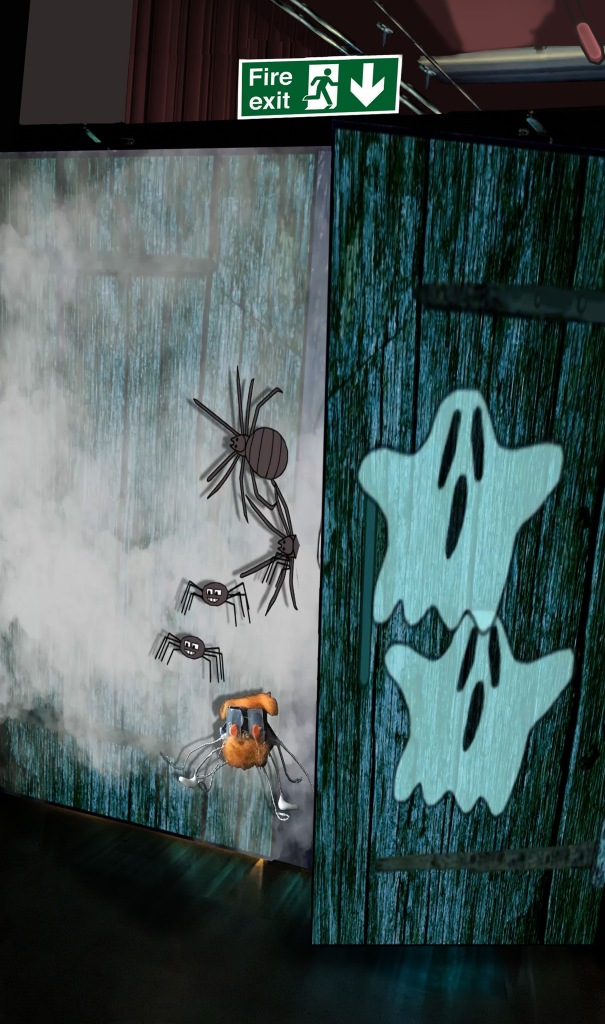
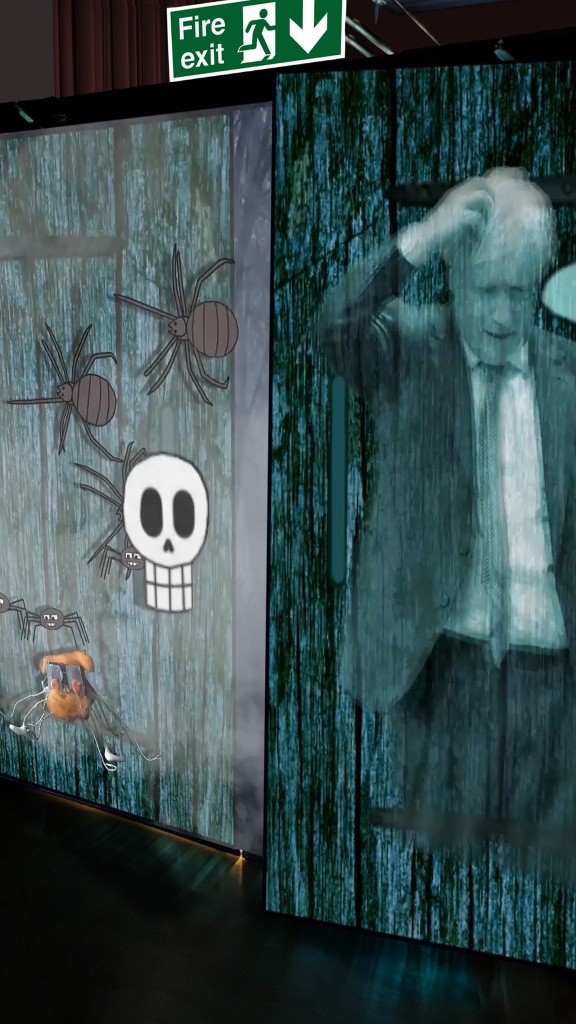
Seven spiders, a chattering skull, two wailing ghosts and Boris Johnson make their smoky entrance in the haunted house…
…followed by the ferocious werewolf!

I attended the exhibition today between 2pm and 6pm. There I saw most of my animations, except my Psyclone Ghoul and claymation spider and Grincha Lisa, due to time and problems with setting up the laptops and projectors.

A white-outlined ghost with magic powers pokes his head round the door.
A green, hostile ghost appears, lunging towards the attendees.
A chilling message, ‘You will be terminated,’ flashes on the doors.
A hand washes the blood on the floor away with a hose.
A tall, swirling ghost floats around for the attendees.
The spiders and wailing ghosts emerge from the doors…
…followed by the chattering skull and Boris Johnson.
The werewolf snarls and shows his claws from behind the door.
A red-eyed mummy pokes his head round the door before vanishing.
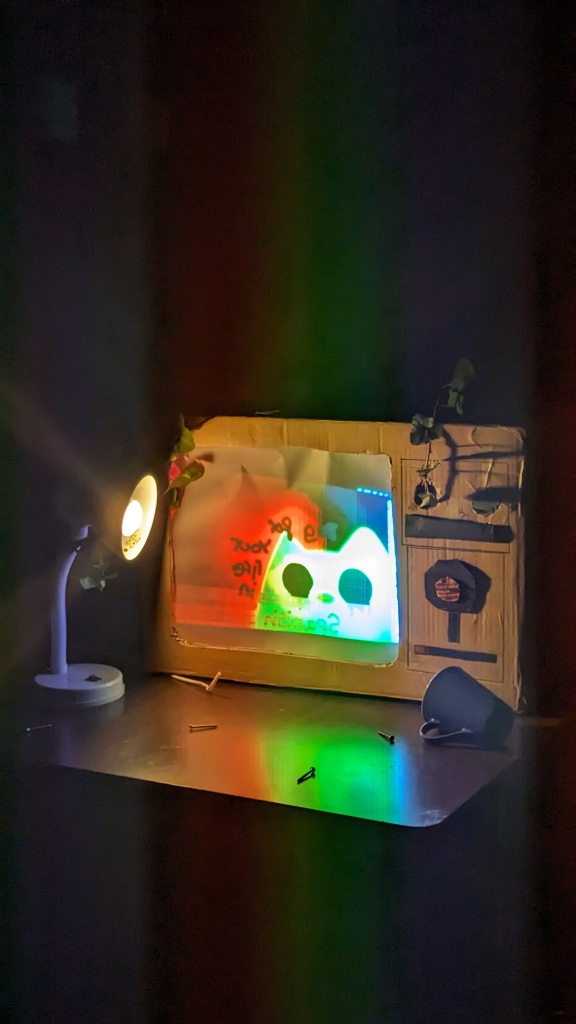
A creepy, green owl with black, bleeding eyes gives a disturbing message on the television, “Hola, mi chicos. Beg for your life in Spanish.” Image © Harry Markwell.
Luigi appears in the darkness, holding his hands on his cheeks in horror. Luigi © Nintendo Company, Limited.
A fallen wardrobe distracts Luigi (with a blue-and-green color scheme), before a ghost laughs (like the Skull Kid) and captures him, dragging the screaming plumber away. Luigi © Nintendo Company, Limited.
Projected haunted painting animation of American Gothic in my decorated picture frame. Image © Grant Wood.
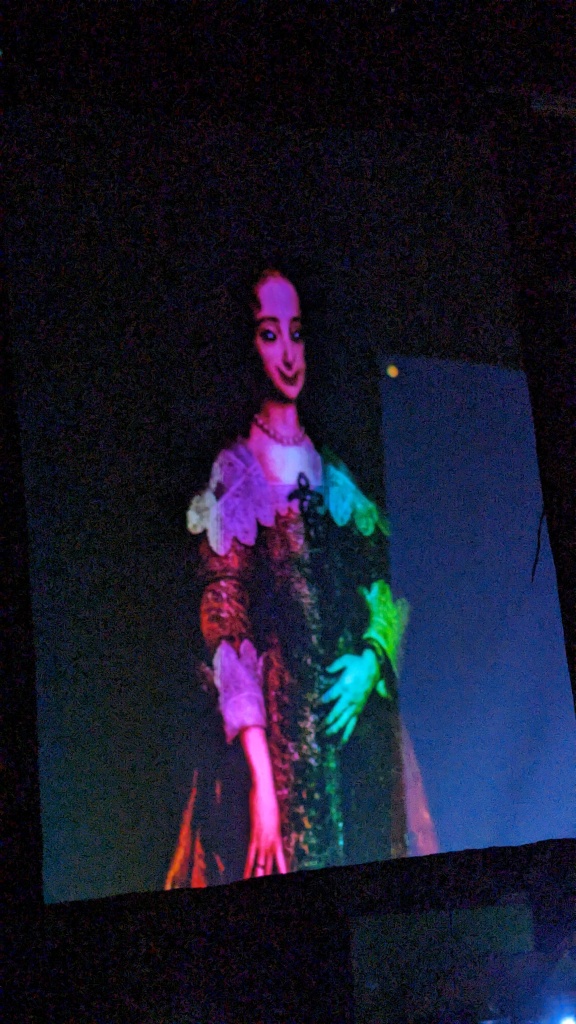
Projected haunted painting animation of Mary, Princess Royal and Princess of Orange (before).
Projected haunted painting animation of Mary, Princess Royal and Princess of Orange with a creepy smile (after).
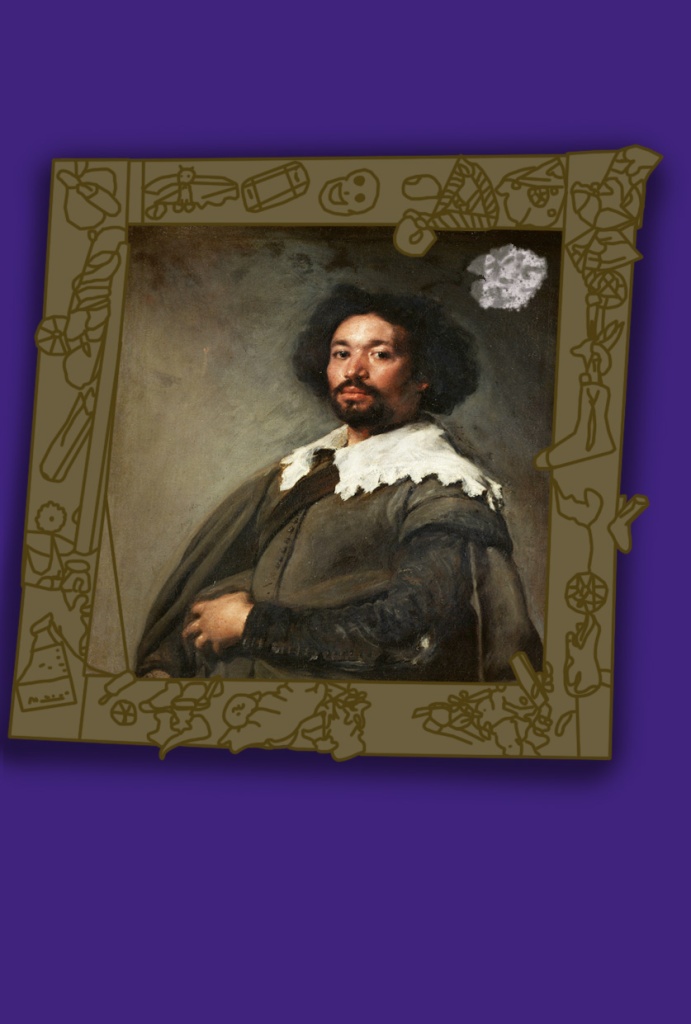
Projected haunted painting animation of Juan de Pareja (before).
Projected haunted painting animation of Juan de Pareja with no face (after).
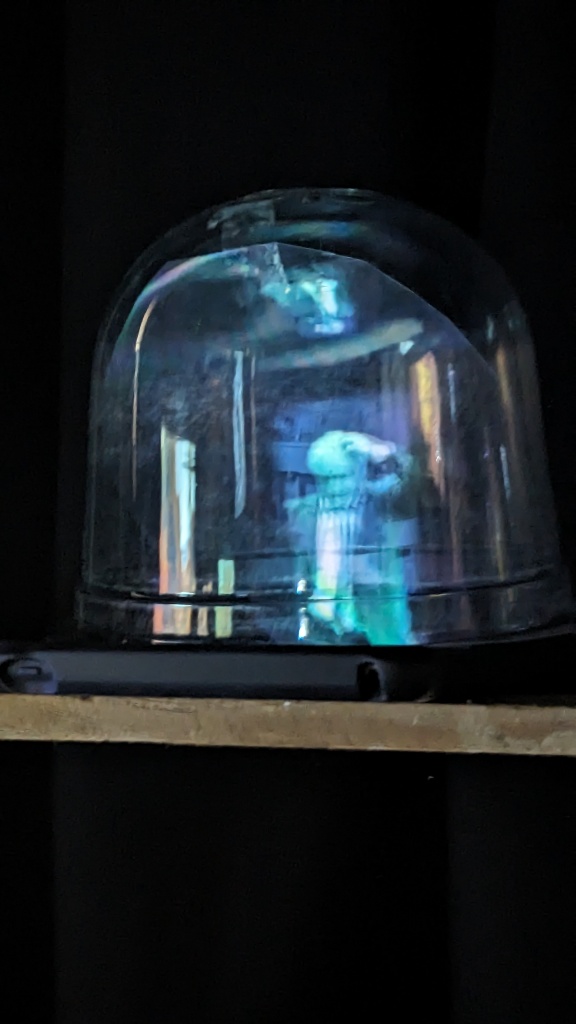
Pepper’s ghost projection of Boris Johnson.
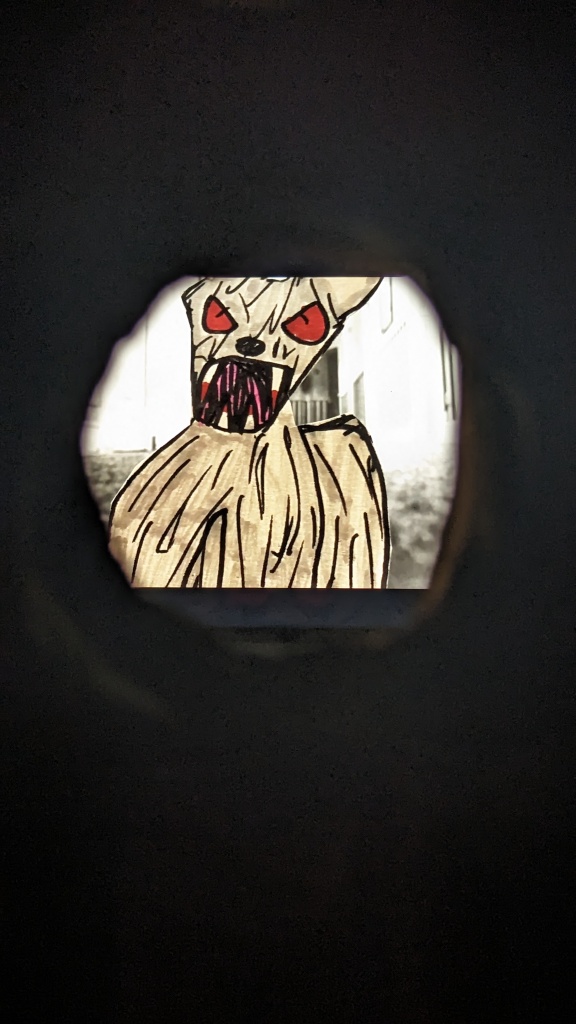
The Mouth, as viewed from a peephole. Image © Oliver (different person).
A peephole jumpscare from a vampire rat.
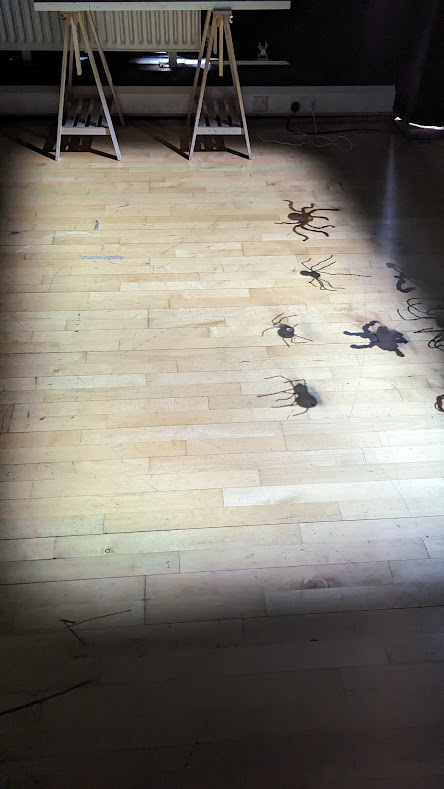
Black and brown spiders scuttle across the floor.
More spiders emerge from the shadows to join in.
Three spiders dance around in a circle, while a red spider arrives on the scene.

The Wascawwy Wagnewian: An Analysis of What’s Opera, Doc?

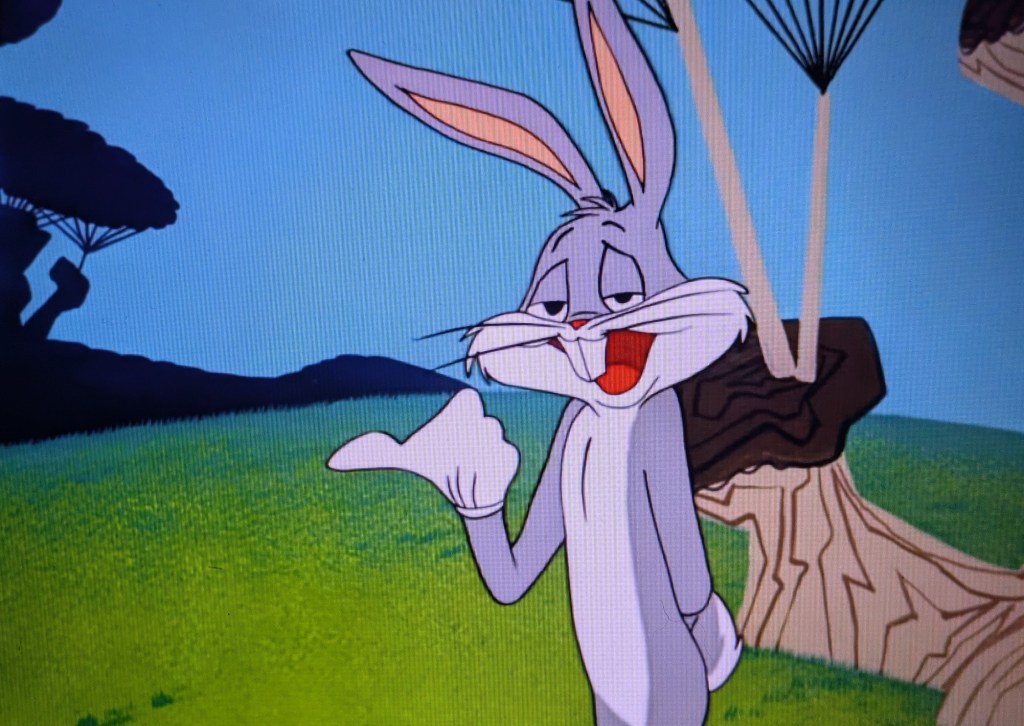
Bugs Bunny gestures toward Elmer Fudd as he talks to the audience about the latter’s magic helmet. Image © Warner Bros. Entertainment Inc.

The Success of Bugs Bunny
Since his debut in Tex Avery’s A Wild Hare in 1940, Bugs Bunny has entertained audiences with his clever trickery and ability to take the moral high ground and stand up for himself against whoever antagonizes him. The rabbit’s foes include Daffy Duck, Elmer Fudd, Yosemite Sam, Marvin the Martian, the Tasmanian Devil, Wile E. Coyote, et cetera. He has become less of a bully and more of a smart confident hero with superhuman strength who outsmarts his enemies.

Poster for Jailhouse Rock. Image © Metro-Goldwyn-Mayer Studios, Inc.

Satire Season, Tragedy Season: The Historical Context of What’s Opera, Doc?
The United States of America and Britain were still recovering from World War II, the former country being full of political unrest. The Civil Rights Act of 1957 came into force that year. The most popular films of the 1950s that people saw were The Ten Commandments (an epic religious drama directed by Cecil B. DeMille and starring Charlton Heston), Around the World in Eighty Days (a light-hearted adventure film directed by Michael Anderson), 12 Angry Men, Jailhouse Rock (an underdog film based on the song of the same name by and starring Elvis Presley), The Bridge on the River Kwai and The Three Faces of Eve. These films are relevant and contextualize What’s Opera, Doc? as the audience would be going to see the cartoon’s screening before these feature films, in which we recognize a recurring theme of the underdog triumphing over the more controlling figures. This reflected the mindset of Americans at the time.

At Warner Brothers, Chuck Jones (who had been working at the studio since the 1930s) was directing a lot of Looney Tunes and Merrie Melodies cartoons around 1957, including Scrambled Aches, Ali Baba Bunny, Go Fly a Kit and Boyhood Daze, most of which involved underdog characters taking the mickey out of the people supposedly in charge and making them look like fools. This is relevant today, because political figures, such as Donald Trump and Boris Johnson, are vulnerable to being satirized by comedians and artists.

Scene from Siegfried. Image © Seattle Opera.

Humor has been used in narrative-based, sequential cartoons since the invention of the printing press. Thanks to artistic processes such as engraving and carving, the printing process was exposed to the masses, For example, William Hogarth used engraving and printing in his work to tell stories and make un of the upper class and politics. The Walt Disney Company’s Fantasia is a 1940 musical anthology film in which different animated segments are set to classical tunes, with the actions in sync to the music. In response to this, Warner Brothers decided to compete with them, producing and releasing shorts like Bunny of Seville and What’s Opera, Doc? to focus more on parody than pomp, with Jones as the director. During the six minutes of What’s Opera, Doc?, Jones also satirizes the contemporary style of ballet, Richard Wagner’s ponderous operatic style, and the standard Bugs-and-Elmer formula, which was clichéd at the time.

Michael Maltese wrote the cartoon’s story and the lyrics to Wagner’s music to create Bugs and Elmer’s song “Return My Love”, while Maurice Noble devised the stylized backgrounds. The voices were provided by Mel Blanc (Bugs Bunny, Elmer Fudd yelling, “SMOOOOOG!!!”) and Arthur Q. Bryan (Elmer Fudd).

Jones’ production staff spent six times the amount of labor working on the cartoon, with him telling them to cheat on their time cards in order to convince the higher-ups that they were making Road Runner cartoons.[1]

What’s Opera, Doc? was released on July 6, 1957, and has been praised by many animation historians as one of Warner Brothers’ best animated short films and one of The 50 Greatest Cartoons of all time.[2]

A Labor of Love
“This 1957 epic satirizes the grand tradition of Viking opera and also manages to rib an entire century of ballet in the process.” – quote from Warner Brothers Animation Art by Jerry Beck and Will Friedwald.

“In 1943, while the classical music and animation communities were still buzzing about Walt Disney’s Fantasia, Warner Brothers decided to tilt that conversation in their favor; they began to release animated shorts parodying Fantasia‘s use of classical music.”[3]

Fantasia is serious, beautiful and artistic, in contrast to What’s Opera, Doc?, which is comedic, stylized and exaggerated.

Themes:
Music: Action synchronized to music.
Conflict: Elmer hunting Bugs.
Power: Elmer controlling the weather, Bugs’ power to stop Elmer in his tracks.
Control: Elmer controlling the weather.
Slapstick
Topical satire
Love: Elmer’s weakness to Bugs’ mock lust.
Color: Action (Elmer’s demigod powers) and emotion (example: Elmer’s rage when controlling the weather to kill Bugs and his grief and regret when he thinks that has done so).

A Romantic Tragicomedy
The genres used in What’s Opera, Doc? are drama (Elmer’s demigod powers and Bugs’ “death”), comedy (Siegfried’s gigantic, strong silhouette being revealed to be that of the underwhelming Elmer, Bugs and Elmer’s rhymes and “spear and magic helmet” repetitions, Bugs’ reaction to Elmer singing, “Kiww da wabbit!” and his demigod power demonstration, Valkyrie disguise, and revelation at the end that he is playing dead, et cetera), romance (Elmer falling for Bugs’ Valkyrie disguise and dancing with him) and horror (Elmer’s “Siegfried” silhouette when controlling the weather and his furious wrath).

In the Eyes of the Hunter
The cartoon uses an objective perspective since it shows the action happening onscreen and does not have a narrator or the characters telling the story. It also uses a subjective perspective for some scenes, such as Elmer (as Siegfried) and Bugs breaking the fourth wall (looking at the camera, Bugs’ “Magic helmet!” and “Well, what did you expect in an opera, a happy ending?”, Elmer’s “Dat was da wabbit!”), point-of-view shots of the Brünhilde-disguised Bugs following a zooming medium shot of Elmer feeling dumbfounded upon seeing him, a zooming shot of Bugs singing their duet, and some zooming medium shots of Elmer during his wrath. The backgrounds and foregrounds are also warped and exaggerated in appearance and height to create unrealistic spaces that “play” with perspective and space, depending on the importance of the subject, such as Elmer standing atop a cliff when demonstrating his demigod powers, or Bugs’ appearance in his Valkyrie disguise.

Friend or Foe?
The narrative is about conflict, with one side winning over another, and regretting it immediately after. This is funny because Bugs is revealed to have faked his death, thus making him a champion underdog. Elmer lost because he had been tricked and made to look foolish all along.

Bugs and Elmer’s relationship draws parallels with the Civil Rights Movement. African-American people wanted to have equal rights because without them, America would be weak. Elmer thinks that he has killed Bugs and feels like he loses his purpose to pursue him.

Dark Humor/Light Humor
Exaggerated scale and control is used for Elmer’s huge demigod shadow and himself defying the law of physics by putting his strength into controlling the weather. It takes a jab at inflated egos in politics and authoritative people thinking that they are in the right.

Elmer stabbing his spear into Bugs’ hole and singing, “Kiww da wabbit, kiww da wabbit, kiww da wabbit!” is an exaggerated emotion, since he is singing to the tune of “Ride of the Valkyries”, while Bugs emerges from another hole.

Bugs is a rabbit who reacts to Elmer’s “kiwwing” of him and sings to him, speaking in rhyme. This is an exaggerated emotion since he is generally a trickster underdog character in a series of comedic animated shorts, in contrast to the authoritative Elmer, and rabbits do not speak in real life.

Elmer uses his strength to control the thundercloud, using their rain and lightning to strike the tree that Bugs stands under. An exaggerated perspective is used for the dark colors of the sky and the warped clouds to symbolize Elmer’s authority-centered dominance over Bugs, whose shocked expression after the attack before running away is an exaggerated emotion.

The Valkyrie-disguised Bugs rides down toward Elmer on a horse. This is an exaggerated scale because the path that the horse is riding on is small, whereas the horse is huge. The horse’s height is ridiculous since he would be too big to run on the small path. It is also a reference to “It ain’t over till the fat lady sings,” and a subversion of the stereotypical “fat opera lady on a horse”.

Exaggerated perspective is used for the backgrounds during Bugs and Elmer’s love dance and duet, which is an exaggerated emotion.

Elmer becomes enraged and controls the weather in order to kill Bugs, and he also at one point screams, “SMOOOOOG!!!” This is exaggerated emotion because color is used to symbolize Elmer’s overactive, childish rage, poking fun at the fact that authoritative people can be immature.

When Elmer thinks that he has killed Bugs, he grieves and carries him to Valhalla, unaware that Bugs faked his death and breaks the fourth wall. This is an exaggerated emotion, due to Elmer instantly switching from anger to sadness once he sees Bugs’ seemingly dead body.

Kiww da Wabbit, Kiww da Wabbit, Kiww da Wabbit!
“Chuck had always intended that those plates fell, inverted, fell on Elmer Fudd’s skirt. That they would go ‘dink, dink, dink, dink, dink, dink, dink, dink, dink’, but Treg Brown, the sound editor responsible for the short, forgot to put the sound effects in. He would watch it, and every time he would watch it, he’d give a ‘hurgh’. Sort of like, ‘ Darn it. I can’t believe that happened.’ It was quite remarkable.”[4]

“The surreal masterpiece, which pokes fun at Fantasia, ballet. Wagner, as well as opera…”[1]

“We are assaulted with a lexicon of timbres suddenly freed from the customary requirements of cohesion and climax: percussive outbursts, lightning glissandi, momentary dissonance, frenzied scales, and a host of other musical figures that verge on the avant-garde.”[5]

Lights, Shading, Color, Action!
“Maurice Noble contrived a unique color scheme for the cartoon, dousing Elmer in bright shades. Ken Moore developed a technique to highlight the meeting on the top of the tower by cutting holes in specialty set-design materials.” – quote from The 50 Greatest Cartoons: As Selected by 1,000 Animation Professionals by Jerry Beck.

“Siegfried’s” huge, muscular shadow controls the weather, posing to the dramatic music and lightning clashes. Image © Warner Bros. Entertainment Inc.

The rule of third composition, vertical lines and a contrasting, dramatic tonal range with strong, saturated, depressing, domineering bright green and blue analogous colors and pink flowers are used to focus on and symbolize Elmer’s mighty demigod shadow (the focal point) and powers.

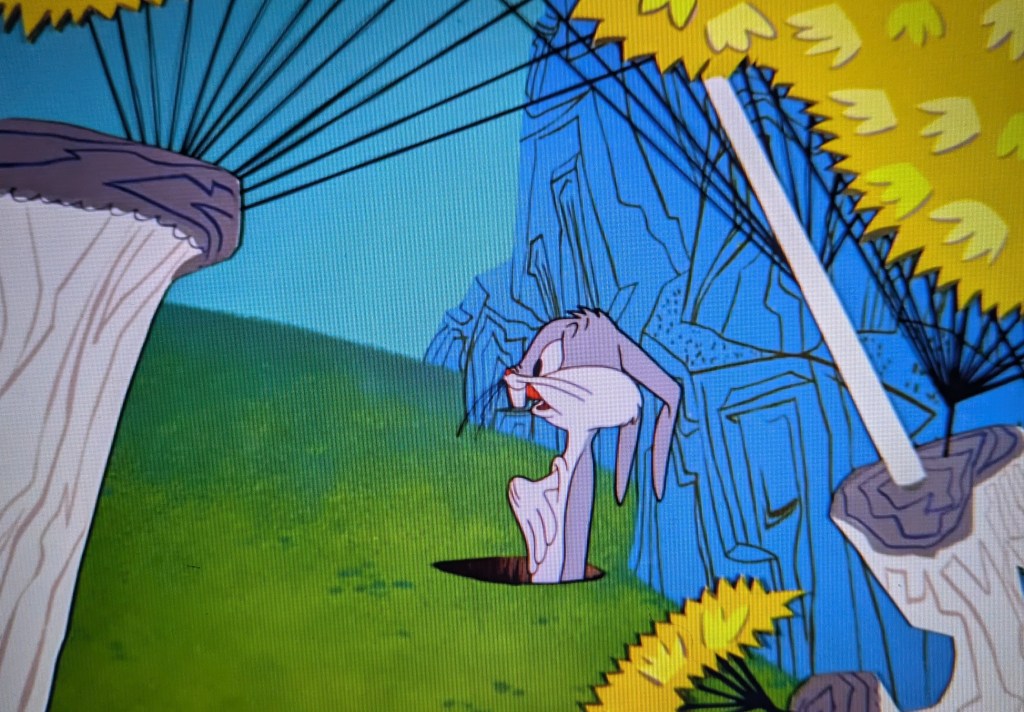
Bugs Bunny emerges from his hole, surprised about Elmer Fudd’s singing about killing him. Image © Warner Bros. Entertainment Inc.

Curved and diagonal lines and a small tonal range with saturated yellow, bright green and blue analogous colors and a less saturated dark green color are used to emphasize Bugs’ heroic trickster, with Bugs framed in a lead room/rule of third composition as the focal point.

Elmer Fudd stands at the top of a cliff to give Bugs Bunny a display of his demigod powers. Image © Warner Bros. Entertainment Inc.

Vertical lines and a strong, saturated, dramatic, depressing, domineering bright green and blue analogous colors and pink clouds are used to symbolize Elmer’s demonstration of his mighty powers, in a wide lead room shot with leading lines pointing on him (the focal point).

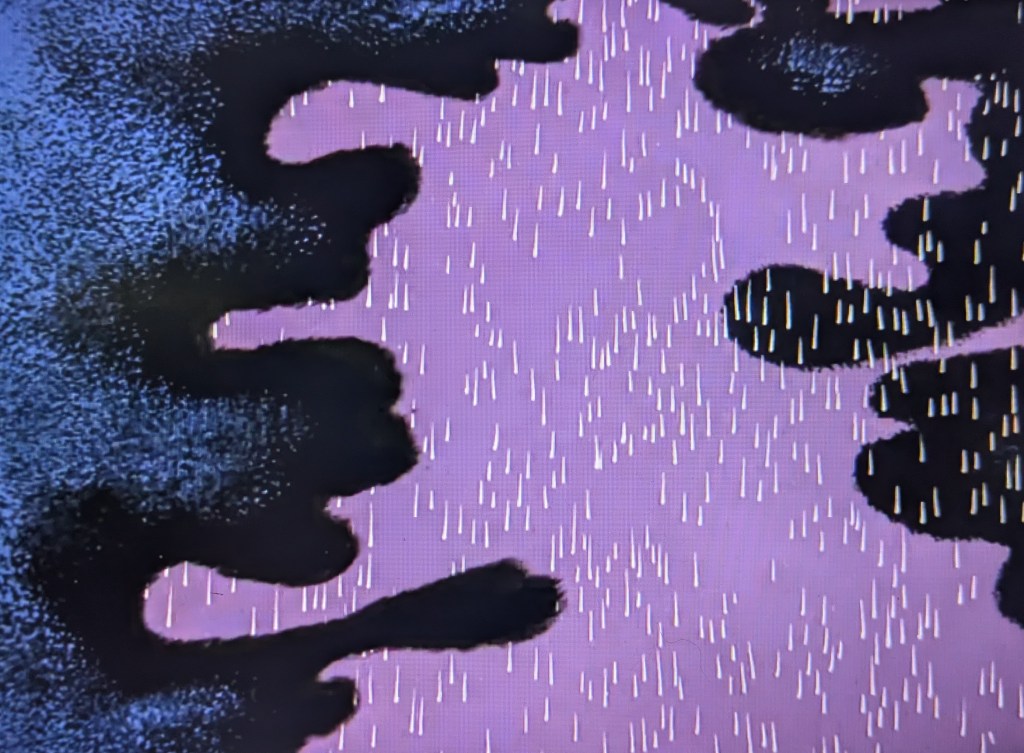
Elmer Fudd controls the thunderclouds, using their rain and lightning to strike Bugs Bunny. Image © Warner Bros. Entertainment Inc.

Negative space, a golden triangle and a contrasting, dramatic tonal range with domineering, dark blue and purple analogous colors and hues and white raindrops are used to symbolize the strength that Elmer puts into the weather to strike Bugs and indicate the thunderclouds’ direction.

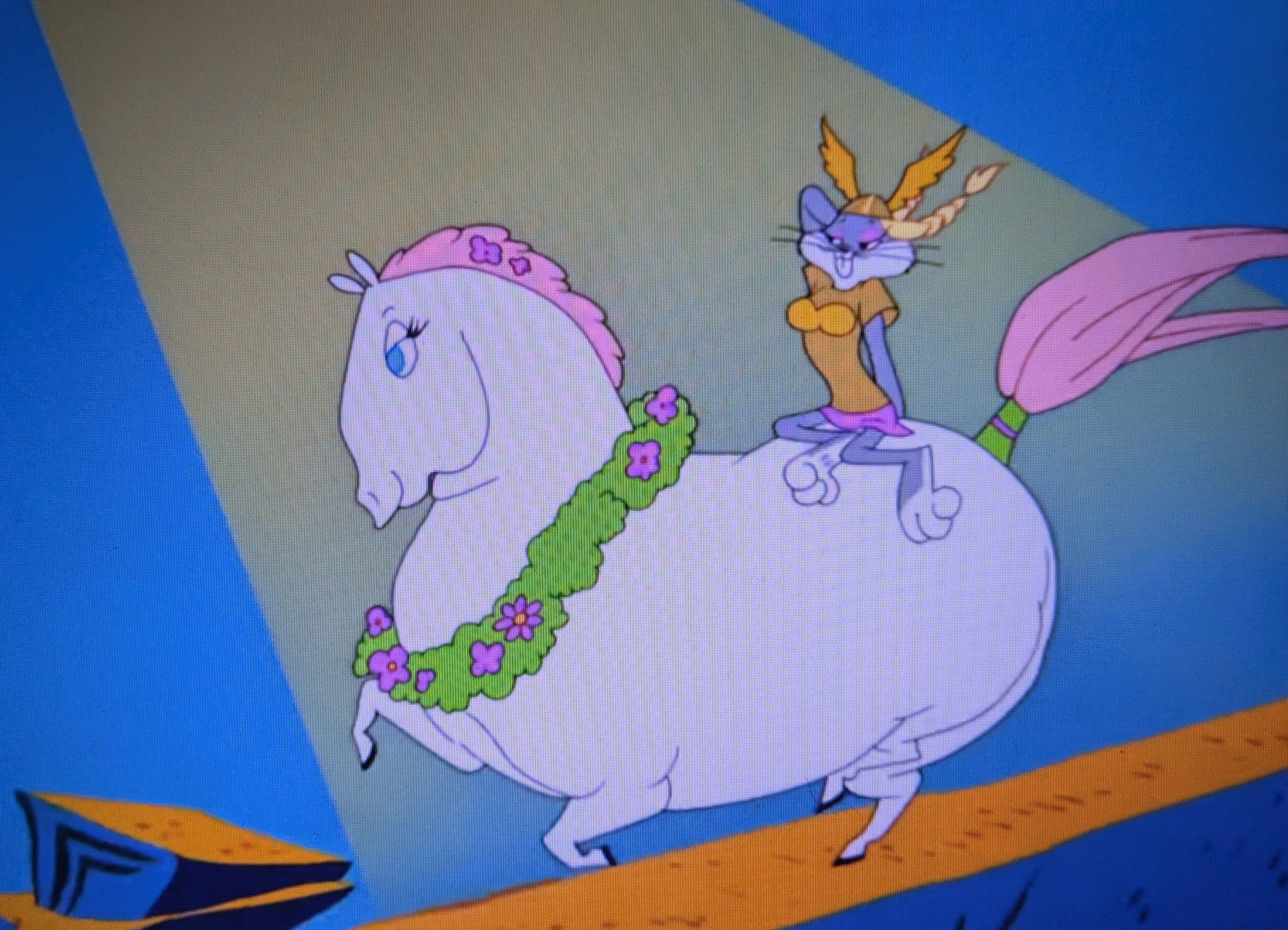
Disguised as Brünhilde, Bugs Bunny rides down the path toward Elmer Fudd on a large horse. Image © Warner Bros. Entertainment Inc.

A lead room composition consisting of a golden triangle, diagonal lines and a small tonal range with saturated orange, blue and yellow triadic colours and playful pink and green colors is used to symbolize Bugs’ (the focal point) mock lust and innocence, and indicate the direction that his horse is going (toward the lovestruck Elmer).

Elmer Fudd follows and searches for Bugs Bunny during their ballet dance. Image © Warner Bros. Entertainment Inc.

A lead room shot with vertical and curved lines in the background and a small tonal range with a saturated pink hue are used to emphasize Bugs’ mock lust and innocence and the dumbfounded Elmer losing his domineering power and falling for Bugs’ disguise.

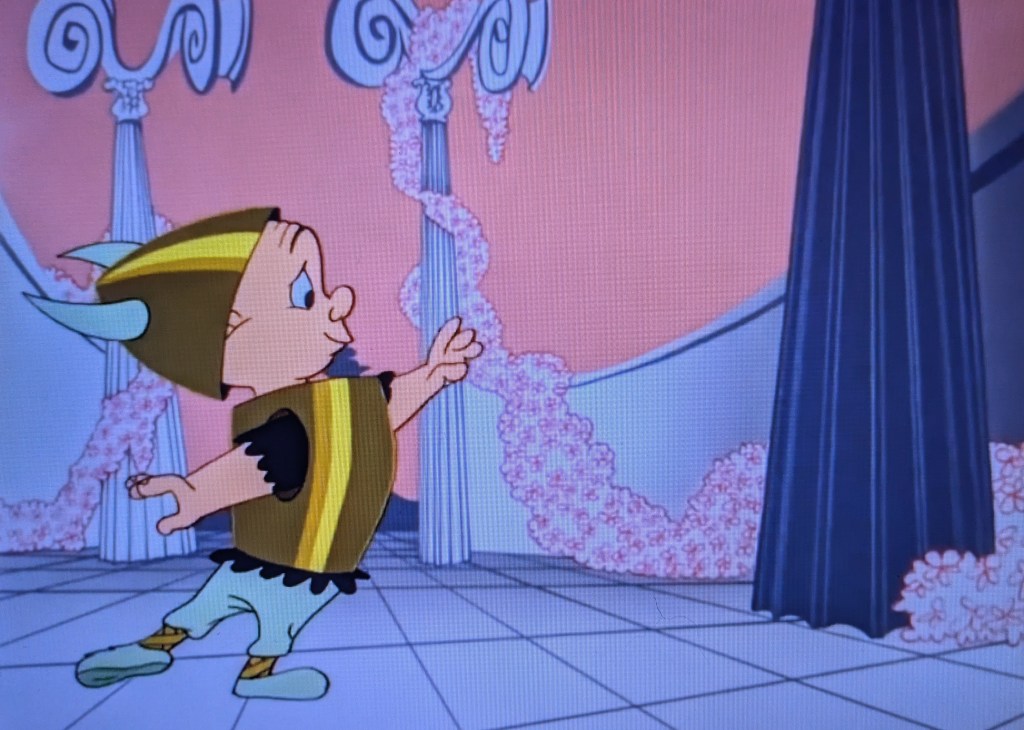
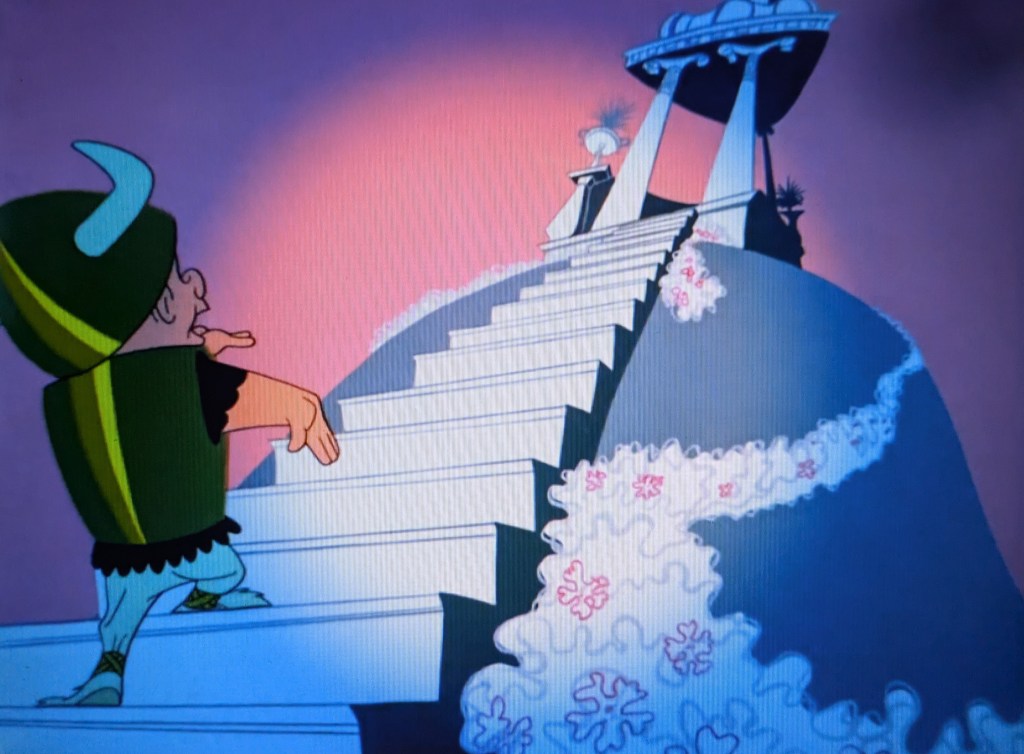
Elmer Fudd climbs the staircase as he proclaims his love for Brünhilde (Bugs Bunny). Image © Warner Bros. Entertainment Inc.

Curved lines are used to give the background a graceful appearance, while horizontal, vertical and diagonal lines are used for the staircase that Elmer walks up to draw the viewer’s attention to where Bugs is lying in the chair (the focal point). The shot uses a contrasting tonal range with dramatic, saturated blue, purple and pink analogous colors and yellow-brown colors.

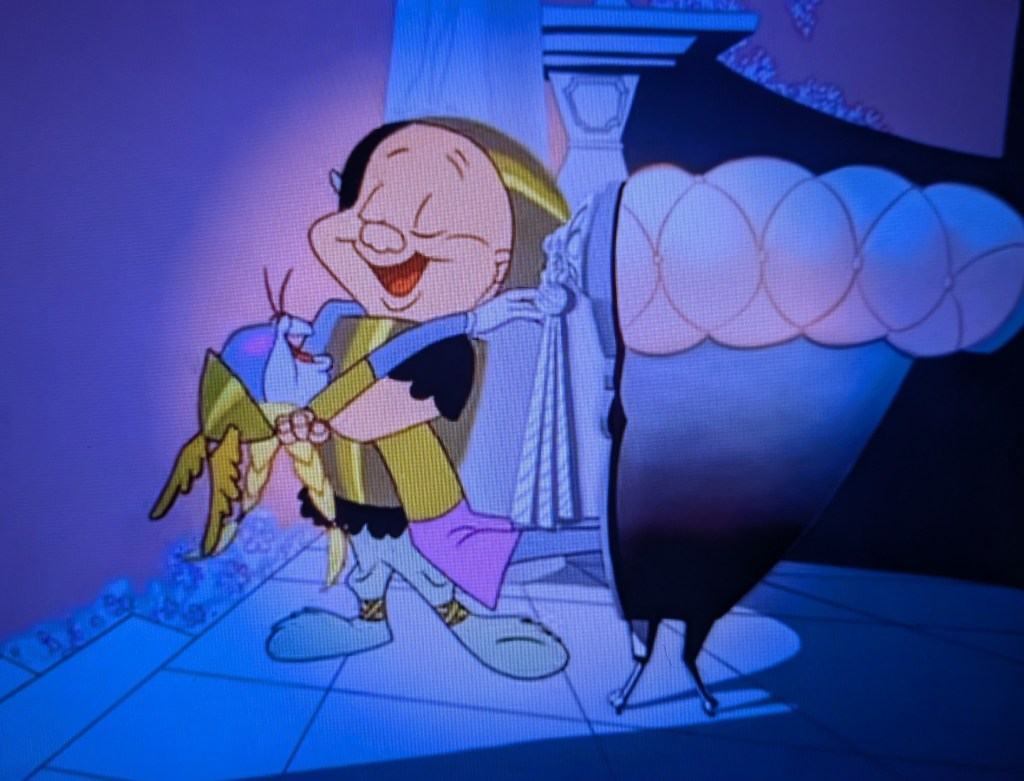
Bugs Bunny and Elmer Fudd embrace each other as they sing their love duet. Image © Warner Bros. Entertainment Inc.

Curved lines are used to give the background a graceful appearance, while a contrasting tonal range with dramatic, saturated blue, purple and pink analogous colors and yellow-brown colors is used to focus on Bugs and Elmer’s love duet (the focal point), framed in a lead room/rule of third composition.

Upon discovering Bugs Bunny’s true identity, Elmer Fudd becomes enraged and screams that he will “kiww da wabbit”. Image © Warner Bros. Entertainment Inc.

A rule of third composition, mostly vertical lines and contrasting tonal range with dramatic dark blue and red complementary colors are used to emphasize Elmer’s rage and incoming wrath.

Elmer Fudd screams in rage, “SMOOOOOG!!!” as he controls storms, winds, typhoons, hurricanes, earthquakes and lightning to kill Bugs Bunny. Image © Warner Bros. Entertainment Inc.

A head room composition and small tonal range with dramatic, saturated red and purple analogous colours are used to symbolize Elmer’s rage and wrath.

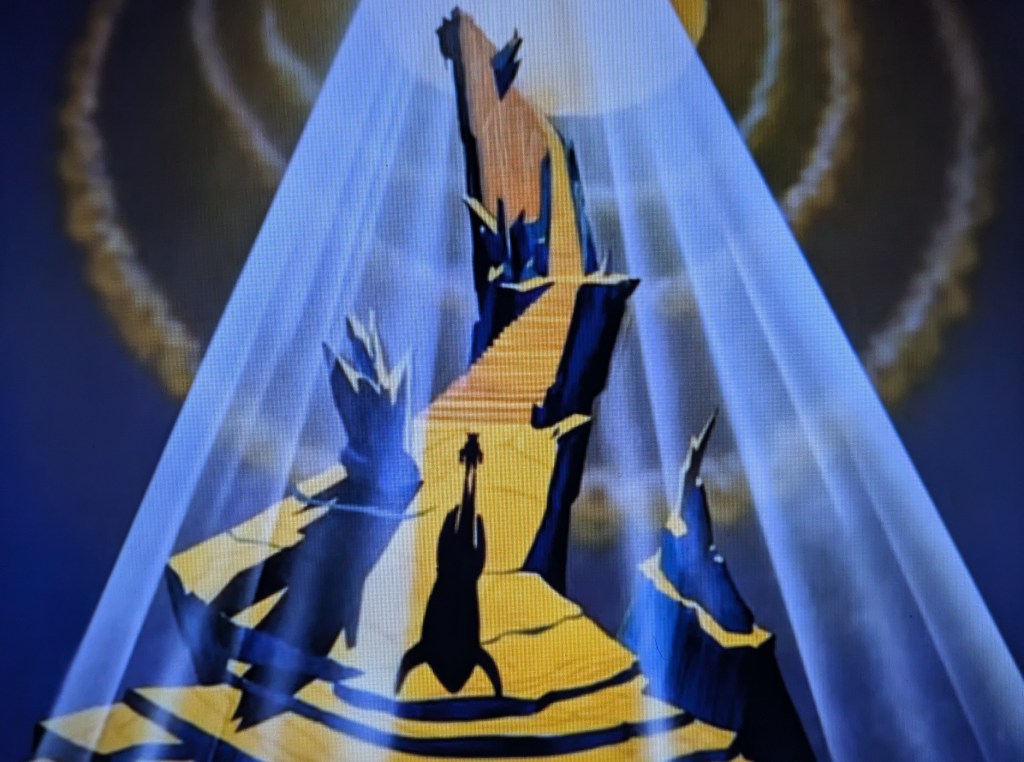
A heavenly light from Valhalla is shone on Bugs Bunny’s dead body, which lies in the middle of the torn-apart mountains. Image © Warner Bros. Entertainment Inc.

A lead room composition, vertical lines and a contrasting dramatic tonal range with strong, saturated dark blue and yellow complementary colors are used to focus on Bugs’ seemingly dead body (the focal point) as if he were on stage.

Regretting his wrath, a grieving Elmer Fudd carries Bugs Bunny off to Valhalla. Image © Warner Bros. Entertainment Inc.

Vertical lines and a small tonal range of black, dark blue, brown and yellow complementary colors are used to give a harmonious appearance and emphasize entering the afterlife as the grieving Elmer carries Bugs’ body to Valhalla. The characters and Valhalla are framed in a lead room/rule of third composition as the focal point.

*Written in Notepad.

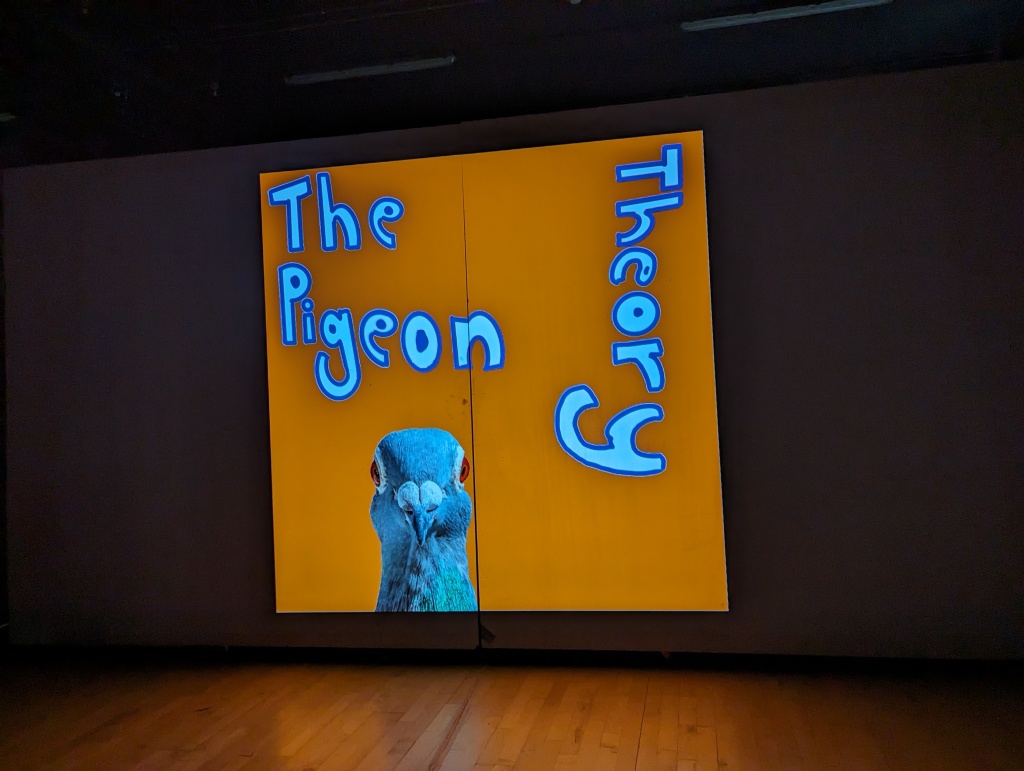
The Pigeon Theory

The film’s title card.

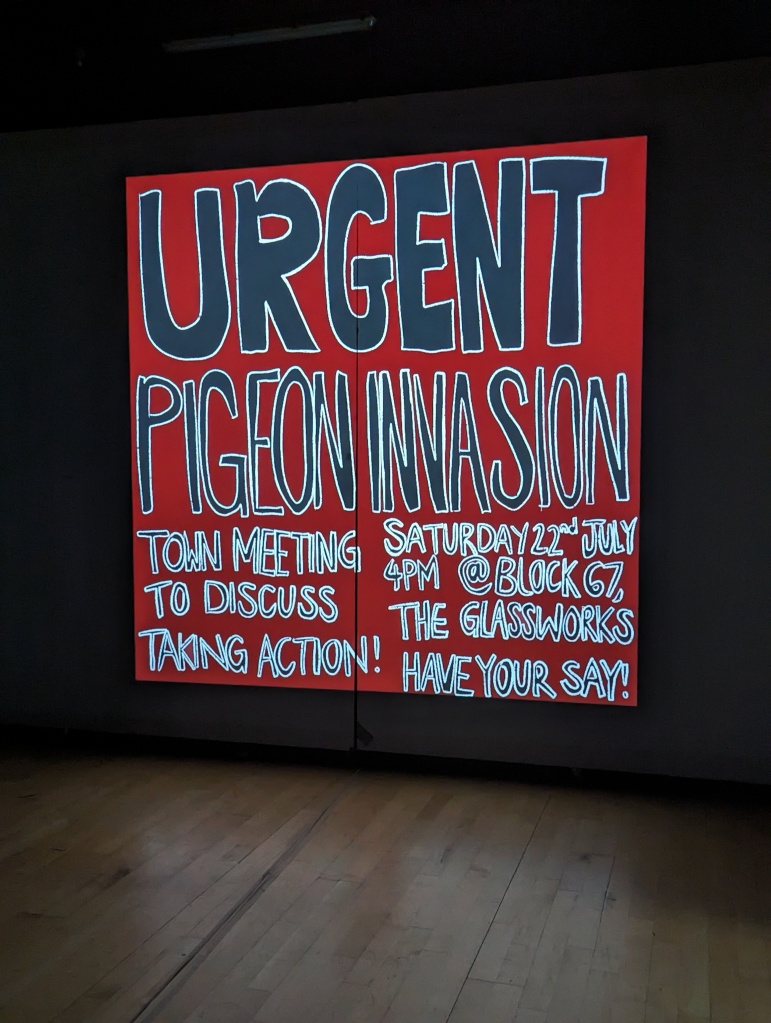
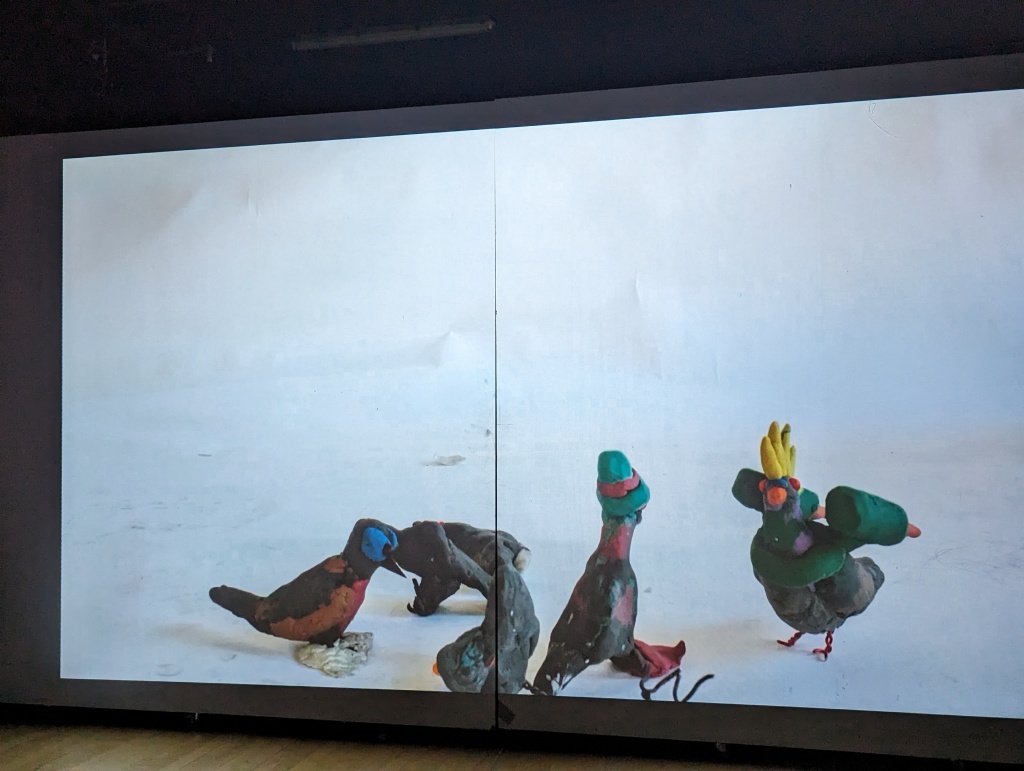
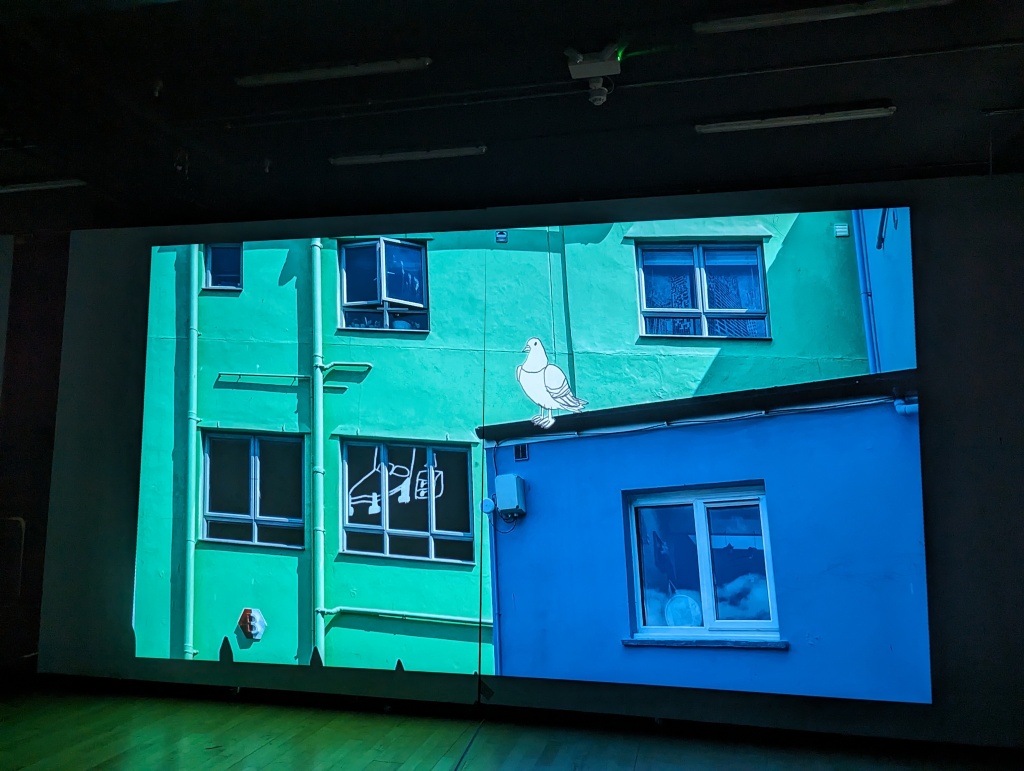
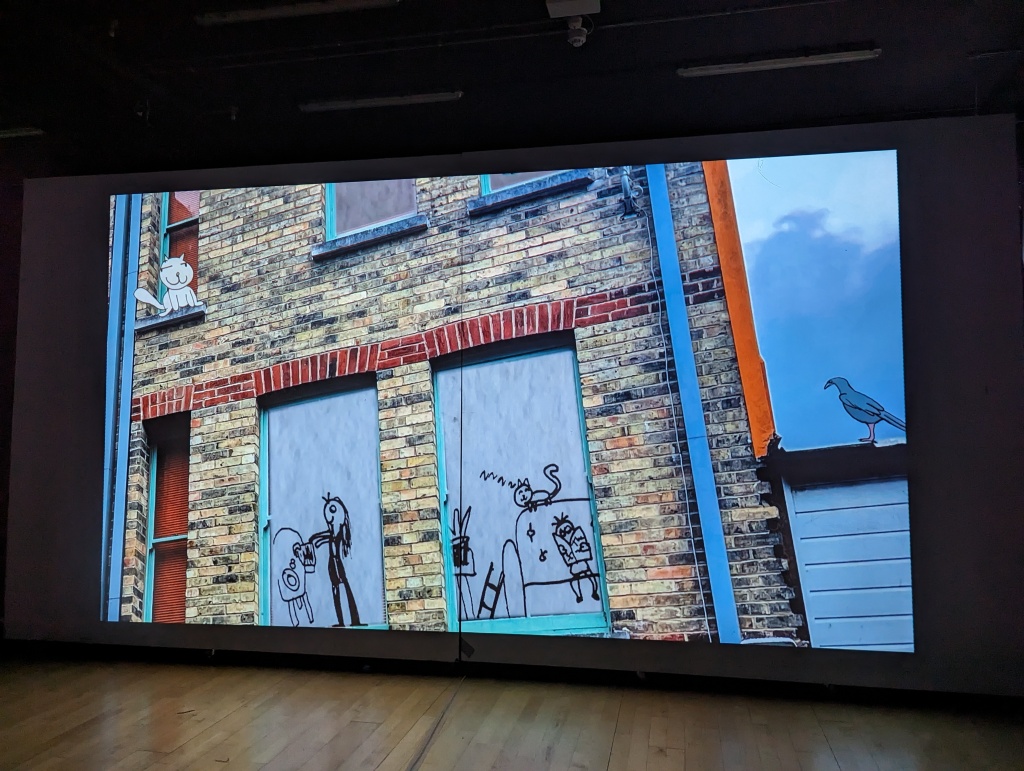
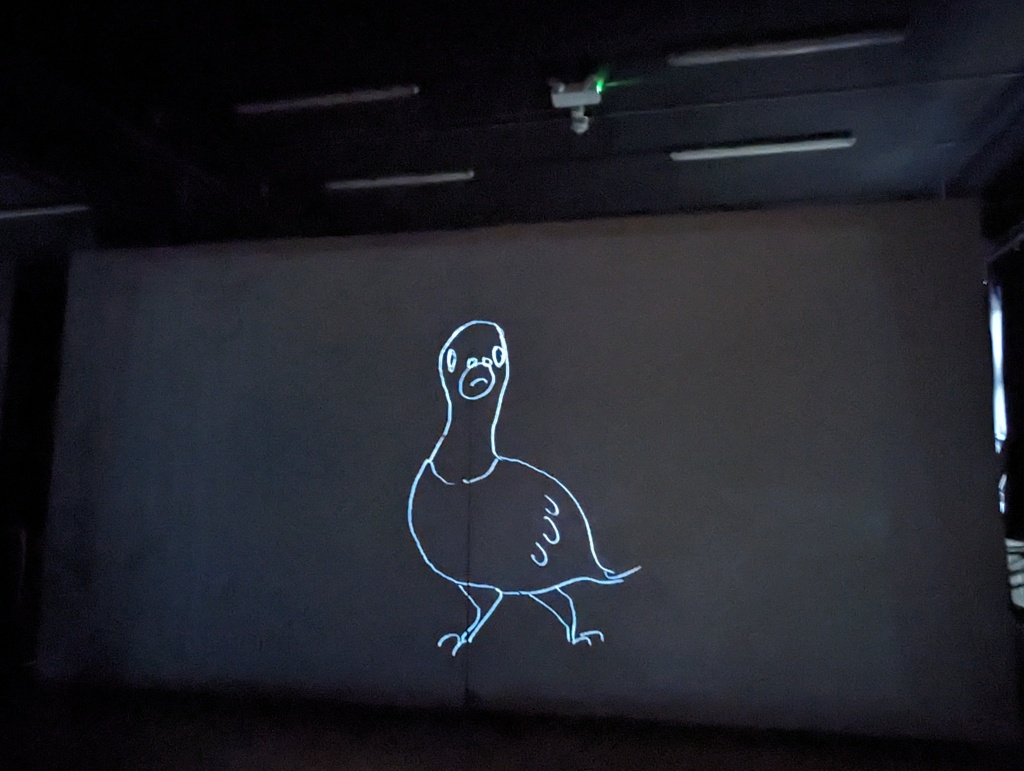
From April 2023 to July 2023, I was at Young Animators Club doing animations for use in a film named The Pigeon Theory, as part of an exhibition named Big Folkestone Doodle. Written, animated, narrated and scored by the other young animators and myself and edited by Lydia Hibbert, the film is about the pigeons’ takeover of the world and has interviews with different people in Folkestone giving their thoughts and theories about them based on their actions. It was made using Adobe After Effects, Character Animator, Premiere Pro, Google Maps and Procreate. I made a pigeon puppet for a stop motion scene in which a flock of pigeons (the other young animators’ pigeons) fight over breadcrumbs and have a party, and did three hand-drawn animations: one of a squirrel running and jumping across some Folkestone buildings’ walls and windows to reach an acorn (named Squirrel Climber made using markers, a plastic sheet and a photograph), another of a pie on a window sill growing legs and standing up, and one of a rotoscoped pigeon looking back before turning into a seagull and flying towards the screen, eating the camera. All three animations were photographed in Procreate, which I also used to do an animated advertisement for the exhibition itself.

My marker-drawn squirrel animation.
My three-frame boil window animation.
Turnaround of my pigeon puppet.
My rotoscoped pigeon turns around to see if anyone is watching him…
…before turning into an attacking seagull and flying towards the screen!
My animated advertisement for the exhibition.

On 22 July 2023, the exhibition opened at 4pm, and I attended it at 3:30pm. There I watched the film and saw my animations, though the one with the squirrel did not play due to the interview featuring it being shortened before the squirrel could move. The film was later uploaded to YouTube under the name The Pigeon Problem. My pigeon is seen at 3:45, and my animations are at 6:07, 9:17 and 10:42.

The film’s YouTube upload.
Advertisement for the exhibition.
My projected animated advertisement for the exhibition.
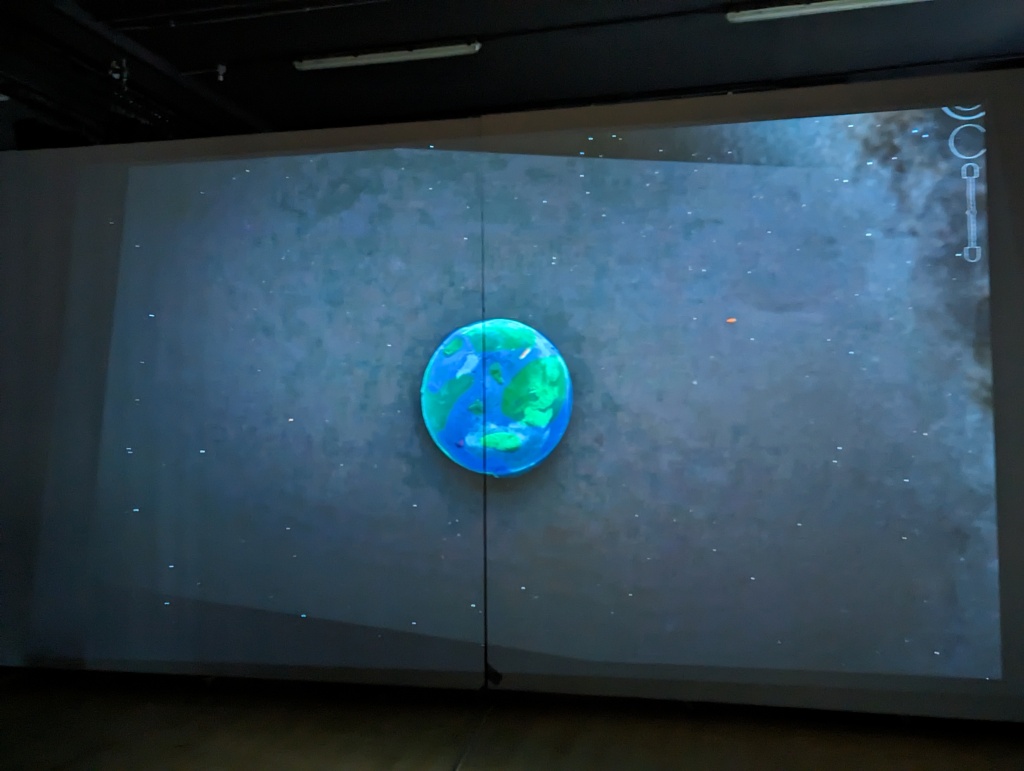
The Earth.
The pigeons’ invasion causes the Earth to blow up.
The film’s title card.
A pigeon walks across the grass in the middle of a park, enveloped in a fiery-red aura.
My pigeon puppet joins the pigeon party, looking for breadcrumbs.
A terrified person hides from the pigeons’ takeover inside a post box.
My transforming pigeon stands atop a drainpipe.
A pigeon watches hijinks occurring in a building’s windows.
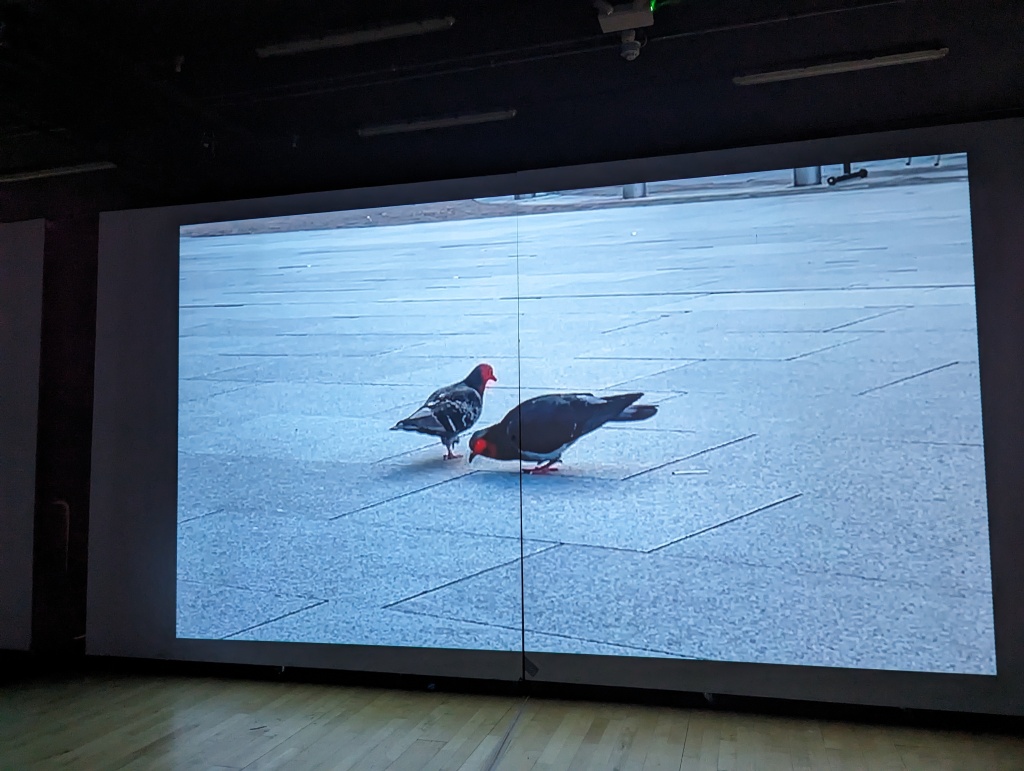
Two red-eyed pigeons walk around before talking about their love for food.
My marker-drawn squirrel runs and jumps across buildings to reach his acorn, while a woman expresses her love for pigeons and hails them.
My inverted three-frame boil window animation.
A ‘fat pigeon’ pecks away at the ground before another pigeon gobbles him up.
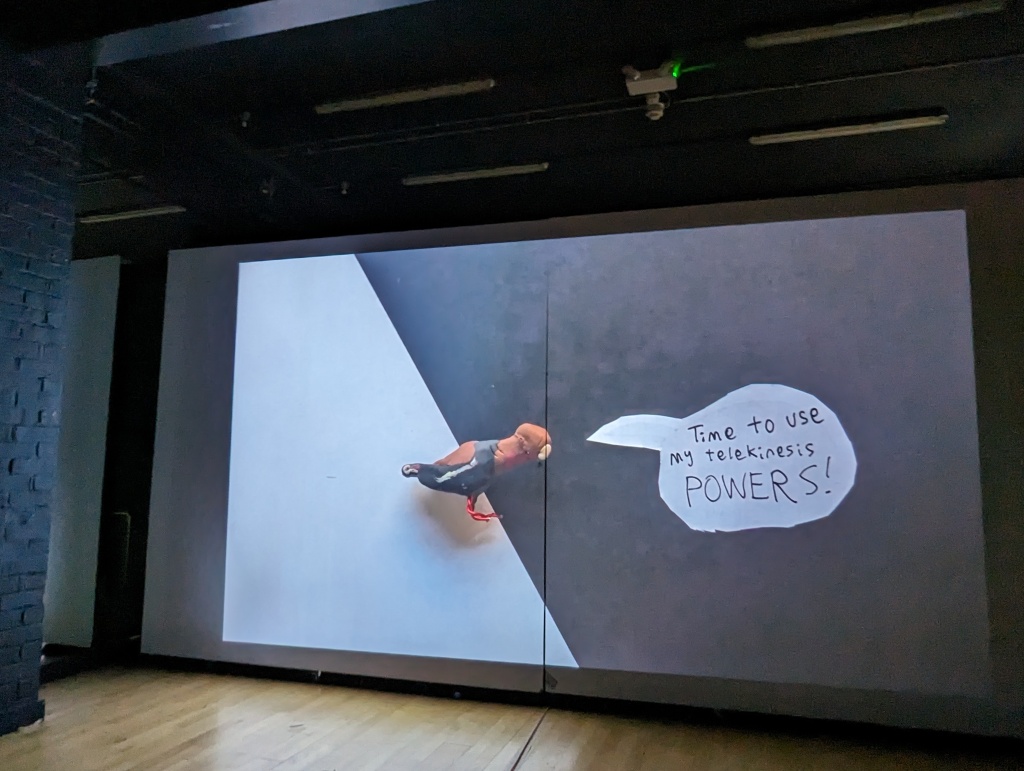
Seeing the Titanic, a pigeon prepares to use his telekinesis powers to sink the ship.
Three monstrous pigeons stand against a dark, brown, stormy background, their mouths and sharp teeth drooling with saliva.
A pigeon transforms into a mushroom bottle before falling over and exploding.
A pigeon stands and looks at the camera, confused about the film ending and the pigeons’ invasion being cut short.

Hunger Pains and Young Animators Arcade

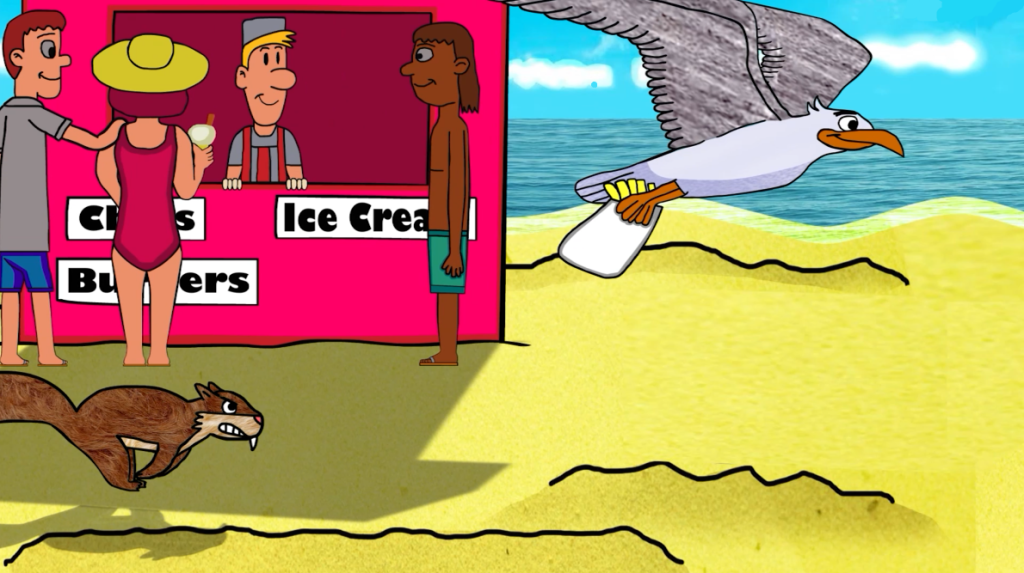
After losing his French fries to the seagull, the squirrel angrily chases after him along the beach. Image © Oliver Mariager.

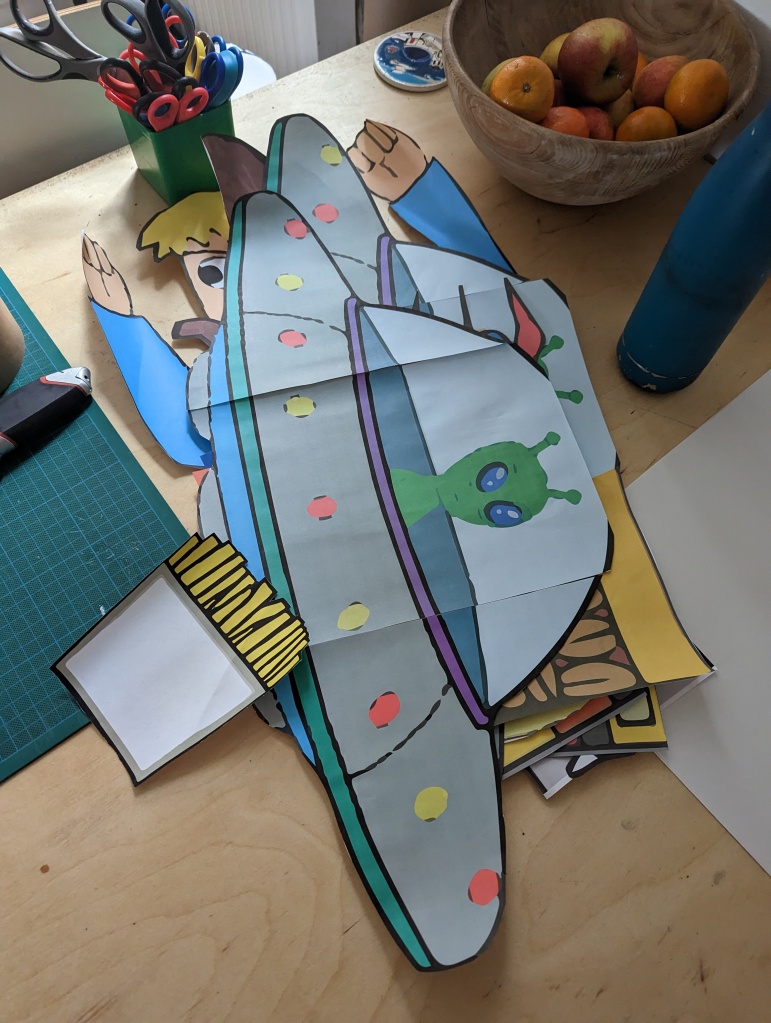
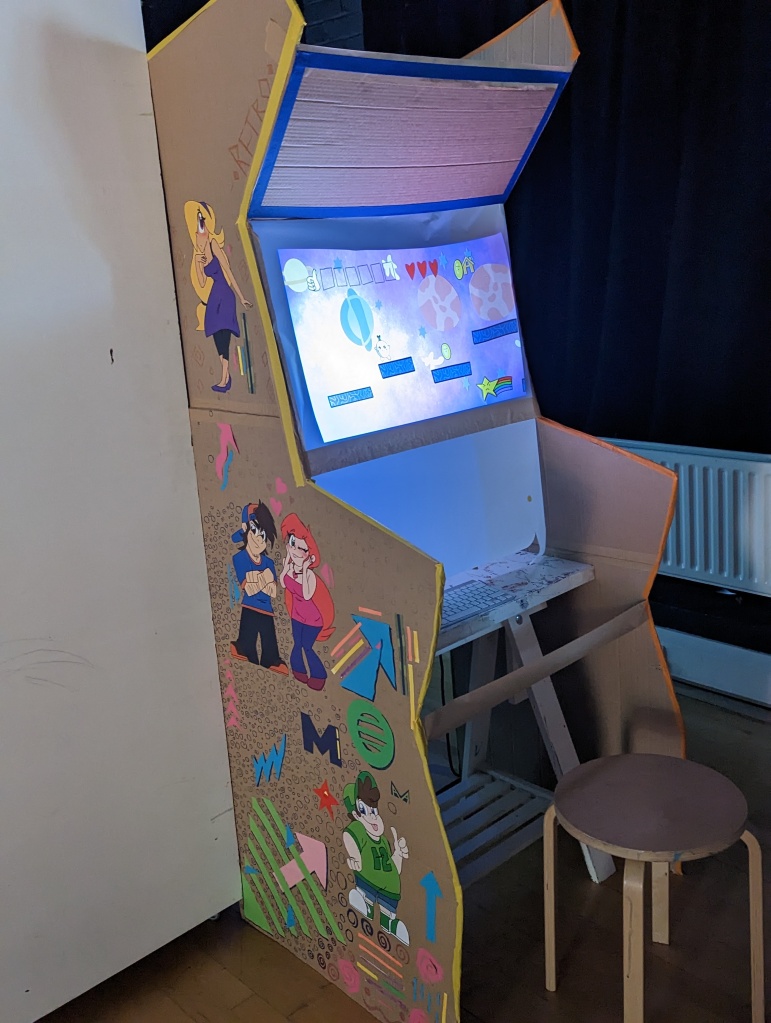
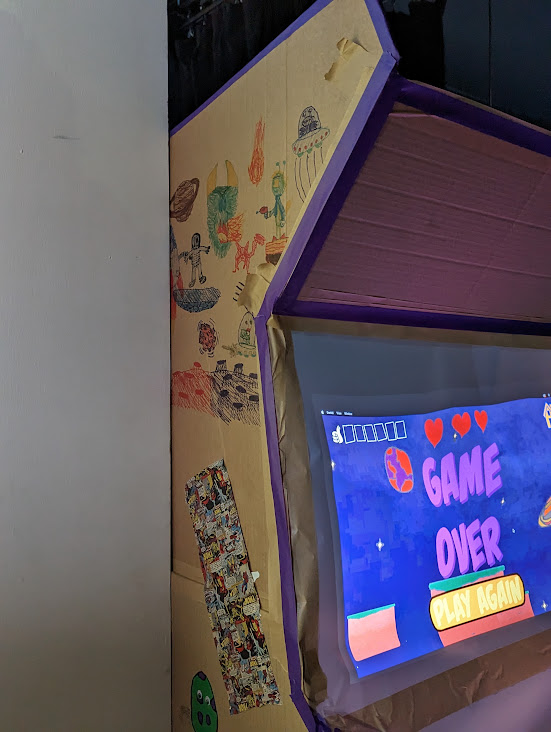
From September 2021 to July 2022, I worked on a short film named Hunger Pains. Written and directed by myself and produced by Lydia Hibbert, the film was made using Adobe Animate for the animation, Adobe Photoshop for the backgrounds, and Adobe After Effects and Premiere Pro for compositing and effects (hand-drawn animation, photography, masking, scaling, rotation, puppet pins, textures, et cetera). A freelance three-dimensions modeller named Laura Boots (who I met at the United Kingdom Creative Festival in September 2021) was originally going to do models and effects for the film, but she was unavailable, so I had to do the effects myself. Music direction was done by Kate Wintie. An arcade platformer video game based on the film was also made from February 2023 to March 2023, using Construct 3 and Photoshop. The cabinet was designed using cardboard, printed Adobe Illustrator cutouts and glue. The game was part of an exhibition at Young Animators Club called Young Animators Arcade, and was also used as a template for the other young animators’ Construct 3 games (a tutorial for making the games can be watched here). I was told by Lydia that they had played my game and enjoyed it. It was decided that the film would be shown at the exhibition as well. We even designed two logo animations (both in two dimensions in Procreate, Illustrator and After Effects and in augmented reality using Adobe Aero), one for Hunger Pains, and another depicting Ferguson the Fox bouncing past and behind the ‘Young Animators Arcade’ logo on a pogo stick. A video of the exhibition (with footage from Hunger Pains) can be watched here.

A hungry squirrel walks along the seaside towards a food stall. He has come from the forest to the seaside due to the other squirrels laughing at him for not having a stump full of stored nuts for the winter. Desperate for sustenance, he spots a pack of French fries. He rushes over to them and is about to eat them, when a seagull swoops down, swiping the squirrel’s snack. Enraged by the loss of his food, the squirrel chases after the feathered thief. Will the squirrel retrieve his food, or will he get a surprise?

Watercolour painting background for someone’s Construct 3 game.
In-progress left side of my arcade cabinet.
Nearly completed left side of my arcade cabinet.
My printed cutouts.
Reference/concept art for my arcade cabinet.
In-progress right side of my arcade cabinet.
Finished right and left sides of my arcade cabinet.
In-progress space sketches on someone’s arcade cabinet.
Finished space sketches on someone’s arcade cabinet.
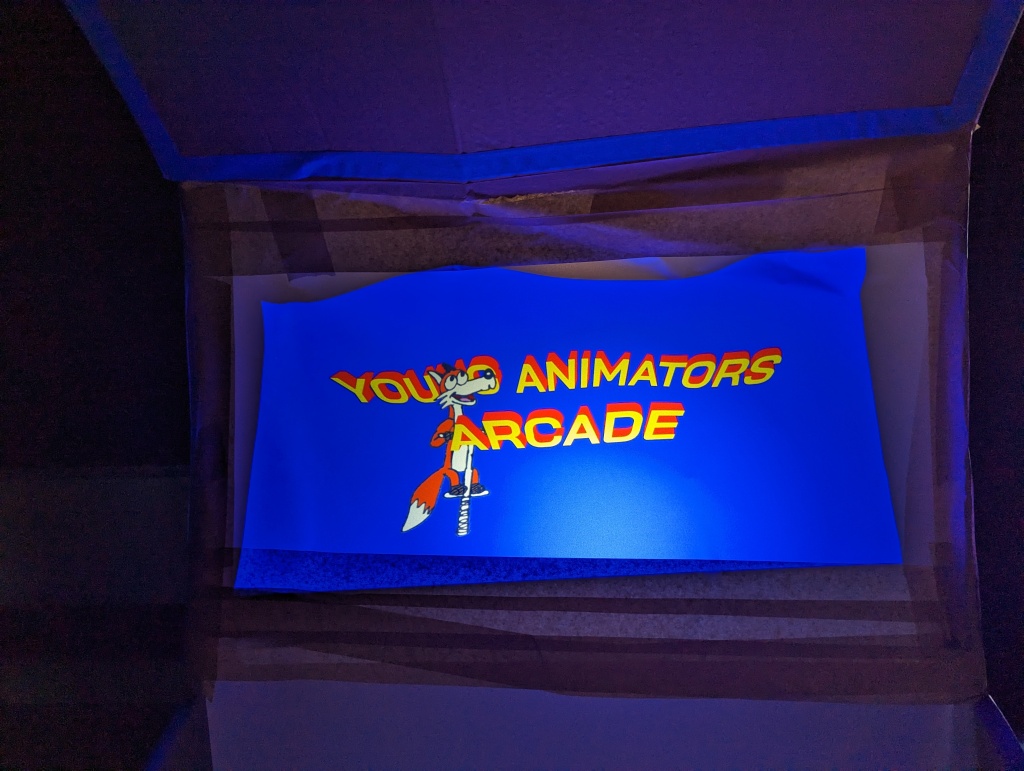
In-progress arcade cabinet sign.
Finished arcade cabinet sign with border.

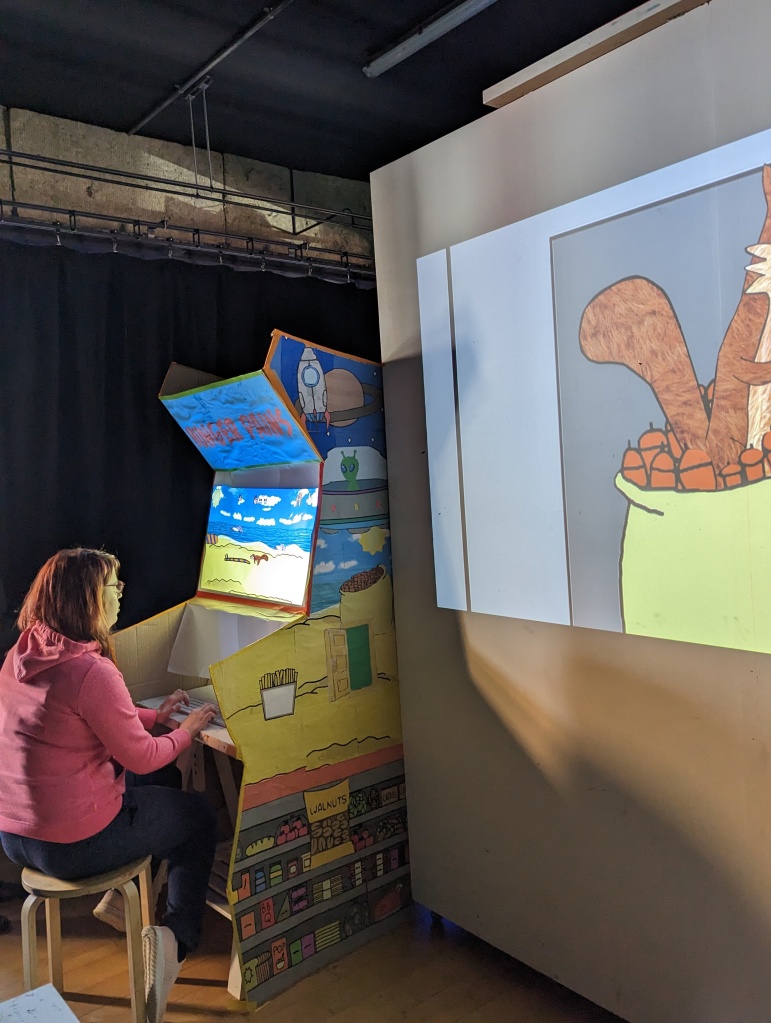
On 2 April 2023, the exhibition opened between 1pm and 4pm, and I attended it at 12:30pm. There I saw my animation projected on the wall and my game projected on transparent paper in my arcade cabinet.

My projected Young Animators Arcade logo.
Ferguson the Fox bounces behind the Young Animators Arcade logo. Ferguson the Fox © Oliver Mariager.
Onion Boy in Space/Turnip Adventure © Elana. Tyler, Rose, Aurora and Zac © Ambeelou Animation.
Hunger Pains arcade game.
Left side of my arcade cabinet.
The hungry squirrel thinks about his empty stump. Image © Oliver Mariager.
The seagull swipes the squirrel’s French fries. Image © Oliver Mariager.
Determined to retrieve his French fries, the squirrel runs down the rocket’s corridor. Image © Oliver Mariager.
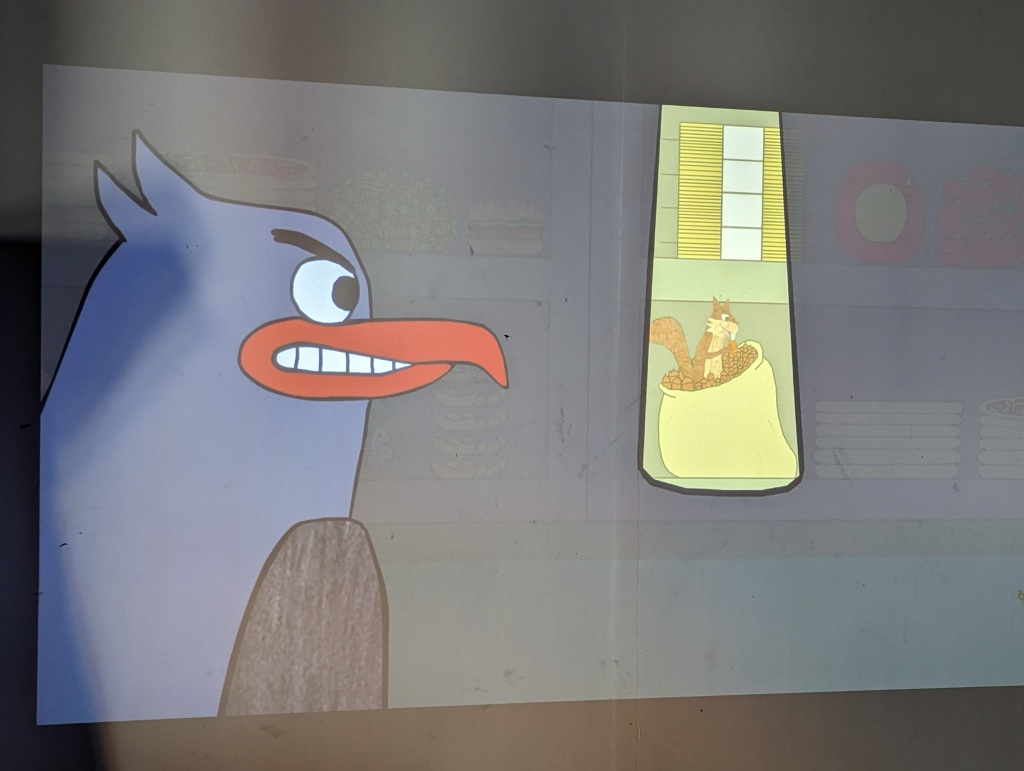
The seagull catches the squirrel in his food room, furious about the latter’s intrusion. Image © Oliver Mariager.
Cornered and sweating, the squirrel stares at the glaring seagull. Image © Oliver Mariager.
My space sketches. Dino Game. Image © Daniel.
Blob Game. Image © Jake.

Chaos Cards 2022

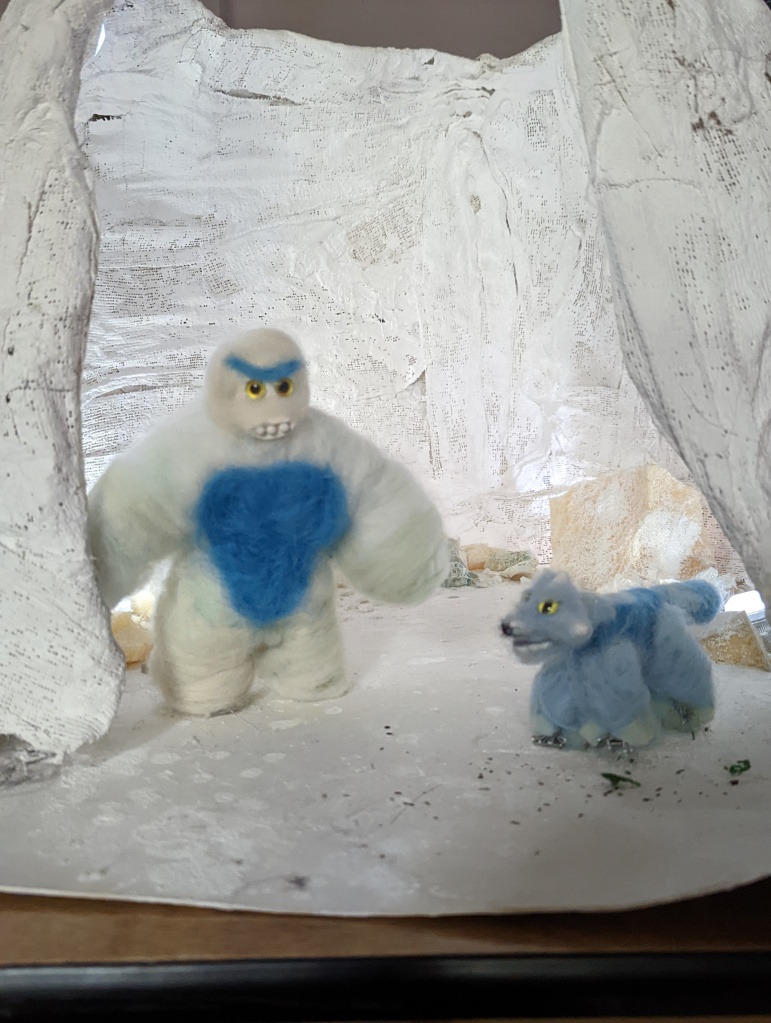
From November 2022 to December 2022, I was at Young Animators Club doing two animations for an exhibition at the Chaos Cards Tabletop Gaming Centre. One was a stop motion animation of a yeti and an arctic fox brawling in an ice cave, made using Dragonframe, After Effects and Premiere Pro. The puppets were made using felting wool, aluminium wire, polymorph, upholstery foam, liquid latex, foot magnets for the stage, dragon eyes and glass eyes, while the cave was created using chicken wire, newspaper, rocks, Modroc, bicarbonate soda, shaving foam and a steel sheet. The other was a hand-drawn logo animation for the word ‘Chaos’, with the letters forming from metal, straw, fire, wood and stones.

My arctic fox puppet.
My yeti puppet.
My ‘Chaos’ logo animation drawings.
My ‘Chaos’ logo animation.

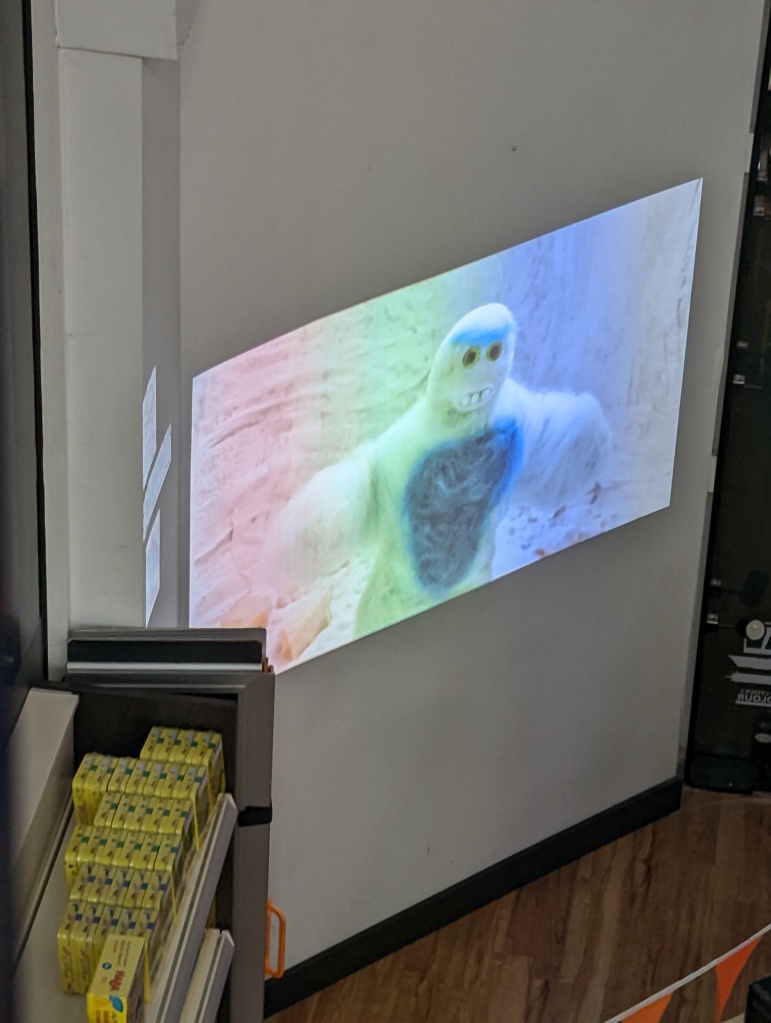
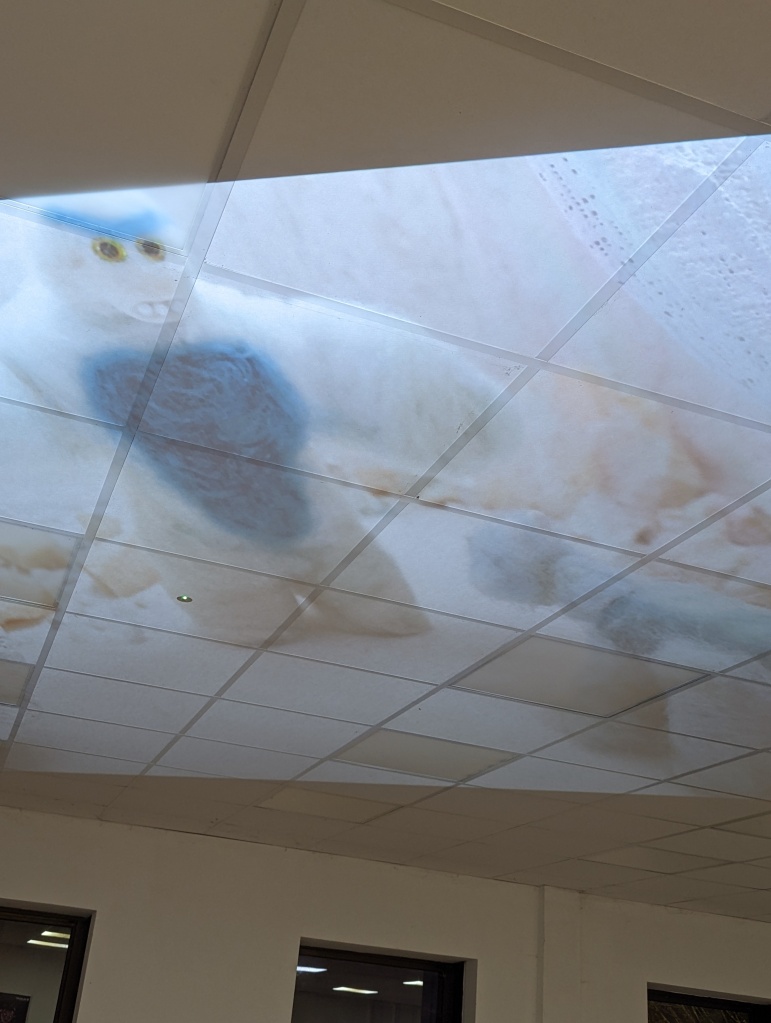
On 20 December 2022, the exhibition opened between 5pm and 6pm, and I attended it. There I saw my stop motion animation projected on the wall and ceiling, used along with the other young animators’ animations as part of a film named CHAOS!, and entered a room with the ice cave set and puppets amongst the young animators’ sets and puppets. CHAOS! was uploaded to YouTube on 22 December 2022, and can be watched here (my animation is at 2:10).

Tyler transforms into his bird superhero outfit in The Door. Tyler © Ambeelou Animation.
My projected ice cave animation.
My ice cave set and puppets.
My yeti and arctic fox puppets.

Loops

The leaflet for the exhibition.

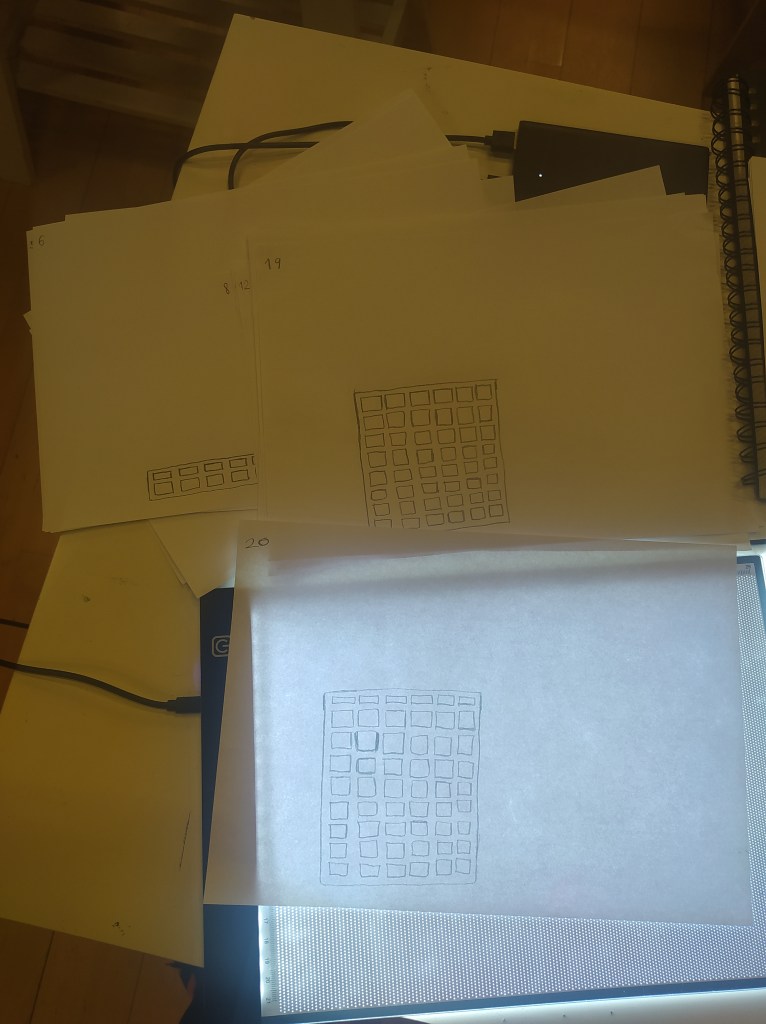
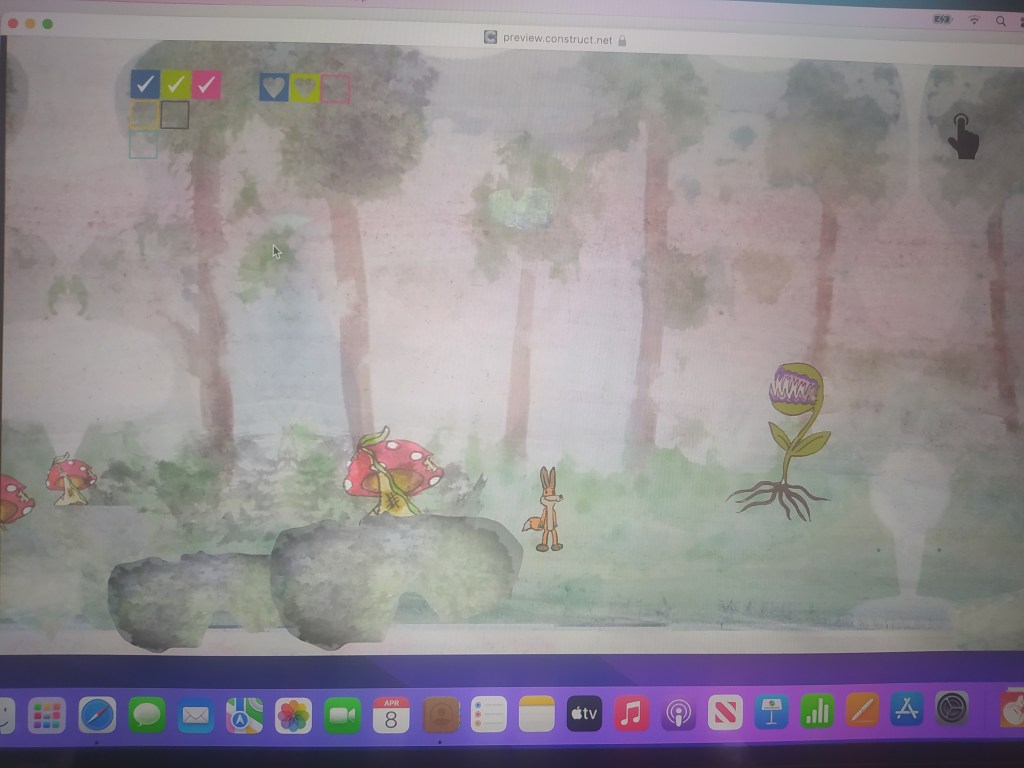
From January 2022 to April 2022, I was at Young Animators Club doing animations and designing props and theming as part of an installation artwork exhibition called Loops, which was about evolution through time. I did some tree drawing and building constructing animations, a hand-drawn growing skyscraper animation using a light box (I was also shown how to do a transparent PSD image sequence in Photoshop), a stop-motion animation of a plasticine man named Daniel doing a cartwheel using Dragonframe and After Effects (with masks to cover up the rigging), an art marker-drawn animation of three growing flowers, some moving clock and cog animations, a digitally-coloured and rotoscoped/traced animation of a horse-dog-turtle hybrid creature kicking using numbered papers and an app named Procreate (accompanied by a galloping sound effect for the creature made using my fingers and recorded by Randolph Matthews), a painted cardboard house, a painted and decorated cardboard clock, and a long-eared fox character (drawn and animated using a tablet) for a Super Mario Brothers-esque platform game made using Construct 3 called Carla’s Quest (2021), with guitar-and-drums music made using GarageBand.

My constructing building animation.
My growing skyscraper drawings.
Daniel.
My rotoscoped/traced horse-dog-turtle hybrid creature.
My painted cardboard house.
The painted and decorated cardboard clock.
My long-eared fox character in Carla’s Quest. Image © Folkestone and Hythe District Council.
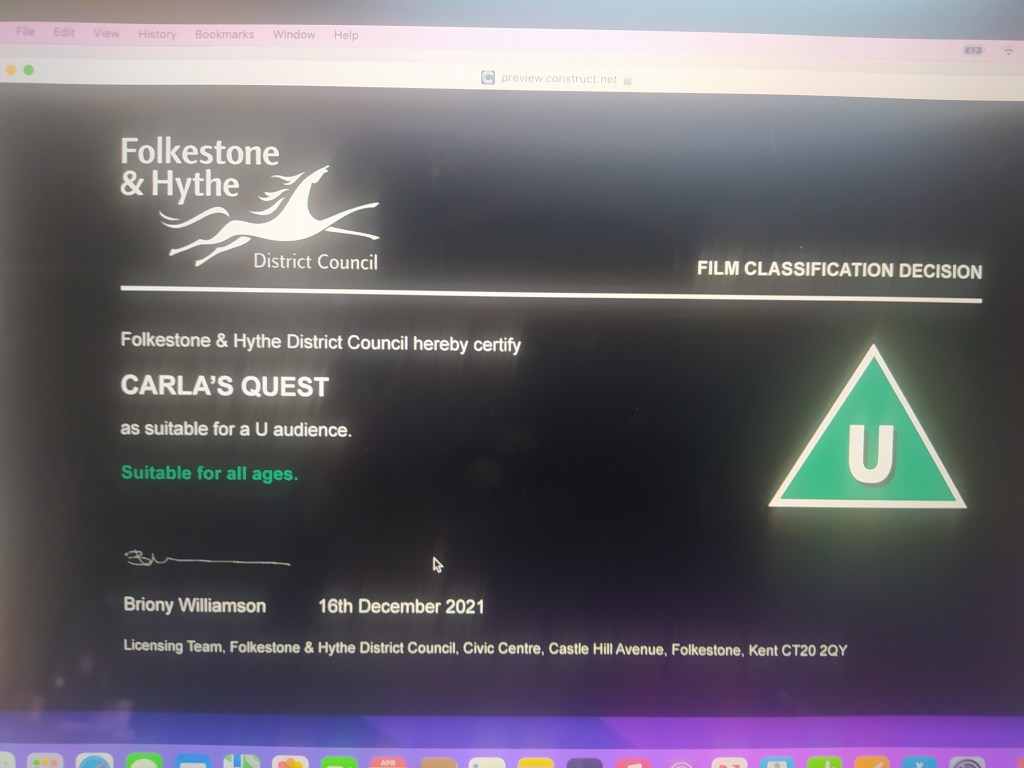
Carla’s Quest‘s film classification decision screen. Image © Folkestone and Hythe District Council.

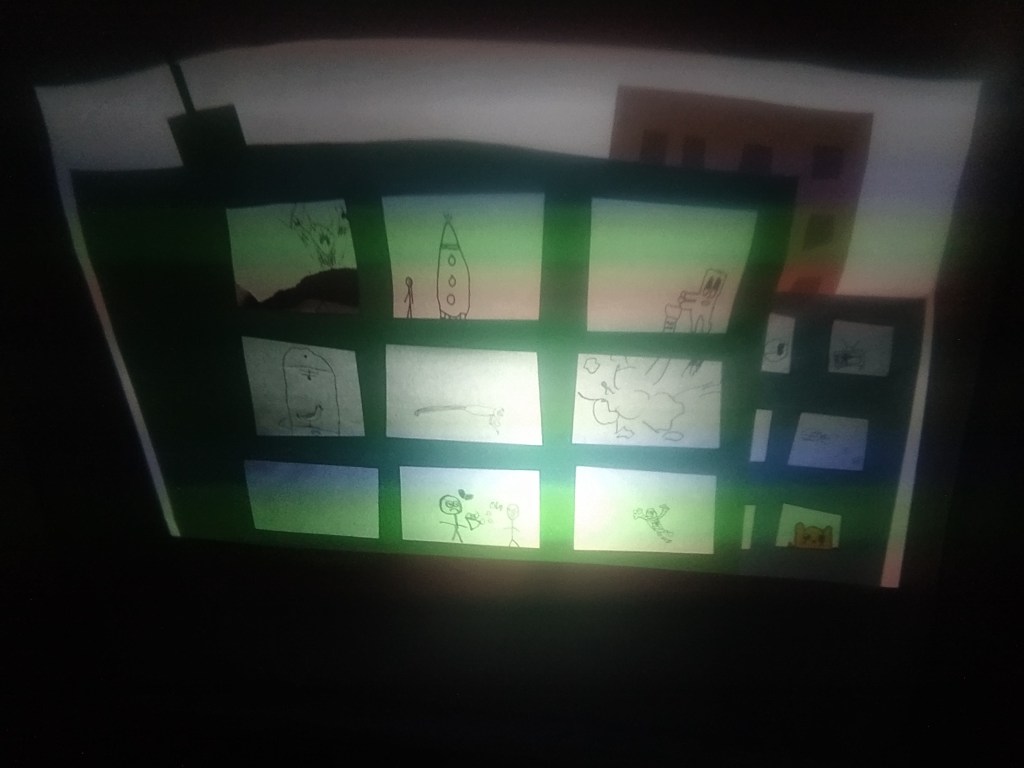
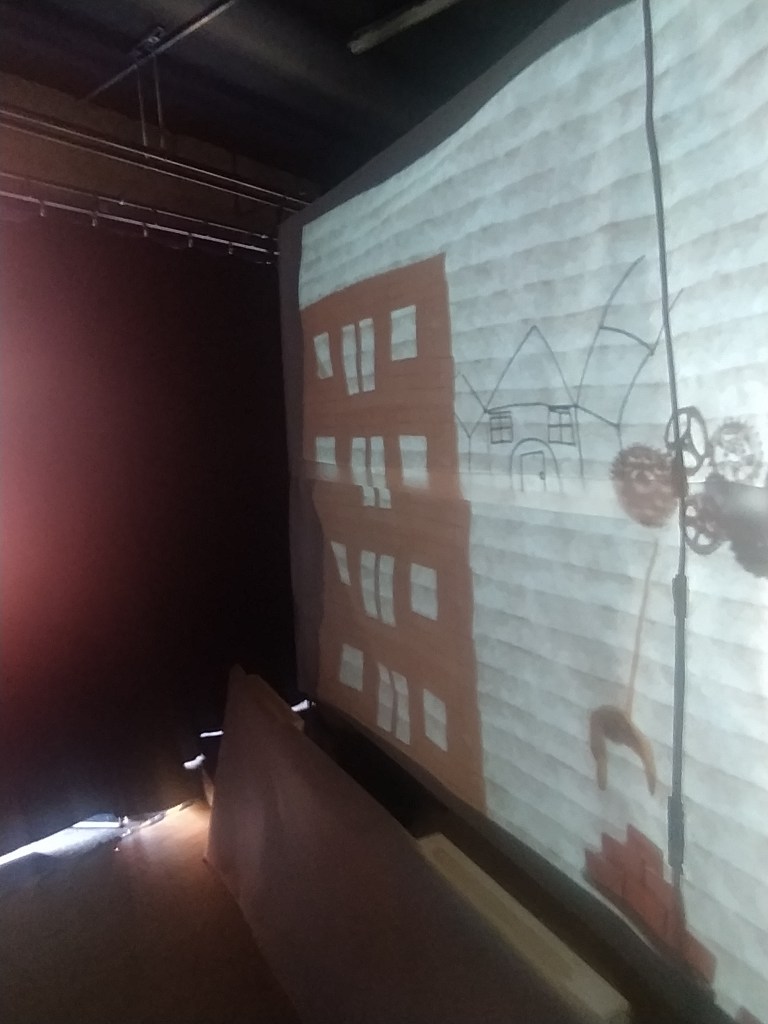
We were shown the areas where our work would be projected on the day of the exhibition. On 10 April 2022, the exhibition opened between 1pm and 4pm, and I attended it.

My projected clock and cog animations.
My projected constructing building animation.