

Real Take is an animated short film about a young autistic adult who struggles with communication.
What is Real Take about?
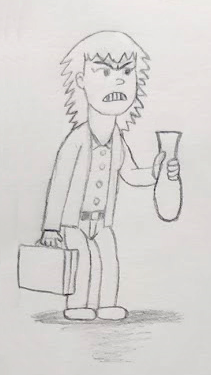
The setting takes place in the park, in Greg’s sketchbook, outside the flower shop, and in his house. The characters in the film are Greg, his support dog Franky, his ex-girlfriend, the woman, the monster in Greg’s sketchbook, and the mugger.
Greg is a young man with autism. He lives alone with his support dog Franky. He uses a sketchbook to document moments and experiences in his life, as well as a calming tool. He looks back at sketches depicting his previous relationship with his girlfriend, the first of which has her telling Greg about his inability to face conflict. Responding to the ‘human’ call to be ‘better’, Greg tries to fit in with life around him. When meeting a woman in the park, he tries and tries again to navigate the moments and experiences of conflict and other strong emotions. He also confronts his difficulties regarding getting to know a new person. Can he be successful?
The film is about struggling to communicate and overcoming fear of conflict, and exposes misconceptions to do with neurodiversity. The main themes in Real Take are conflict, understanding, communication, empowerment, overcoming one’s fears, and standing up for others.
Realist elements:
Park.
Greg’s dislike of noise.
Greg’s fear of conflict.
Franky, the support dog.
Sketches depicting bad memories.
Greg’s ex-girlfriend.
Greg wanting things (such as a tub of soya spread in the refrigerator) to be in order.
Greg’s struggles to communicate.
Woman smiling and giving Greg’s dropped sketchbook to him.
Closed flower shop.
Greg’s house.
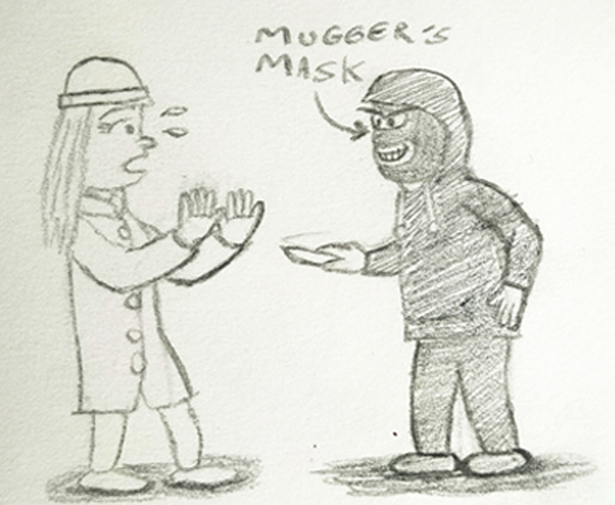
The mugger following and attacking the woman.
Franky’s confusion on whether to protect Greg or save the woman.
Franky biting the mugger’s leg.
Greg remembering his ex-girlfriend telling him about his inability to face conflict.
Greg gathering the courage to stand up to the mugger and take his knife away.
Greg’s sympathy towards the traumatised woman.
Formalist elements:
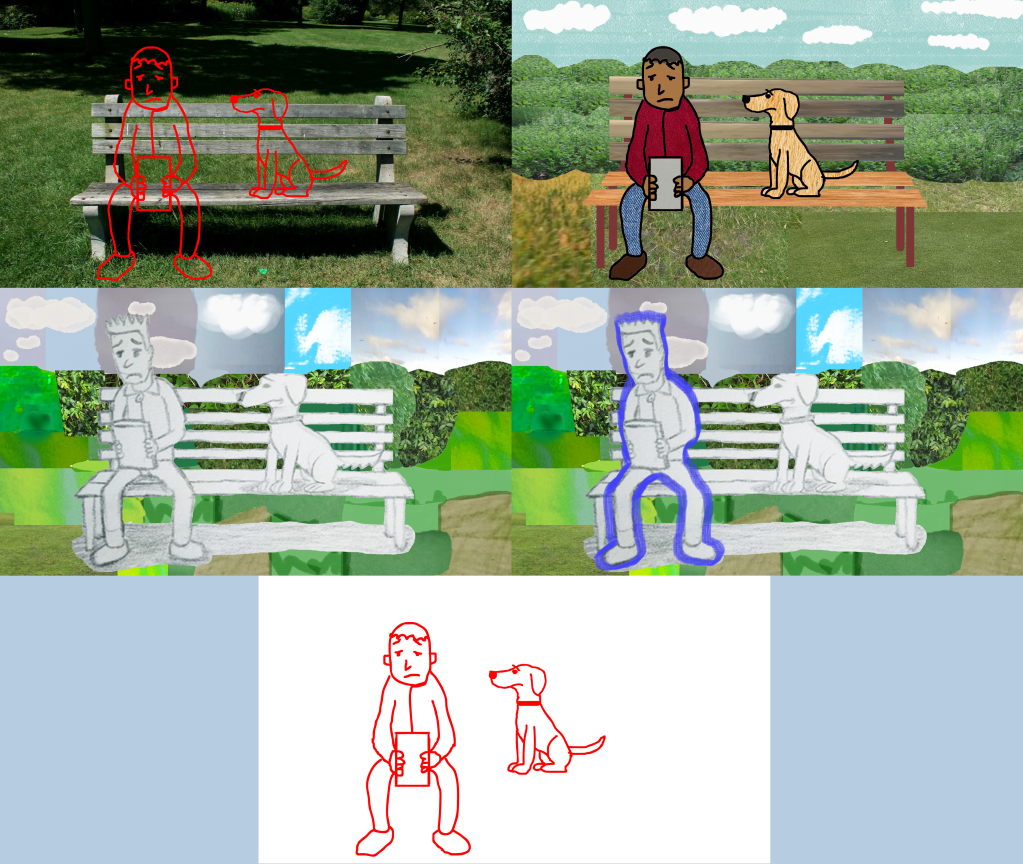
Greg having a blue border outline around himself when having negative thoughts (fantasy).
Point-of-view shots with Greg looking at his sketchbook and the woman and walking towards the mugger.
Animated sketches playing through Greg’s mind (fantasy).
Point-of-view close-up shot of Greg’s ex-girlfriend’s mouth (fantasy).
Text saying, ‘Nervous’ and ‘Say something!’ forming in Greg’s head (fantasy).
Knot forming over Greg’s stomach to represent his fear and agitation (fantasy).
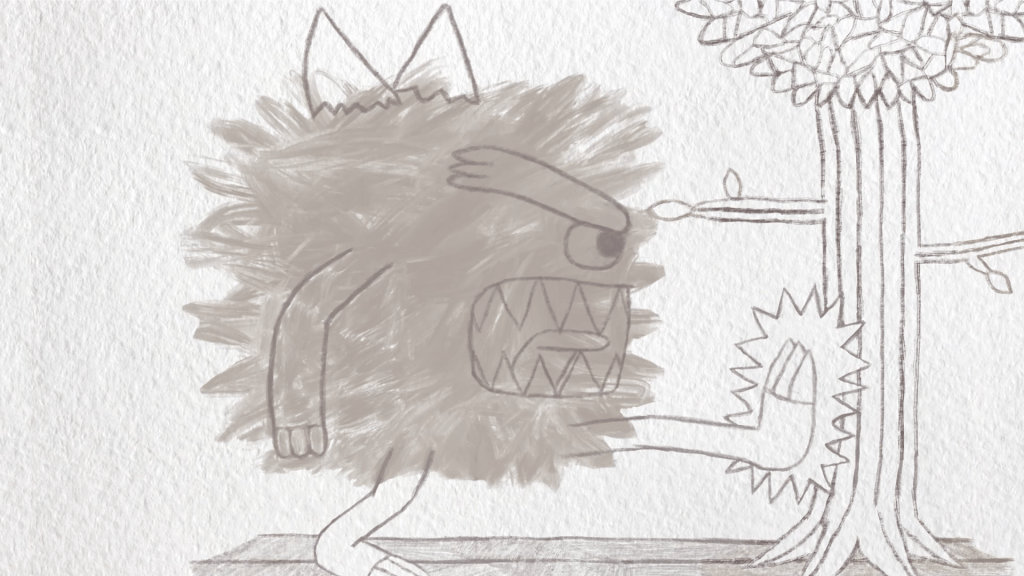
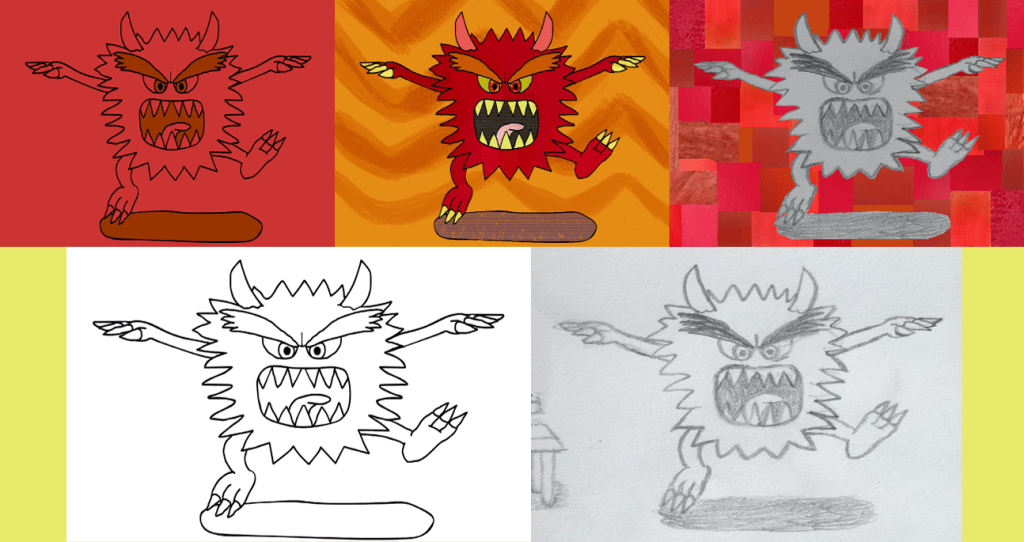
Monster sketch to represent Greg’s anger (fantasy).
Perspective:
The film uses a subjective perspective as it mainly focuses on Greg and not on the other characters. Examples include his animated sketches, the blue outline enclosing him, his various expressions, point-of-view shots where he looks at his ex-girlfriend’s mouth and the woman, and loud foley sound effects (such as turning a page, Greg’s stomach rumbling or building, emotional drum noises), all of which make the viewer feel close to him.
Colour:
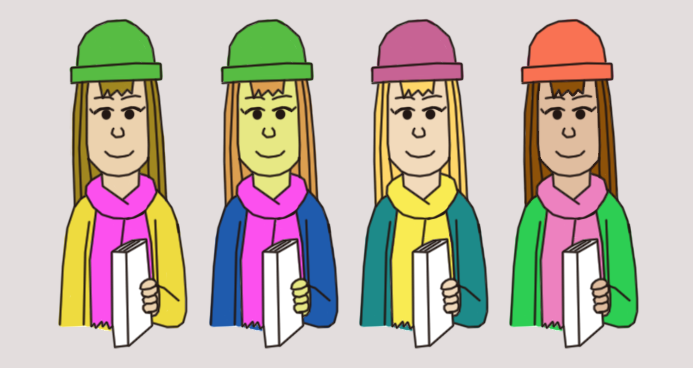
At the beginning, the film mostly uses cold, less saturated colours for the park scenes and the animated sketches, fitting with Greg;s somber mood and giving the sketches the appearance of a distant memory and a dark past. As the film progresses, the interior of Greg’s house and the park scenes during the afternoon use warm, brighter, more saturated colours. This represents the rise of Greg gathering the courage and determination to face conflict and stand up to the mugger, and his sympathy towards the woman in a happy open ending.
Editing:
Camera zooms and pans are used throughout the film, such as the first scene with Greg and Franky on the bench (the focal point), Greg looking at his sketches before and after they play in his mind, the mugger following the woman outside Greg’s house, which he does not notice (mise-en-scène); Franky’s confusion on whether to protect Greg or save the woman, et cetera. Fades are used between scenes to show the passage of time and change in tone, such as when the film fades from Greg’s angry monster sketch to Franky sleeping peacefully in his basket in Greg’s house.


Action scene:
Greg is safe in his home, drawing in his sketchbook.
But he is unaware of the mugger, whom Franky notices.
Therefore, he walks out of his house to the park without worry.
But he hears the woman scream.
Therefore, he looks around and sees the mugger attacking her.
But Greg is apprehensive.
Therefore, Franky is confused on whether to protect his master or save the woman.
But he sees Greg panicking.
Therefore, he springs into action, biting the mugger’s leg.
But meanwhile. the shocked Greg does not know what to do.
Therefore, he remembers his ex-girlfriend telling him about his inability to face conflict.
But rather than acting scared, he gets more determined to face his fears.
Therefore, he takes the mugger’s knife away, and the mugger runs off.
But the woman is left traumatised by the event.
Therefore, Greg sympathetically shows her his sketches.



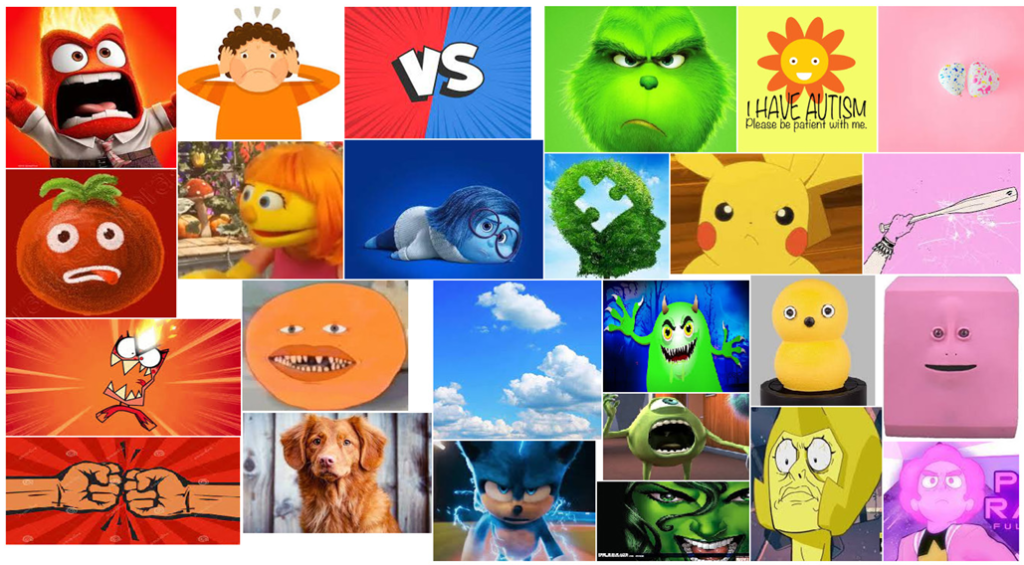
Why and how was the film made?:
Real Take was conceived in 2022 as an entry for Screen South’s Estuary on Film event. I did moodboards, concept art, the script and a schedule, and submitted them to Screen South. However, the idea was not chosen by the event, but I still wanted to make the film, so I continued. Production was part-time and lasted until this month. The film was made using Adobe Photoshop, Animate, After Effects and Premiere Pro.

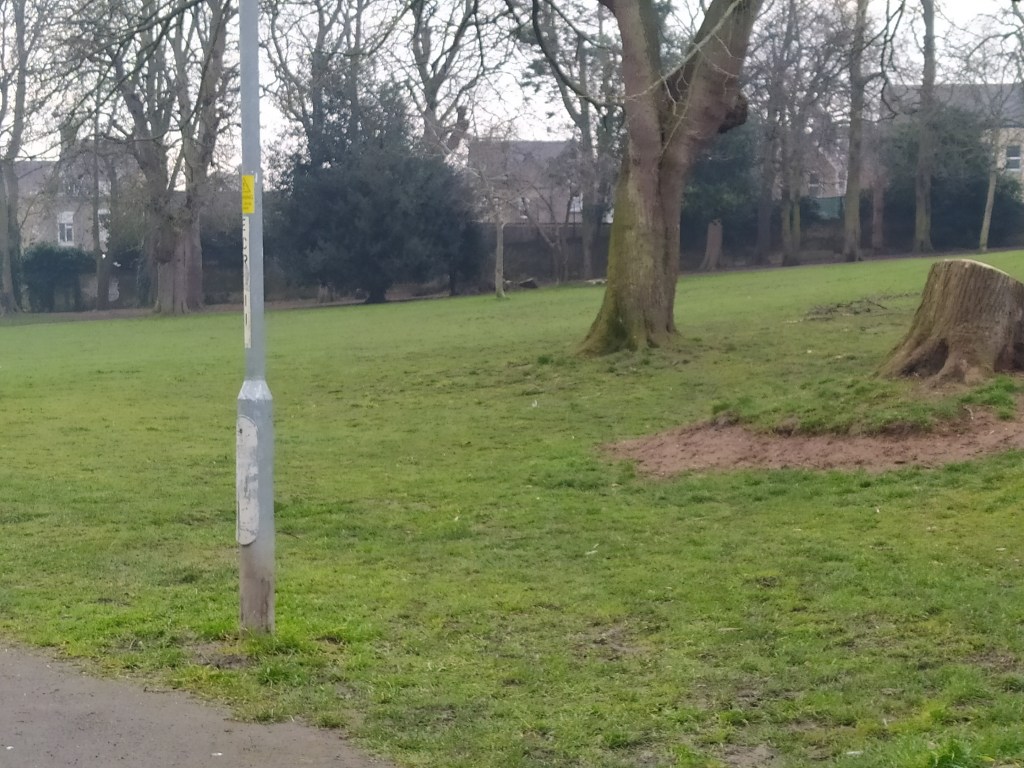
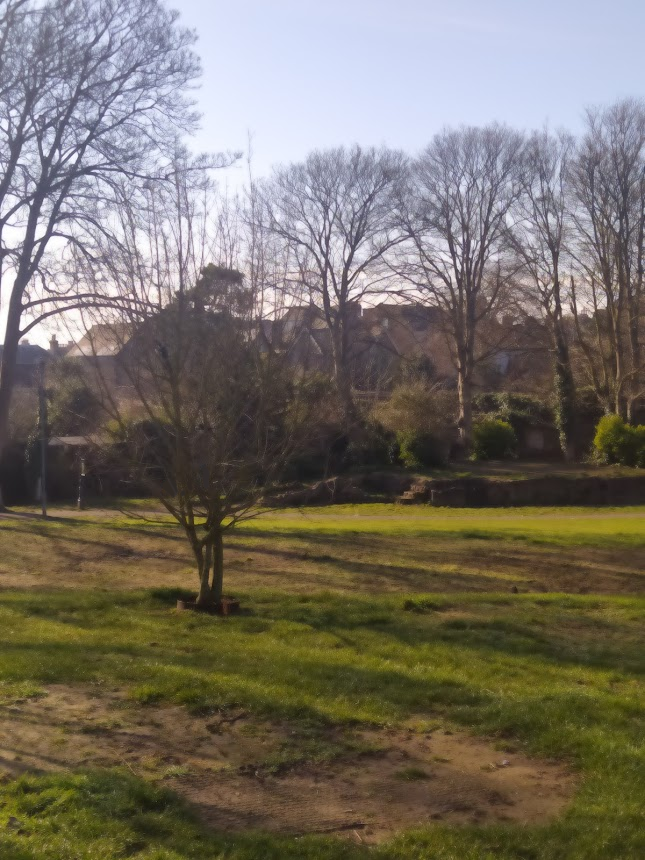


Inspired by live action-animation films such as Who Framed Roger Rabbit and a real life roller coaster scene from Wandaland by Richard Noble,
I took photographs in a park in Ramsgate and used them as background, experimenting with them to represent the contrast between Greg’s world and the outside world. Adobe Stock images were also used as backgrounds for the park the flower shop and Greg’s house, with some being used as props in the latter. I watched other films for inspiration. Feeling My Way by Jonathan Hodgson had scenes with coloured outlines around rubbish bins and a square order around a man sitting in a laundromat, which inspired me to give Greg is blue outline to represent his nervousness, sadness, loneliness, restrictiveness and separation from his surroundings. Scenes from Mary and Max in which Mx wants logic and order I his life were used as inspiration for Greg pushing down a crease on his trouser leg at the beginning, and his reactions to the misplaced tub of soya spread in one of his sketches and the closed flower shop. His internal struggles to communicate were based on Louis’ nervous introduction in Louis’ Shoes. I took inspiration from Lambert the Sheepish Lion for Greg’s ex-girlfriend’s criticism of his inability to face conflict, and his initial cautiousness and bravery when standing up to the mugger. The knot forming over Greg’s stomach when he struggles to communicate with the woman was inspired by a scene in Utopia Portals by Jessica Ashman.
The idea of using animated pencil sketch scenes to show Greg’s bad experiences with conflict came from a scene in Feeling My Way with a pencil-drawn bicycle and Louis’ Mind Palace in Louis’ Shoes. The look of the sketches was also inspired by Musical Traumas by Miloš Tomić. Greg’s point-of-view shots when looking back at his sketches were initially going to depict bordered eyes, inspired by Riley Andersen’s emotions watching her father feed her broccoli in Inside Out. The sketches were originally planned to be done in Photoshop, but were done in Procreate instead, and edited in After Effects. For the sketch were Greg’s ex-girlfriend misplaces a tub of soya spread in the refrigerator, I added text saying, ’15 minutes later…’ This was inspired by the “dialogue text” scenes from The Man With Beautiful Eyes by Jonathan Hodgson, as were the ‘Nervous’ and ‘Say something!’ texts that appear in Greg’s head when he struggles to communicate.
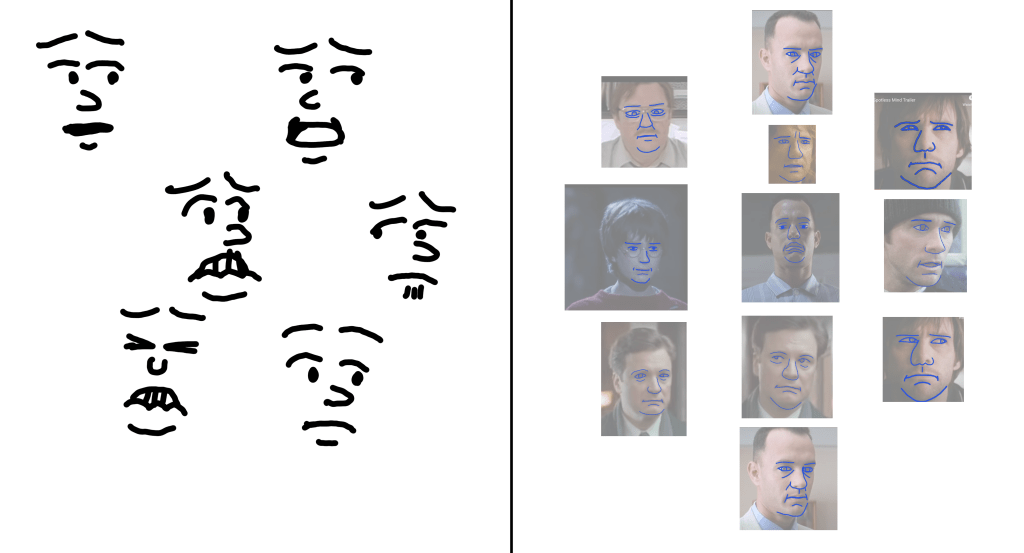


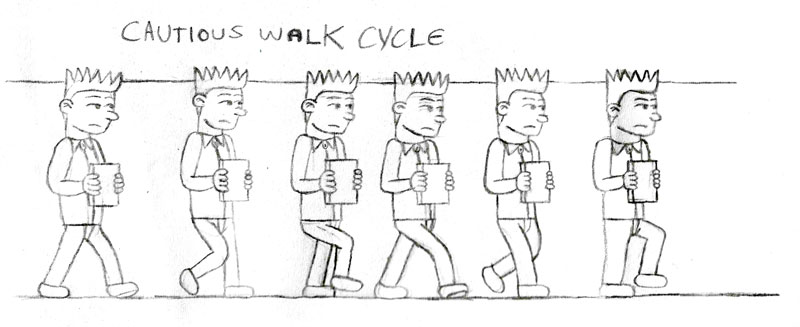

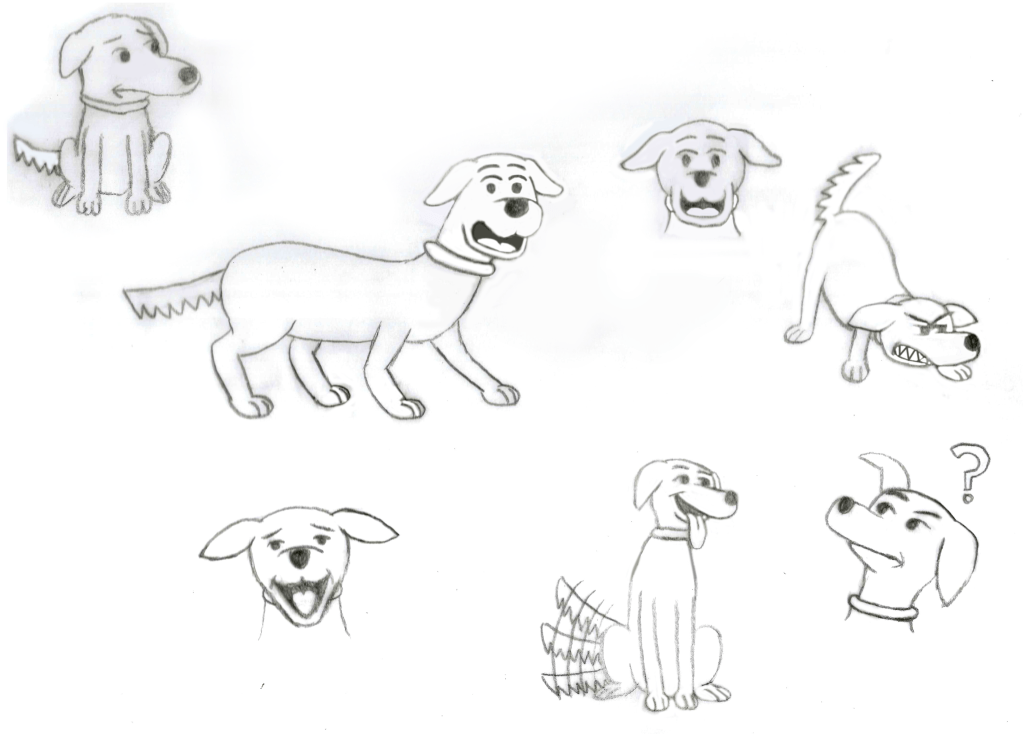
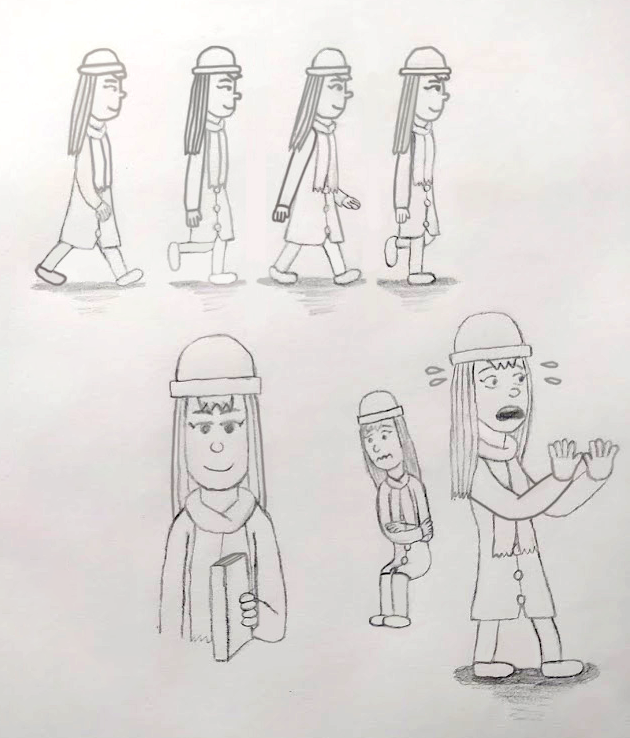
To create Greg’s nervous facial expressions in close-up shots, I traced shocked, disbelieved, nervous and worried faces from films such as Forrest Gump, Harry Potter and the Philospher’s Stone, Eternal Sunshine of the Spotless Mind and The Hobbit: An Unexpected Journey to use as reference. I used Richard Williams’ The Animator’s Survival Kit to creat neutral, calm/confident and cautious walk cycles for him. For Franky, I was inspired by Dug’s emotions from Up to depict Franky’s loyalty and care with wide eyes and a tilted head for his master Greg, and his uncertainty of whether to protect him or save the woman’ Carl’s sleeping pose in Despicable Me to fade from Greg’s monster sketch and animate Franky sleeping in his basket in Greg’s house; and Max’s confronting and shocked poses from The Secret Life of Pets and The Secret Life of Pets 2 to depict Franky’s alert when hearing the woman scream and deciding whether to protect Greg or save the woman, and his aggressive defence pose before charging over. When Franky bites the mugger’s leg, I used a scene from Animal Planet: Dog Bites Host as a reference when animating Franky moving his body forwards and around and wriggling his bottom. I also included the model sheet for Franky (based on reference sketches in the film’s title sequence. The music for the film was composed by Kate Wintie in Logic Pro X, with the addition of stock music provided by Randolph Matthews. I looked t film scenes where the music and sound effects build to add to the tension, like Anxiety by Mayshan Kelishadi and Joker. The technique of rotoscoping was used for three scenes that were difficult to animate: the woman’s arm handing Greg’s sketchbook to him, the mugger running away, and Greg kneeling down before calling Franky.
Genres:
The genres used in Real Take are realist-fiction (Greg’s dislike of noise and fear of conflict, Franky being Greg’s support dog, the sketchbook drawings showing Greg’s bad relationship with his ex-girlfriend, his struggles to communicate with the woman, et cetera) and fantasy (the sketches being animated, the monster sketch representing Greg’s anger).
Release:
The film was submitted to the Oska Bright Film Festival to be screened in 2026, but was not selected. It was selected as a finalist at the French Duck Film Festival, and selected by the Together! Disability Film Festival. As of 6 November 2025, the film is available on the Creative Foundation’s website.
*Written in Notepad.
 mysuperendeavour