
In the 1960s, three young filmmakers, James K. Morrow, Joe Adamson and David E. Stone, attended Abington High School in suburban Philadelphia, where they collaborated on each other’s films and films made by other students, some of which won awards.[1] Their films included In the Mist of Life (rated by the Los Angeles Free Pass as “film poetry of the highest order”),[2] It’s an Out of its Mind World,[3] The Man Who Owned America,[4] The Revenge of the Monster Maker, Cagliostro the Sorcerer,[5] and adaptations of Edgar Allen Poe’s The Tell-Tale Heart, August Derleth and Mark Schorer’s The Return of Andrew Bentley, and Samuel Taylor Coleridge’s The Rime of the Ancient Mariner,[3][6][5] which received an Honorable Mention in the 1964 Kodak Movie News Teen-Age Movie Contest.[3] In 1972-1973, they reunited to produce a 22-minute 16 millimeter short film, under the name “Odradek Productions”. They called it A Political Cartoon.[7] Morrow stated that the film was “another satiric sally against the American republic”, and saw it as “a ritualized attempt to rekindle [their] old The Man Who Owned America collaboration and maybe get it right this time”.[4]
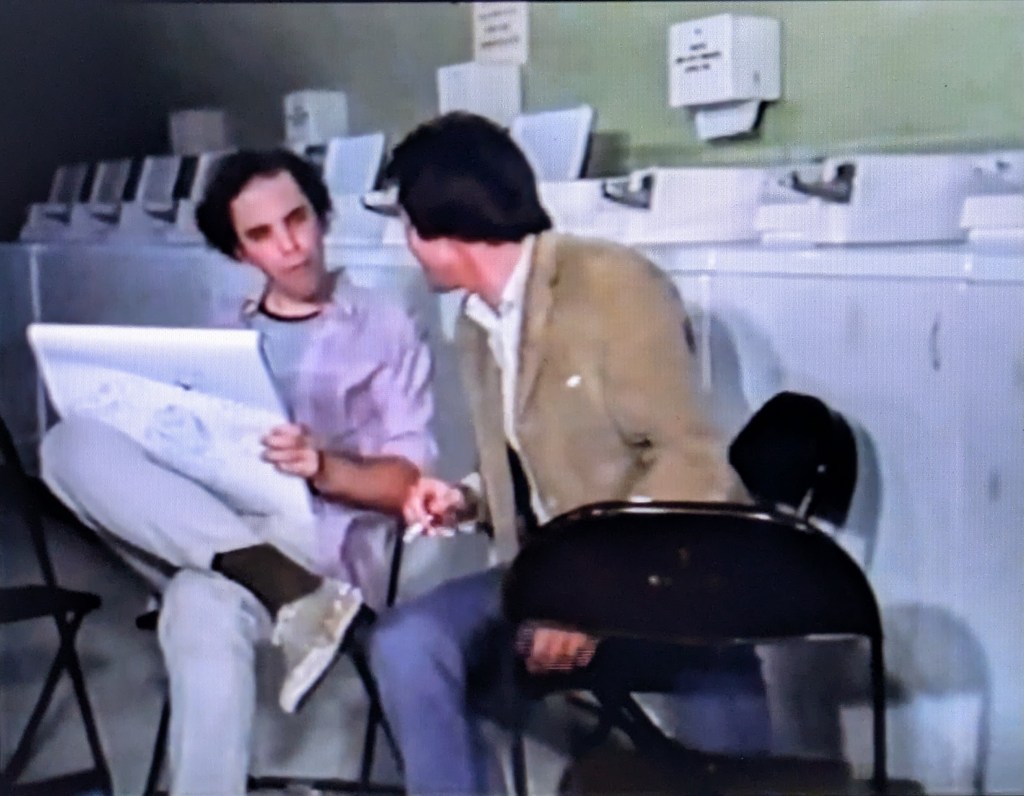
The short begins with Bugs Bunny campaigning on behalf of equal rights for cartoon characters everywhere, saying that fantasy is everybody’s business. At night, a political campaign manager named Lance Mungo enters a laundromat and meets an unemployed cartoonist named Bernie Wibble. Lance enlists Bernie’s aid in creating a vague-talking, innocuous cartoon character named Peter President and running him for President of the United States of America. After Peter’s election, people begin to have negative reactions to cartoon characters because of him, which includes Bambi being put in a zoo in Yonkers, Farmer Al Falfa being found on the street corner selling the Sunday Funnies, Betty Boop running a brothel in Levvitown, Krazy Kat being made into a tennis racket, and Bugs being put on sale at a pet store as an Easter Rabbit. Lance, Bernie and Peter attend a meeting with the Consolidated Commerce Conglomeration, who presents them their products, Panacea and Bubonics. The CCC CEO asks Peter to endorse their products and offers to use his likeness on them, but he firmly refuses. The CCC responds by selling all the India Ink back to India, rendering Peter catatonic. Lance enters the room with some ink, and he and Bernie attempt to revive Peter by transporting ink through a tube, only for the result to turn out unsuccessful. Bernie literally stares daggers at Lance, and takes his anger out on him by firing his guns and throwing a stick of dynamite. Lance has an idea just as the dynamite explodes, and decides that he and Bernie can reuse the latter’s animation of Peter for his next press conference. Later, the CCC hires two 1930s gangsters to kill Bernie. Bernie is taking a walk, eating ice cream, but notices the gangsters approaching him. He runs into a printing factory in order to escape them, and ends up getting turned into a comic book named The Wonderful World of Wibble, so Lance replaces him with a puppet master.[8][9][10]
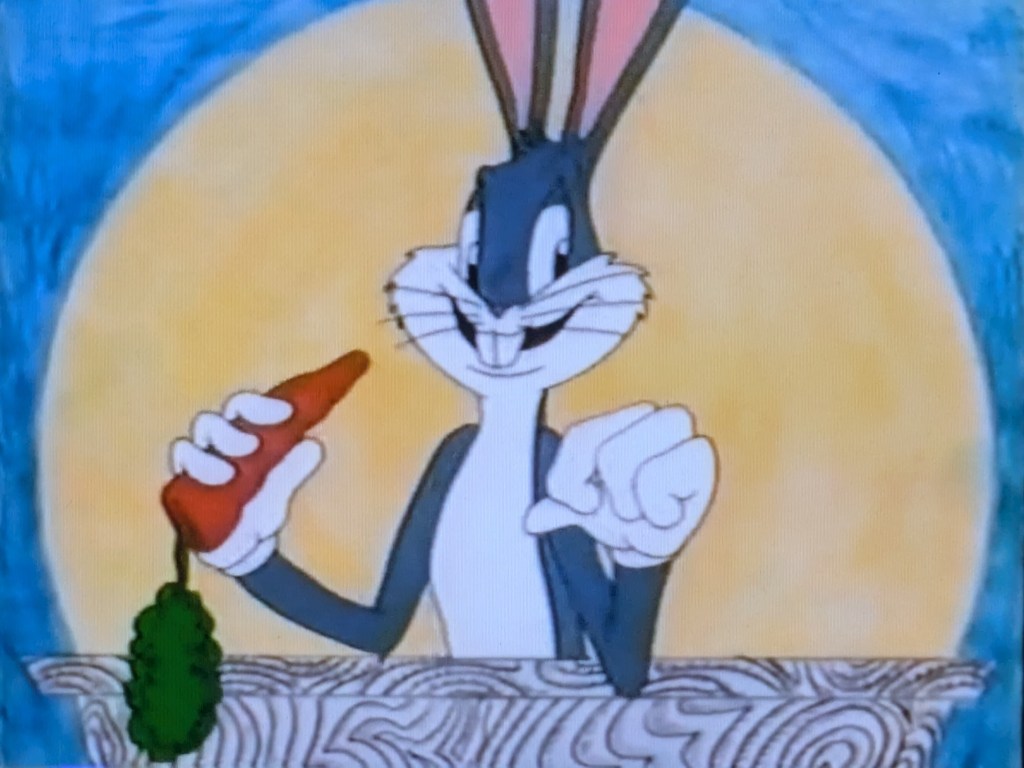
A Political Cartoon was written, produced and directed by James K. Morrow, Joe Adamson and David E. Stone, and was minimally financed and made on a shoestring budget in the Boston suburbs during Richard Nixon’s second inauguration.[7][1] The short starred Alex Krakower (as Bernie Wibble), Liam Smith (as Lance Mungo), Marshall Anker (as the Consolidated Commerce Conglomeration CEO), Allen Lieb (as the first Consolidated Commerce Conglomeration member), George Stapleford, Bob Kingsley (as the second Consolidated Commerce Conglomeration member),[1] Adamson (as one of the astronauts from Alpha Centuri, a news reporter, a mailman and the second gangster (voice)), assistant director Lindsay Doran (as a waitress), and Morrow (as the narrator, Bingo, Bongo, Peter President and other cartoon characters).[11] Morrow, Adamson and Stone shot principal photograph (all the Lance and Bernie scenes and the Consolidated Commerce Conglomeration) and the Panacea commercial on the campus of Drew University and around town in Madison, New Jersey. The living marionette at the end and the news conference were the only scenes shot in Boston environments (actually closer to Nashua, New Hampshire).[1] According to Bob Kingsley, the marionette was played by a 12-years-old girl, with a giant pinewood chair abetting the illusion where it manipulates its own strings.[12] Other pickups (aerial image animation, et cetera) were done in New York City and in State College, Pennsylvania (where Adamson was teaching at the time).[1] Stone designed and animated Peter President, as well as Bingo, Bongo, the astronauts and the other cartoon characters.[7] The astronauts were stop motion models filmed against a blue screen in a video transmission.[13] The original version of the script had Bugs Bunny as an old, withered, weathered rabbit with wrinkled eyes in a retirement home for cartoon characters, wheezing in an old chair, similar to Jedediah Leland in Citizen Kane. He would peer over his dark glasses and prod his febrile memory for recollections of tranquillity, saying, “Sometimes, I like ta see our old films on da television. I like ta see us, so young and everyt’ing. It’s hard ta remember back dat far.” For his parting shot, he would say to the interviewer, “On your way out, stop at da vegetable stand, will ya? And send me up a couple of good carrots. And tell ’em ta wrap ’em up ta look like cigars or somet’ing, or dey’ll stop ’em at da desk.”[12][14][15][16] Morrow, Adamson and Stone contacted Mark Kausler, an animator in Hollywood, to work on the scene.[12][17] He was the winner of the first Bobe Cannon scholarship to Chouinard Art School in 1968.[14] Mel Blanc was also willing to record Bugs’ voice for the scene.[12][7] However, Warner Brothers did not want Bugs to be shown as old. Morrow, Adamson and Stone protested that Bob Clampett had directed the 1944 Merrie Melodies cartoon The Old Grey Hare, which featured Bugs as an elderly rabbit, but Warner Brothers had not heard of Clampett or the short.[12][14][15][16] Because of this, a new scene had to be written, in which Bugs was painting Easter eggs at the Bugs Bunny Easter Egg Factory. He would say, “How about dis, huh?” while creating a beautiful, intricate design on an egg with only three strokes of the brush. He then added, “Only a cartoon character can do dat, ya know. You’d t’ink dat would be worth $1.75 an hour, wouldn’t ya? Oh, no! £93 a day and a pat on da nose. Tops!” Bugs would finally sigh, “It’s a rough life doc. I was talkin’ ta Daffy about it de other day. Ya t’ink it’s tough being a cartoon character. What do ya t’ink it’s like being a black cartoon character?”[12] Warner Brothers was finally agreeable to this scene, but now Kausler kicked. “You had a good scene,” he said. “It made me laugh and cry at the same time. It fit with your whole concept. This just makes me cry. It’s silly. I won’t do it.”[12][18] The scenes in which Bugs campaigns on behalf of equal rights for cartoon characters everywhere and is interviewed at the pet store were written and submitted to Warner Brothers, and were included in the final version of the short.[18] Blanc recorded Bugs’ voice for the scenes while in hospital with a broken leg. He propped himself up in bed and made about $300.00 for two minutes of work.[7][14] Kausler animated the scenes using an old model sheet by Robert McKimson, and painted the backgrounds as well, while Manon Washburn inked the celluloids. Kausler was only paid around $400.00 for the work.[16][14] The short also features cameo appearances from Mickey Mouse and Minnie Mouse (in a picture), Clarabelle Cow, Porky Pig, the Big Bad Wolf from the 1943 Merrie Melodies cartoon Pigs in a Polka, George from George and Junior, and Koko the Clown (as the cartoon characters revolting outside the White House); mentions of Dumbo (name suggestion), Bambi, Bosko (name suggestion), Betty Boop, Farmer Al Falfa, and Krazy Kat; and references to Sylvester the Cat (Narrator: “Paid for by Suffering (Sufferin’) Succotash, Washington, District of Columbia.”), “That’s all Folks!” and Snoopy (“Joe Cool” as a name suggestion). The short’s electronic soundtrack was composed by Harry Buch, and the basic sound effects were created by David Helpern.[7] At one point Stone and Adamson were in the editing room when the time came to cut the sound effects track for the scene in which Peter has lost his vital India ink, and Lance and Bernie desperately improvise an ink transfusion to save him. It was Stone’s idea to begin the process simply, by dropping in existing sound from outtakes, adding that to the sync production sound, which, according to Adamson, never would have occurred to him.[19] The scenes with the 1930s gangsters were achieved using a black-and-white reversal original, a scratched and violated dupe negative, a positive copy with printed dust slugged into the A-and-B rolls, a carefully filtered voice track, and a hissing, thumping crackle supplied by an elderly 78 record having its last fling in its final groove.[13][12]

A Political Cartoon was distributed by The Creative Film Society on October 1, 1974.[18][2] It was exhibited at the Orson Welles Cinema in Cambridge, Massachusetts, was nominated for a Gold Hugo for Best Short Film at the Chicago International Film Festival,[20] and won the Francis Scott Key Award at the Baltimore Film Festival,[18][21] the Judge’s Prize at the Santa Barbara Film Festival, the Jury’s Prize at the Columbus Film Festival,[22] and the Audience Prize at the Midwest Film Festival.[18][22] Chuck Jones and Robert McKimson criticized Mark Kausler’s Bugs Bunny scenes, despite the fact that Kausler used McKimson’s Bugs model sheet.[14] The short was also broadcast on television in the 1980s. On September 24, 1996, it was released on Video Home System by Kino Video as part of Cartoongate!, a compilation reel of politics-themed animated shorts.[8][4][1] A rare Video Home System release of the short, signed by James K. Morrow and David E. Stone, was put up on eBay years later.[23] In 2017, Trevor Thompson, the self-appointed Looney Tunes Critic, reviewed the film and stated, “Toward the end of the film, Peter President gets too costly to keep animating, so Lance Mungo and Bernie Wibble reuse old drawings in an attempt to make a jab at crappy animation studios of the day, like Filmation. Apart from the two Bugs Bunny scenes animated by the brilliant Mark Kausler, the animation is pretty terrible. So when it gets to the part of the movie where they have to reuse drawings and the animation is supposed to be s****y, they have to hold on the drawings longer just to make it register visually that it’s deliberately s****y now.”[24] No offence to Trevor, but Lance and Bernie reuse Peter’s drawings for his next press conference because of his death from ink loss. The reused Peter drawings and the “crippled ventriloquists” scene are actually jabs at limited animation in general, not at “crappy animation studios like Filmation”, and the animation is “pretty terrible” because the short was an independent film made by three young filmmakers (Morrow, Joe Adamson and Stone) on a low budget.
*Written in Notepad.
**To be liked by TheEnlightenedMind622.
 mysuperendeavour