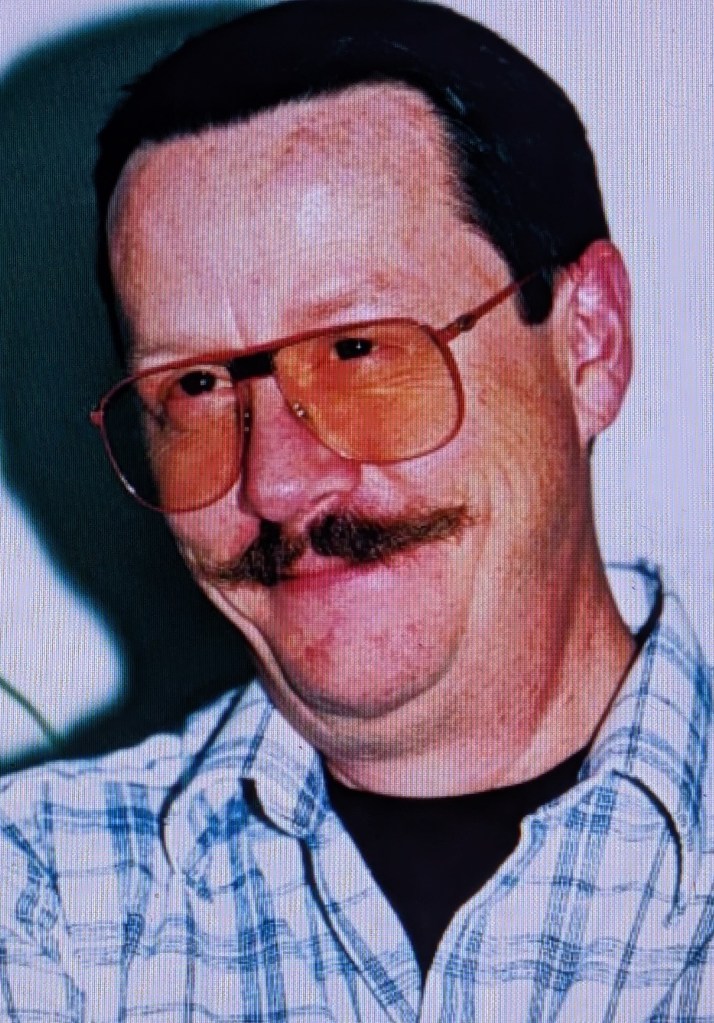
Born in Montignies-sur-Sambre Luc to painter André Dupanloup on 12 February 1945,[1][2] Luc Dupanloup became interested in comics during his late teenage years in 1963.[3] He studied at the Academy of Fine Arts in Brussels between 1964 and 1967.[4] After graduation, Dupa met Michel “Greg” Régnier, who was working as a chief editor of the weekly comics magazine Tintin, published by Le Lombard.[5] At first he arrived with a folder under his arm, but was turned down. He returned a week later with a folder full of new drawings,[6] and became Greg’s assistant, working as a background artist on Zig et Puce and Achille Talon, as well as Fifi, Fleurette, Luc Junior, Tootsy, and Constant Souci.[5] He also worked with Daniel “Dany” Henrotin on Quentin Gentil and Les As.[7] In 1968, Dupa, aged 23, was asked by Greg to create a character to fill an empty page in the April 16 issue of Tintin. He drew a large ball of white fur with four legs, hair covering a pair of eyes, a black nose, and a yellow pom-pom-like tail, eventually creating a bobtail dog. Since dogs were known to love bones, he named the character after the “cubitus”, an old anatomical term for the ulna bone in the forearm. And thus, Dupa’s most famous creation, Cubitus, was born.[16][5][6][8]


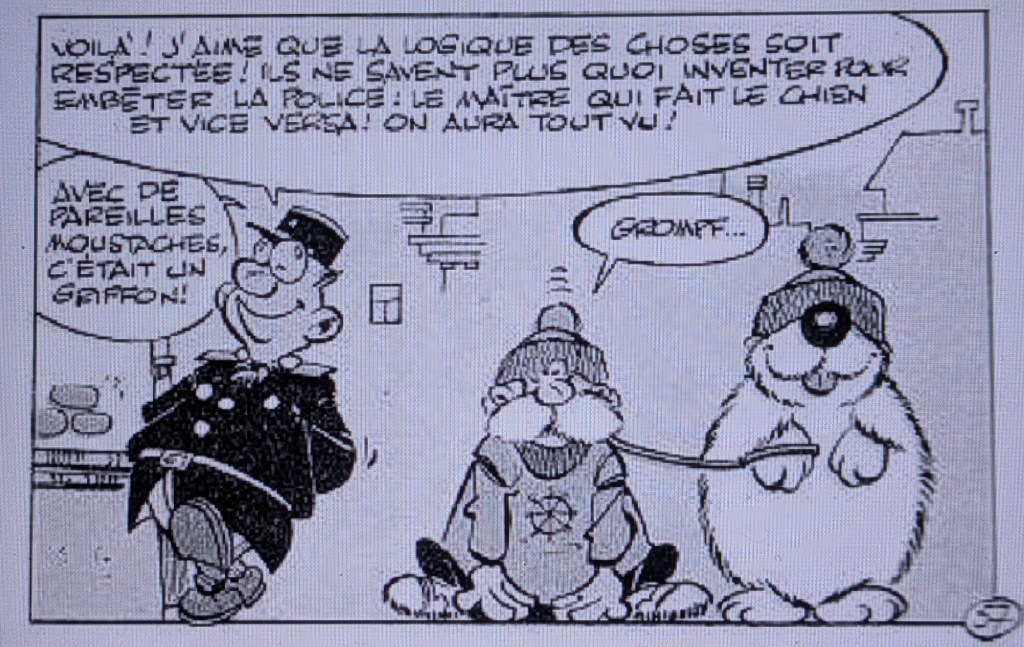

Cubitus immediately gained popularity upon its debut.[9] It was a surreal gag comic strip, showing Dupa’s talent for wordplay, with each strip consisting of one page. The titular character was a clumsy dog who initially lived in a suburban house with a young boy named Marcellin as his master.[10][11][12][13] In the first strip, Cubitus sleeps and only utters a grunt (“Gnorf!”) in response to children speaking to him, like Marcellin and his neighbor Dorothée.[14][13] The pessimistic Dorothée tries to give orders to Cubitus, such as “run”, “bark”, “jump” and “attack”, but none of them work. Marcellin optimistically describes him as “an intelligent and very up-to-date dog” and asserts that he (Cubitus) responds normally and a dog has only one master. He gives Cubitus the order “sleep”, the only one that he wants to hear and obey. The strip essentially depicts a struggle for authority between master and slave, posing the dialectical question of “Who dominates whom?” The question would always be left unanswered since Cubitus would retain a large element of animality, explaining both his taste for chewing bones and the great outdoors, as well as his dislike of cats,[14] like Sénéchal, a mischievous black-and-white tomcat and his arch-enemy who lived next door.[10][15][16] However, he would never completely be a normal dog, as he would speak human language (beginning in the second strip) and stand on two legs (already on his first Tintin cover on May 21, 1968).[14] He would also sometimes be accompanied by a little yellow canary.[17] On June 17, 1969, Sémaphore, a retired sailor, was introduced in the 57th strip as Cubitus’ master, although the relationship of master and dog would sometimes be reversed. The strip begins with Sémaphore leaving a dental office, holding Cubitus on a leash. The master, having received medical instructions not to open his mouth, therefore only emits muffled sounds (“Grompf!”). A police officer appears to chat with the pair, but he gets no articulate response from them. Annoyed, he reproduces a sequence of imperatives similar to Dorothée, except that his orders of “You, stand,” and “You, sit,” are immediately obeyed. This reversal of the roles of master and dog illustrates the theme of the physical resemblance between the two protagonists with big white mustaches. The officer concludes, “There you go! I like it when the logic of things is respected! They don’t know what else to invent to annoy the police! The master who plays the dog and vice versa! I’ve seen it all! With a mustache like that, he is a griffin!” As Dupa would later state, “The master and his dog form a pair of matching companions where it is not clear which one is ultimately the most animal. Cubitus is obviously the strongest, but he leaves Sémaphore with the illusion of being the boss.”[18] Sémaphore’s role in the comic is mainly to create inventions intended to be functional and aid Cubitus and others, but this leads to trouble in the end. He also has a passion for vintage cars and motorcycles, inspired by that of Dupa, and has his own motorcycle, Titine. It would later be revealed that Sémaphore gave Cubitus his name in reference to the ulna bone that he used to urinate on when he was just a few days old. He is also supposedly Marcellin’s uncle, as Marcellin calls him “Tonton” (“Uncle”) in one strip.[6][15] Cubitus and Sénéchal became more “human” and anthropomorphic, gaining the ability to walk on two legs, have hands instead of paws, and being able to perform any human action, although Cubitus would retain his love of bones. The hair covering Cubitus’ eyes would also disappear, revealing his now-good-natured yet mischievous personality. His favorite hobbies are eating, sleeping and boxing, using Sénéchal as a punching bag. Cubitus can also be very scrupulous and snobbish, especially when it comes to food, and will sometimes wear glasses and read novels. Running gags in the comic include not only Cubitus and Sénéchal’s rivalry, but also Sémaphore trying to make Cubitus behave more like a normal dog or get into the bath tub, and Cubitus trying to steal food.[6][10][15] One of Cubitus’ interesting characteristics in the series is his awareness of being a character in a comic, or rather a “comic book hero”. He also knows his creator, Dupa, very well, whom he often reproaches for all the setbacks that he suffers during his adventures, with expressions such as “Dupa, tu me paieras ça!” (“Dupa, you’ll pay for this!”) or “On me dupa!” (“I’ve been duped!”). Dupa himself even makes appearances in the comic, sometimes participating in the gags and providing explanations to the story. The humor, art style, and universe of Cubitus were inspired and influenced by that of Greg’s Achille Talon; both have the same setting, suburban house, and antagonistic relationships, with the trio of Cubitus (the hero without a quest), Sénéchal (the unpleasant villain) and Sémaphore (the liberal authority figure benevolently watching over the hero) being reminiscent of Achille Talon, Hilarion Lefuneste and Papa Talon.[14][10] Dupa also made references in his comic to history, old films and other comic strips, including The Beatles, the Marx Brothers, Tintin, The Adventures of Blake and Mortimer, Popeye, Bécassine, Georges Méliès, and King Kong. When asked about his references, Dupa admitted to doing very little research, despite his adoration for collecting cars, motorcycles, scale models, and “anything to do with the Second World War” (he also had a dislike for traveling, flying, vacations, and free time[5]). He appreciated Pierre Perret, Marcel Pagnol, the Marx Brothers, Walt Disney, and Tex Avery, as well as stories by the Countess of Ségur and about science fiction, citing them as additional influences. Dupa stated that when he would begin writing and drawing a Cubitus strip, he would structure the gags in a way similar to how the Marx Brothers structured theirs. He was also inspired by his reading skills and love for comic strips. Most journalists who interviewed Dupa were surprised not to find any physical resemblance between the artist and his character, and so began seeking moral similarities. Christian Sonon described his visit to Dupa’s home in an article in the Belgian daily newspaper Le Soir, “Beware, strange dog!” Many journalists and historians were overcome with doubt, wondering if Dupa had fooled them, and if he and Cubitus were one and the same. Dupa himself willingly lent himself to the game of assimilation (being likened) to his character, convinced that a comic character is a parody of a real, exaggerated physical type. According to Dupa, “I suppose it’s a projection of me, morally if not physically. For Cubitus, the simplest things take on the magnitude of problems, and that’s my case. He’s naive, and so am I. He likes good things, and I’m greedy. Voilà!” Dupa did not pose as a master for the character of Cubitus, but preferred to see him as an alter ego, naturally chosen from the domestic species of man’s best friend. He stated, “Cubitus, he’s a great friend, I imagined him as I wanted a friend to be.” This relationship of equals raised a philosophical questioning that did not escape him. Interviewer Yves Duval summarized the artist’s explanation that Cubitus therefore has a double identity, man and dog, that could be used according to the circumstances.[19]
Other recurring characters in the comic include Médor l’escargot, a snail who follows Cubitus practically everywhere and is said to secretly have a crush on him; Ventenpoupe, an old friend of Sémaphore and an intruding crook and swindler; Victor, a highly sophisticated and omniscient computer with caterpillar tracks and an antenna, who can speak and has an extraordinary capacity for analysis and prediction; Manuel de Cotalos Y Mucho Gusto, the friendly yet bothersome ghost of a former racing driver of whom Sémaphore was a huge fan as a child, driving the Douze litres DeValpo (Twelve-Litre DeValpo), who falls in love with Titine and decides to settle in its sidecar; and Isidore, a mysterious person known and adored by everyone, but is never actually seen by Cubitus (or the reader).[17][6] Marcellin, Dorothée and the canary would disappear completely from the comic, with the former being gradually replaced by his uncle Sémaphore.[6][10] The series would begin album publication in 1972.[20] Even though most of the comics and albums consisted of separate one-page gags, there were also some with shorter stories or, in rare cases, one long story throughout the entire album. Characters from other comics from the Tintin magazine, such as Olivier Rameau, The Adventures of Tintin, Platon, Torloche et Coquinette, Monsieur Edouard and Clifton, would make cameo appearances in the series.[21][22][23] The series was published in other countries; Cubitus is known as Dommel in Flanders and the Netherlands, Alkalb Lubu (Lobo the Dog) in the Arab world, Muppelo or Pom Pom in Finland, Hannibal (initially) or Charlie in Germany,[24] Teodoro in Italy, Copito, Felpudo, Lanitas or Peluche in Spain,[6] Zıpır in Turkey, and Доммель in Russia. Cubitus appeared in various German magazines, including Felix, Zack, and Rate mal Comics, as well as in 12 issues of Piccolo. Between 1988 and 1994, 14 albums were published by Carlsen Comics, and the series has been continued by Phoenix Verlag since 2000. Despite all this, only a fraction of the 39 albums published in France have been published in Germany.[25][26][27][24]

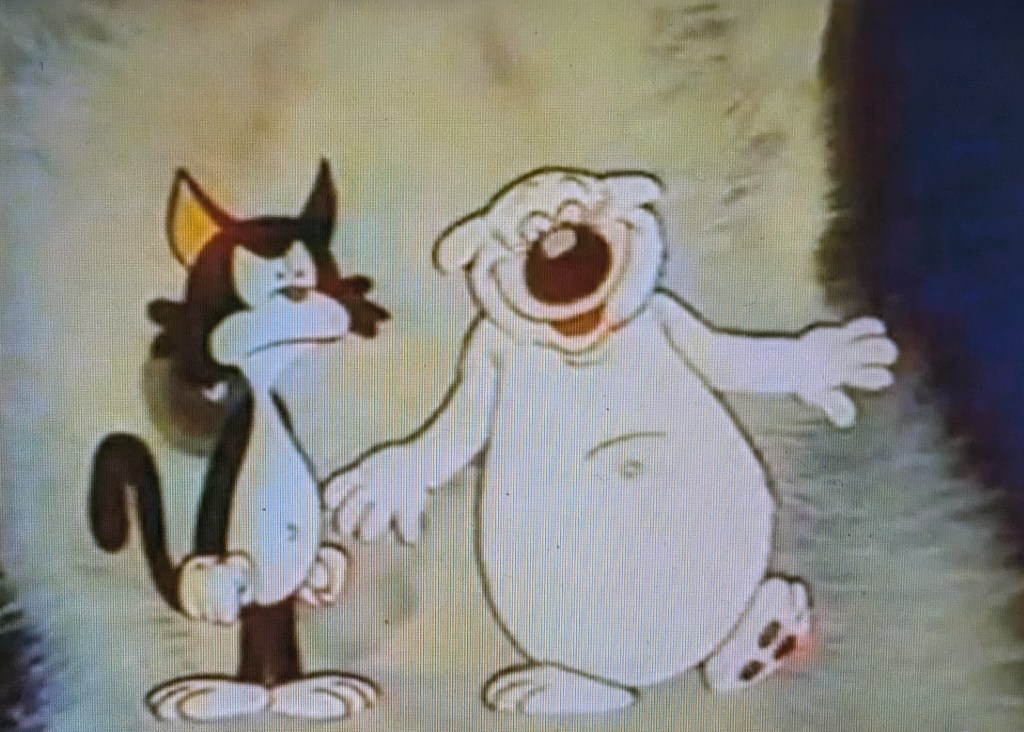
In 1977, the strip was adapted into an animated short film pilot, named Cubitus: Le gâteau d’anniversaire (Cubitus: The Birthday Cake). In the short, Cubitus and Sémaphore awake to see that it is the former’s birthday, so they decide to organize a party and bake a cake. Sénéchal attempts to play dirty tricks on the pair and ruin Cubitus’ birthday, only for his tricks to backfire, resulting in him getting injured. The short was produced by Le Lombard’s Belgian animation studio Belvision, directed and written by Jos Marissen and Dupa, animated by Nic Broca, Christiane Segers and Paulette Smets-Melloul, and edited by Michèle Maquet and François Leonard.[28] The backgrounds were painted by Michel Leloup.[29] The short’s synthesized music and sound effects were composed and designed by Yvan Delporte and Frédéric Jannin.[28][30] The voices were recorded at Studio L’Equipe.[28] André Gevrey and Guy Pion are both listed in the credits, but are not heard in the short. It is likely they were brought in to do voices and their audio tracks were never heard, their names were listed with them being considered for roles, or they were just credited to make Belvision Studios appear bigger than it was. The only credited actor who is actually heard in the short is Georges Pradez. Pradez had provided the voices of Bill in Boule et Bill and the King in Belvision’s The Smurfs and the Magic Flute (1976), so it is very likely that he provided all the voices in the short. He voiced Cubitus (compare to Bill (1:07, 18:07, 20:35) and the Old Man in Belvision’s Clifton: Un pépin pour Clifton (1984)), Sémaphore (compare to the King), Sénéchal (compare to Bill (27:32, 28:17) and the Tall Drug Trafficker in Clifton), a fly, a statue (compare to Cubitus) and the Pilot (compare to Sénéchal, particularly on the second line). Additional evidence to somewhat support this exists in the form of a drawing of Cubitus created for Pradez’s birthday on 30 April 1979 (“4 dessins originaux en hommage à Georges Pradez 1979 > Hermann”).[31] Cubitus: Le gâteau d’anniversaire was released on Video Home System by Regie Cassette Video in the 1980s as a part of Les héros du journal de Tintin (The Heroes of Tintin), a compilation of animated short pilots adapted from comics from the Tintin magazine by Belvision,[32] and broadcast on Radio-Québec’s Ciné-cadeau on December 29, 1984 and January 1, 1986, and Télétoon in 2000.[28]
On November 28, 1984, Cubitus was adapted for an episode of La bande à Bédé (The Comic Strip of Bédé), a television series dedicated to comics. The series debuted on January 8, 1981, airing on Thursday afternoons as part of Récré A2 on Antenne 2. It later aired on Wednesday afternoons until 1986. It was hosted by Dominique Rocher and Toussaint Lucciani, and the theme song was written and performed by Pierre Perret. Each episode featured a guest comic strip artist invited to the show, who presented their work. Animated shorts based on the different artists’ comics were produced for each episode, immersing the artist in the show through motion graphics and video effects by Fred Berton and allowing them to communicate with their own characters. The Cubitus episode started with the hosts and the series’ dog mascot Bédé interviewing Dupa, who had arrived from Belgium in a barrel. This was followed by animated adaptations of the Cubitus strips, as well as sequences where Cubitus would dance and sing, accompanied by motion graphics in the background. While some of the shorts used illustrations from the strips, others were produced in limited animation.[33][28] The episode featured the voices of Vincent Grass (Dupa, Cubitus (compare to his Flotsam and Jetsam in The Little Mermaid)), Michel Mella (Librarian (compare to his Hercules in Spiff and Hercules), Sénéchal (compare to Hercules)), Yves-Marie Maurin (W.A.F. Voice (compare to his dubbing for David Hasslehoff)), Robert Blanchet (Sémaphore) and an unknown voice actress (Médor), either Brigitte Damiens, Veronique Riviere, Christine Ryf, Veronique Valmont or Claude Lombard.
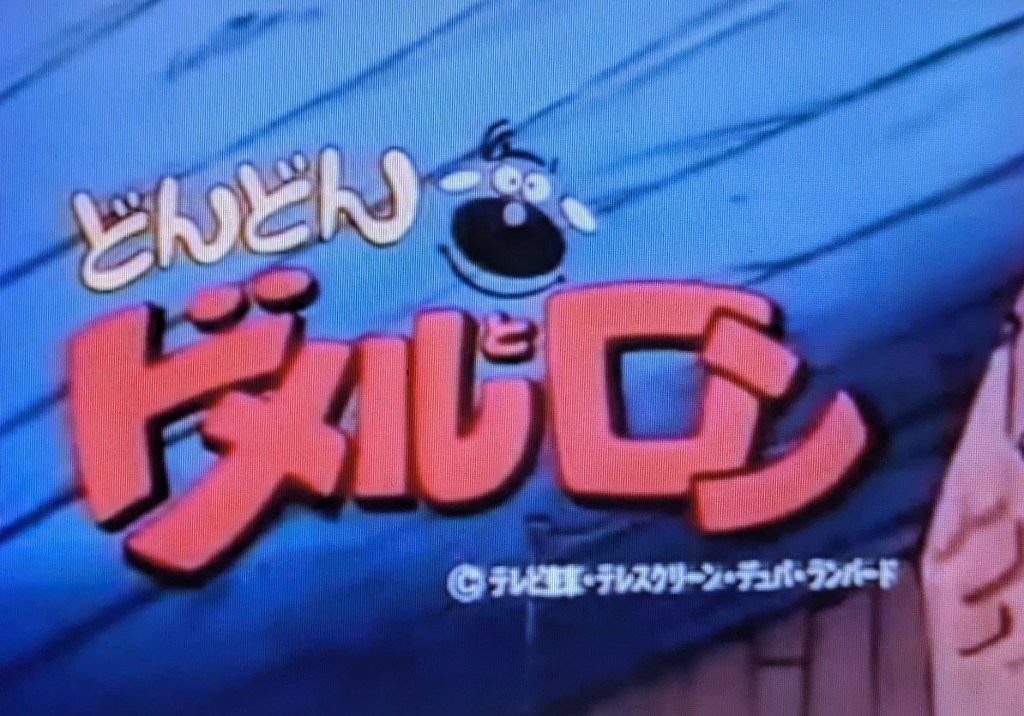


In 1988, Cubitus was adapted into an anime series, named Dondon: Domeru to Ron (Bigger and Better: Dommel and Ron). Airing from April 5, 1988 to March 27, 1989, the series consisted of 52 two-part episodes the running time of 25 minutes in total. It was a co-production between Telecable Benelux B.V. and TV Tokyo, with co-operation from Japan Creative Staff and Wako Production; Dommel to Ron was the first anime to be produced by the former studio.[2][34] It was directed by Hiroshi Sasagawa and produced by Kazuo Tabata and Sumio Takahashi, with music written and composed by Takanori Arisawa and sound design by Yasufumi Yoda of Fizz Sound Creation.[35] Cubitus, Sémaphore and Sénéchal were renamed Dommel, Ron and Blackie, respectively. In contrast to the comic strip’s eccentric and surreal gag format, the series had a comedic, slapstick tone. Four new characters were added to the series: Cherry, an attractive young blonde teenager who seems to take quite a fancy interest toward Dommel, who, along with Ron, also seems to have a crush on her; Bob, Cherry’s younger brother, who bears a slight resemblance to Marcellin from the early comic strips; Beatrix, a bossy, middle-aged woman who is often rude and condescending to Dommel and has a crush on Ron; and a police officer who keeps a whistle in his mouth and uses it to tell people off when there is trouble about; Cherry also has a crush on him. The voice cast included Naoki Tatsuta as Dommel, Kaneta Kimotsuki as Ron, Rica Matsumoto as Blackie, Mīna Tominaga as Cherry, Tarako Isono as Bob, Kazuko Sugiyama as Beatrix, and Kōichi Yamadera as the police officer.[35] The opening and ending theme songs, “Fly Away – Yume no Hikouki” and “GO! GO! My Friend”, were sung by Mitsuko Horie, and released by Nippon Columbia on April 21, 1988.[36] Although the anime had an excellent lineup that was only possible during the Japanese asset price bubble era, it had poor ratings for its first six months (April to September 1988), even though it was broadcast every Tuesday from 6:00 pm to 6:25 pm. Japanese viewers praised its production and voice acting, but criticized the heartwarming Franco-Belgian comic-inspired art style. During the program reorganization in the fall of 1988, it was moved to Monday from 5:00 pm to 5:30 pm, which led to some TV Tokyo-affiliated networks like TV Aichi, TV Osaka and TV Setouchi canceling the show. It was also broadcast on Saturdays from 5:45 am on Iwate Broadcasting Company and on Saturdays from 8:00 am on Nagano Broadcasting Systems.[34] An English dub of the anime, renamed Wowser, was produced by Saban Entertainment and directed by Tom Wyner. The dub changed the names of the characters; Dommel was renamed Wowser, Ron was renamed Professor Dinghy, Blackie was renamed Ratso Catso, Cherry was renamed Linda Lovely, Bob was renamed Bob Lovely, Beatrix was renamed Beatrice, and the police officer was given the name Officer Whistle. The dub also replaced the original music by Takanori Arisawa with a new score written and composed by Haim Saban and Shuki Levy, with the series opening with the theme song “Wow-Wow Wowser”. The sound editing was done by Gary Jane, Scott Page and John Valentino, which replaced most of the anime sound effects with Hanna-Barbera sound effects.[35] The voices were recorded at Intersound Incorporated.[37] A promotional pilot trailer was made by Saban to sell the series, with Doug Lee as the narrator, Jeff Winkless as Wowser and Ratso, Robert V. Barron as Dinghy, and Iona Morris as Beatrice.[38] In the final version, Simon Prescott voiced Dinghy, Robert Axelrod took over the role of Ratso, Wendee Lee voiced Linda, Barbara Goodson voiced Bob (though Lee would fill in for Goodson in some episodes), and Melanie McQueen voiced Beatrice.[37][35] Some scenes were removed or edited due to their violent or sexual nature, such as Linda’s clothes flying out the window and landing in parts of town in Self-Cleaning Machine, a chicken attacking Beatrice and making her ruin her dress in Slap Happy Birthday, and Dinghy beating Wowser in Hippo Dance Party. Wowser aired on the Family Channel in the United States of America from September 1989 to 1991.[39][40][35] The series was also broadcast as Dommel on the Vlaamse Radio- en Televisieomroeporganisatie in Belgium and Omroepvereniging VARA in the Netherlands from September 24, 1989 to May 4, 1991, featuring the voices of Hans Hoekman (Wowser/Dommel), Jan Anne Drenth (Dinghy/Semafoor), Hans Pauwels (Ratso/Balthasar), Beatrijs Sluijter (Linda/Cherry), Trudy Libosan (Bob/Bobby), Maria Lindes (Beatrice/Mevrouw Beatrix), and Fred Butter (various characters).[41][42] It also aired as Teodoro e L’Invenzione Che Non Va (Theodore and the Wrong Invention) on Italia 1 in Italy (with its theme song sung by Christina D’Avena),[43][44] and IQ Língdàn Duōmáo Gǒu (IQ Zero Egg Hairy Dog) on TVB Jade and Astro Wah Lai Toi in Hong Kong (with its opening and ending theme songs strangely taken from Alan Silvestri’s arrangement of Franz Liszt’s “Hungarian Rhapsody Number 2” in Who Framed Roger Rabbit).[45][46] It is currently distributed by Mediatoon Distribution.[47][48] The anime increased the original Cubitus comic strip’s notability and popularity; after several years of gags and album publications, Cubitus became the title strip for a magazine of its own, first published by Le Lombard in December 1989.[2][49] The series was in line with the anime, and featured Beatrice and Linda in larger roles. Ray Nicholson was a cover and comic artist for the magazine.[50] The magazine was short-lived, lasting only six issues and ending in October 1990.[51]
On January 5, 1990, a French dub of Wowser, named Cubitus, was featured on the programme Avant l’école on TF1, and started airing on Super Écran in Quebec on April 2, 1990.[52] United States-based distributor Celebrity Home Entertainment released the series on video in four volumes through their Just for Kids Home Video imprint between 1990 and 1991, with episodes running for 30 minutes and 60 minutes.[53][37][54] The series aired on RTLplus in Germany (as Cubitus, der Wuschelhund (Cubitus, the Fluffy Dog)),[55] TV2 in New Zealand, M-Net’s K-T.V. in South Africa,[56] and YTV in Canada between 1990 and 1993. In the United Kingdom, the series aired on ITV from 1990 to 1993 and Channel 4 from 1993 to 1996.[57][58][59][60] It was also broadcast on The Children’s Channel. Stylus Video released the series on video in two volumes.[61] In Australia, Wowser aired on the Nine Network and Fox Kids from 1990 to 1995. The series was dubbed in Arabic in Jordan as Ka’abool at Al-Sharq Al-Adnaa Studios, and broadcast on Qatar Television in February 1990, Kuwait Television in March 1990, and Saudi Television,[35] though it would later be redubbed in Lebanon as Wowser around 2005. In Spain, the series was dubbed into Spanish, Basque and Catalan, renamed Gordi, Dommel Artzain Txakurra (Dommel the Shepherd Dog) and Dommel respectively.[62] The Catalan dub aired on Televisió de Catalunya.[35] On February 16, 1991, the series began airing as Dommel on the Wieczorynce block on TVP1 in Poland.[63] Reruns of the series aired on Kindernet in the Netherlands from June 12, 1991 to December 13, 2002.[41] In Singapore, the series was broadcast on Channel 5.[64] In Malaysia, the series was broadcast on TV1 and TV3 between 1991 and 1994.[65][66][64][67] From October 23, 1993 to March 1994, the German dub aired on RTL Television. Between 1996 and 1997, it aired on Nickelodeon in Germany.[55] In 1998, the French dub began airing on Télétoon. The German dub was broadcast on Super RTL from July 31, 1998 to October 2, 2000.[55] Wowser was planned to air on the Fox Family Channel in the United States that year, but was scrapped.[68] A redub of the series was broadcast on Fox Kids in Italy from April 1, 2000 to March 1, 2005, with a new theme song performed by Rachelle Cano.[69] From October 2, 2000 to July 2, 2004, the German dub was broadcast on Fox Kids in Germany. From March 11, 2002 to August 2, 2003, it aired on tv.nrw. The series is also said to have aired on RTL Zwei and Toon Disney.[55] When Kindernet relaunched as Nickelodeon Kindernet on Comedy Central in the Netherlands, Dommel was briefly rerun on the Dutch feed of Nickelodeon during late May 2003.[70] It also aired on Direct 8 in France from 2006 to 2007, and on the Nickelodeon Kindernet block from May 4, 2011 to 31 October 2013.[71] The series began airing on Pebble TV in 2015.[72]
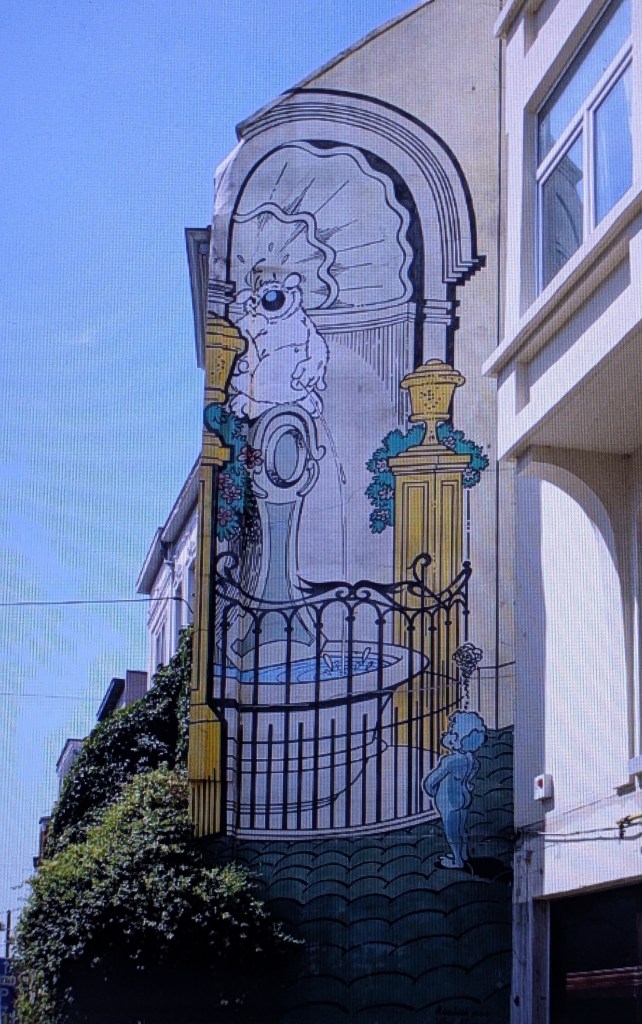

Cubitus became one of the most popular comic book characters in advertising. In addition to comics and animation, a wide range of merchandise was produced in the form of figurines, stamps, plush toys and Pogs. In July 1992, Hello Bédé celebrated the 1000th Cubitus gag strip.[73] In October 1994, La Poste Belgique (the Belgian Post Group) issued a Cubitus stamp as part of its annual “Philatélie de la Jeunesse” issue.[74][4][5] In the same month, Georgios Oreopoulos and David Vandegeerde designed a mural painting featuring Cubitus as part of the Brussels’ Comic Book Route, adorning the gable end of 109 Rue de Flandre, Brussels, where Cubitus takes Manneken Pis’ place and urinates into the fountain’s basin, much to the latter’s anger as he observes from below.[5][75][2][76] Dupa spent the last 30 years of his life in Limal.[77][2] In 2000, Cubitus received a mural painting in the Rue de Montmoreau as part of the Comic Book Route in Angoulême, France.[2] On 8 November 2000, Dupa died at the age of 55, following a cerebral haemorrhage.[2][5][78] He was buried in the Limal cemetery.[79] In June 2002, Le Lombard published a posthumous album named Cubitus: Tu te la coules douce… (Cubitus: You’re Having a Great Time…), the 39th volume in the series, which featured 46 previously unpublished or little-known gag strips.[77] On 3 October 2002, a statue of Cubitus, sculpted by Luc Cauwenberghs, was unveiled at the Albert I Square in Limal.[80][77][2]

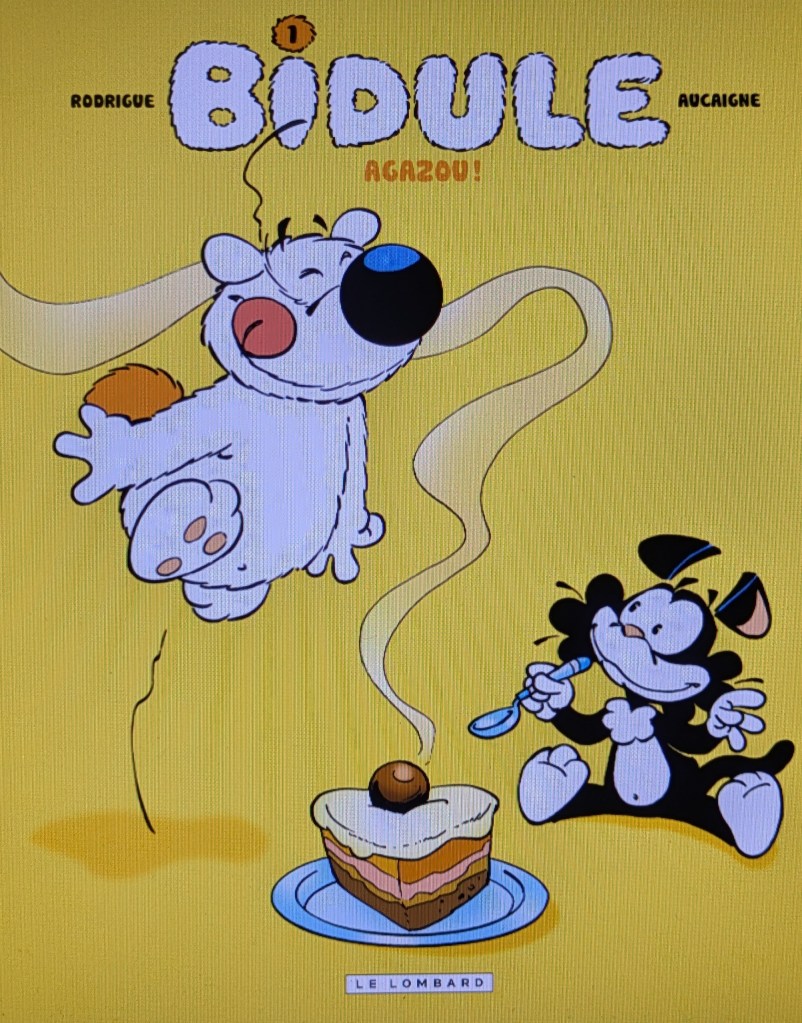
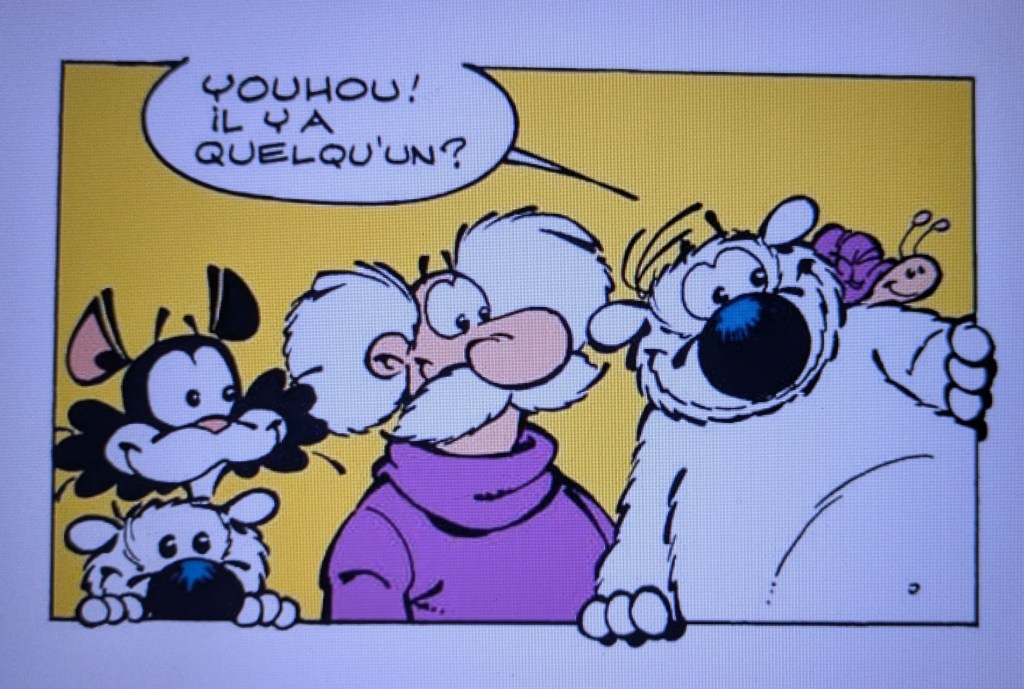
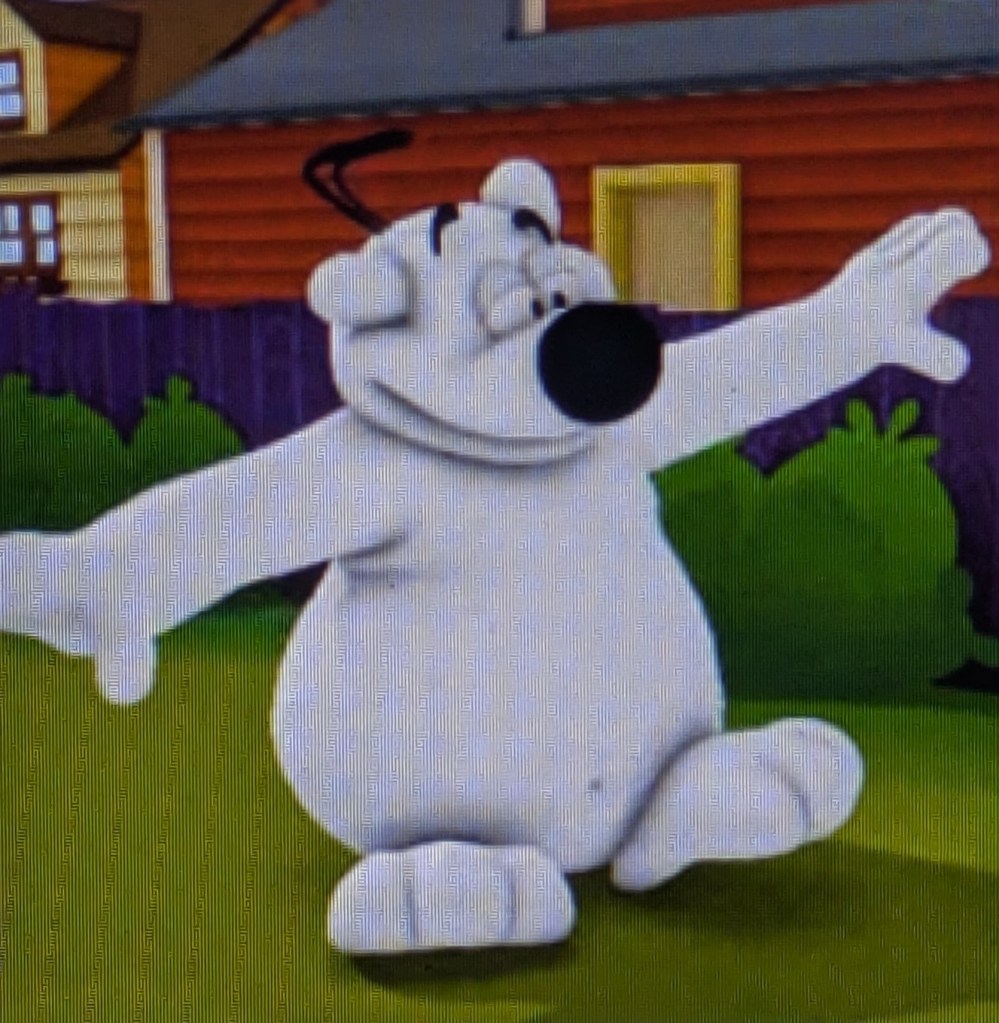
In 2005, five years after Dupa’s death, Michel Rodrigue and Le Lombard scriptwriter Pierre Aucaigne relaunched the series as Les Nouvelles Aventures de Cubitus (The New Adventures of Cubitus).[2][81][15][82][83] The series introduced new characters, including Helmut, a grumpy dwarf/gnome in Cubitus’ garden who looks for a garden gnome his size; Ursula, a discreet, romantic, slightly silly garden gnome who Helmut loves, though she often argues with him; Miss Badmington, a woman who desperately tries to keep her date at the pool, without much success; Polo and Jean-Marie, two friends of Sémaphore who have been hunting together for 20 years; and a woman that Sémaphore meets online, with whom he chats for 18 months. Due to Aucaigne’s busy work between his shows and theatre, Gilles “Erroc” Corre took over writing duties from Volume 7 onward.[83] Together with Adeline Blondieau, Rodrigue created a spin-off series in 2011, starring Cubitus’ baby nephew, Bidule.[15][82][83][84][85] According to Rodrigue, the idea for Bidule came from a gag in the first album of Les Nouvelles Aventures de Cubitus, where Cubitus sees his whole life flash before his eyes; at the beginning, he is small.[85] Additional characters in the Bidule strips included Max and his wife, a young veterinarian couple and Bidule’s adoptive owners who try their best to cope with the young puppy’s mischief and boundless energy; Câline, a black-and-white neighborhood kitten and Sénéchal’s niece; Pupuce, a big, grey vegetarian mastiff; a trio of birds who fall from their nest and cannot fly, and the refrigerator, which Bidule regularly takes pleasure in raiding.[86][87][88] Between October 7, 2005 and October 16, 2005, Cubitus post-it notes and magnets were sold as part of the Radio Télévision Belge Francophone’s CAP48 campaign.[89][90] In September 2006, Cubitus and Sénéchal appeared on 10 self-adhesive stamps launched by La Poste.[91][15] In 2011, there were plans to adapt the strip into a new three-dimensional computer-animated series. The series was produced by Ellipsanime and Storimages.[92][93]
 mysuperendeavour